Introduction
Enterprise web applications continue to grow in complexity. Modern websites routinely deliver hundreds of JavaScript files, cascading style sheets, images, fonts, APIs, and asynchronous requests before rendering a complete user experience. Although improvements such as browser caching, content delivery networks, asset compression, and HTTP keep-alive have significantly improved performance, the underlying HTTP/1.1 protocol still introduces limitations when managing large numbers of concurrent resources.
HTTP/2 represents the first major revision of the Hypertext Transfer Protocol in many years. Rather than changing the semantics of HTTP methods, headers, or status codes, HTTP/2 modernizes the transport layer by introducing binary framing, multiplexing, header compression, and server push capabilities.
For organizations already using Nginx as a reverse proxy, HTTP/2 offers an opportunity to improve application responsiveness while preserving existing backend architectures.
From the perspective of December 2015, browser support for HTTP/2 is rapidly improving, and enterprises are beginning to evaluate production deployments using HTTPS-enabled Nginx servers.
Industry Background
Modern web applications increasingly consist of numerous independent resources.
Typical enterprise applications include:
- ◆JavaScript frameworks.
- ◆CSS assets.
- ◆Responsive images.
- ◆REST APIs.
- ◆Web fonts.
- ◆Content Delivery Networks.
- ◆Microservice-based backends.
Developers have historically adopted several optimization techniques to compensate for HTTP/1.1 limitations.
Common practices include:
- ◆CSS sprites.
- ◆Asset concatenation.
- ◆Domain sharding.
- ◆Image optimization.
- ◆Minification.
- ◆Browser caching.
Many of these techniques exist primarily because HTTP/1.1 handles multiple parallel requests inefficiently.
HTTP/2 seeks to remove several of these constraints through protocol-level improvements.
The Business Problem
Organizations operating high-traffic web applications commonly encounter several networking challenges.
These include:
- ◆High page load latency.
- ◆Excessive TCP connections.
- ◆Header overhead.
- ◆Resource blocking.
- ◆Inefficient bandwidth utilization.
- ◆Increased infrastructure costs.
- ◆Reduced mobile performance.
As enterprise applications continue expanding, protocol efficiency becomes increasingly important for maintaining responsive user experiences.
Understanding the Technology
HTTP/2 maintains the existing HTTP programming model while redesigning how requests and responses travel across network connections.
Major protocol capabilities include:
- ◆Binary framing.
- ◆Multiplexed streams.
- ◆Header compression.
- ◆Request prioritization.
- ◆Server push.
- ◆Persistent encrypted connections.
Applications continue using familiar HTTP methods such as GET, POST, PUT, and DELETE without modification.
Most improvements occur transparently between browsers and web servers.
Core Architecture
A simplified HTTP/2 deployment architecture appears below.
| Component | Responsibility |
|---|---|
| Web Browser | Initiates HTTP/2 requests |
| HTTPS Connection | Encrypted transport |
| Nginx Reverse Proxy | Terminates TLS and manages HTTP/2 |
| Load Balancer | Distributes application traffic |
| Application Servers | Execute business logic |
| Database Systems | Store application data |
Nginx acts as the gateway between client browsers and backend application infrastructure while exposing HTTP/2 capabilities to users.
Key Features
Binary Framing
Unlike HTTP/1.1's text-based message format, HTTP/2 exchanges information using compact binary frames.
This improves protocol efficiency while simplifying message parsing.
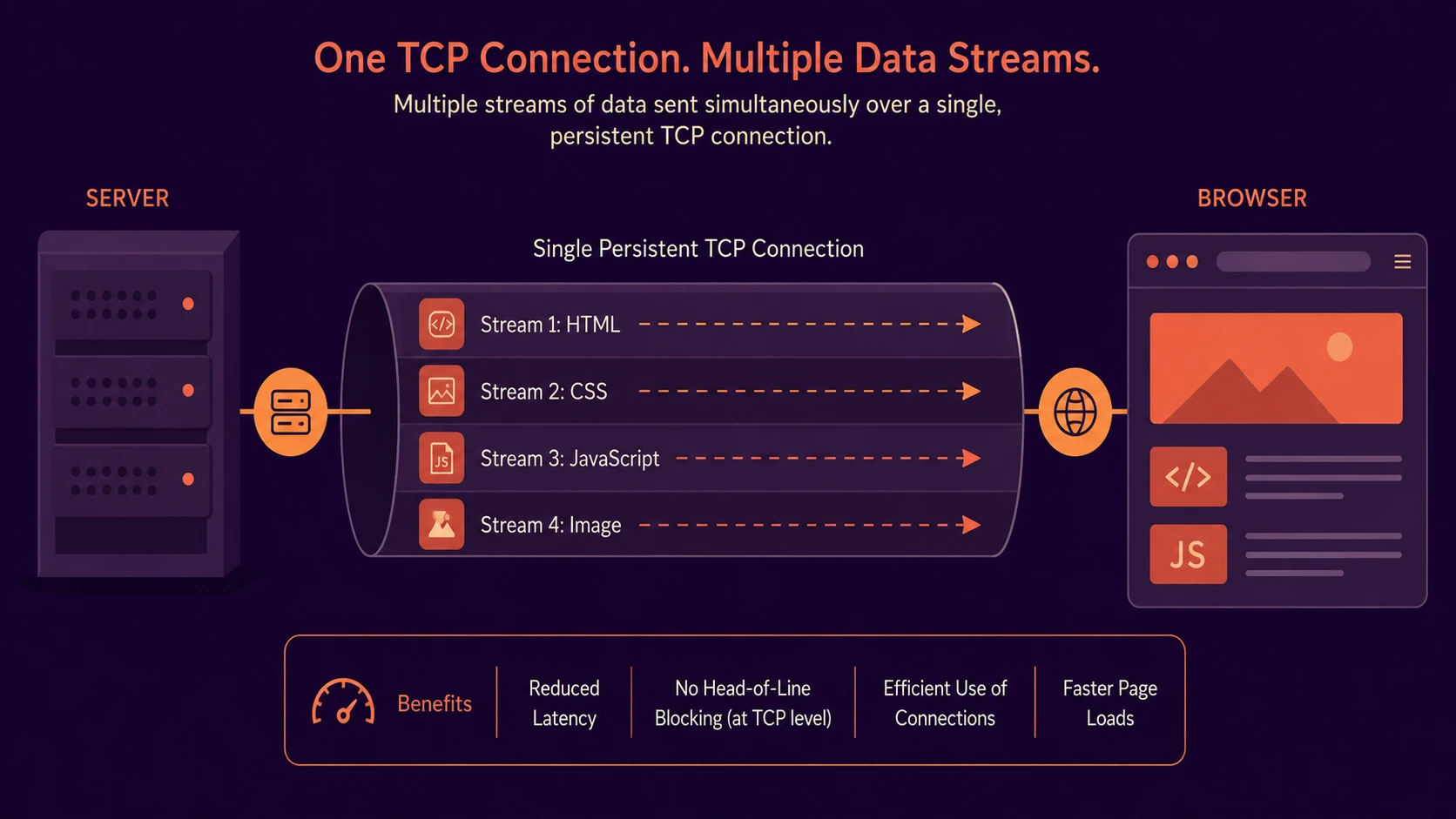
Multiplexing
Multiple requests and responses can share a single TCP connection simultaneously.
This eliminates much of the head-of-line blocking experienced when browsers manage numerous independent connections.
Header Compression
HTTP request headers often contain repeated information.
HTTP/2 introduces header compression to reduce unnecessary network overhead and improve transmission efficiency.
Request Prioritization
Browsers can communicate the relative importance of resources.
Servers may use this information when determining response order for critical application assets.
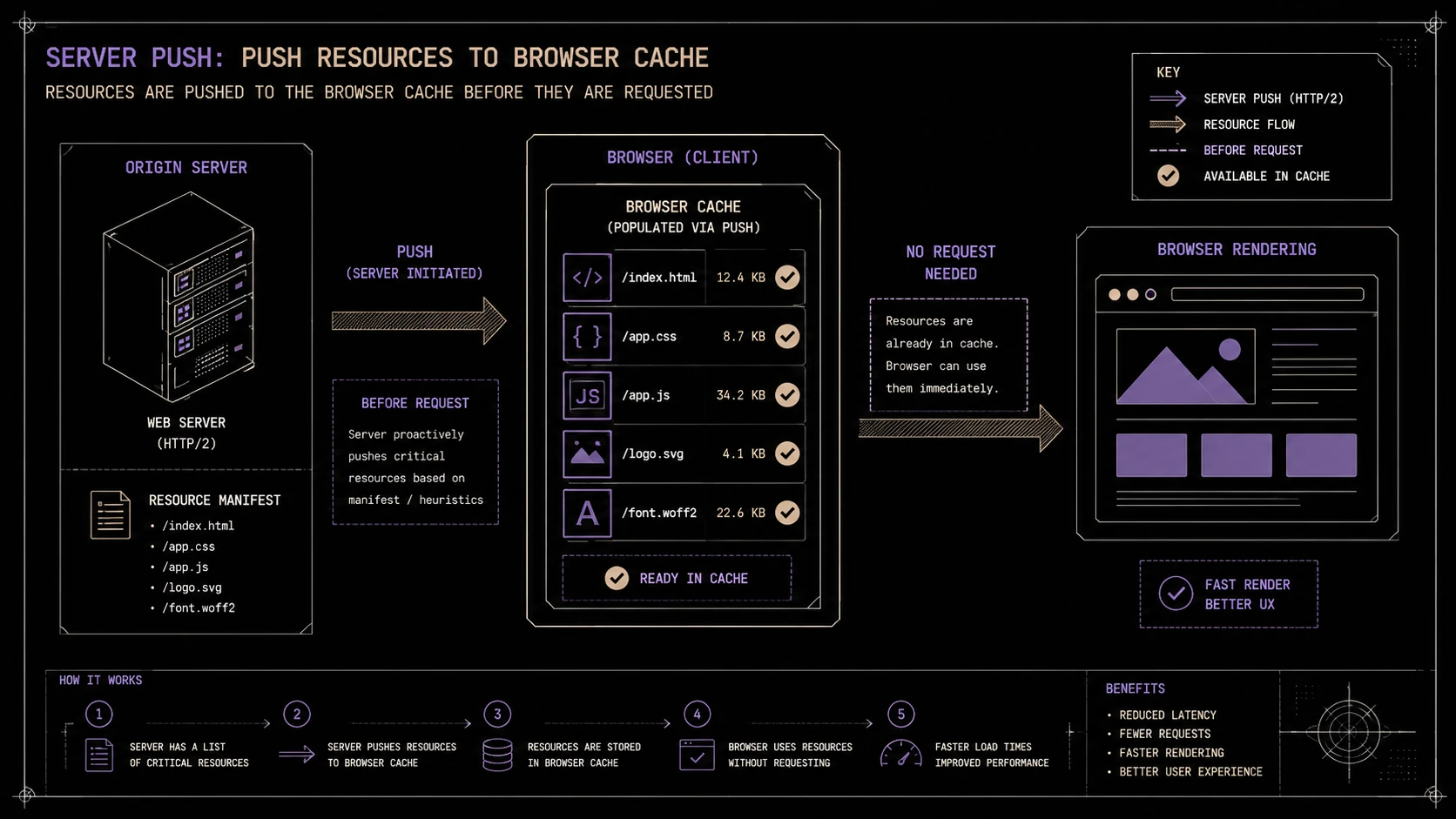
Server Push
Servers can proactively send resources that clients are likely to require before explicit requests occur.
This capability has the potential to reduce application latency for certain workloads.
HTTPS Integration
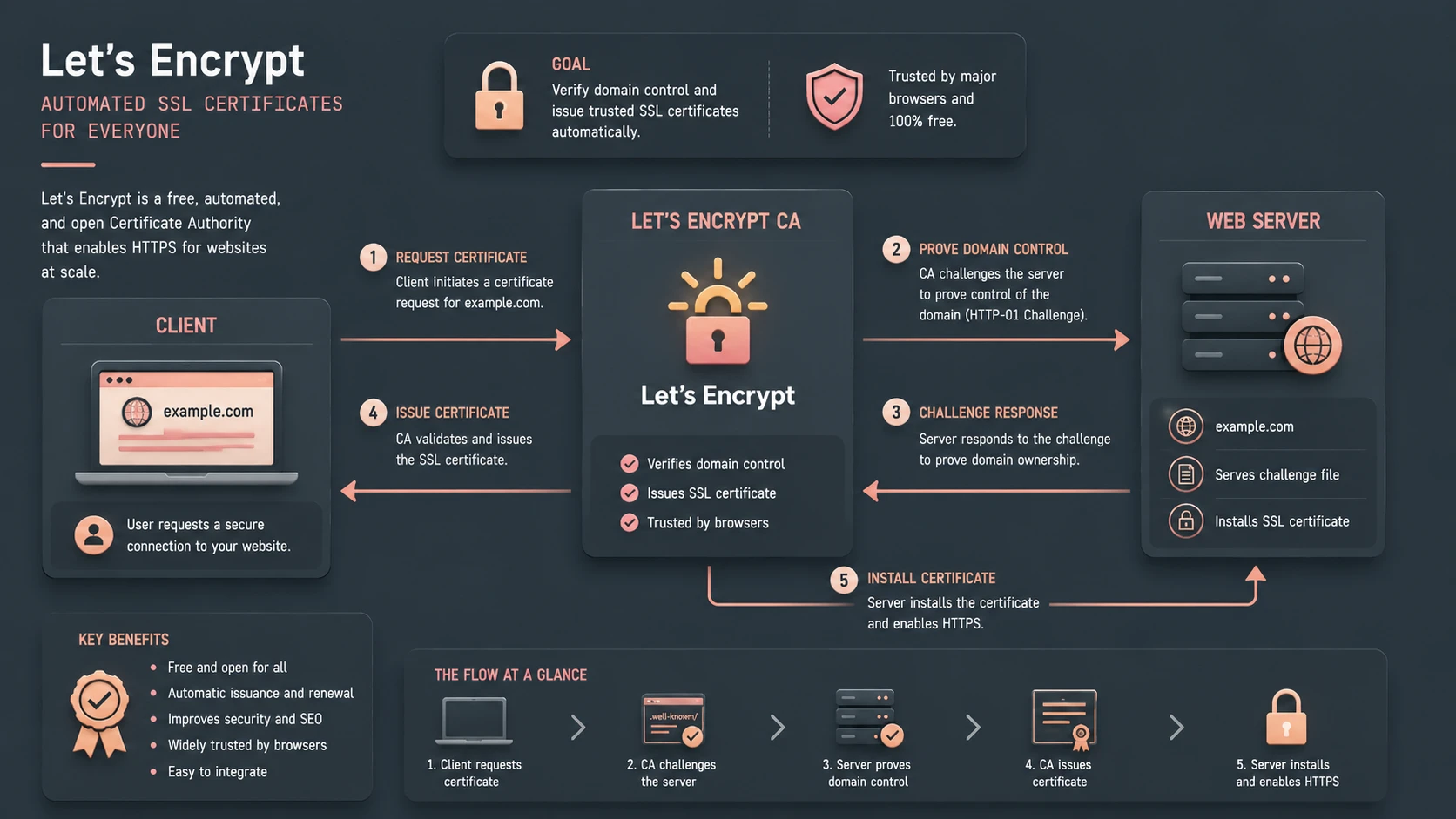
Although the HTTP/2 specification is not inherently limited to encrypted connections, browser implementations commonly negotiate HTTP/2 using TLS.
Consequently, HTTPS configuration becomes a practical requirement for production deployments.
How It Works
A simplified request flow appears below.
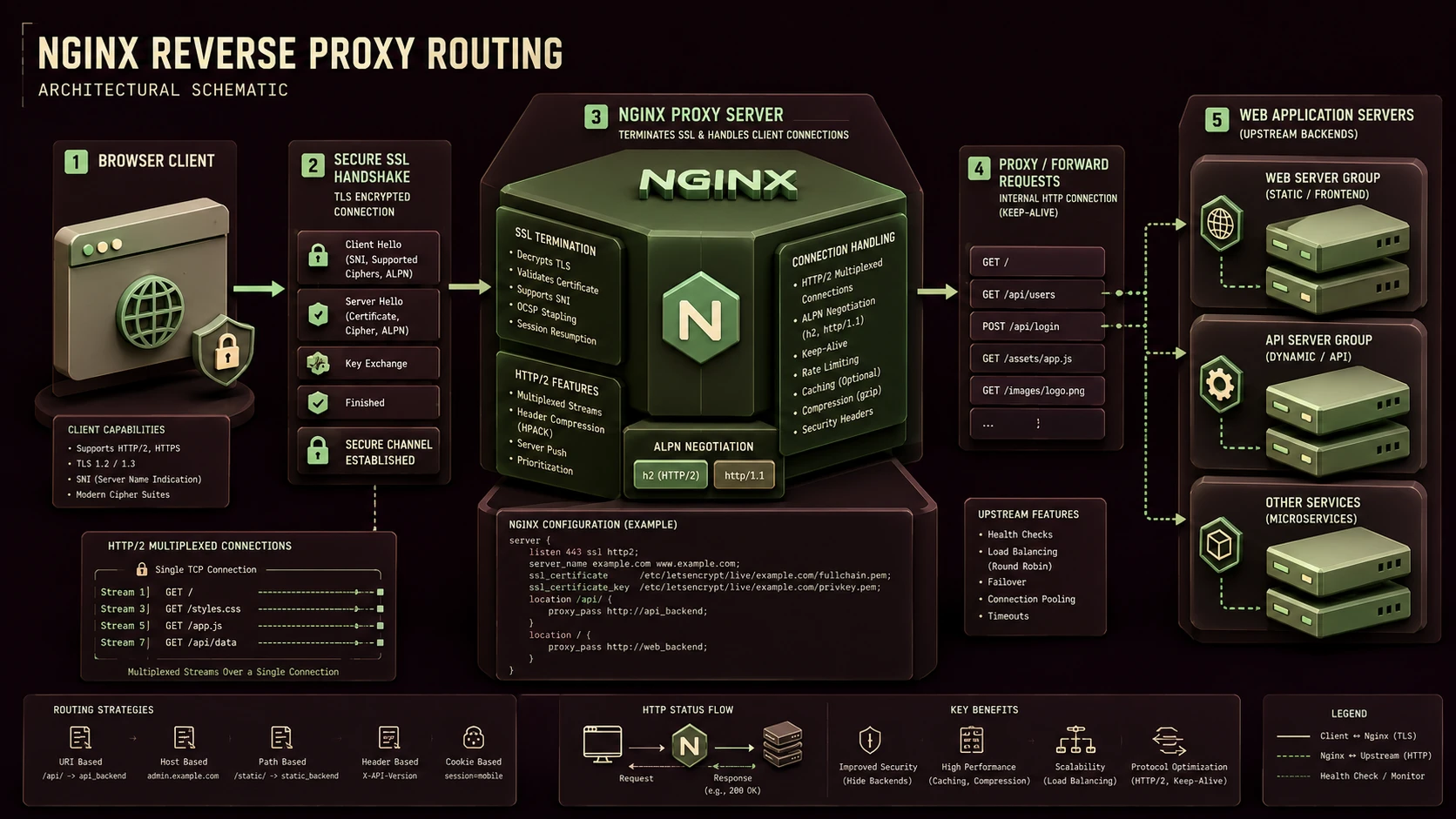
System architecture diagram and conceptual workflow layout for HTTP/2 in Production.
Client Browser
        |
HTTPS Connection
        |
HTTP/2 Negotiation
        |
Nginx Reverse Proxy
        |
Application Server
        |
Business Logic
        |
HTTP/2 Response
Multiple requests may be exchanged concurrently through the same encrypted connection.
Enterprise Use Cases
Enterprise Web Portals
Business applications containing numerous interface components benefit from multiplexed resource delivery.
REST API Gateways
Nginx can expose modern HTTP/2 connections to clients while continuing communication with existing backend services.
E-Commerce Platforms
Product pages containing numerous assets may experience reduced latency.
Content Management Systems
Large numbers of static resources become more efficient to deliver through multiplexed connections.
Software-as-a-Service Platforms
Cloud-hosted applications serving many concurrent users benefit from improved protocol efficiency.
Performance Considerations
HTTP/2 provides several opportunities for improved performance.
Important considerations include:
- ◆Reduced connection overhead.
- ◆Lower latency.
- ◆Improved bandwidth utilization.
- ◆Efficient header transmission.
- ◆Better mobile network performance.
- ◆Faster asset delivery.
Organizations should continue benchmarking representative production workloads because application architecture remains a major factor influencing overall responsiveness.
Security Considerations
HTTP/2 deployments should follow established enterprise security practices.
Recommended controls include:
- ◆TLS configuration.
- ◆Strong certificate management.
- ◆Secure cipher selection.
- ◆Reverse proxy hardening.
- ◆Regular software updates.
- ◆Authentication and authorization.
HTTPS should be treated as an essential component of HTTP/2 production deployments.
Scalability
Nginx and HTTP/2 complement scalable enterprise architectures.
Advantages include:
- ◆Efficient connection management.
- ◆Lower protocol overhead.
- ◆Better reverse proxy utilization.
- ◆Improved resource delivery.
- ◆Reduced client connection requirements.
Combined with load balancing and caching, HTTP/2 supports modern high-volume web infrastructure.
Best Practices
Organizations deploying HTTP/2 should:
- ◆Upgrade Nginx to a version supporting HTTP/2.
- ◆Configure HTTPS before enabling the protocol.
- ◆Optimize TLS certificates and cipher suites.
- ◆Continue compressing application assets.
- ◆Monitor application latency.
- ◆Benchmark production traffic.
- ◆Validate browser compatibility.
Successful deployment depends on infrastructure tuning rather than enabling the protocol alone.
Common Mistakes
| Mistake | Business Impact |
|---|---|
| Assuming HTTP/2 eliminates the need for application optimization | Limited performance improvements |
| Ignoring HTTPS configuration | Inability to use HTTP/2 in major browsers |
| Continuing unnecessary domain sharding | Reduced protocol efficiency |
| Deploying without performance testing | Unexpected production behavior |
| Neglecting reverse proxy monitoring | Operational visibility gaps |
| Using outdated TLS configurations | Increased security risk |
Careful planning ensures organizations realize the benefits of HTTP/2 without introducing unnecessary operational complexity.
Technology Comparison
| Characteristic | HTTP/1.1 | HTTP/2 |
|---|---|---|
| Message Format | Text-based | Binary framing |
| Connection Usage | Multiple parallel connections | Multiplexed streams over fewer connections |
| Header Transmission | Uncompressed | Header compression |
| Resource Prioritization | Limited | Supported |
| Server Push | Not available | Supported |
| Browser Deployment | Mature | Increasing production adoption |
HTTP/2 improves transport efficiency while preserving the familiar HTTP programming model.
Adoption Strategy
Organizations should introduce HTTP/2 using a phased deployment strategy.
- 1.Upgrade Nginx infrastructure.
- 2.Deploy HTTPS across public-facing services.
- 3.Validate browser compatibility.
- 4.Benchmark application performance.
- 5.Optimize reverse proxy configuration.
- 6.Expand deployment following operational monitoring.
This incremental approach minimizes operational risk while allowing teams to evaluate measurable performance improvements.
Limitations
As of December 2015, HTTP/2 adoption continues expanding.
Organizations should recognize several considerations.
- ◆Browser implementations continue maturing.
- ◆Backend application optimization remains important.
- ◆Performance improvements vary by workload.
- ◆Operational monitoring remains essential.
- ◆Existing deployment practices should be reviewed to avoid techniques designed solely for HTTP/1.1 limitations.
These considerations should guide enterprise deployment planning.
Looking Ahead
From the perspective of December 2015, HTTP/2 represents one of the most important infrastructure improvements for modern web applications. By introducing multiplexing, binary framing, header compression, and more efficient resource delivery, the protocol addresses many long-standing inefficiencies associated with HTTP/1.1 while preserving compatibility with existing web applications.
For organizations already using Nginx as a reverse proxy, adopting HTTP/2 primarily involves infrastructure modernization rather than application redesign. As browser support continues expanding and production experience grows, HTTP/2 is well positioned to become the preferred transport protocol for enterprise web applications seeking improved responsiveness, stronger security through HTTPS, and more efficient network utilization.