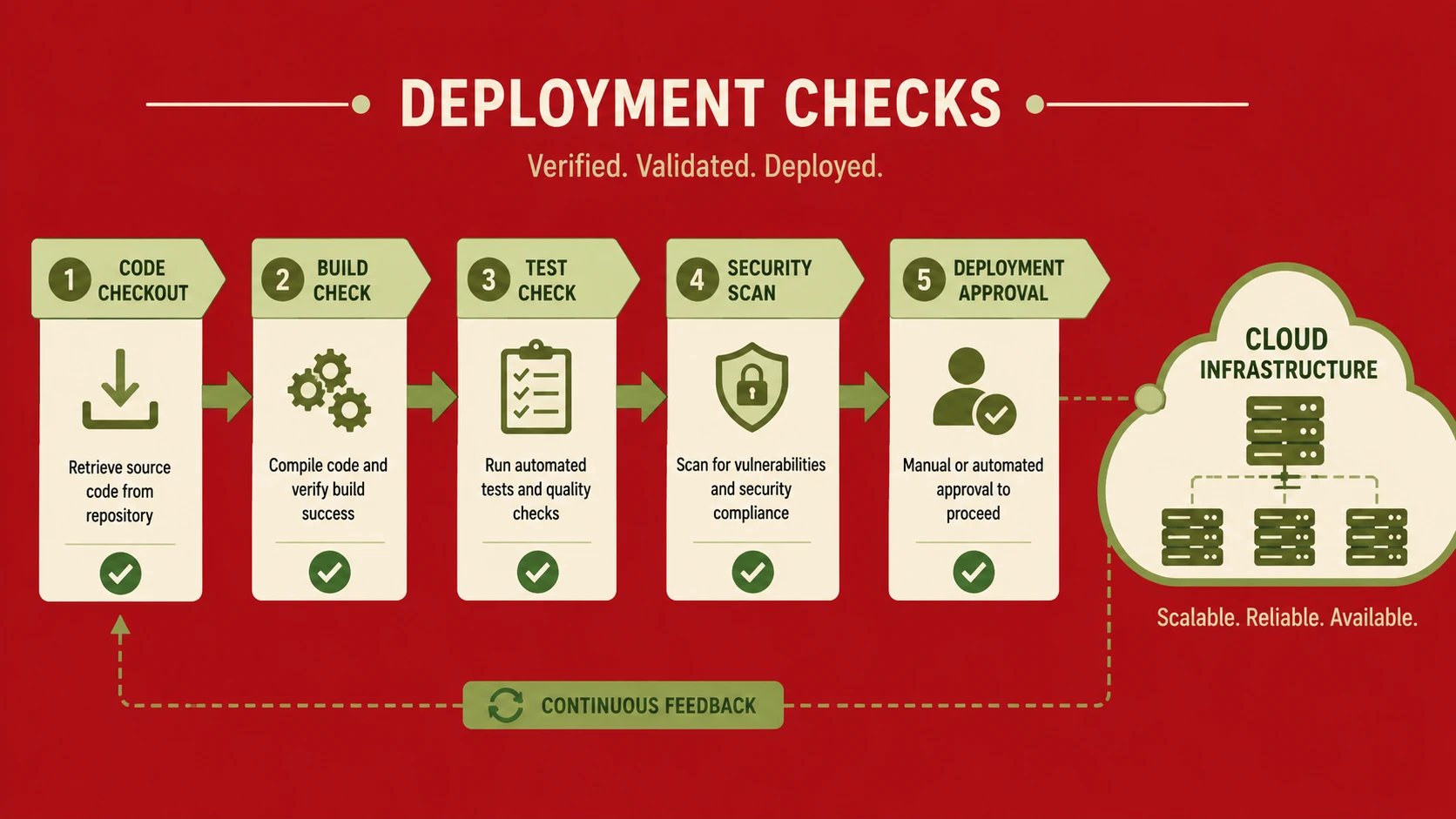
Introduction
Software delivery has traditionally been constrained by lengthy release cycles involving manual testing, coordinated deployment windows, and extensive operational planning. While Agile development has helped organizations shorten development iterations, many enterprises still deploy software only after several completed sprints due to operational complexity and deployment risk.
Continuous Delivery (CD) is emerging as a practical engineering discipline that extends Agile principles beyond development into deployment. Rather than treating releases as infrequent events, Continuous Delivery emphasizes building software that remains in a deployable state throughout development.
From the perspective of November 2012, Continuous Delivery is becoming a strategic capability for organizations seeking faster delivery without sacrificing quality, reliability, or operational stability.
Industry Background
Agile methodologies have significantly improved software development by encouraging iterative planning, customer feedback, and incremental feature delivery. However, many organizations continue to rely on traditional release management processes that introduce delays after development is complete.
Common characteristics of conventional release cycles include:
- ◆Manual deployment procedures.
- ◆Environment inconsistencies.
- ◆Lengthy testing phases.
- ◆Weekend deployment windows.
- ◆Extensive operational coordination.
- ◆Large batches of application changes.
As web applications and cloud platforms become more prevalent, engineering teams are beginning to automate these activities through Continuous Delivery pipelines.
The Business Problem
Large release cycles introduce numerous business and operational risks.
Organizations commonly experience:
- ◆Delayed feature delivery.
- ◆High deployment risk.
- ◆Difficult rollback procedures.
- ◆Production configuration drift.
- ◆Long stabilization periods.
- ◆Increased operational costs.
- ◆Limited customer feedback.
Releasing hundreds of changes simultaneously makes diagnosing failures considerably more difficult than deploying smaller, incremental updates.
Continuous Delivery seeks to minimize these risks through automation and repeatable deployment processes.
Understanding the Technology
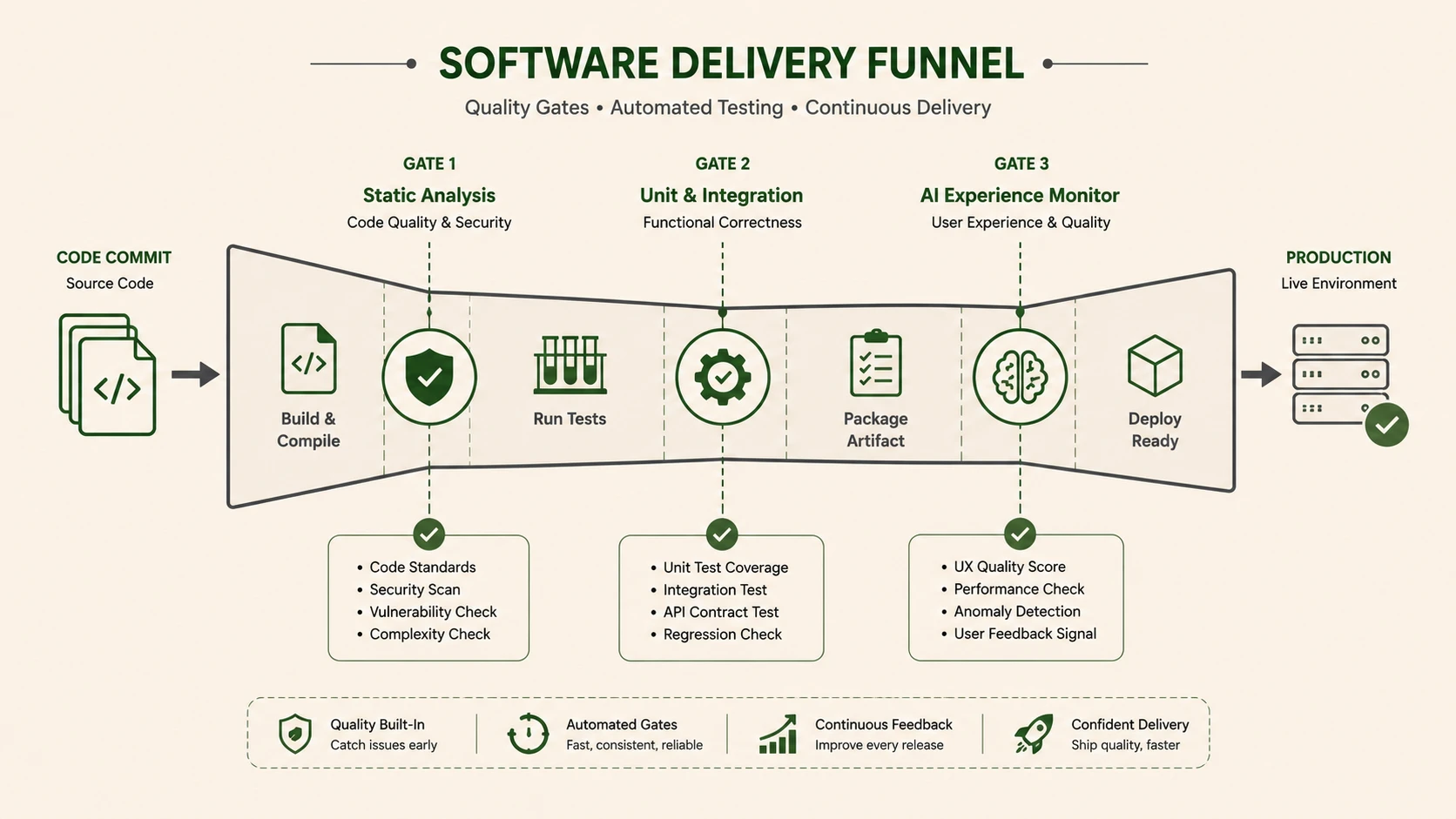
Continuous Delivery combines automated build systems, testing frameworks, deployment automation, and configuration management into an integrated software delivery pipeline.
The objective is straightforward: every successful build should be capable of being deployed into production when the business chooses.
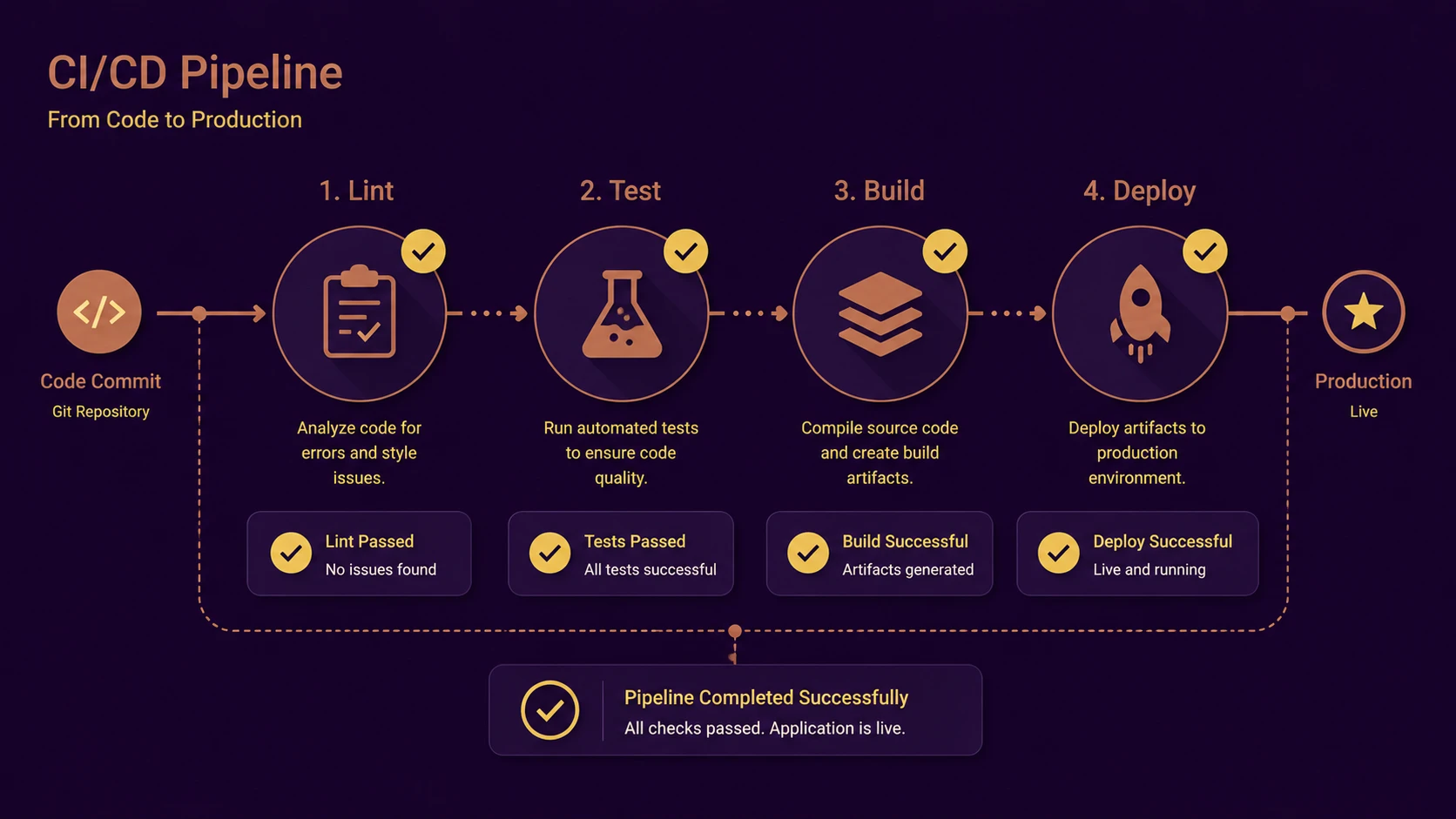
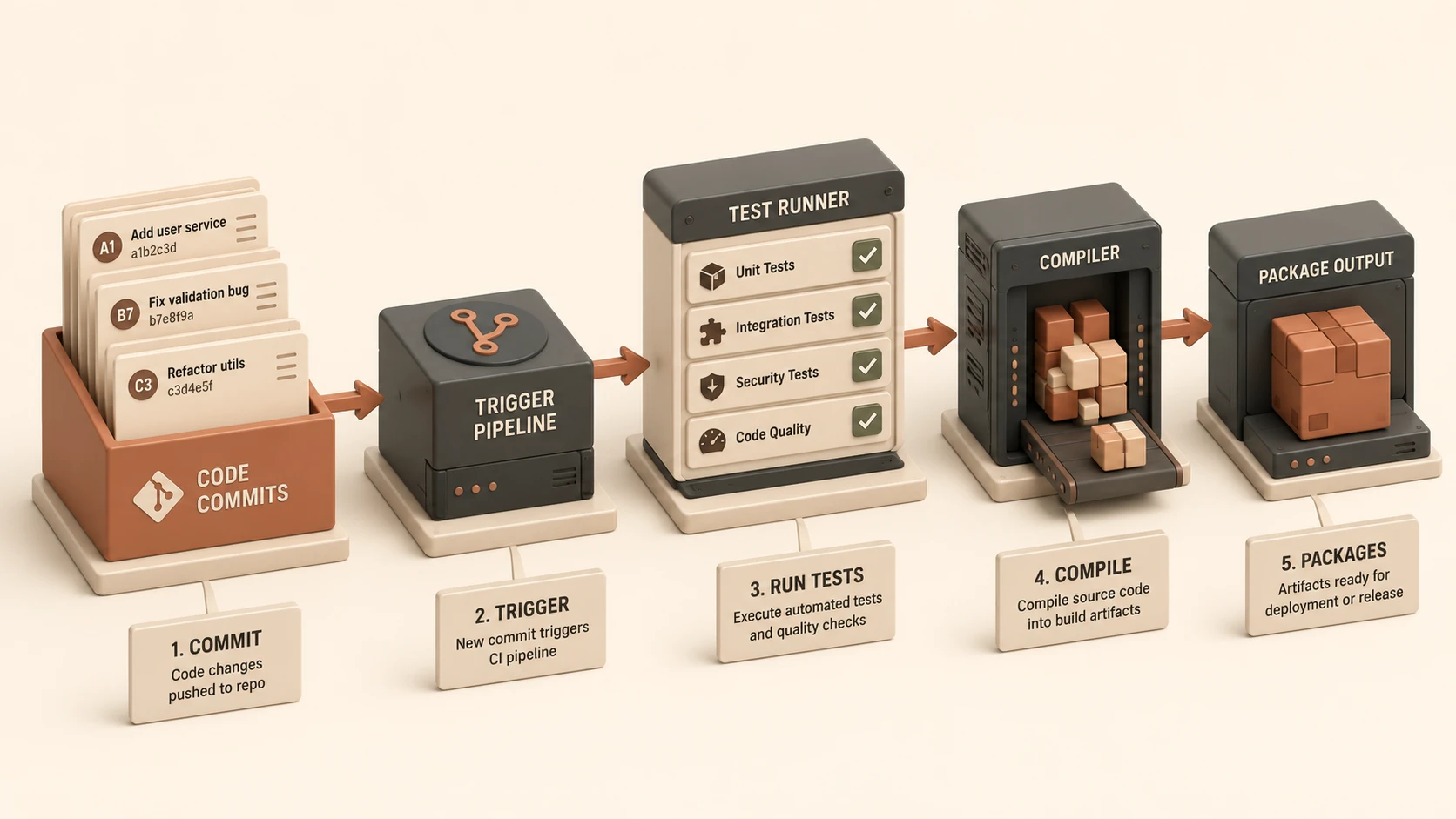
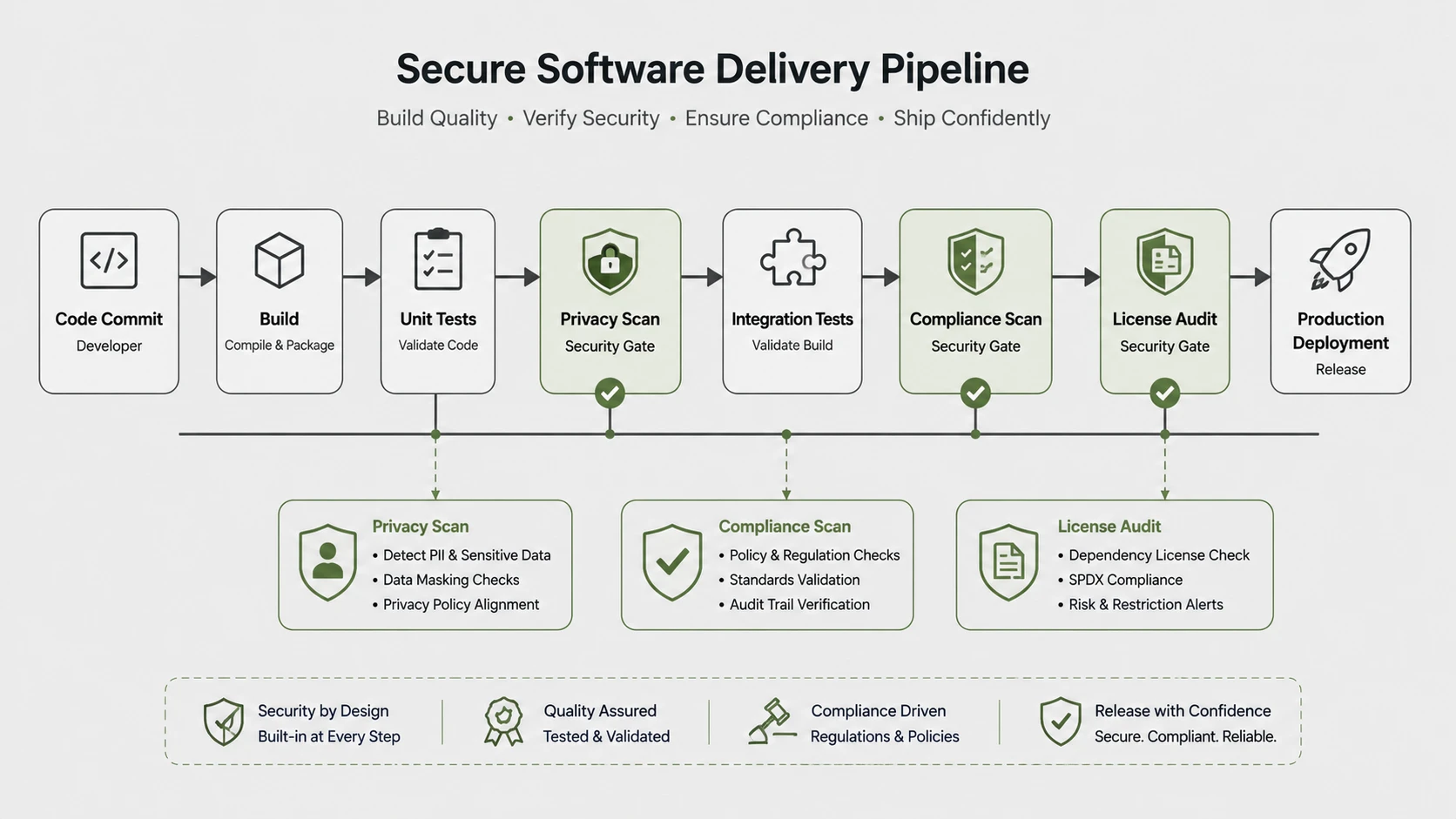
Typical pipeline stages include:
- ◆Source control.
- ◆Automated builds.
- ◆Unit testing.
- ◆Integration testing.
- ◆Packaging.
- ◆Deployment automation.
- ◆Acceptance testing.
- ◆Production approval.
Automation reduces manual intervention while improving consistency across environments.
Core Architecture
A typical Continuous Delivery pipeline consists of several interconnected stages.
| Component | Responsibility |
|---|---|
| Version Control | Source code management |
| Build Server | Automated compilation |
| Test Framework | Quality verification |
| Artifact Repository | Package storage |
| Deployment Automation | Environment deployment |
| Production Environment | Live application hosting |
| Monitoring | Operational validation |
Each stage validates software quality before allowing progression through the delivery pipeline.
Key Features
Automated Builds
Every code change automatically triggers compilation and validation, reducing integration problems.
Continuous Testing
Automated unit and integration tests identify defects early in the development lifecycle.
Deployment Automation
Applications are deployed using repeatable scripts instead of manual operational procedures.
Consistent Environments
Development, testing, staging, and production environments become increasingly standardized.
Small Incremental Releases
Frequent deployments reduce the operational risk associated with large release packages.
Rapid Feedback
Developers receive immediate notification when builds or tests fail, allowing faster issue resolution.
How It Works
A simplified Continuous Delivery workflow appears as follows.
Developer
      |
Source Control Commit
      |
Automated Build
      |
Unit Tests
      |
Integration Tests
      |
Package Creation
      |
Deployment Automation
      |
Staging Environment
      |
Production Approval
      |
Production Deployment
Each pipeline stage validates software before progressing to the next phase.
Enterprise Use Cases
Continuous Delivery supports numerous enterprise software scenarios.
Web Applications
Customer-facing applications benefit from frequent feature releases with reduced downtime.
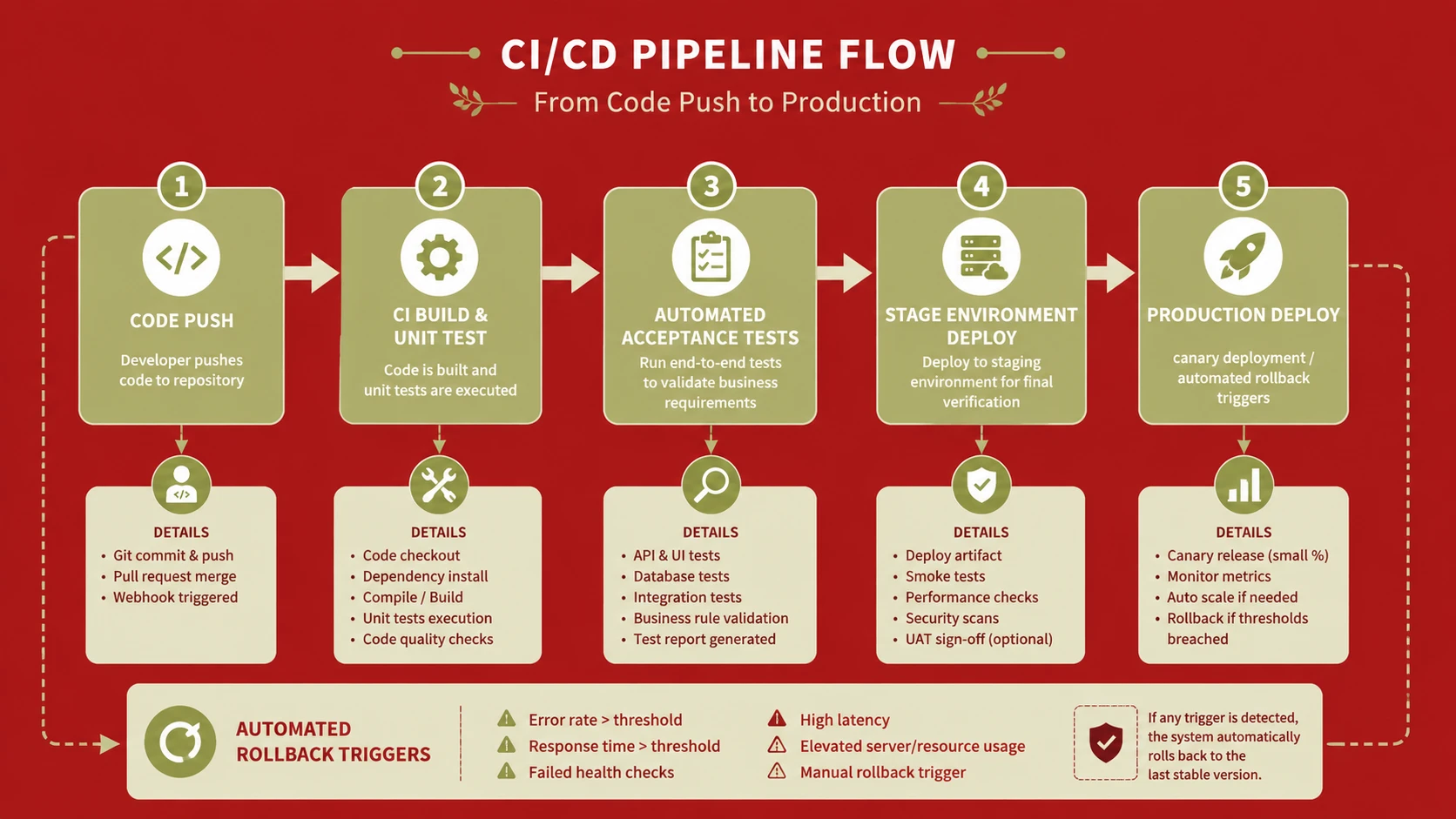
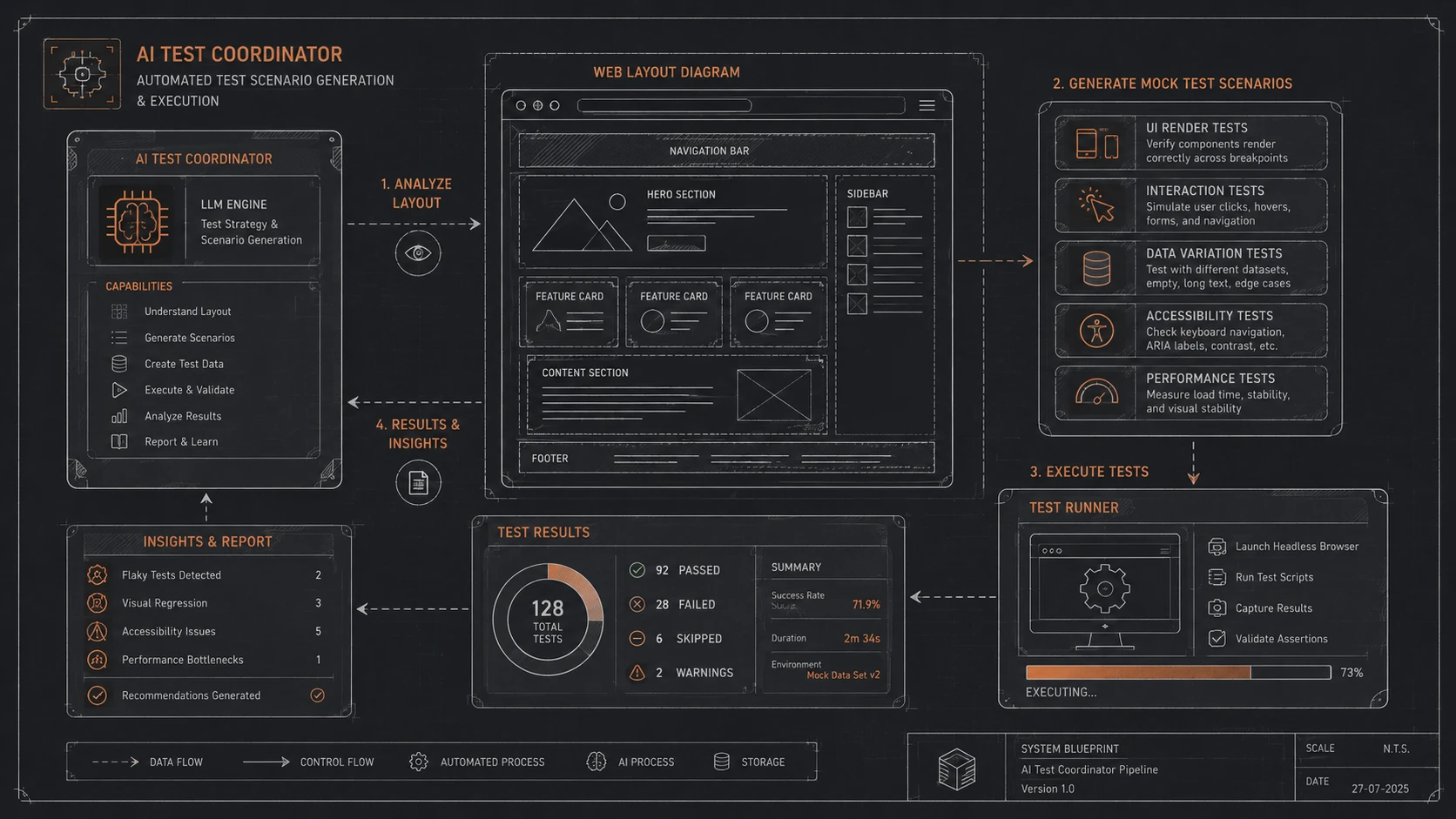
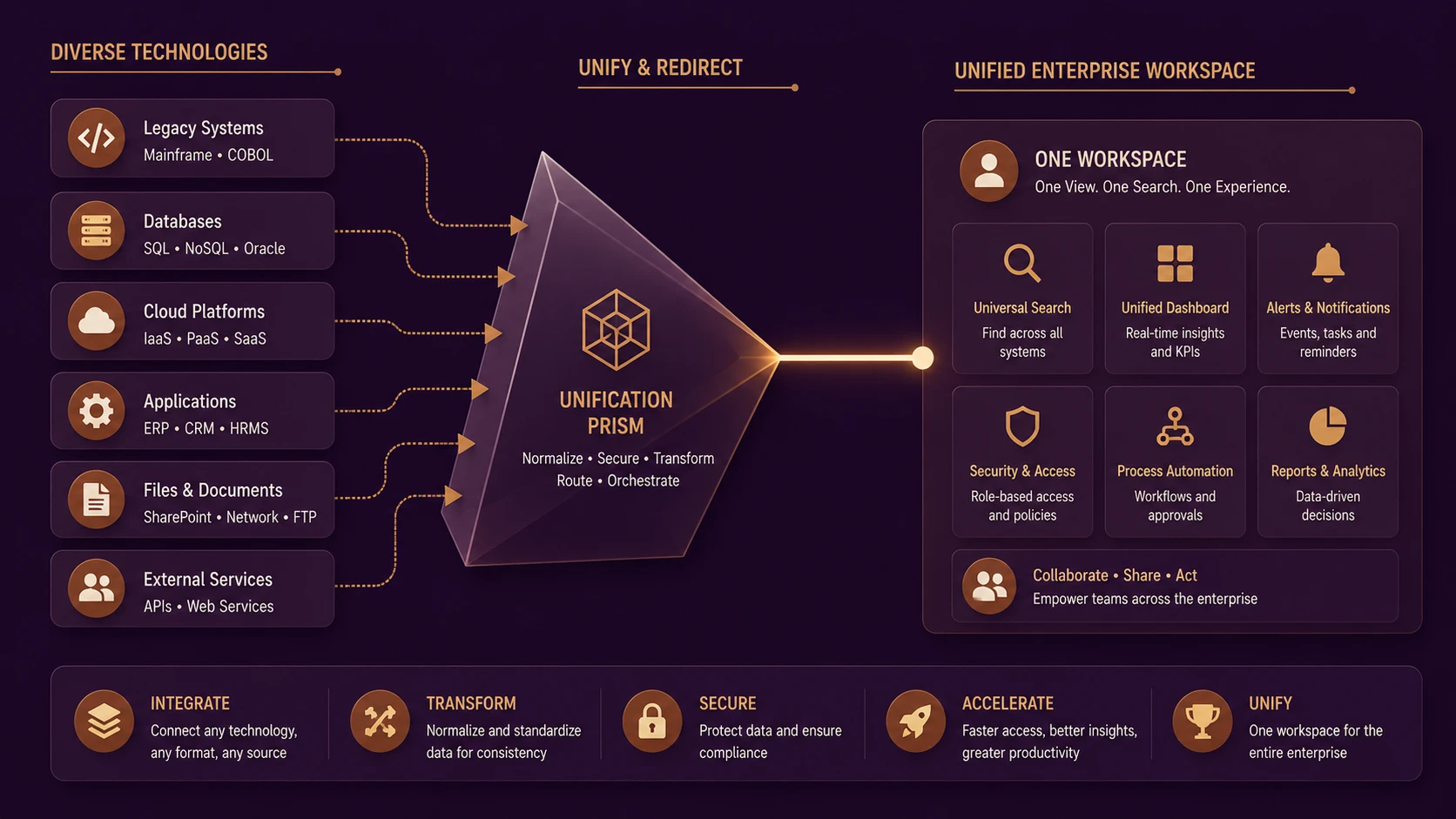
System architecture diagram and conceptual workflow layout for Continuous Delivery.
Enterprise Portals
Internal business applications can receive incremental improvements without lengthy release schedules.
SaaS Platforms
Hosted software products benefit from streamlined deployment automation and operational consistency.
API Services
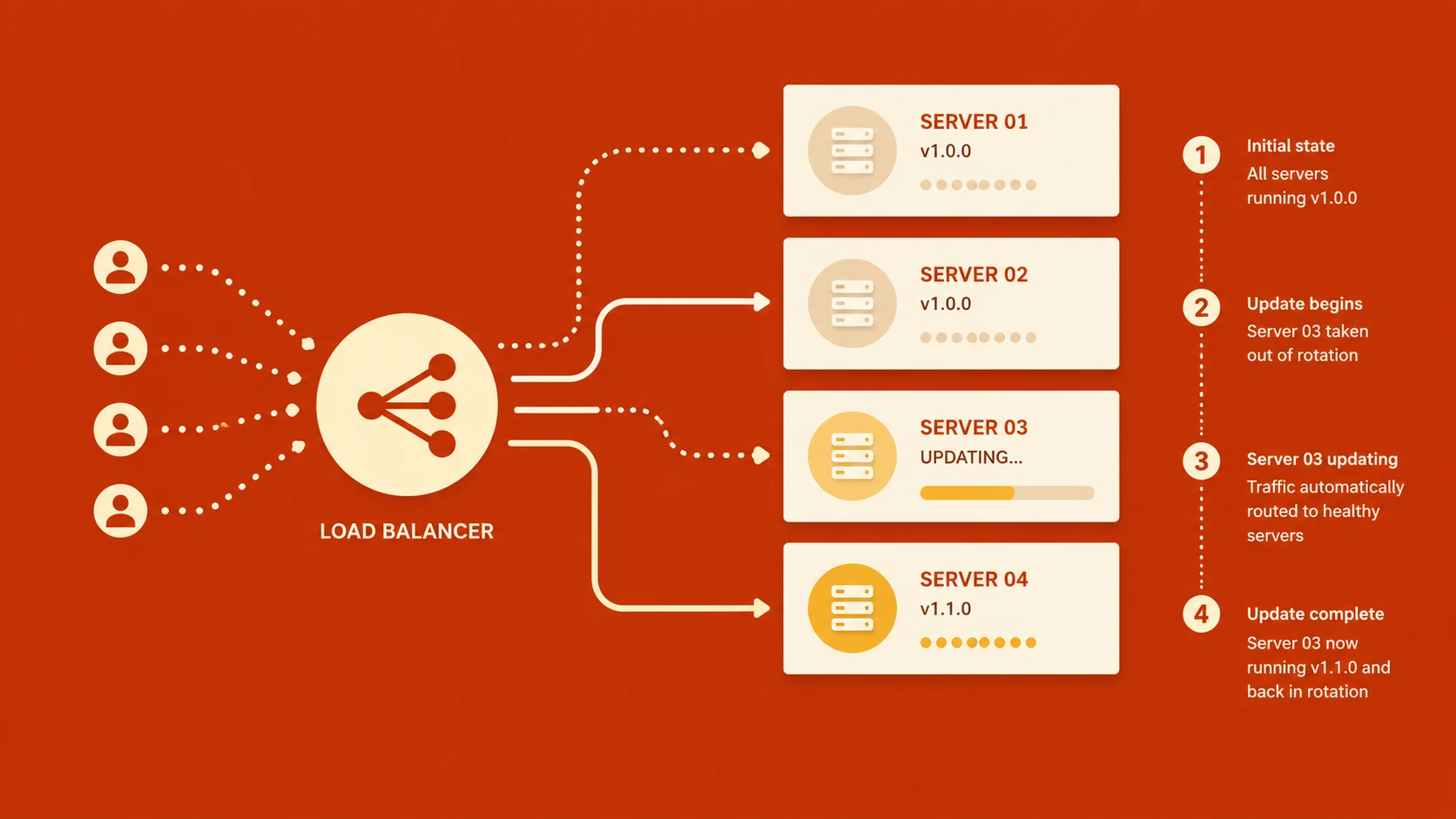
Service-oriented architectures can evolve through controlled, incremental deployments.
Multi-Team Development
Automation reduces integration challenges across multiple engineering teams.
Performance Considerations
Continuous Delivery pipelines should be optimized for both speed and reliability.
Important considerations include:
- ◆Build execution time.
- ◆Automated test duration.
- ◆Deployment efficiency.
- ◆Environment provisioning.
- ◆Artifact management.
Long-running pipelines reduce developer productivity and delay feedback, making pipeline optimization an important engineering objective.
Security Considerations
Automation should improve security rather than bypass established operational controls.
Recommended practices include:
- ◆Secure source repositories.
- ◆Role-based deployment permissions.
- ◆Encrypted credentials.
- ◆Audit logging.
- ◆Controlled production approvals.
- ◆Automated security validation where practical.
Deployment automation should operate under well-defined governance processes appropriate for enterprise environments.
Scalability
Continuous Delivery scales effectively when supported by modular architecture and standardized deployment processes.
Scalable characteristics include:
- ◆Parallel build execution.
- ◆Automated environment provisioning.
- ◆Reusable deployment scripts.
- ◆Standardized application packaging.
- ◆Consistent configuration management.
As organizations grow, standardized automation becomes increasingly valuable.
Best Practices
Organizations implementing Continuous Delivery should:
- ◆Keep source code under version control.
- ◆Automate builds and testing.
- ◆Maintain production-like staging environments.
- ◆Deploy frequently using small changes.
- ◆Monitor deployments continuously.
- ◆Automate rollback procedures where possible.
- ◆Maintain repeatable deployment scripts.
These practices improve release confidence while reducing operational complexity.
Common Mistakes
| Mistake | Business Impact |
|---|---|
| Large release batches | Increased deployment risk |
| Manual deployment processes | Operational inconsistency |
| Slow automated tests | Delayed developer feedback |
| Environment differences | Production failures |
| Ignoring monitoring | Delayed issue detection |
| Infrequent integration | Complex merge conflicts |
Avoiding these issues enables organizations to build reliable software delivery pipelines.
Technology Comparison
| Characteristic | Traditional Releases | Continuous Delivery |
|---|---|---|
| Release Frequency | Every few weeks or months | Potentially daily or on demand |
| Deployment Process | Mostly manual | Highly automated |
| Risk Per Release | High | Lower through smaller changes |
| Testing | Primarily before release | Continuous throughout development |
| Rollback Complexity | Higher | Simplified through smaller deployments |
| Feedback Cycle | Slow | Rapid |
Continuous Delivery emphasizes release readiness at all times rather than periodic deployment events.
Adoption Strategy
Organizations should adopt Continuous Delivery incrementally.
Recommended roadmap:
- 1.Establish centralized version control.
- 2.Automate application builds.
- 3.Introduce automated testing.
- 4.Standardize deployment environments.
- 5.Automate deployment procedures.
- 6.Measure deployment success and continuously refine the pipeline.
A phased implementation minimizes organizational disruption while improving engineering maturity.
Limitations
Continuous Delivery is not solely a technology initiative.
Organizations should recognize several challenges.
- ◆Cultural change is required.
- ◆Legacy applications may require significant modernization.
- ◆Test automation demands sustained investment.
- ◆Deployment automation requires operational discipline.
- ◆Cross-functional collaboration between development and operations becomes increasingly important.
Success depends as much on engineering practices as on tooling.
Looking Ahead
From the perspective of November 2012, Continuous Delivery is emerging as one of the most significant advances in enterprise software engineering. By combining automated testing, deployment automation, and repeatable operational processes, organizations can shorten release cycles while reducing deployment risk.
As Agile development continues to mature and cloud infrastructure becomes more common, enterprises are likely to invest further in automated delivery pipelines that enable faster, safer, and more predictable software releases. Organizations that establish strong automation practices today will be well positioned to respond more effectively to changing business requirements while maintaining operational stability.