Enterprise software development has evolved dramatically over the past decade. Organizations have invested heavily in agile methodologies, automated testing, virtualization, and continuous integration to improve software quality and accelerate delivery. Yet despite these advances, one significant challenge continues to affect enterprise IT: the disconnect between software development teams and IT operations.
Development organizations are measured by their ability to deliver new features quickly, while operations teams are responsible for maintaining stability, security, and availability. These competing priorities often create organizational friction, resulting in delayed deployments, configuration inconsistencies, communication breakdowns, and production failures.
A new movement known as DevOps is beginning to address these challenges. Although still in its early stages during 2010, DevOps is attracting considerable attention among enterprise architects, software engineers, system administrators, and IT leaders seeking more effective ways to deliver reliable software.
Rather than introducing another technology platform, DevOps represents a cultural and operational shift that encourages collaboration between software engineering and IT operations throughout the application lifecycle.
What Is DevOps?
DevOps combines the principles of software development and IT operations into a collaborative approach for delivering, deploying, and maintaining enterprise applications.
The objective is simple:
- ◆Improve collaboration
- ◆Reduce deployment risk
- ◆Increase delivery speed
- ◆Enhance software quality
- ◆Improve operational reliability
- ◆Eliminate unnecessary organizational barriers
Instead of treating development and operations as separate departments with conflicting objectives, DevOps promotes shared ownership of application success.
Why Traditional Development Models Create Challenges
Historically, enterprise software projects have followed a sequential delivery process.
A simplified workflow often resembles:
| Phase | Primary Team |
|---|---|
| Requirements | Business Analysts |
| Design | Architects |
| Development | Software Engineers |
| Testing | QA Teams |
| Deployment | Operations |
| Production Support | Operations |
While this model provides clear responsibilities, it frequently results in delayed feedback and limited collaboration.
Common issues include:
- ◆Deployment delays
- ◆Environment inconsistencies
- ◆Last-minute configuration changes
- ◆Lengthy release cycles
- ◆Communication gaps
- ◆Production defects discovered after deployment
DevOps aims to reduce these inefficiencies by encouraging continuous collaboration throughout the lifecycle.
The Influence of Agile Development
The growing adoption of Agile software development has accelerated interest in DevOps.
Agile methodologies encourage:
- ◆Short development iterations
- ◆Frequent software delivery
- ◆Customer feedback
- ◆Continuous improvement
However, many organizations discovered that rapid development alone could not accelerate business value if deployment processes remained slow or heavily manual.
DevOps extends Agile thinking beyond software development by including operational teams as active participants in the delivery process.
Core Principles of DevOps
Although the DevOps movement continues to evolve, several common principles are becoming widely recognized.
Collaboration
Development and operations teams should communicate continuously rather than only during deployment.
Shared planning reduces misunderstandings and improves deployment quality.
Automation
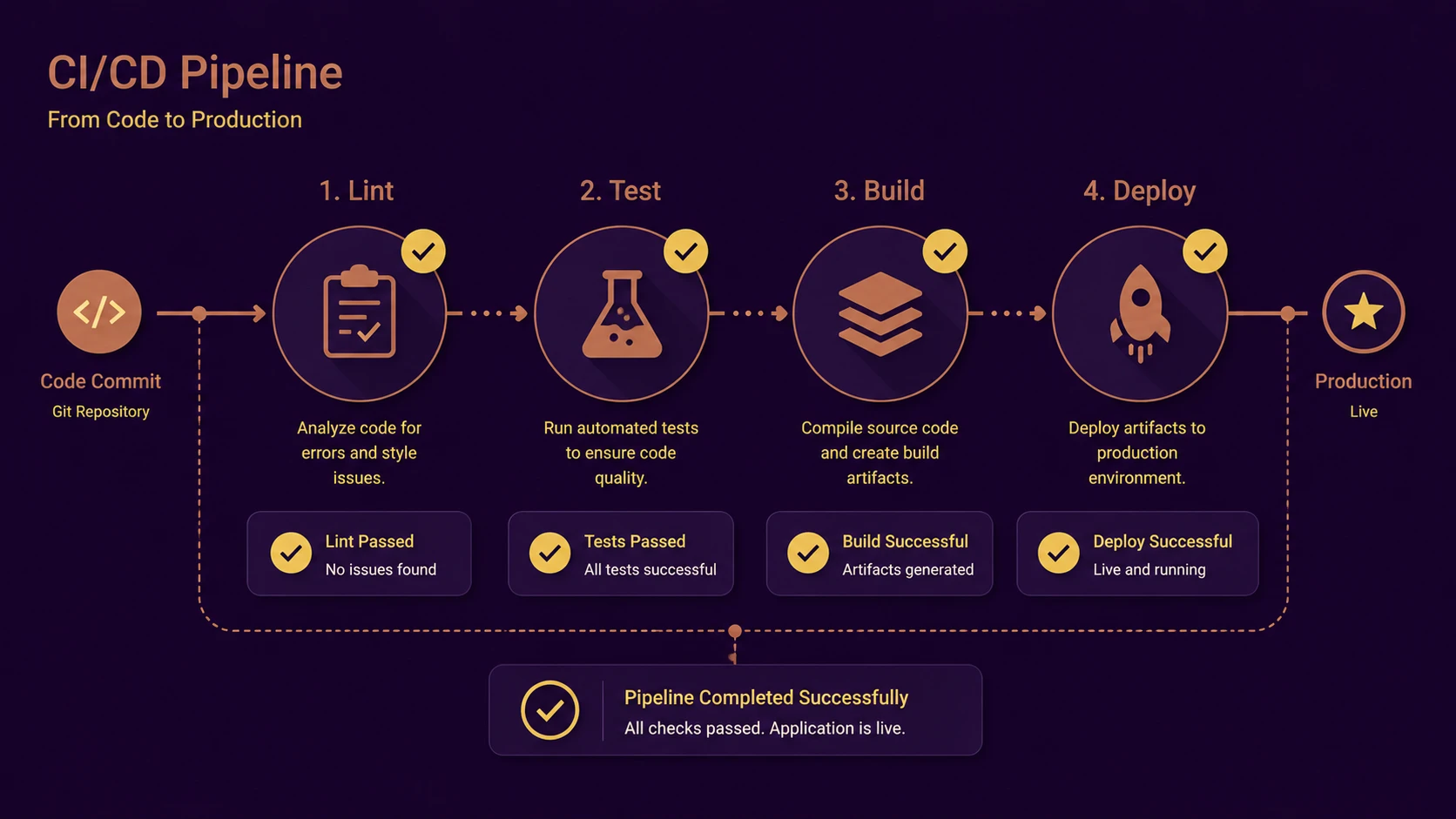
# Basic DevOps CI/CD deployment shell script trigger
#!/usr/bin/env bash
set -eo pipefail

echo "--- Initiating Automated Build Pipeline ---"
npm run lint
npm run test -- --coverage

echo "--- Packaging Docker Container ---"
IMAGE_TAG="shivamitcs/app:${GITHUB_SHA::8}"
docker build -t "$IMAGE_TAG" .

echo "--- Deploying Container Image to Production ---"
docker push "$IMAGE_TAG"
kubectl set image deployment/app-deployment web="$IMAGE_TAG"
Manual deployment activities often introduce inconsistency and human error.
Automation can improve:
- ◆Build processes
- ◆Testing
- ◆Deployment procedures
- ◆Configuration management
- ◆Environment provisioning
Automation also improves repeatability across development, testing, staging, and production environments.
Shared Responsibility
Rather than assigning blame after production incidents, DevOps encourages teams to share responsibility for application success.
Developers gain greater awareness of operational concerns, while operations teams participate earlier in application planning.
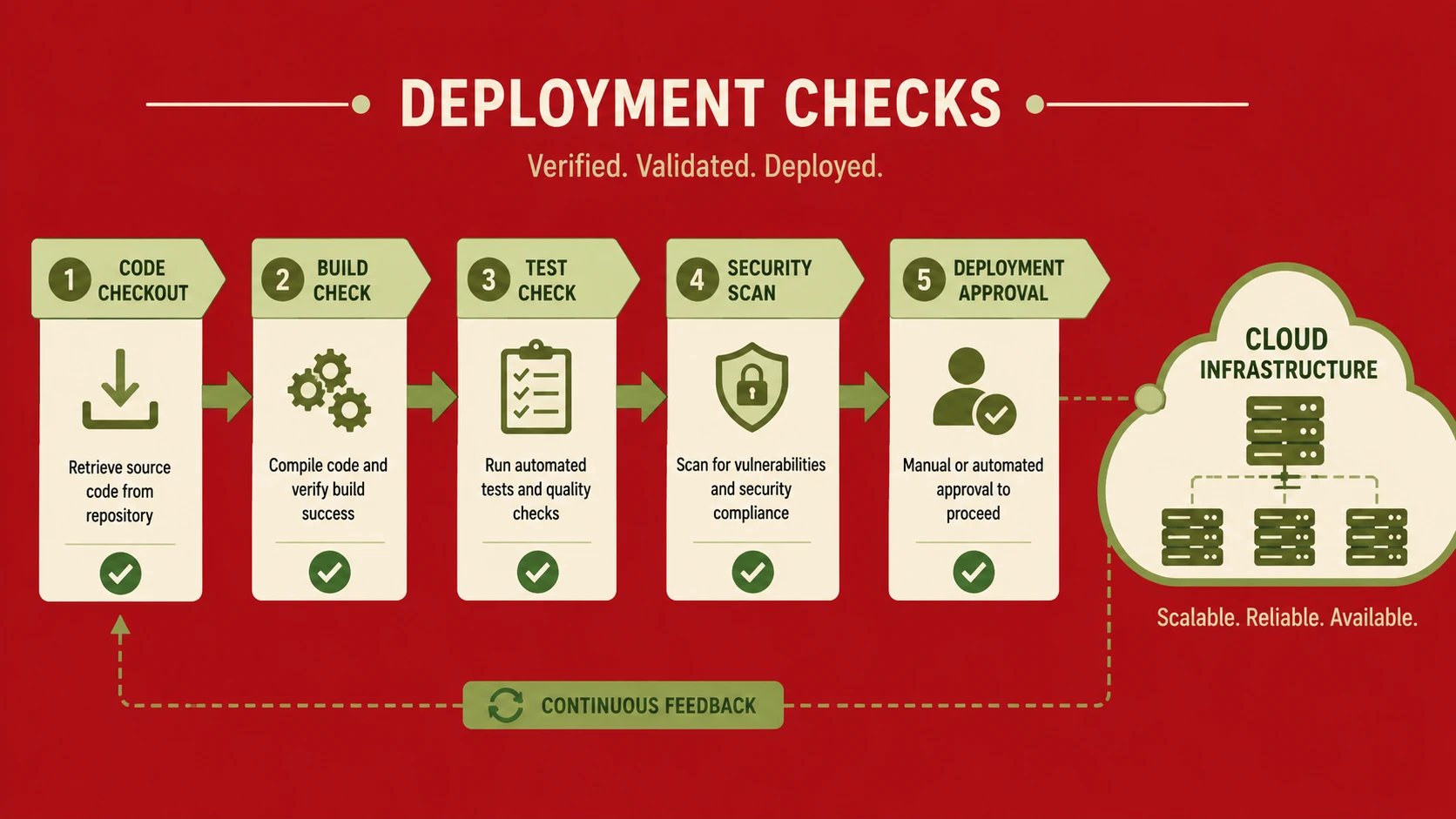
Continuous Feedback
Rapid feedback enables organizations to identify issues before they become costly production problems.
Feedback should include:
- ◆Build results
- ◆Test outcomes
- ◆Deployment observations
- ◆Operational metrics
- ◆Customer issues
Continuous Integration as a Foundation
Continuous Integration (CI) has become an important enabling practice for DevOps.
Development teams integrate code frequently into a shared repository where automated builds verify application integrity.
Benefits include:
- ◆Earlier defect detection
- ◆Reduced integration problems
- ◆Improved code quality
- ◆Faster feedback
Continuous Integration does not replace deployment processes but provides a strong foundation for more reliable software delivery.
Virtualization Supports Consistency
Virtualization technologies have become increasingly important in enterprise data centers.
By standardizing server environments, virtualization reduces configuration differences between development, testing, and production.
Advantages include:
- ◆Faster environment provisioning
- ◆Better hardware utilization
- ◆Simplified disaster recovery
- ◆Improved testing consistency
Organizations adopting virtualization often find it easier to support collaborative operational practices.
Enterprise Benefits of DevOps
While still emerging, DevOps offers several potential benefits for enterprise organizations.
Faster Software Delivery
Improved collaboration reduces delays associated with deployment approvals and operational handoffs.
Higher Software Quality
Early operational involvement helps identify deployment issues before production.
Improved Reliability
Standardized deployment procedures reduce configuration errors and improve production stability.
Better Business Alignment
Faster delivery enables organizations to respond more effectively to changing business requirements.
Increased Operational Efficiency
Automation reduces repetitive manual work, allowing operations teams to focus on higher-value activities.
Enterprise Architecture Considerations
DevOps should complement existing enterprise architecture rather than replace established governance.
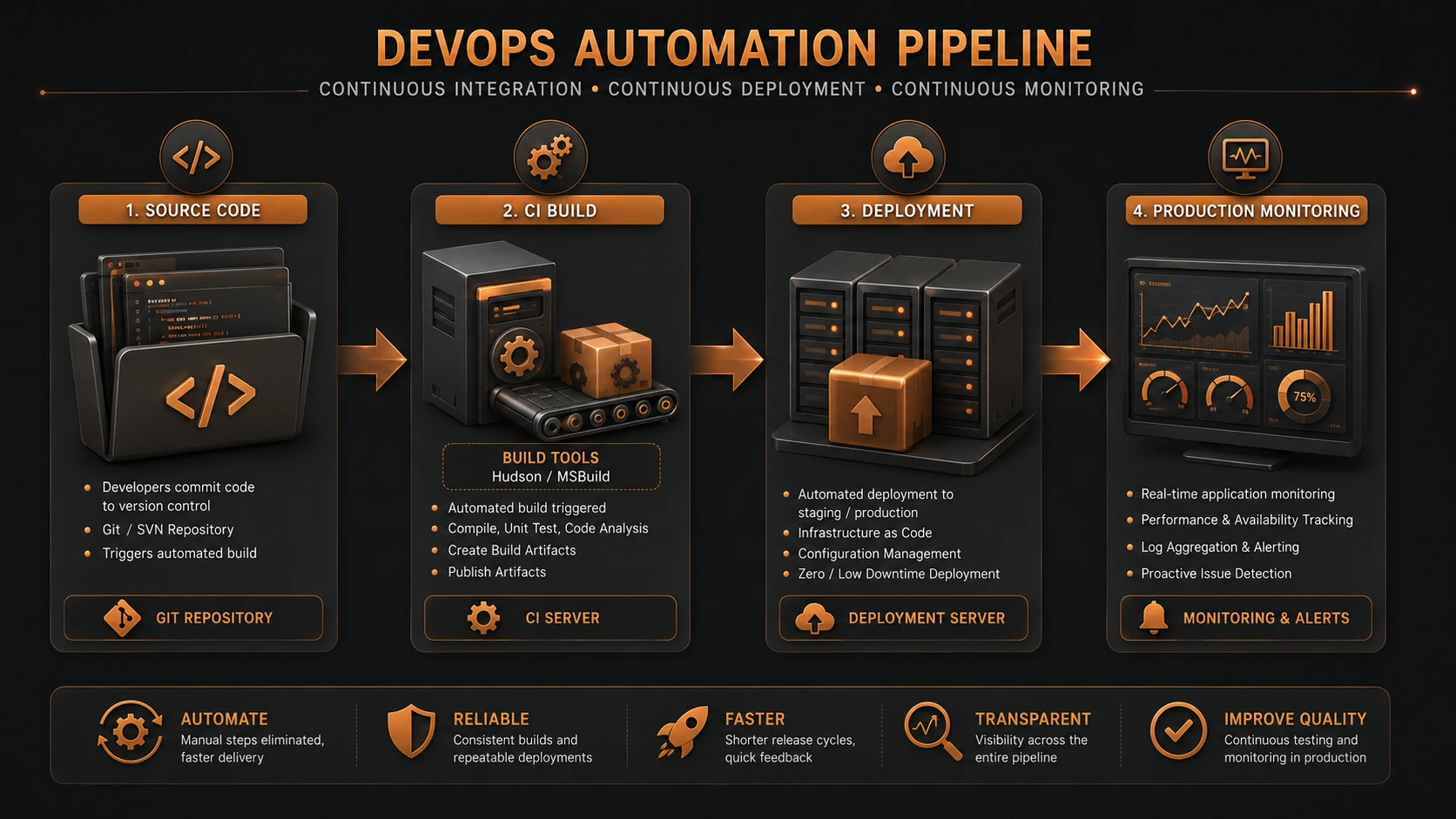
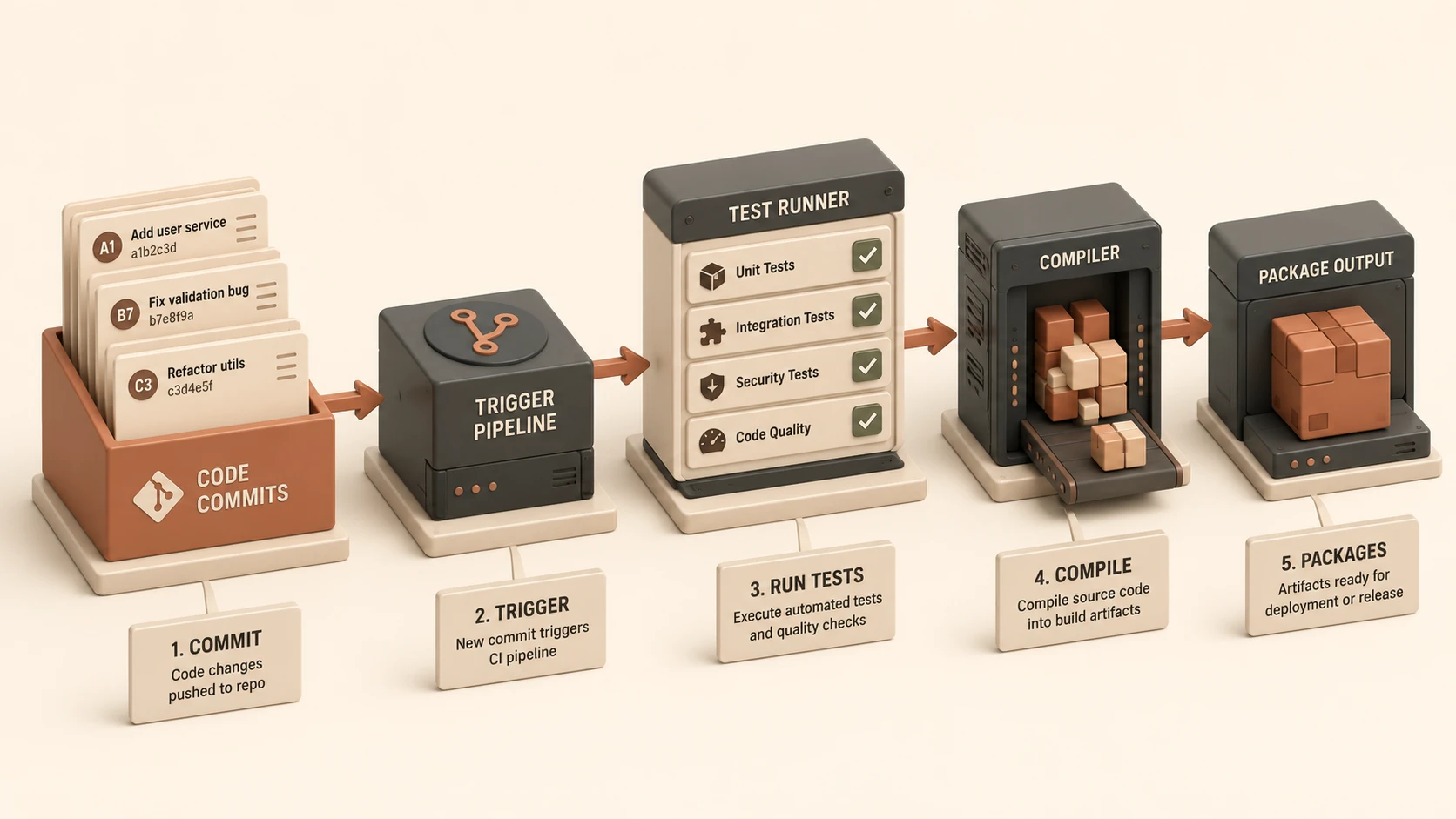
Continuous integration pipeline linking source control, test runners, and target servers.
Organizations should maintain:
- ◆Change management procedures
- ◆Security reviews
- ◆Compliance requirements
- ◆Documentation standards
- ◆Disaster recovery planning
The objective is not to eliminate governance but to make governance more efficient and predictable.
Typical Enterprise Workflow
A collaborative software delivery process may include:
- 1.Developers implement new functionality.
- 2.Code is committed to a shared repository.
- 3.Automated builds verify compilation.
- 4.Automated tests validate functionality.
- 5.Operations reviews deployment requirements.
- 6.Staging environments validate production readiness.
- 7.Applications are deployed using documented procedures.
- 8.Operational feedback is shared with development.
This workflow reduces surprises during production deployment.
Organizational Challenges
Technology alone cannot create successful DevOps adoption.
Many obstacles are organizational rather than technical.
Common challenges include:
- ◆Departmental silos
- ◆Separate management structures
- ◆Conflicting performance metrics
- ◆Limited communication
- ◆Resistance to organizational change
Executive sponsorship is often necessary to encourage collaboration across traditional departmental boundaries.
The Importance of Communication
Successful DevOps organizations encourage regular communication among:
- ◆Developers
- ◆Database administrators
- ◆Network engineers
- ◆Security teams
- ◆System administrators
- ◆Project managers
Shared planning meetings and post-deployment reviews help build trust while improving operational knowledge.
Automation Opportunities
Organizations evaluating DevOps should identify repetitive activities suitable for automation.
Typical candidates include:
- ◆Software builds
- ◆Unit testing
- ◆Packaging
- ◆Deployment scripts
- ◆Configuration validation
- ◆Environment setup
Automation reduces inconsistency while improving deployment speed.
Common Misconceptions
As interest in DevOps grows, several misconceptions have emerged.
DevOps Is Not a Software Product
DevOps is a set of practices and cultural principles rather than a commercial software package.
Organizations cannot simply purchase DevOps through a single technology investment.
DevOps Does Not Eliminate Operations
Operations expertise remains essential.
Infrastructure management, security, capacity planning, monitoring, and availability continue to require experienced operational teams.
DevOps Does Not Replace Agile
Agile improves software development processes.
DevOps extends collaboration into deployment and production operations.
The two approaches are complementary rather than competing methodologies.
Best Practices for Early Adoption
Organizations exploring DevOps during 2010 should consider the following recommendations.
Start with Small Projects
Pilot projects allow teams to refine collaborative practices before broader adoption.
Improve Build Automation
Reliable automated builds establish confidence and reduce integration problems.
Standardize Deployment Procedures
Documented deployment processes improve consistency across environments.
Encourage Shared Planning
Operations teams should participate in architecture and release planning discussions.
Measure Outcomes
Useful measurements include:
- ◆Deployment frequency
- ◆Build success rates
- ◆Production incidents
- ◆Release preparation time
- ◆Mean time to resolve operational issues
Objective metrics support continuous improvement.
Common Mistakes
Organizations beginning their DevOps journey should avoid several common pitfalls.
- ◆Treating DevOps as only an automation initiative.
- ◆Ignoring organizational culture.
- ◆Excluding operations from project planning.
- ◆Relying on undocumented deployment procedures.
- ◆Implementing automation without standardized processes.
- ◆Focusing exclusively on development productivity while neglecting operational reliability.
Balanced improvements across people, processes, and technology produce better long-term results.
Enterprise Use Cases
Several enterprise scenarios are particularly well suited for DevOps practices.
Financial Services
Frequent application updates require dependable deployment procedures while maintaining strict operational controls.
Software Product Companies
Commercial software vendors benefit from shorter release cycles and improved quality assurance.
Online Services
Internet-facing applications require rapid issue resolution and dependable operational processes.
Internal Business Applications
Large organizations can reduce deployment complexity by improving collaboration among development, infrastructure, and support teams.
Comparing Traditional Delivery and DevOps
| Traditional Approach | DevOps Approach |
|---|---|
| Separate development and operations teams | Shared collaboration throughout delivery |
| Manual deployments | Increased automation |
| Limited operational involvement during development | Early operational participation |
| Long release cycles | More frequent, controlled releases |
| Reactive issue resolution | Continuous feedback and improvement |
Looking Ahead
As of early 2010, DevOps remains an emerging movement rather than a mature enterprise standard. Nevertheless, the principles behind DevOps address challenges that many organizations have experienced for years. Increasing software complexity, growing reliance on Agile development, expanding virtualization initiatives, and rising expectations for faster software delivery all reinforce the need for stronger collaboration between development and operations.
It is reasonable to expect that organizations will continue investing in automation, standardized deployment practices, and closer cooperation across traditionally separate teams. While the specific tools and practices will undoubtedly evolve, the underlying objective of delivering reliable software more efficiently is likely to remain a strategic priority.
For enterprise IT leaders, DevOps represents an opportunity to rethink software delivery from an organizational perspective. By encouraging shared responsibility, improving communication, and automating repetitive operational tasks, enterprises can build more resilient delivery processes while supporting the increasing pace of modern software development. As the movement matures, organizations that begin adopting these principles today are likely to be well positioned for the next generation of enterprise application delivery.