Introduction
Modern software delivery is changing rapidly. Enterprise organizations are releasing applications more frequently, maintaining larger server fleets, and increasingly adopting cloud infrastructure. Traditional manual deployment processes, once acceptable for infrequent software releases, are becoming operational bottlenecks that introduce inconsistency, downtime, and configuration drift.
Infrastructure automation has therefore become a strategic priority. Organizations require repeatable deployment processes capable of configuring operating systems, installing software, updating application services, and maintaining infrastructure consistency without relying on manual intervention.
Ansible has emerged as one of the most promising automation platforms by emphasizing simplicity, agentless architecture, and human-readable playbooks. Using standard SSH connectivity and declarative YAML files, Ansible enables administrators to automate infrastructure provisioning and application deployment across hundreds or thousands of servers.
For enterprise architects and DevOps teams, Ansible Playbooks offer a practical foundation for implementing reliable deployment pipelines while minimizing operational complexity.
Industry Background
Enterprise infrastructure has grown considerably more dynamic during the past several years. Virtualization, cloud computing, and large-scale web platforms require administrators to manage increasingly complex environments.
Common operational activities include:
- ◆Server provisioning
- ◆Package installation
- ◆Configuration management
- ◆Application deployment
- ◆Service orchestration
- ◆Environment standardization
Performing these tasks manually introduces inconsistency and limits deployment frequency.
Automation platforms are therefore becoming essential components of enterprise IT operations.
The Business Problem
Organizations maintaining growing infrastructure frequently encounter:
- ◆Configuration drift
- ◆Manual deployment errors
- ◆Long release windows
- ◆Environment inconsistencies
- ◆Difficult rollback procedures
- ◆Increased operational costs
As application release frequency increases, repeatable infrastructure automation becomes essential for maintaining reliability.
Understanding Ansible
Ansible is an open-source automation platform focused on configuration management, application deployment, infrastructure provisioning, and orchestration.
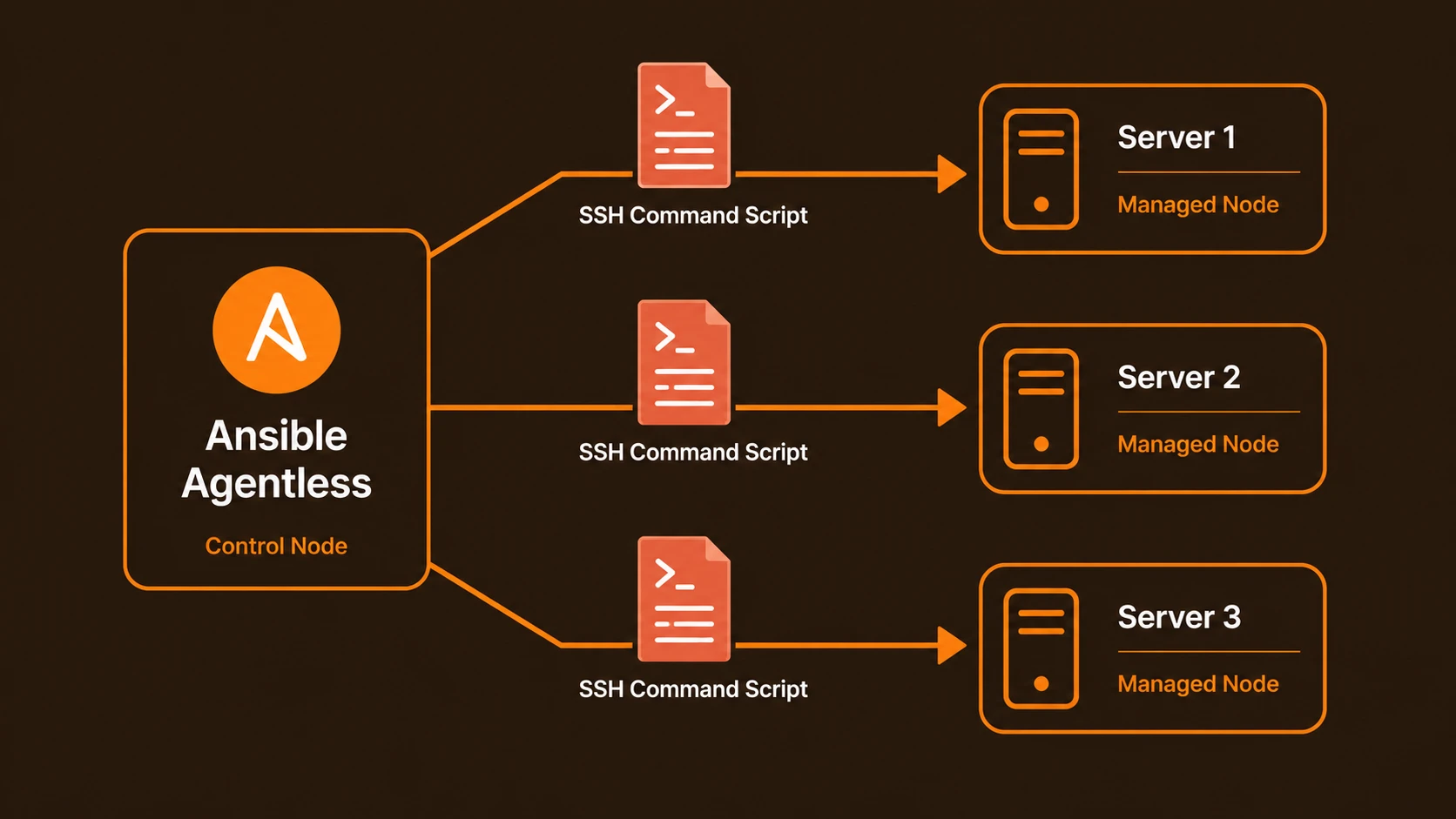
Unlike many configuration management systems, Ansible operates without requiring persistent software agents on managed servers. Instead, it communicates primarily over SSH using temporary execution modules.
Automation logic is defined within YAML-based playbooks that describe the desired state of managed infrastructure.
This declarative approach simplifies infrastructure management while improving readability and maintainability.
Core Architecture
Ansible consists of several complementary components.
| Component | Responsibility |
|---|---|
| Control Node | Executes automation tasks |
| Inventory | Defines managed hosts |
| Playbook | Describes automation workflow |
| Module | Performs specific operations |
| SSH | Secure communication channel |
| Managed Nodes | Target infrastructure |
| Variables | Environment customization |
This architecture minimizes infrastructure requirements while supporting heterogeneous server environments.
How Ansible Playbooks Work
A typical deployment workflow includes:
- 1.Administrator executes a playbook.
- 2.Inventory identifies target servers.
- 3.SSH connections are established.
- 4.Required modules execute on managed nodes.
- 5.Configuration changes are applied.
- 6.Services restart only when necessary.
- 7.Results are reported upon completion.
Because playbooks describe desired system state, repeated execution should produce consistent outcomes while avoiding unnecessary changes.
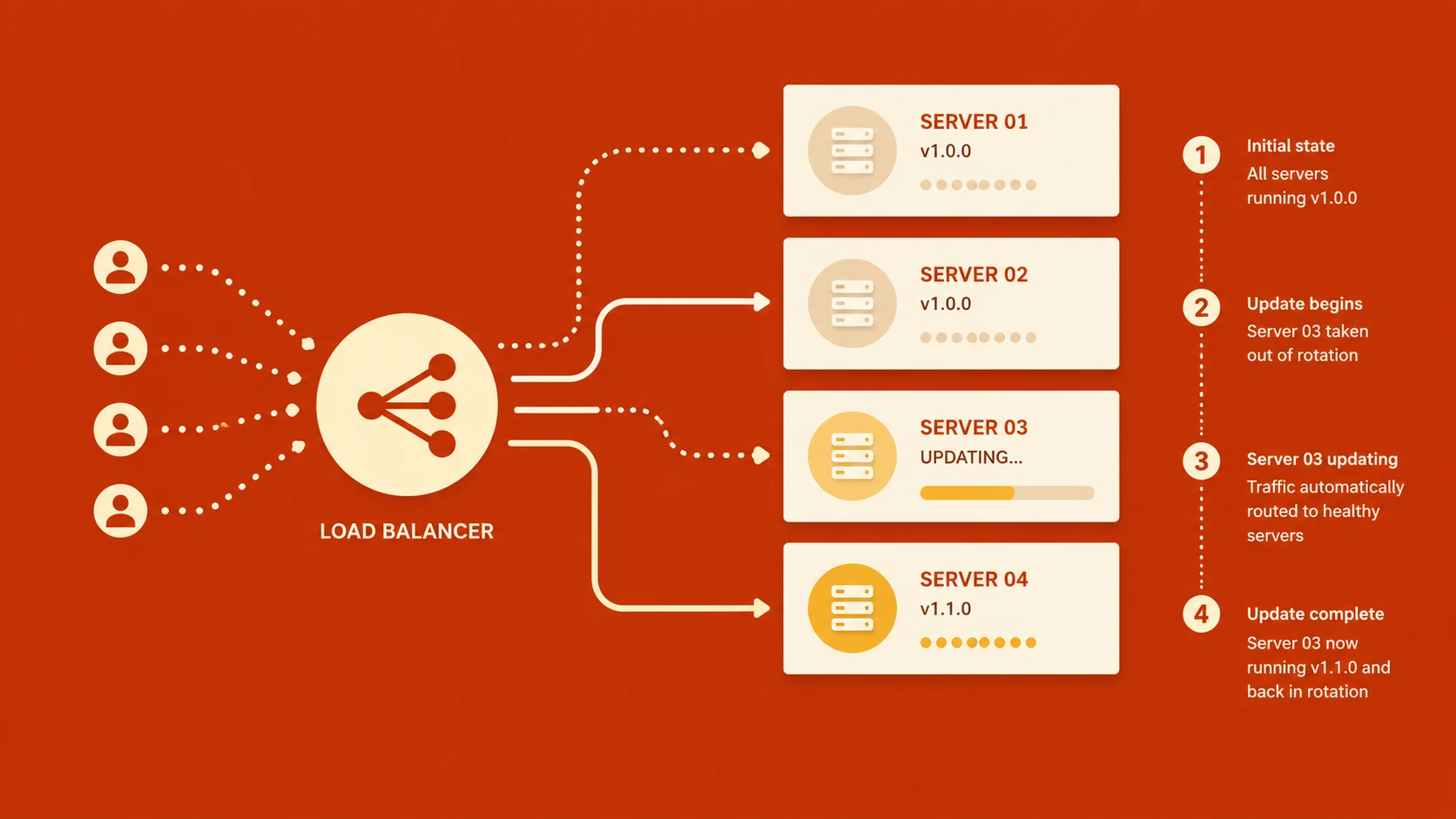
Zero-Downtime Deployment Strategy
One of Ansible's strengths lies in orchestrating controlled application deployments.
A typical enterprise deployment strategy may include:
- ◆Removing selected servers from a load balancer.
- ◆Deploying updated application binaries.
- ◆Applying configuration changes.
- ◆Restarting application services.
- ◆Performing health verification.
- ◆Returning updated servers to production.
- ◆Repeating the process for remaining servers.
By updating infrastructure incrementally rather than simultaneously, organizations can reduce application downtime while maintaining service availability.
Key Features
Agentless Architecture
Managed servers require no continuously running management agent, reducing operational overhead.
YAML Playbooks
# Ansible Playbook for zero-downtime rolling update across a web server cluster
- name: Rolling deployment of web application
  hosts: webservers
  serial: 1  # Deploy server-by-server to maintain availability
  tasks:
    - name: Disable server in load balancer pool
      include_tasks: lb_disable.yml

    - name: Pull updated application artifacts
      git:
        repo: 'https://github.com/shivamitcs/app.git'
        dest: /var/www/app
        version: release-1.0

    - name: Enable server in load balancer pool
      include_tasks: lb_enable.yml
Human-readable automation definitions simplify collaboration between operations and development teams.
Idempotent Operations
Tasks are designed to apply only necessary changes, improving deployment consistency.
Extensive Module Library
Reusable modules simplify common administrative operations such as package management, service control, file deployment, and user management.
Multi-Tier Orchestration
Playbooks coordinate changes across application servers, databases, web servers, and supporting infrastructure.
Enterprise Use Cases
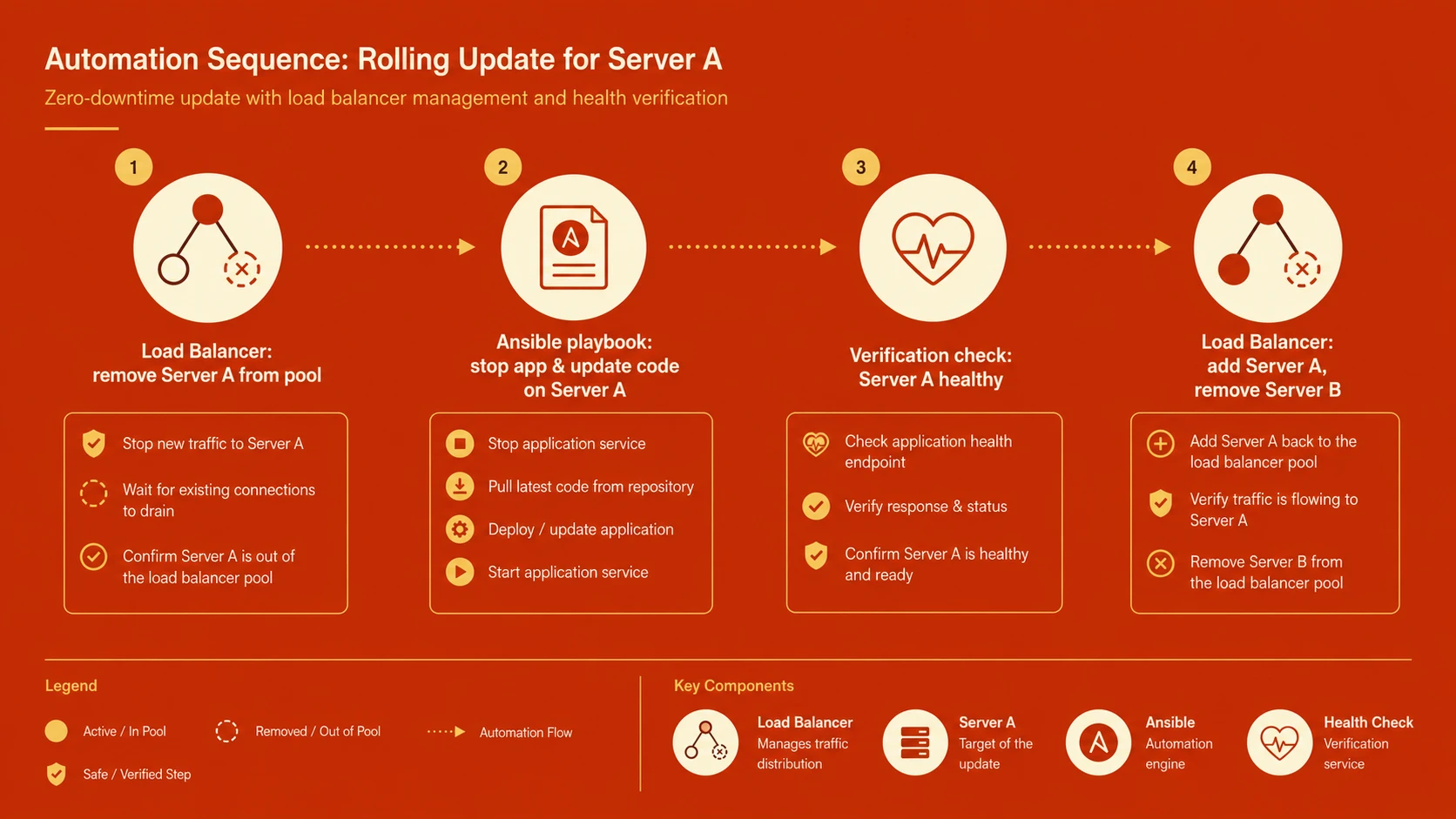
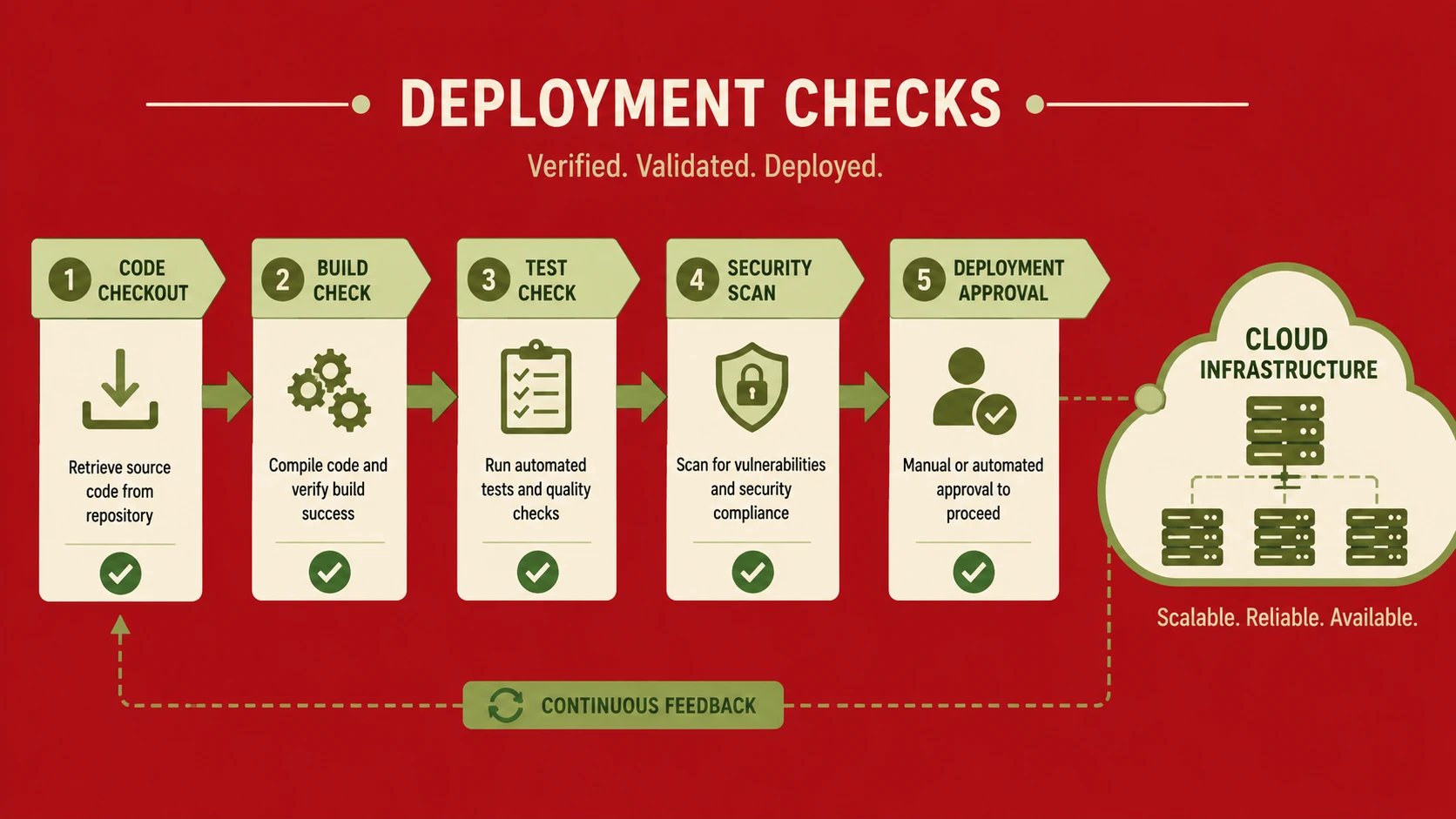
System architecture diagram and conceptual workflow layout for Ansible Playbooks.
Ansible supports a broad range of enterprise automation scenarios.
Application Deployment
Standardized release procedures reduce operational risk while improving deployment consistency.
Configuration Management
Servers remain aligned with organizational configuration standards.
Infrastructure Provisioning
New environments can be prepared automatically using reusable playbooks.
Disaster Recovery
Automated infrastructure rebuilding reduces recovery time following failures.
Cloud Environment Management
Organizations adopting cloud infrastructure can standardize deployment procedures across virtual environments.
Performance Considerations
Ansible's architecture minimizes operational overhead by avoiding permanently installed agents.
Performance considerations include:
- ◆SSH connection establishment
- ◆Inventory size
- ◆Task parallelism
- ◆Module execution time
- ◆Network latency
- ◆Playbook organization
Administrators should optimize playbooks to minimize unnecessary remote operations while grouping related tasks logically.
Security Considerations
Automation systems frequently operate with elevated privileges.
Organizations should therefore implement:
- ◆SSH key management
- ◆Least-privilege administrative access
- ◆Protected inventory data
- ◆Secure credential storage
- ◆Controlled playbook repositories
- ◆Audit logging
Automation infrastructure should be governed using the same security standards applied to production systems.
Scalability
Ansible is designed to automate infrastructure ranging from small server groups to large enterprise environments.
Scalability advantages include:
- ◆Parallel execution
- ◆Inventory grouping
- ◆Reusable playbooks
- ◆Modular task organization
- ◆Agentless communication
Well-designed playbooks remain maintainable as infrastructure expands across multiple environments.
Best Practices
Organizations adopting Ansible should consider the following recommendations.
- ◆Keep playbooks modular.
- ◆Store infrastructure definitions under version control.
- ◆Separate configuration from deployment logic.
- ◆Use variables consistently.
- ◆Test playbooks in staging environments.
- ◆Design idempotent automation.
- ◆Document deployment procedures.
- ◆Monitor automation execution results.
Common Mistakes
| Mistake | Enterprise Impact |
|---|---|
| Hardcoding configuration values | Reduced maintainability |
| Ignoring idempotent design | Unpredictable deployments |
| Combining unrelated tasks | Difficult troubleshooting |
| Skipping testing | Production failures |
| Weak SSH key management | Security risks |
| Manual production changes outside automation | Configuration drift |
Infrastructure automation succeeds when operational changes are consistently managed through version-controlled playbooks.
Technology Comparison
| Capability | Manual Administration | Ansible Playbooks |
|---|---|---|
| Deployment Consistency | Variable | High |
| Repeatability | Limited | Excellent |
| Infrastructure Documentation | Separate | Embedded in Playbooks |
| Agent Requirement | Not Applicable | No |
| Parallel Execution | Manual | Yes |
| Operational Scalability | Limited | High |
Ansible emphasizes operational simplicity while providing enterprise-grade automation capabilities.
Adoption Strategy
Organizations planning Ansible adoption should proceed incrementally.
Recommended steps include:
- 1.Inventory existing infrastructure.
- 2.Identify repetitive administrative tasks.
- 3.Develop reusable playbooks.
- 4.Test automation in non-production environments.
- 5.Standardize deployment procedures.
- 6.Integrate version control.
- 7.Train operations teams.
- 8.Expand automation gradually across production infrastructure.
This phased approach minimizes operational risk while allowing administrators to build automation expertise.
Limitations
Although Ansible simplifies infrastructure automation, several considerations remain.
- ◆SSH connectivity is required for most managed systems.
- ◆Complex orchestration requires careful playbook design.
- ◆Organizations must establish automation governance.
- ◆Existing manual operational procedures require modernization.
- ◆Large deployments benefit from structured inventory management.
Automation improves operational consistency, but success ultimately depends upon disciplined infrastructure management practices.
Looking Ahead
From the perspective of December 2013, Ansible represents one of the most approachable infrastructure automation platforms available to enterprise organizations. Its agentless architecture, readable YAML syntax, and strong orchestration capabilities significantly reduce the complexity traditionally associated with configuration management and application deployment.
As DevOps practices continue gaining momentum and release cycles become increasingly frequent, automation platforms emphasizing simplicity, repeatability, and infrastructure consistency are expected to become fundamental components of enterprise software delivery. Ansible Playbooks provide a strong foundation for organizations seeking to standardize deployments while reducing operational risk and supporting highly available application environments.