Why Real-Time AI Streaming Matters
Users no longer expect AI applications to remain idle while generating responses. Waiting several seconds for a complete answer creates friction and makes even powerful AI models feel slow. Modern AI experiences are increasingly defined by responsiveness rather than raw inference speed.
Next.js Server Actions introduce a powerful pattern for delivering AI responses progressively. Instead of waiting for the entire completion, applications can stream tokens to the interface as they are generated, creating an experience that feels immediate, interactive, and natural.
For enterprise AI platforms, this approach reduces perceived latency while improving user engagement and overall application performance.
UX Principle: Users should see meaningful progress within milliseconds, even if the complete AI response takes several seconds to generate.
---
Traditional AI Response Flow
Most AI applications follow a request-response model.
User Prompt
      │
      ▼
Frontend API Request
      │
Backend Processing
      │
LLM Generates Response
      │
Complete Response Returned
      │
UI Updates
Although technically correct, users stare at a loading indicator until the model finishes generating the entire response.
This approach increases perceived latency and often results in a less engaging experience.
---
Streaming with Next.js Server Actions
Server Actions change this interaction model by allowing responses to be streamed progressively from the server.
Instead of waiting for completion, the interface updates continuously as tokens arrive.
User Prompt
      │
      ▼
Server Action
      │
LLM Stream
      │
Readable Stream
      │
Progressive Token Delivery
      │
Live UI Rendering
The browser receives incremental updates, making conversations feel significantly faster even when overall generation time remains unchanged.
---
Why Server Actions Are Ideal for AI
Unlike traditional API routes, Server Actions execute directly on the server while remaining tightly integrated with the React rendering pipeline.
This architecture offers several advantages:
- ◆Secure API key management
- ◆Reduced client-side complexity
- ◆Native streaming support
- ◆Simplified server communication
- ◆Lower JavaScript bundle sizes
- ◆Better developer experience
- ◆Improved application security
By moving AI orchestration to the server, applications become easier to maintain and scale.
---
Designing a Streaming User Experience
Effective streaming is not simply displaying text character by character. The interface should provide meaningful feedback throughout the generation process.
A well-designed streaming experience includes:
- ◆Immediate response initiation
- ◆Animated typing indicators
- ◆Progressive markdown rendering
- ◆Smooth scrolling
- ◆Partial component updates
- ◆Graceful loading states
- ◆Error recovery
- ◆Stream completion indicators
These elements create the perception of an intelligent assistant actively thinking and responding.
---

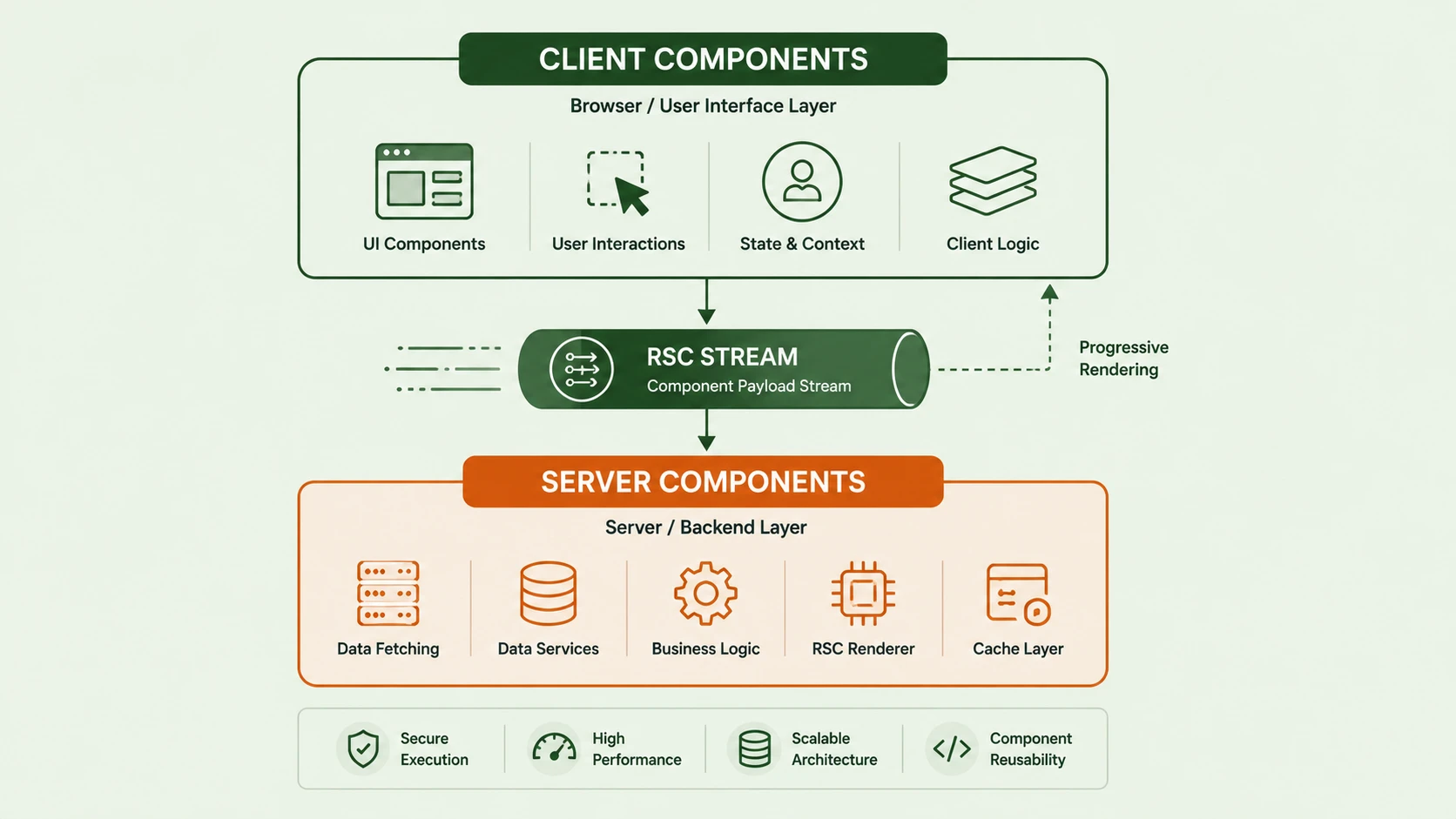
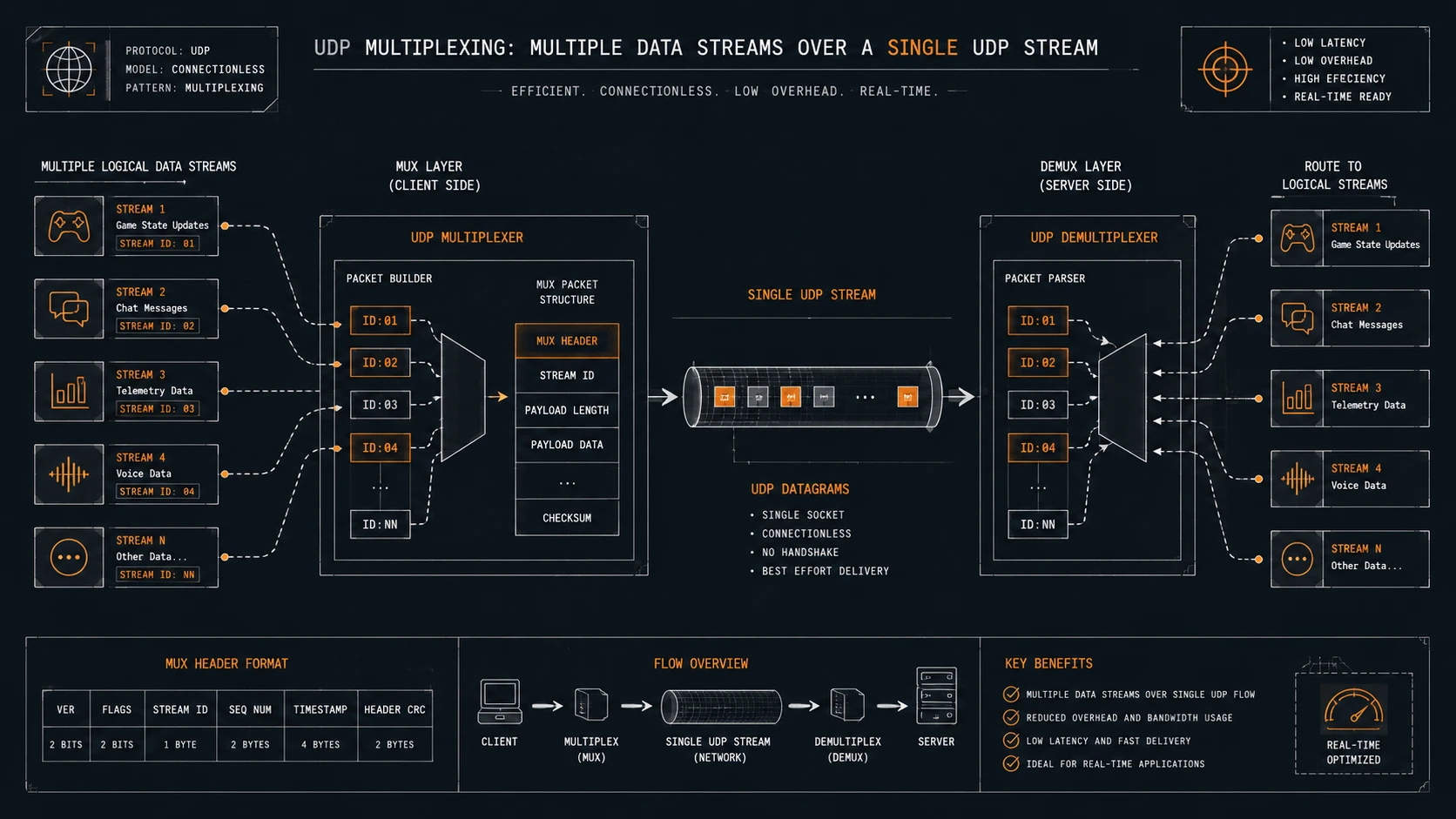
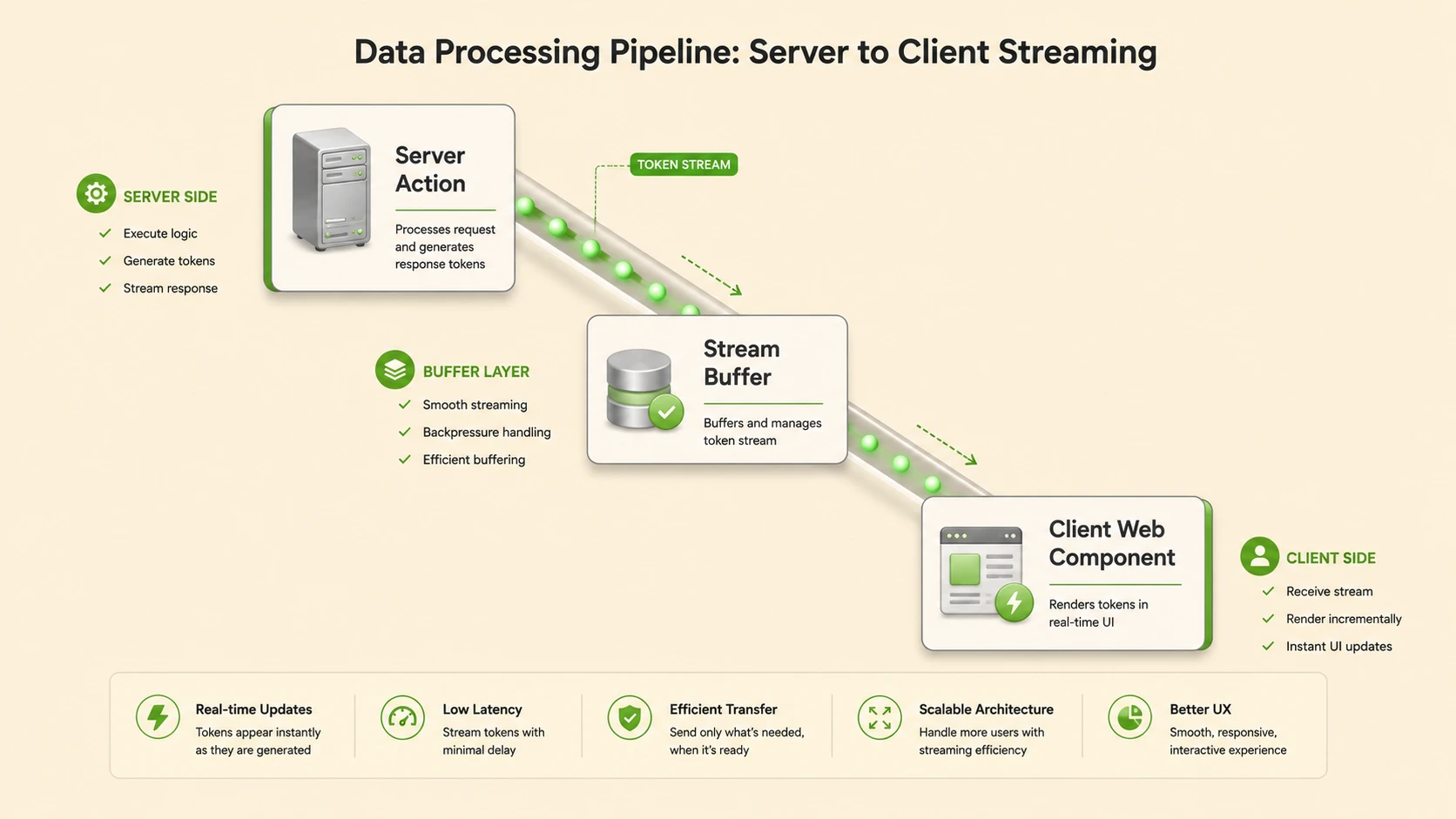
System architecture diagram and conceptual workflow layout for Real-Time AI Streaming in Next.js Server Actions.
Streaming Architecture
A production-ready architecture often consists of multiple coordinated layers.
Client Interface
        │
        ▼
Next.js Server Action
        │
Streaming Controller
        │
LLM Provider
        │
Token Stream
        │
React Rendering Pipeline
        │
Live User Interface
Each layer performs a dedicated responsibility while maintaining a continuous data stream between the model and the browser.
---
Performance Benefits
Streaming improves more than user perception. It also enhances application efficiency.
Key benefits include:
- ◆Lower perceived latency
- ◆Faster First Meaningful Response
- ◆Improved responsiveness
- ◆Better user retention
- ◆Reduced unnecessary re-rendering
- ◆Smaller client bundles
- ◆Efficient server execution
- ◆Higher scalability under concurrent workloads
For enterprise AI applications serving thousands of users, these optimizations have a measurable impact on both performance and operational costs.
---
Handling Errors Gracefully
Streaming systems should be designed to recover from interruptions without degrading the user experience.
Recommended practices include:
- ◆Automatic retry logic
- ◆Stream timeout handling
- ◆Partial response preservation
- ◆Fallback messaging
- ◆Connection health monitoring
- ◆Retry prompts
- ◆User-friendly error notifications
Resilient streaming builds trust while preventing conversation loss.
---
Security Considerations
Although streaming focuses on user experience, security remains essential.
Applications should ensure:
- ◆API keys remain server-side
- ◆Requests are authenticated
- ◆User input is validated
- ◆Sensitive information is filtered
- ◆Streaming endpoints are rate limited
- ◆Audit logs capture AI interactions
Server Actions naturally improve security by preventing AI credentials from reaching the browser.
---
Best Practices for Enterprise AI
Organizations implementing real-time streaming should follow these architectural guidelines:
| Area | Best Practice |
|---|---|
| Rendering | Progressive UI Updates |
| Execution | Server Actions |
| Communication | Readable Streams |
| Security | Server-Side API Keys |
| Performance | Incremental Rendering |
| UX | Immediate Visual Feedback |
| Scalability | Stateless Streaming |
| Monitoring | Token & Latency Metrics |
---
The Future of AI User Experiences
Real-time AI streaming is quickly becoming the standard interaction model for intelligent applications. Users increasingly expect conversational interfaces that respond immediately rather than waiting for complete answers.
By combining Next.js Server Actions with streaming architectures, organizations can build AI experiences that feel faster, more natural, and more engaging without changing the underlying language model. As enterprise AI adoption grows, progressive token delivery will become a fundamental UX pattern for modern web applications.