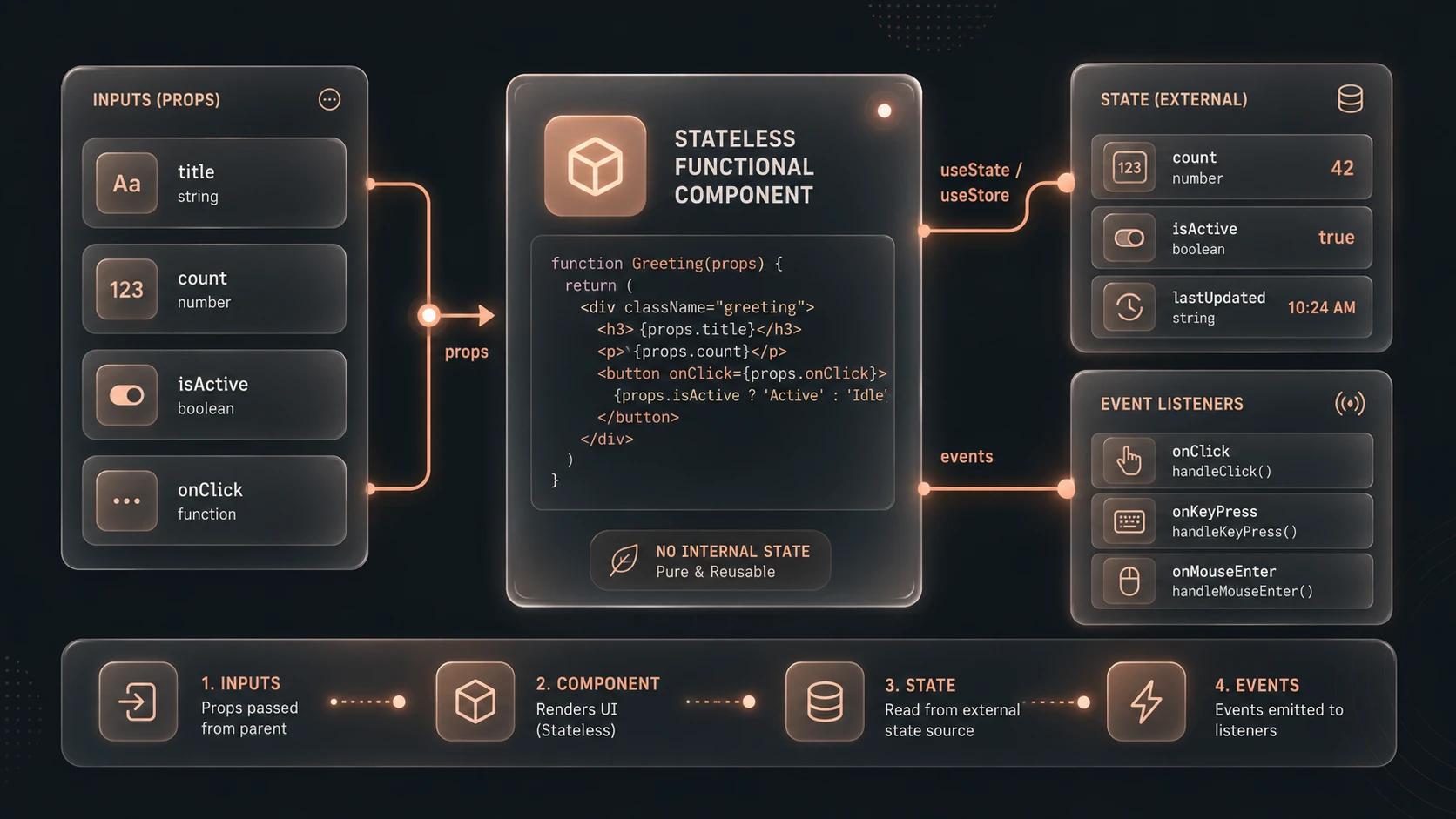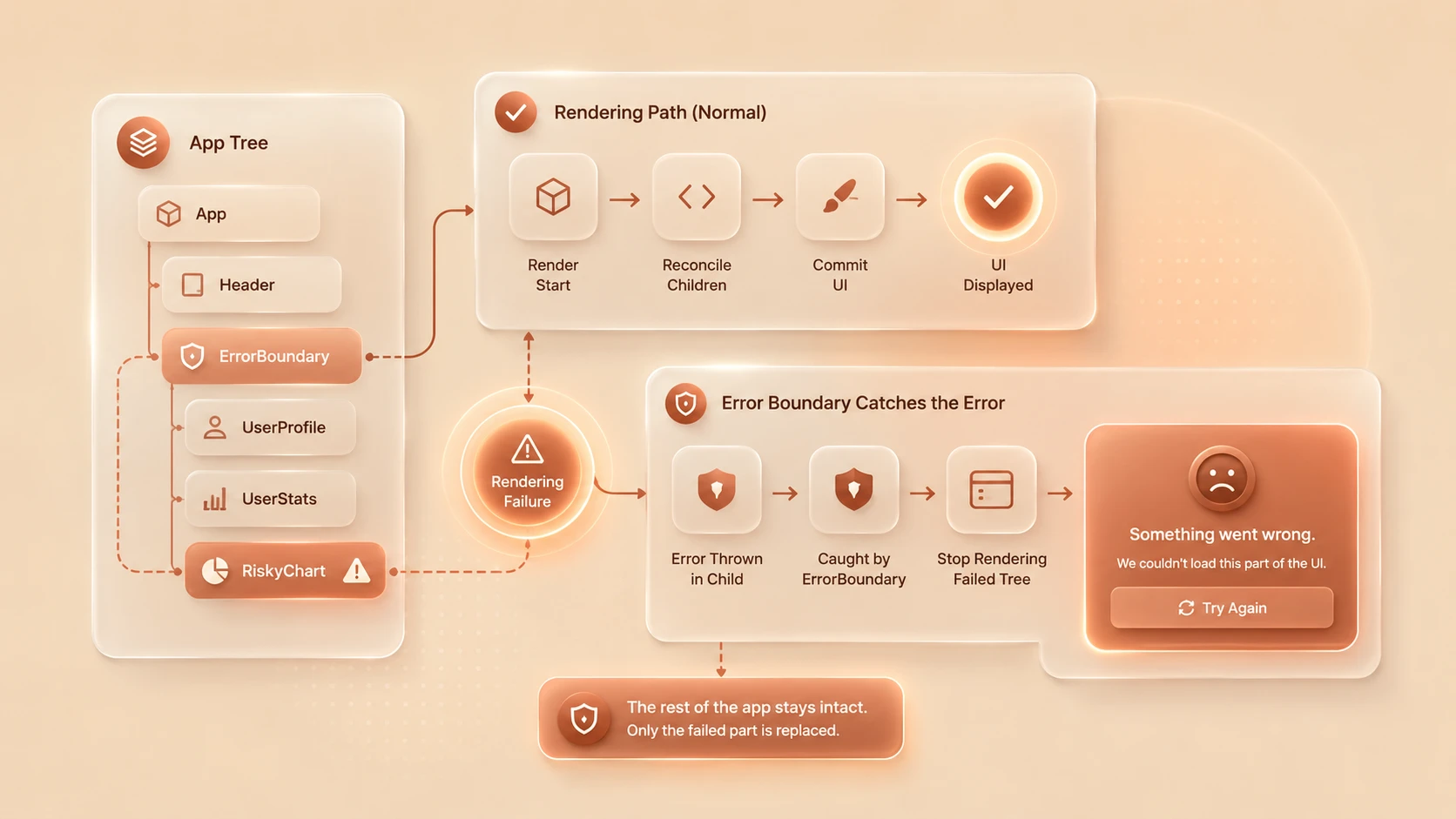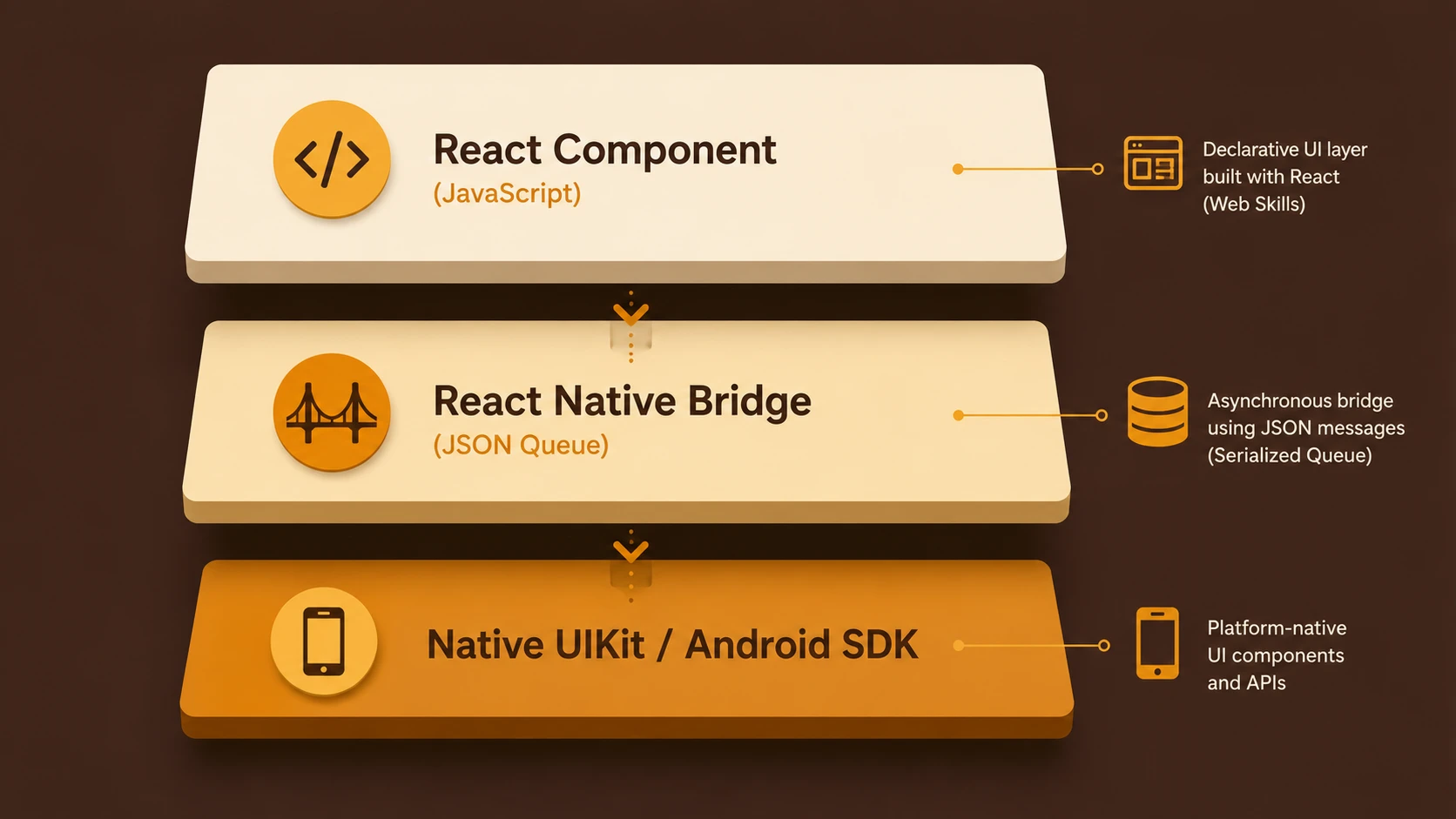
Introduction
Enterprise mobility continues to reshape software development. Organizations are no longer building applications solely for desktop browsers. Customer-facing services, internal business applications, field service solutions, sales enablement platforms, and executive dashboards increasingly require native mobile experiences on smartphones and tablets.
Traditionally, organizations choosing native mobile development have maintained separate codebases for each platform. Objective-C is commonly used for iOS development, while Java serves as the primary language for Android applications. Although this approach provides direct access to native platform capabilities, it also increases development cost, duplication of business logic, and long-term maintenance effort.
Facebook has introduced React Native as an open source framework that applies React's component-based programming model to native mobile development. Rather than rendering HTML inside a browser or embedding web views, React Native renders actual native user interface controls while allowing developers to write application logic in JavaScript.
As of May 2015, React Native represents one of the most significant developments in cross-platform application architecture. While still in its early stages, it offers an alternative to traditional native development and hybrid web-based mobile frameworks.
Industry Background
Mobile application development has become a strategic investment for enterprises across nearly every industry. Organizations increasingly require:
- ◆Native user experiences
- ◆Frequent application updates
- ◆Consistent business logic
- ◆Faster development cycles
- ◆Maintainable application architectures
- ◆Integration with RESTful APIs
Several approaches currently exist for mobile development.
Native development offers the best integration with platform capabilities but requires platform-specific expertise. Hybrid frameworks reuse web technologies but often rely on embedded browser controls that may not fully match native behavior.
React Native attempts to bridge this gap by combining JavaScript development with native rendering.
The Business Problem
Enterprise mobile development commonly encounters:
- ◆Separate iOS and Android development teams
- ◆Duplicate application logic
- ◆Longer release cycles
- ◆Higher maintenance costs
- ◆Inconsistent user experiences
- ◆Complex testing efforts
- ◆Limited code reuse
Organizations seek development models that improve productivity while maintaining native application quality.
Understanding React Native
React Native is a mobile application framework that enables developers to build native applications using JavaScript and React.
Instead of generating HTML or executing within a browser, React Native maps React components to native platform controls.
Applications continue to use native navigation, user interface elements, and platform capabilities while benefiting from React's declarative programming model.
This distinguishes React Native from browser-based mobile application frameworks.
Core Architecture
| Component | Responsibility |
|---|---|
| JavaScript Application | Implements business logic |
| React Components | Define user interface structure |
| React Native Bridge | Coordinates communication with native platform APIs |
| Native UI Controls | Render platform-specific interface elements |
| iOS Runtime | Executes native application |
| REST API | Supplies application data |
This architecture separates application logic from platform rendering while preserving native user interface behavior.
Component-Based Development
React Native adopts the same component-oriented development model introduced by React.
Applications are constructed from reusable interface components.
Examples include:
- ◆Navigation views
- ◆Lists
- ◆Buttons
- ◆Forms
- ◆Profile screens
- ◆Dashboard widgets
Component composition encourages modular design while simplifying long-term maintenance.
Native Rendering
One of React Native's defining characteristics is its use of native user interface controls.
Unlike browser-based mobile applications that render HTML elements, React Native translates component definitions into platform-native interface elements.
Potential advantages include:
- ◆Native appearance
- ◆Platform-consistent interaction
- ◆Improved responsiveness
- ◆Better integration with operating system controls
This approach seeks to provide a user experience closer to traditionally developed native applications.
JavaScript Execution
Business logic continues to execute within a JavaScript runtime.
Developers benefit from:
- ◆JavaScript familiarity
- ◆Component reuse
- ◆Declarative rendering
- ◆React programming model
Communication between JavaScript and native platform components occurs through the React Native bridge.
The Bridge Architecture
// React Native basic Component using native components bridge
import React from 'react';
import { View, Text, StyleSheet, TouchableOpacity } from 'react-native';

export default function App() {
  return (
    <View style={styles.container}>
      <Text style={styles.title}>Welcome to React Native!</Text>
      <TouchableOpacity onPress={() => console.log('Button pressed!')}>
        <Text style={styles.buttonText}>Click me</Text>
      </TouchableOpacity>
    </View>
  );
}

const styles = StyleSheet.create({
  container: { flex: 1, justifyContent: 'center', alignItems: 'center' },
  title: { fontSize: 20, fontWeight: 'bold' }
});
React Native introduces a communication layer that connects JavaScript code with native platform functionality.
Typical interaction follows this sequence:
- 1.JavaScript application updates component state.
- 2.React calculates interface changes.
- 3.Instructions pass through the React Native bridge.
- 4.Native platform controls update accordingly.
- 5.User interactions are communicated back to JavaScript.
This architecture allows application logic to remain largely independent of native implementation details.
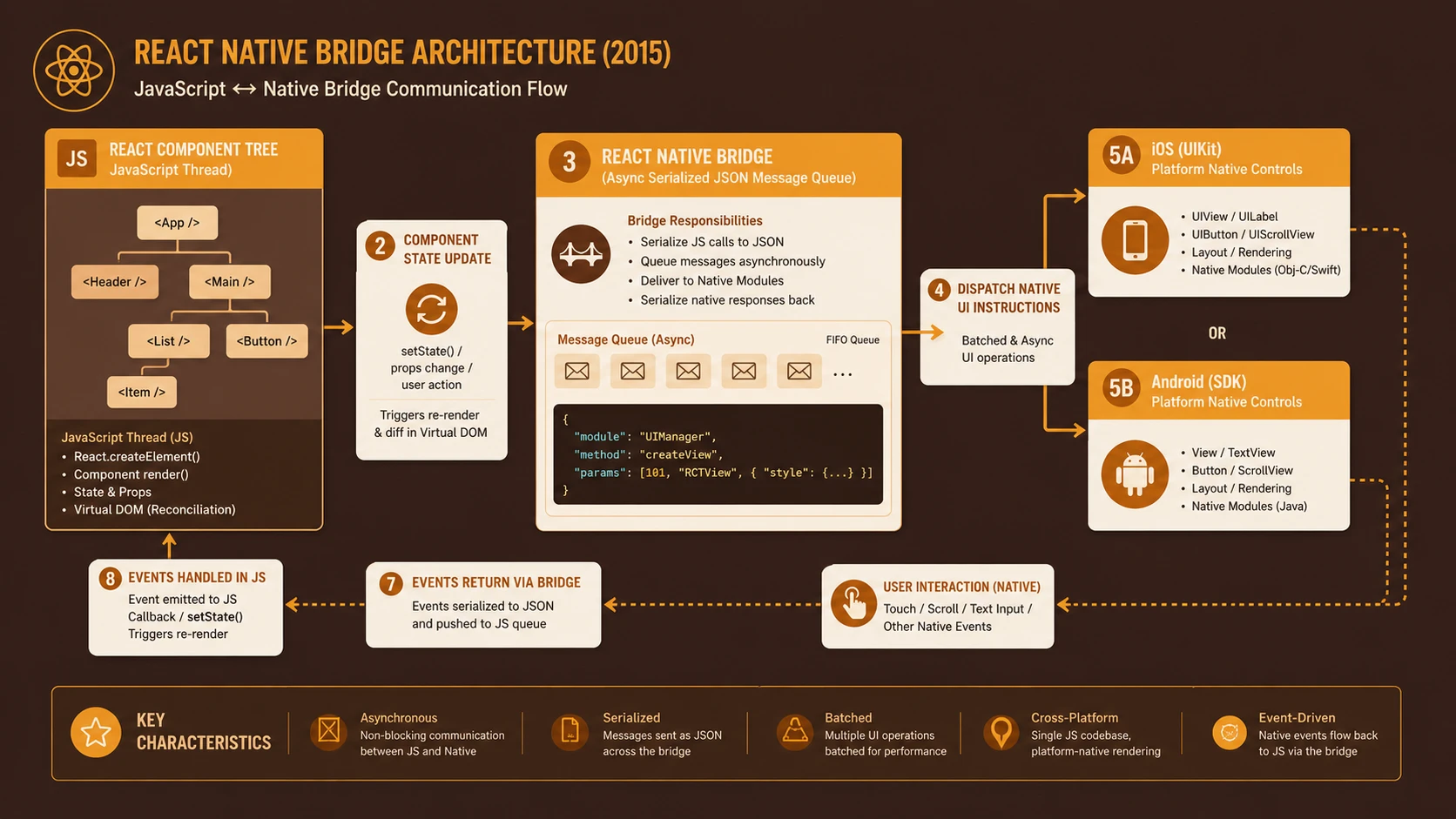
System architecture diagram and conceptual workflow layout for React Native Release.
Integration with RESTful APIs
Enterprise mobile applications frequently communicate with backend services.
A typical architecture includes:
- ◆Mobile application
- ◆REST API
- ◆Authentication services
- ◆Business services
- ◆Database systems
React Native integrates naturally with existing HTTP-based APIs, allowing organizations to reuse backend infrastructure already serving web applications.
Enterprise Use Cases
| Scenario | Benefit |
|---|---|
| Customer mobile applications | Native interface with JavaScript development |
| Enterprise dashboards | Component reuse |
| Internal business applications | Improved maintainability |
| Field service applications | Native user experience |
| Sales enablement tools | Shared application architecture |
| SaaS mobile clients | Faster feature delivery |
Organizations already using React for web development may benefit from familiarity with the component model.
Performance Considerations
Performance planning should evaluate:
- ◆JavaScript execution
- ◆Native rendering responsiveness
- ◆Bridge communication overhead
- ◆Memory utilization
- ◆Application startup time
Because React Native renders native controls rather than browser content, user interface responsiveness may differ from traditional hybrid application frameworks.
Performance should be validated using representative production workloads.
Security Considerations
React Native focuses on application development rather than security.
Enterprise applications should continue implementing:
- ◆HTTPS
- ◆Secure authentication
- ◆Authorization
- ◆Input validation
- ◆Secure storage of sensitive information
- ◆Server-side business rule enforcement
Mobile application security remains a responsibility of the complete system architecture.
Scalability
React Native supports growing applications through:
- ◆Modular component architecture
- ◆Reusable interface elements
- ◆Separation of business logic
- ◆Integration with existing enterprise services
Well-defined component boundaries simplify collaboration across larger development teams.
Best Practices
Organizations evaluating React Native should:
- ◆Design small reusable components.
- ◆Separate presentation from business logic.
- ◆Reuse existing REST APIs.
- ◆Follow platform interface conventions.
- ◆Test native behavior thoroughly.
- ◆Organize application modules consistently.
- ◆Measure performance throughout development.
- ◆Establish shared coding standards.
These practices improve maintainability while reducing long-term development costs.
Common Mistakes
Development teams should avoid:
- ◆Assuming all existing React code transfers directly to mobile development.
- ◆Ignoring platform-specific user experience guidelines.
- ◆Building excessively large components.
- ◆Mixing networking logic with presentation.
- ◆Skipping native device testing.
- ◆Treating React Native as a browser framework.
Successful applications balance shared architecture with platform-appropriate design.
Technology Comparison
| Capability | Native Development | Hybrid Web Frameworks | React Native |
|---|---|---|---|
| Primary Language | Objective-C or Java | HTML, CSS, JavaScript | JavaScript |
| User Interface | Native controls | Browser rendering | Native controls |
| Code Reuse | Limited across platforms | High | Application logic reuse |
| Platform Integration | Excellent | Moderate | Strong |
| Component Architecture | Platform dependent | Framework dependent | React components |
| REST API Integration | Excellent | Excellent | Excellent |
React Native occupies a distinct position by combining JavaScript development with native rendering.
Adoption Strategy
Organizations considering React Native should adopt it gradually.
A practical strategy includes:
- 1.Identify a suitable mobile project.
- 2.Train developers on React Native architecture.
- 3.Reuse existing backend REST APIs.
- 4.Build reusable interface components.
- 5.Measure application performance.
- 6.Validate native user experience.
- 7.Expand adoption based on operational results.
Incremental adoption allows engineering teams to evaluate the framework without disrupting existing mobile initiatives.
Limitations
As of May 2015, React Native is a newly released framework and organizations should evaluate it carefully.
Current considerations include:
- ◆The ecosystem is still maturing.
- ◆Best practices for large enterprise projects continue to evolve.
- ◆Platform-specific knowledge remains valuable.
- ◆Some native functionality may require platform-specific implementation.
- ◆Development tooling is expected to continue improving.
Pilot projects provide an appropriate environment for evaluating long-term suitability.
Looking Ahead
React Native introduces an innovative approach to mobile application development by combining React's component architecture with native platform rendering. Rather than choosing exclusively between traditional native development and browser-based hybrid applications, organizations now have another architectural option that emphasizes JavaScript development while preserving native user interface controls.
As of May 2015, React Native shows considerable promise for enterprise teams seeking improved productivity without abandoning native application experiences. Organizations already investing in React and REST-based service architectures should closely evaluate the framework as they plan the next generation of enterprise mobile applications.