Introduction
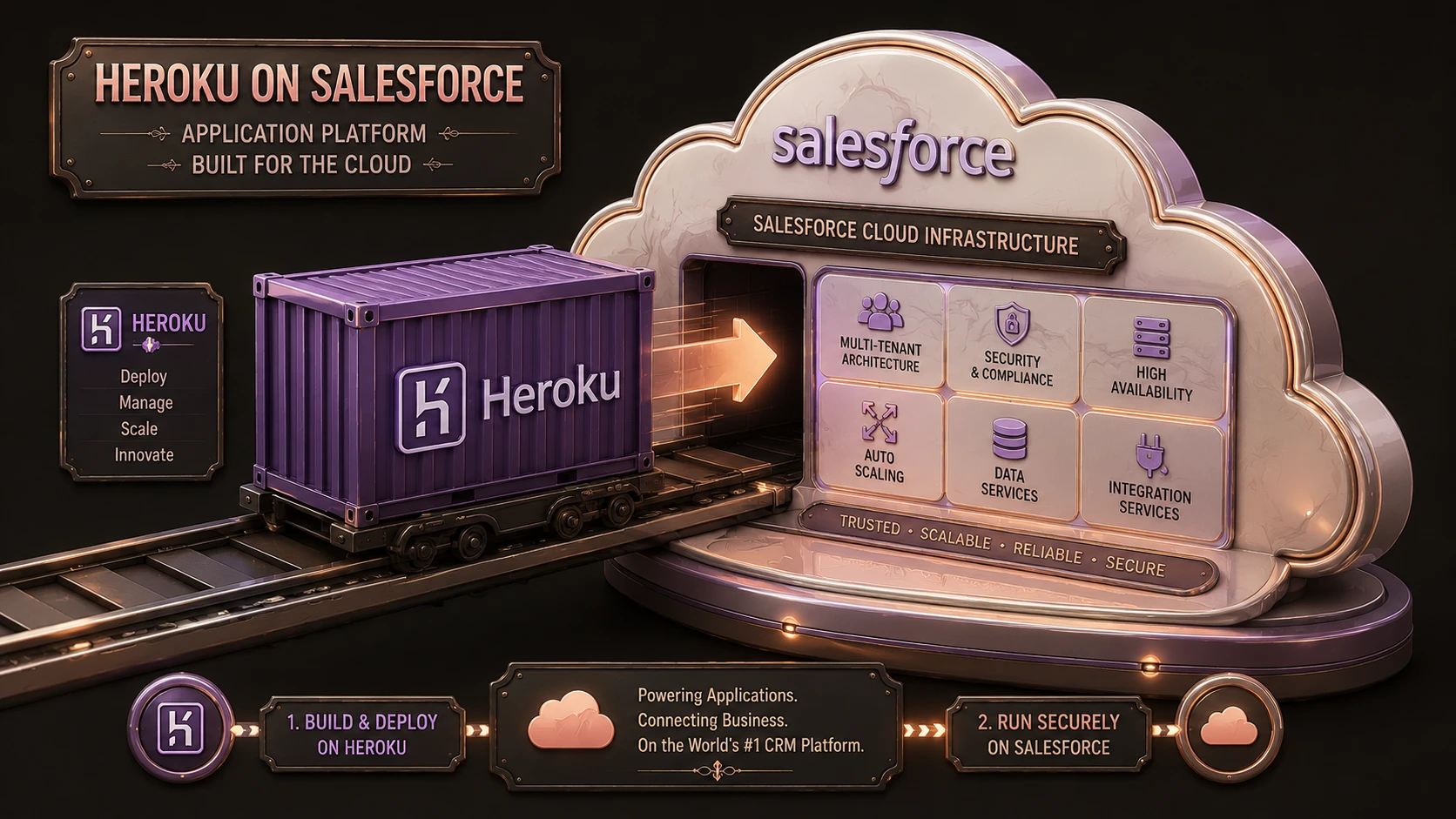
Platform-as-a-Service (PaaS) continues to mature as organizations seek faster ways to develop, deploy, and manage web applications without investing heavily in infrastructure management. Heroku, originally recognized for its Ruby on Rails hosting platform, has significantly broadened its capabilities by introducing production-ready support for Python and Java applications.
From the perspective of May 2012, this expansion represents more than the addition of programming languages. It reflects an industry-wide movement toward polyglot cloud platforms capable of supporting multiple technology stacks while maintaining a consistent operational model.
For enterprise architects, development managers, and software engineers, Heroku's evolution demonstrates how cloud platforms are beginning to abstract infrastructure concerns, allowing engineering teams to focus primarily on application development.
Industry Background
Cloud computing has rapidly evolved from infrastructure virtualization toward higher-level managed services. While Infrastructure-as-a-Service providers offer virtual machines and storage resources, Platform-as-a-Service solutions aim to simplify software deployment by handling operating system management, runtime configuration, scaling, and application lifecycle management.
Initially, many PaaS offerings were closely tied to a single programming language. Heroku established its reputation around Ruby on Rails, attracting startups and agile development teams.
However, enterprise software environments rarely rely on a single language. Organizations often maintain applications developed in Java, Python, .NET, PHP, and JavaScript, creating demand for platforms that accommodate diverse technology portfolios.
Heroku's support for Python and Java is therefore an important strategic step toward becoming a language-agnostic cloud platform.
The Business Problem
Traditional enterprise application deployment introduces several operational challenges.
- ◆Server provisioning delays.
- ◆Runtime configuration complexity.
- ◆Environment inconsistencies.
- ◆Manual software deployment.
- ◆Capacity planning.
- ◆Operating system maintenance.
- ◆Scaling infrastructure during traffic growth.
These activities consume engineering resources that could otherwise be dedicated to delivering business functionality.
A managed Platform-as-a-Service addresses these issues by standardizing deployment workflows and automating infrastructure management.
Understanding the Technology
Heroku provides a managed execution environment where developers deploy application source code rather than configuring servers.
Applications are built using language-specific buildpacks that detect project requirements, prepare runtime environments, and package dependencies.
Core platform capabilities include:
- ◆Source code deployment.
- ◆Automated application builds.
- ◆Dependency management.
- ◆Runtime provisioning.
- ◆Application scaling.
- ◆Log aggregation.
- ◆Managed process execution.
The platform enables developers to interact primarily through Git-based deployment workflows, reducing operational overhead.
Core Architecture
Heroku's architecture abstracts infrastructure behind managed platform services.
| Component | Responsibility |
|---|---|
| Git Deployment | Source code delivery |
| Build System | Dependency installation and compilation |
| Runtime Environment | Language execution |
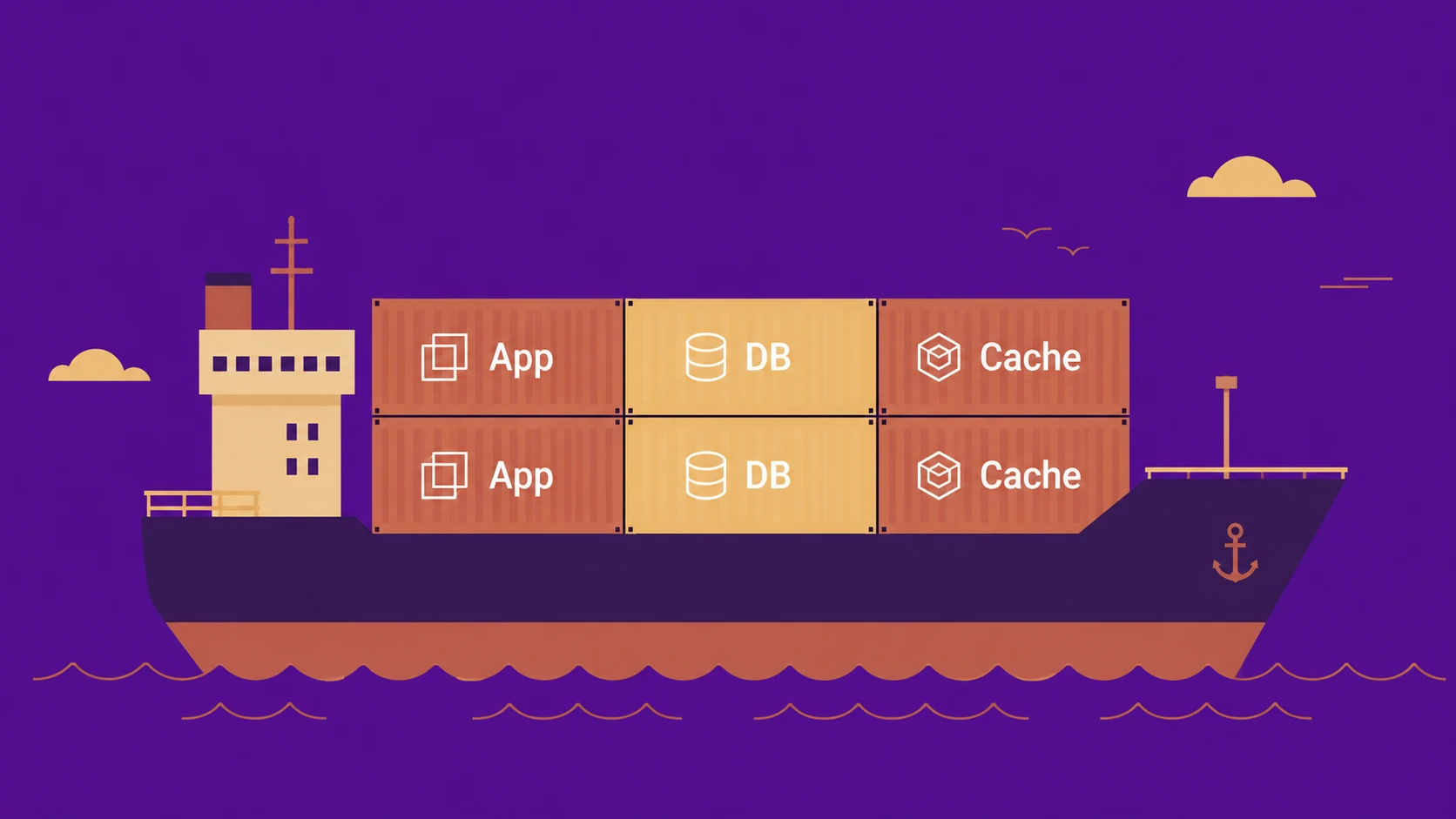
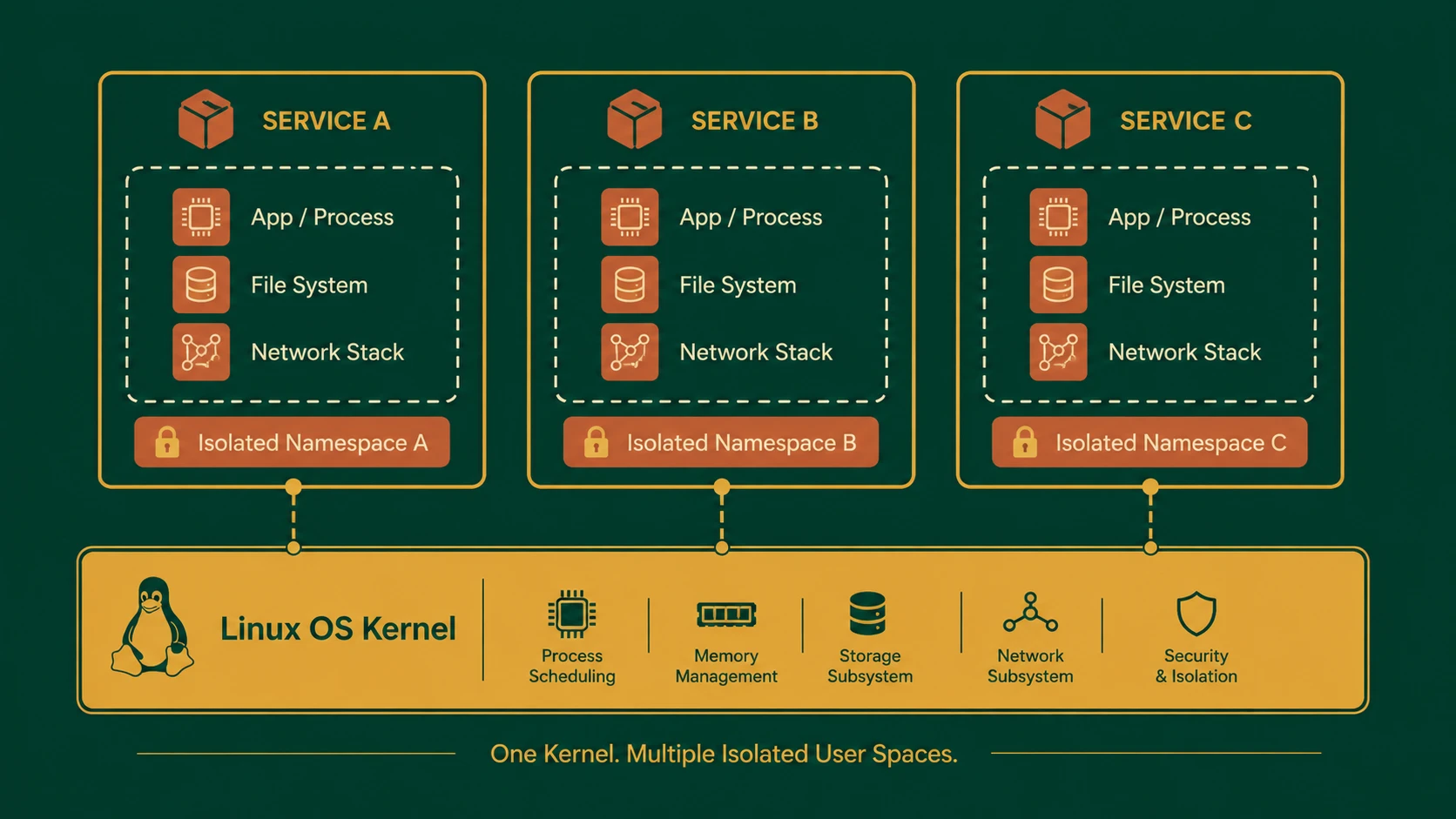
| Dynos | Isolated application processes |
| Routing Layer | HTTP request distribution |
| Add-ons | Managed databases and external services |
| Logging Services | Centralized application logs |
Applications are deployed through Git pushes, triggering automated build and release processes before becoming available to users.
Key Features
Multi-Language Support
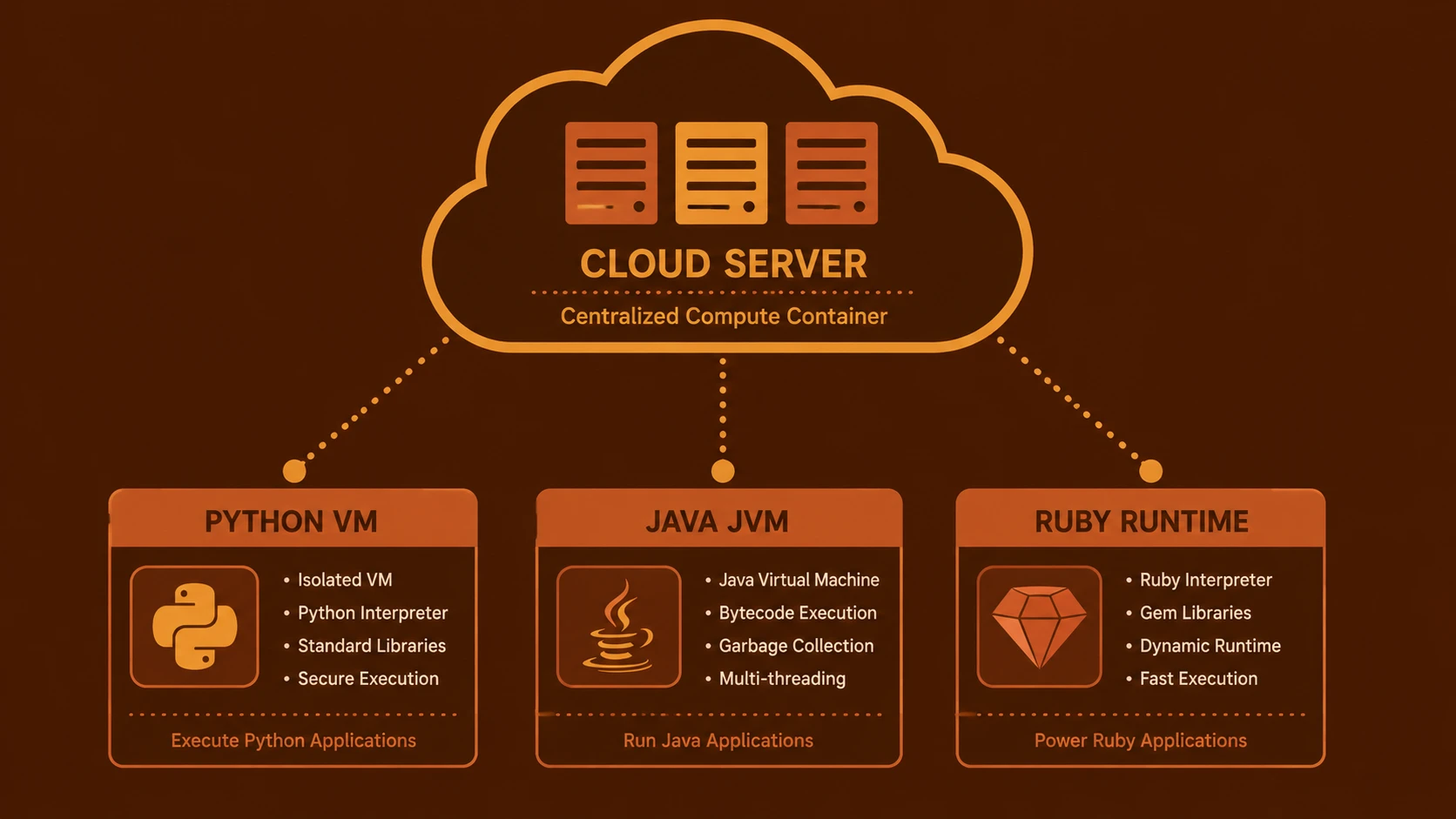
Python and Java join Ruby as supported development platforms, allowing organizations to standardize deployments across multiple languages.
Git-Based Deployment
Developers deploy applications using familiar version control workflows, minimizing operational complexity.
Managed Runtime
Heroku automatically provisions runtime environments, eliminating manual server configuration.
Elastic Scaling
Application capacity can be adjusted by increasing or decreasing the number of dynos without redesigning deployment architecture.
Add-on Ecosystem
Managed databases, caching services, messaging systems, and monitoring tools can be integrated through standardized add-ons.
How It Works
A typical deployment follows this sequence.
Developer
     |
Git Push
     |
Heroku Build System
     |
Language Buildpack
     |
Application Compilation
     |
Dyno Deployment
     |
Routing Layer
     |
End Users
The platform automates compilation, dependency resolution, release management, and runtime provisioning.
Enterprise Use Cases
Organizations can apply Heroku across multiple scenarios.
Customer-Facing Web Applications
Rapid deployment supports evolving customer portals and digital services.
RESTful APIs
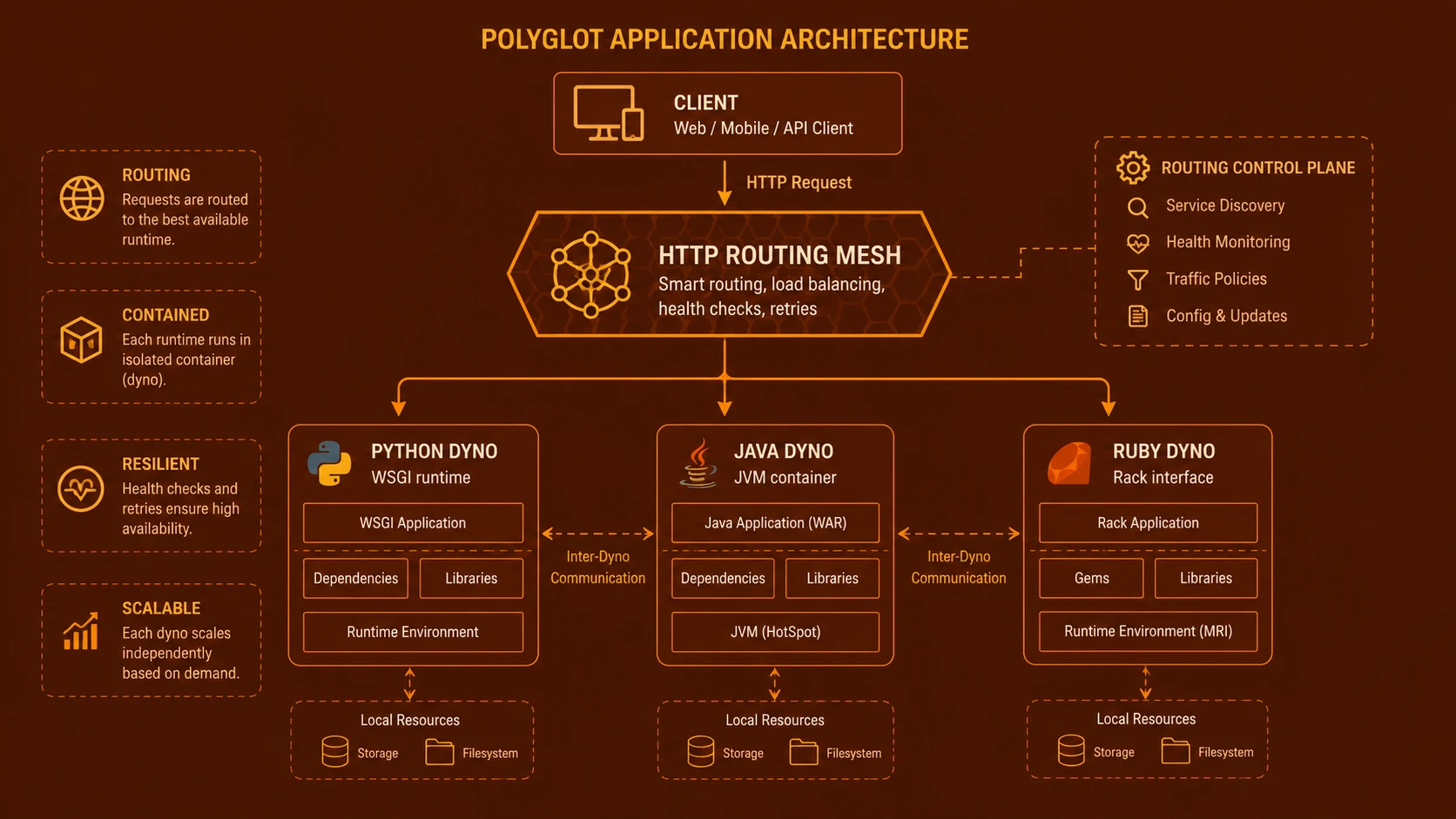
Platform-as-a-Service deployment flow compiling source repositories into isolated dynos.
Development teams can deploy scalable API services without managing operating systems.
Internal Business Applications
Departments can rapidly build productivity tools using Java or Python while leveraging managed infrastructure.
Startup Product Development
Small engineering teams benefit from simplified operations and faster release cycles.
Prototype Validation
Development teams can validate business ideas without investing heavily in infrastructure.
Performance Considerations
Performance depends on both application architecture and platform configuration.
Important considerations include:
- ◆Efficient database access.
- ◆Stateless application design.
- ◆Appropriate dyno sizing.
- ◆Background job processing.
- ◆Optimized application startup.
Applications with excessive startup times or heavy in-memory workloads may require architectural optimization.
Security Considerations
Although infrastructure management is delegated to the platform, application security remains the responsibility of development teams.
Recommended practices include:
- ◆HTTPS communication.
- ◆Secure credential management.
- ◆Input validation.
- ◆Session protection.
- ◆Dependency management.
- ◆Principle of least privilege.
Organizations should also evaluate regulatory and compliance requirements before deploying sensitive workloads to managed cloud environments.
Scalability
One of Heroku's primary advantages is simplified horizontal scaling.
Scaling generally involves increasing the number of application dynos rather than provisioning additional servers manually.
Benefits include:
- ◆Faster response to traffic growth.
- ◆Simplified operational procedures.
- ◆Reduced infrastructure administration.
- ◆Improved deployment consistency.
Applications designed around stateless processing are particularly well suited for this deployment model.
Best Practices
Development teams should consider the following recommendations.
- ◆Design stateless web applications.
- ◆Externalize session storage.
- ◆Automate testing before deployment.
- ◆Separate configuration from source code.
- ◆Monitor application logs continuously.
- ◆Minimize application startup time.
- ◆Use managed services for persistent storage.
Following cloud-native design principles improves operational reliability.
Common Mistakes
| Mistake | Impact |
|---|---|
| Storing state locally | Scaling difficulties |
| Ignoring logging | Troubleshooting challenges |
| Large startup times | Slower deployments |
| Hardcoded configuration | Reduced portability |
| Treating dynos as permanent servers | Operational inconsistencies |
Avoiding these issues results in more resilient cloud deployments.
Technology Comparison
| Platform | Primary Focus | Language Support |
|---|---|---|
| Heroku | Managed PaaS | Ruby, Python, Java |
| Amazon EC2 | Infrastructure-as-a-Service | Runtime managed by customer |
| Google App Engine | Managed application platform | Limited language environments |
| Windows Azure | Cloud platform | Primarily Microsoft technologies |
Heroku differentiates itself by emphasizing developer productivity and simplified application deployment rather than infrastructure management.
Adoption Strategy
Enterprises considering Heroku should begin with non-critical workloads before expanding usage.
Recommended approach:
- 1.Identify suitable web applications.
- 2.Validate supported language runtimes.
- 3.Review compliance requirements.
- 4.Automate deployment pipelines.
- 5.Establish monitoring practices.
- 6.Evaluate operational cost models.
This phased adoption reduces organizational risk while allowing teams to gain operational experience.
Limitations
Despite its advantages, organizations should recognize several considerations.
- ◆Infrastructure customization is intentionally limited.
- ◆Certain legacy enterprise applications may require significant modification.
- ◆Vendor-managed environments reduce administrative control.
- ◆Long-running background processes should follow platform execution guidelines.
- ◆Existing operational procedures may require adaptation.
These trade-offs should be evaluated alongside productivity improvements.
Looking Ahead
From the perspective of May 2012, Heroku's expansion into Python and Java demonstrates that Platform-as-a-Service is evolving beyond language-specific hosting toward comprehensive cloud application platforms. Organizations increasingly expect deployment environments that support multiple programming languages while maintaining consistent operational workflows.
If this trend continues, enterprise development teams may place greater emphasis on application architecture and business functionality while relying on managed cloud platforms to handle deployment, scaling, and infrastructure management. Success will depend on balancing platform convenience with governance, security, and operational requirements as cloud adoption continues to mature.