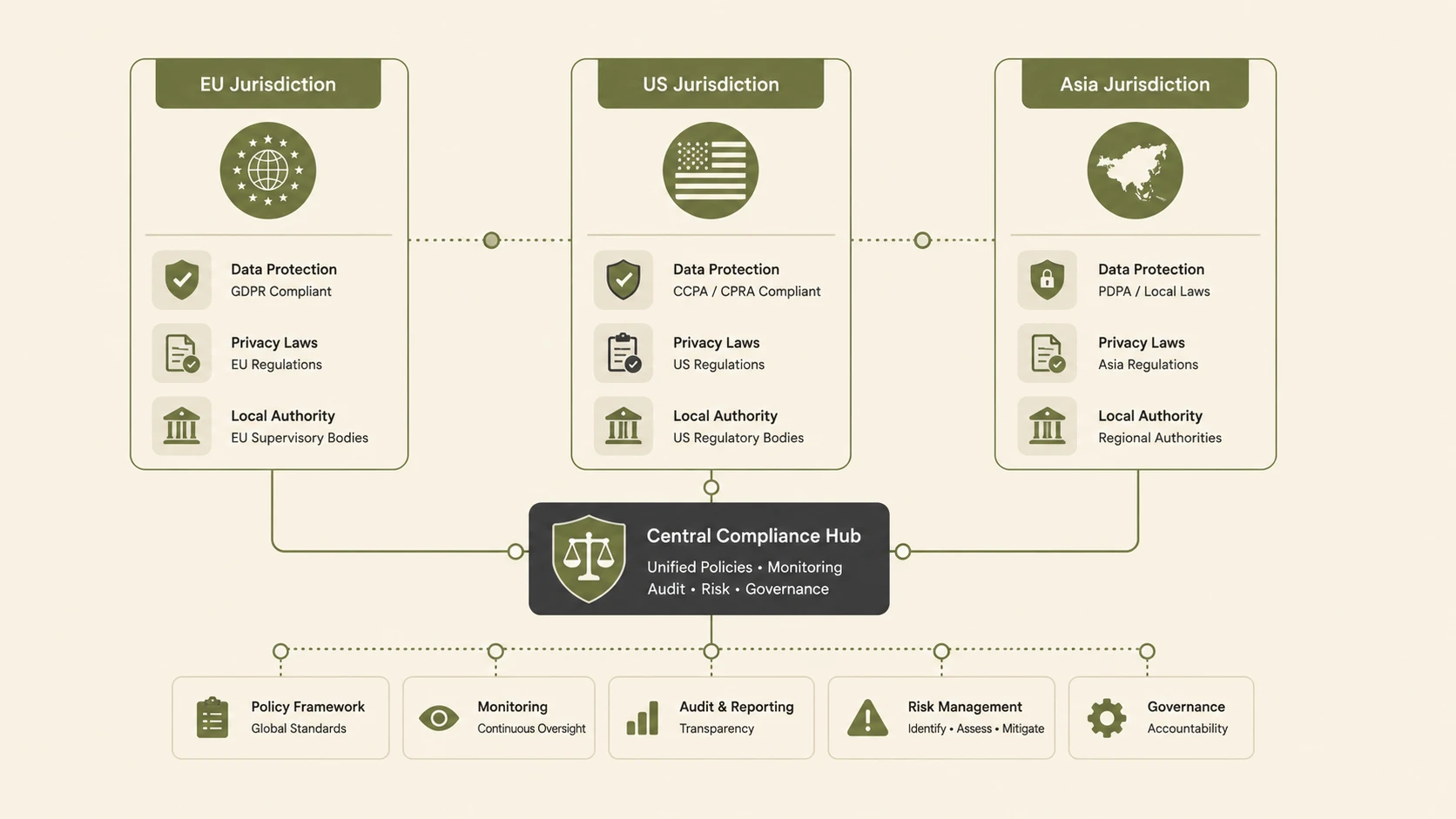
Introduction
Cloud computing has transformed enterprise IT over the past fifteen years. Organizations migrated applications from on-premises infrastructure to hyperscale cloud platforms to gain elasticity, operational efficiency, global availability, and accelerated software delivery. Centralized cloud regions became the default deployment model for enterprise workloads ranging from customer applications to analytics, artificial intelligence, and mission-critical business systems.
However, as organizations expanded internationally, another challenge emerged. Data increasingly became subject to national regulations, industry-specific compliance requirements, contractual obligations, and customer expectations regarding where information is collected, processed, stored, and transferred. Governments introduced stronger privacy frameworks, organizations adopted Zero Trust security models, and enterprises became more conscious of digital sovereignty.
At the same time, advances in edge computing, hybrid cloud infrastructure, Kubernetes, distributed databases, confidential computing, and AI inference have demonstrated that not every workload benefits from centralized execution. Instead, many organizations are embracing architectures that distribute applications and data according to business requirements, regulatory obligations, latency objectives, and operational resilience.
This shift has accelerated the adoption of sovereignty-aware, decentralized architectures. Rather than replacing centralized cloud platforms, these architectures extend them with regional processing, edge infrastructure, localized data governance, and policy-driven workload placement.
As of November 2024, data sovereignty has become an architectural concern that influences infrastructure strategy, software design, cybersecurity, compliance, and enterprise operating models.
Industry Background
Several technology and regulatory trends continue driving decentralized enterprise architectures:
- ◆Data sovereignty regulations
- ◆Privacy legislation
- ◆Multi-cloud adoption
- ◆Hybrid cloud platforms
- ◆Edge computing
- ◆Artificial Intelligence governance
- ◆Zero Trust security
- ◆Platform Engineering
Organizations increasingly require infrastructure capable of respecting jurisdictional requirements while maintaining global operational consistency.
The Business Problem
Traditional centralized cloud deployments often introduce:
- ◆Cross-border data transfer complexity
- ◆Regulatory uncertainty
- ◆Higher network latency for regional users
- ◆Single-region operational dependency
- ◆Compliance management challenges
- ◆Increased data residency concerns
- ◆Limited workload placement flexibility
Modern enterprises require architectures capable of balancing global scalability with localized governance and operational control.
Understanding Data Sovereignty
Data sovereignty refers to the principle that digital information is governed by the laws and regulations of the jurisdiction in which it is collected, processed, or stored.
Enterprise architects must increasingly consider:
- ◆Data residency
- ◆Cross-border transfers
- ◆Regulatory obligations
- ◆Customer contractual requirements
- ◆Industry-specific controls
Data sovereignty is therefore not simply a storage concern—it influences application architecture, operational workflows, identity management, encryption, and governance.
Understanding Decentralized Architecture
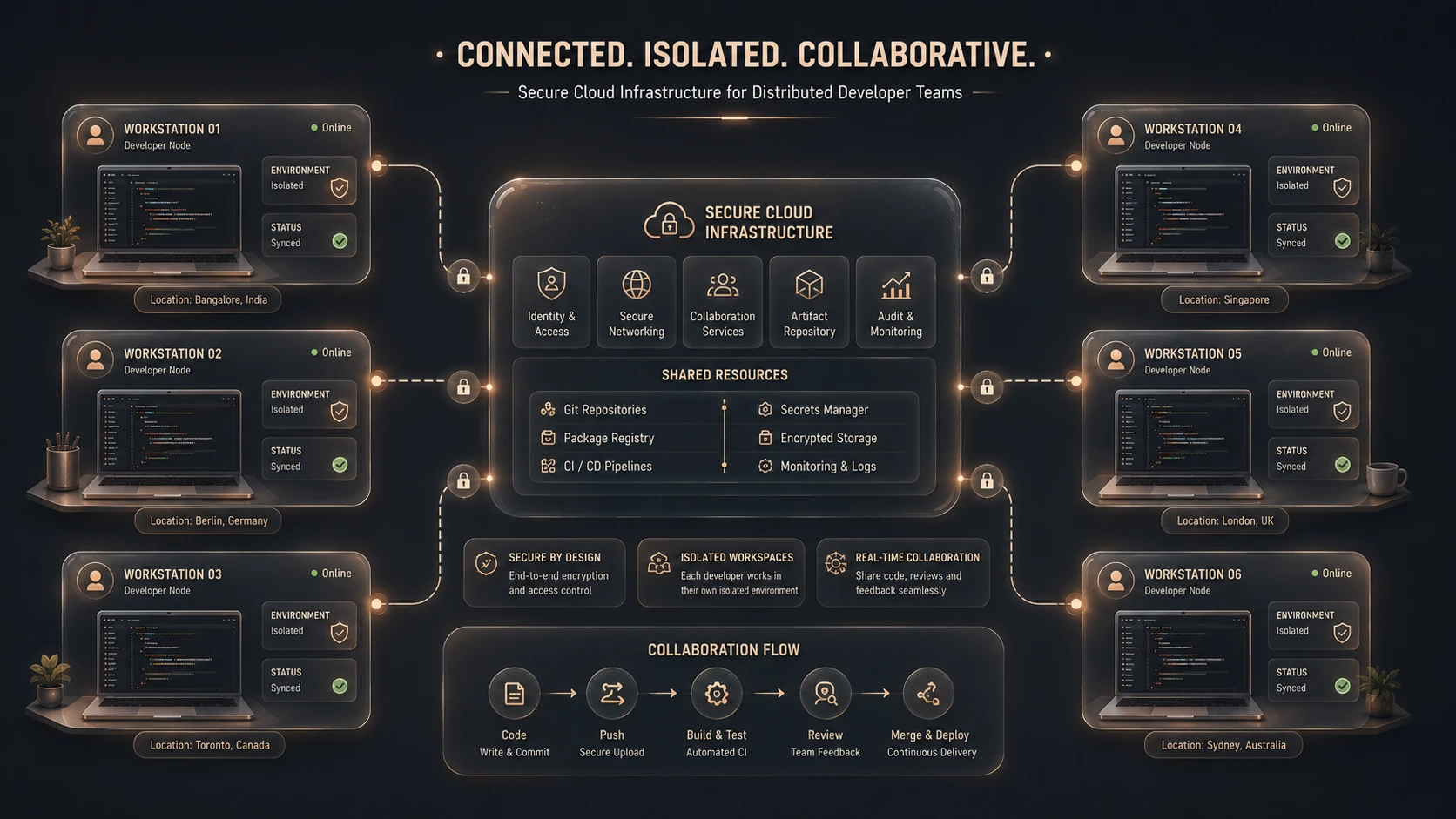
Decentralized architecture distributes applications, services, and data across multiple geographic locations rather than relying exclusively on centralized cloud regions.
Typical architectural characteristics include:
- ◆Regional application deployment
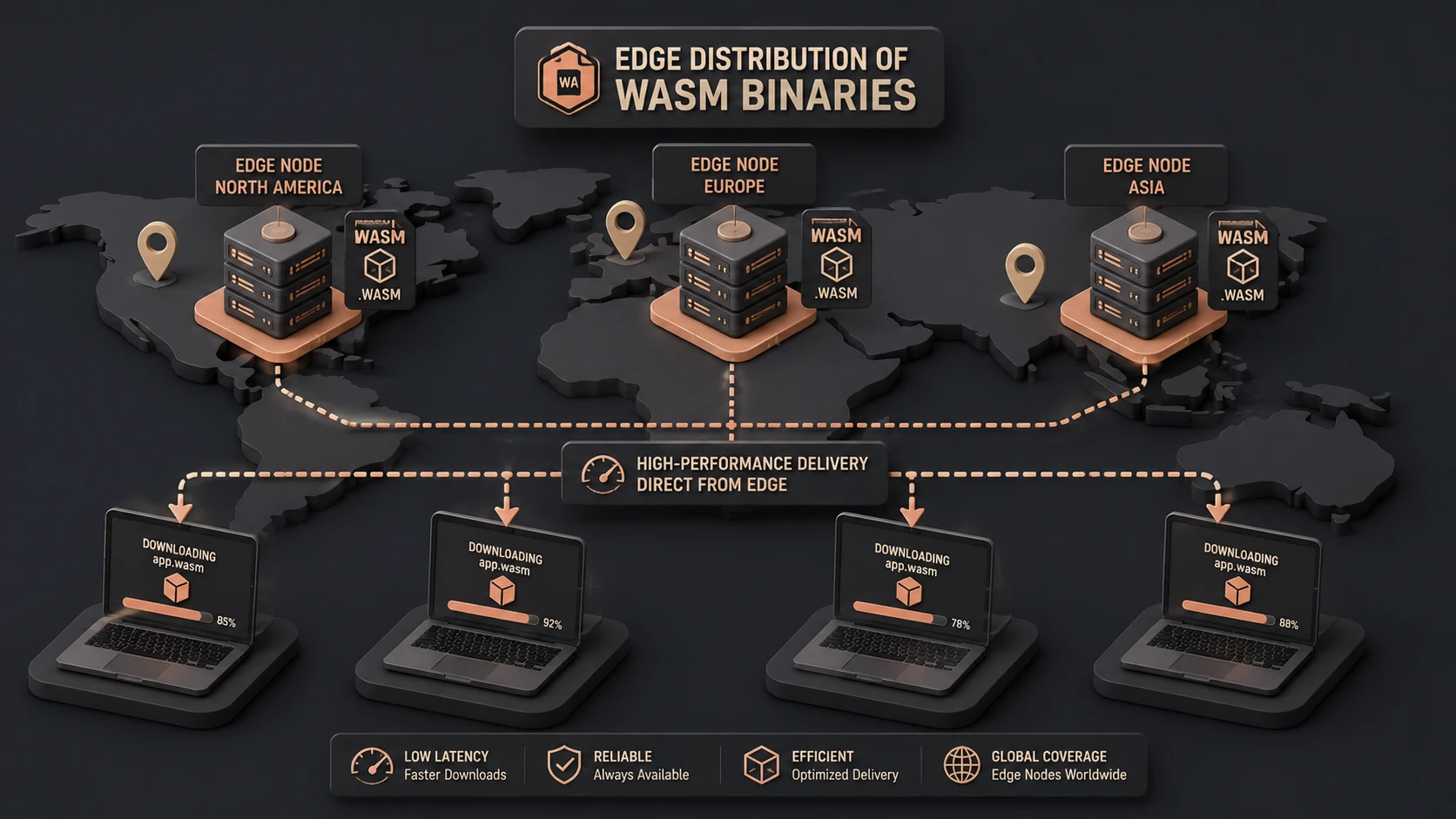
- ◆Edge computing
- ◆Distributed databases
- ◆Multi-region APIs
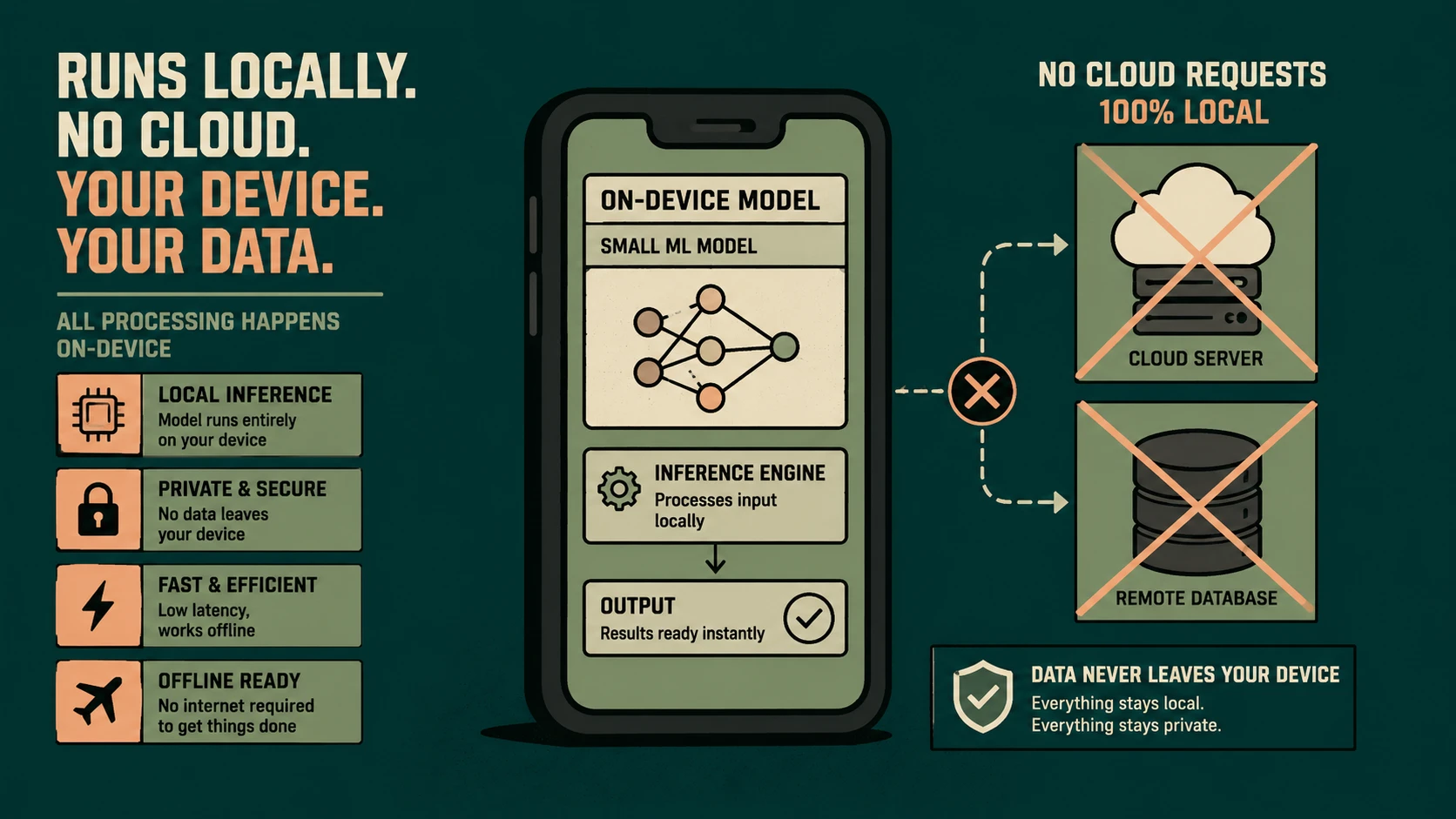
- ◆Local AI inference
- ◆Federated identity services
- ◆Policy-driven workload placement
The objective is to place workloads where they provide the greatest business, regulatory, and operational value.
Core Architecture
| Component | Responsibility |
|---|---|
| Regional Cloud Infrastructure | Hosts jurisdiction-specific workloads |
| Edge Computing Layer | Executes latency-sensitive processing |
| Distributed Data Platform | Stores and synchronizes regional data |
| Policy Engine | Determines workload and data placement |
| Identity Platform | Provides secure federated authentication |
| Compliance Services | Enforce governance and auditing |
| Observability Platform | Monitors distributed infrastructure |
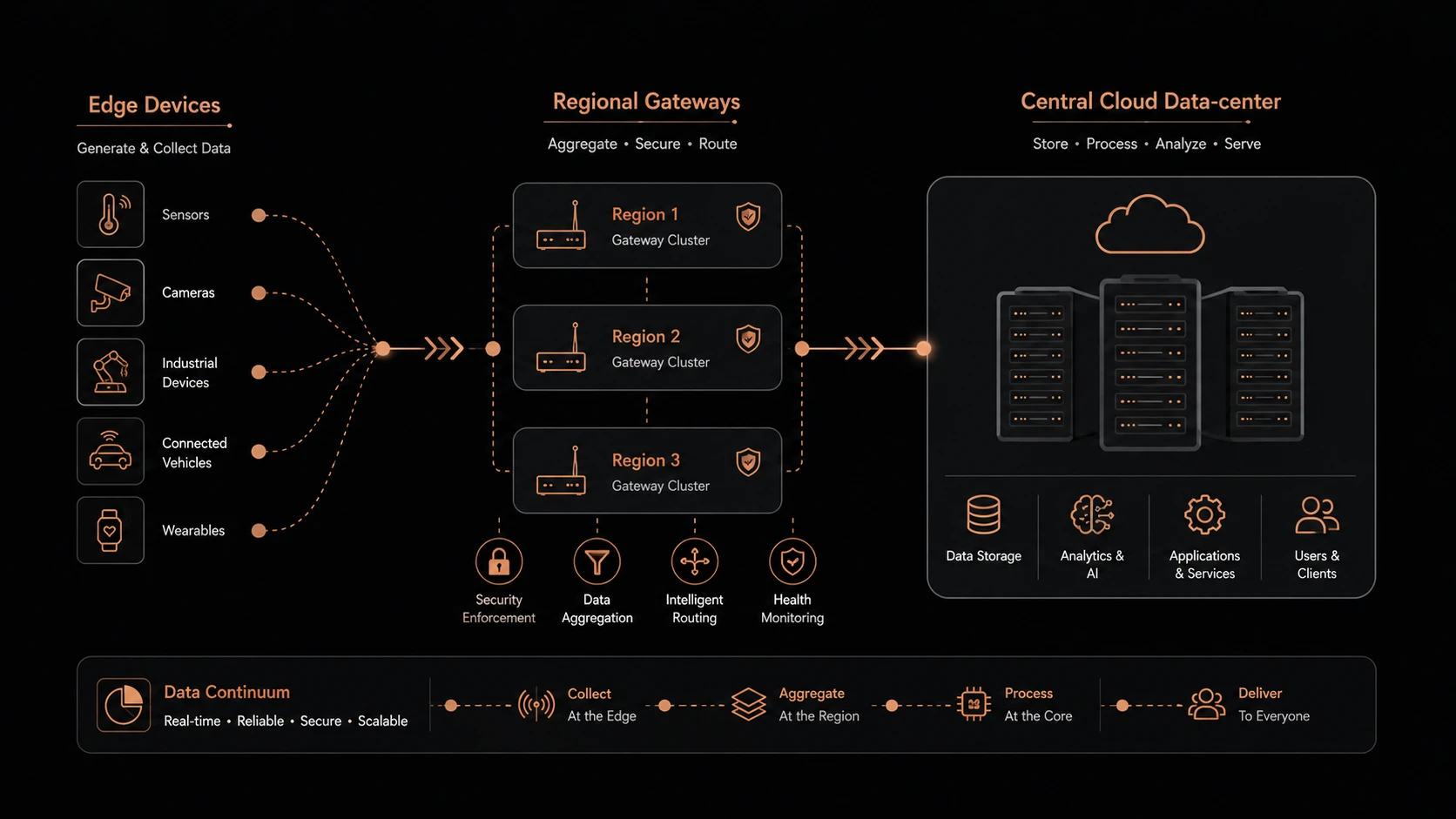
This architecture combines centralized coordination with localized execution and governance.
Data Residency vs Data Sovereignty
Although frequently discussed together, data residency and data sovereignty address different concerns.
Data residency focuses on the physical or logical location where information is stored.
Data sovereignty extends further by considering the legal jurisdiction governing that information, including how it may be processed, transferred, accessed, and protected.
Enterprise architectures should evaluate both dimensions when designing distributed systems.
Regional Workload Placement
Modern platforms increasingly deploy workloads according to policy rather than convenience.
Typical considerations include:
- ◆Regulatory requirements
- ◆Latency objectives
- ◆Disaster recovery planning
- ◆Customer location
- ◆Operational cost
- ◆Infrastructure availability
Policy-driven deployment enables organizations to balance compliance and performance simultaneously.
Hybrid Cloud and Edge Integration
Decentralized architectures frequently combine:
- ◆Public cloud services
- ◆Private cloud infrastructure
- ◆On-premises systems
- ◆Edge environments
- ◆Regional data centers
Each environment performs workloads aligned with its operational strengths while remaining connected through standardized APIs and secure networking.
Federated Data Management
-- Postgres foreign data wrapper query matching geographic data residency laws
-- Fetches local EU customer records without moving storage out of the EU region
CREATE EXTENSION postgres_fdw;

CREATE SERVER eu_db_server
FOREIGN DATA WRAPPER postgres_fdw
OPTIONS (host 'eu-data-node.shivamitcs.com', dbname 'eu_customers', port '5432');

CREATE USER MAPPING FOR current_user
SERVER eu_db_server
OPTIONS (user 'sovereign_reader', password 'restricted_pass');

CREATE FOREIGN TABLE local_eu_customers (
    id integer,
    name varchar(100),
    country_code varchar(2)
) SERVER eu_db_server OPTIONS (table_name 'customers');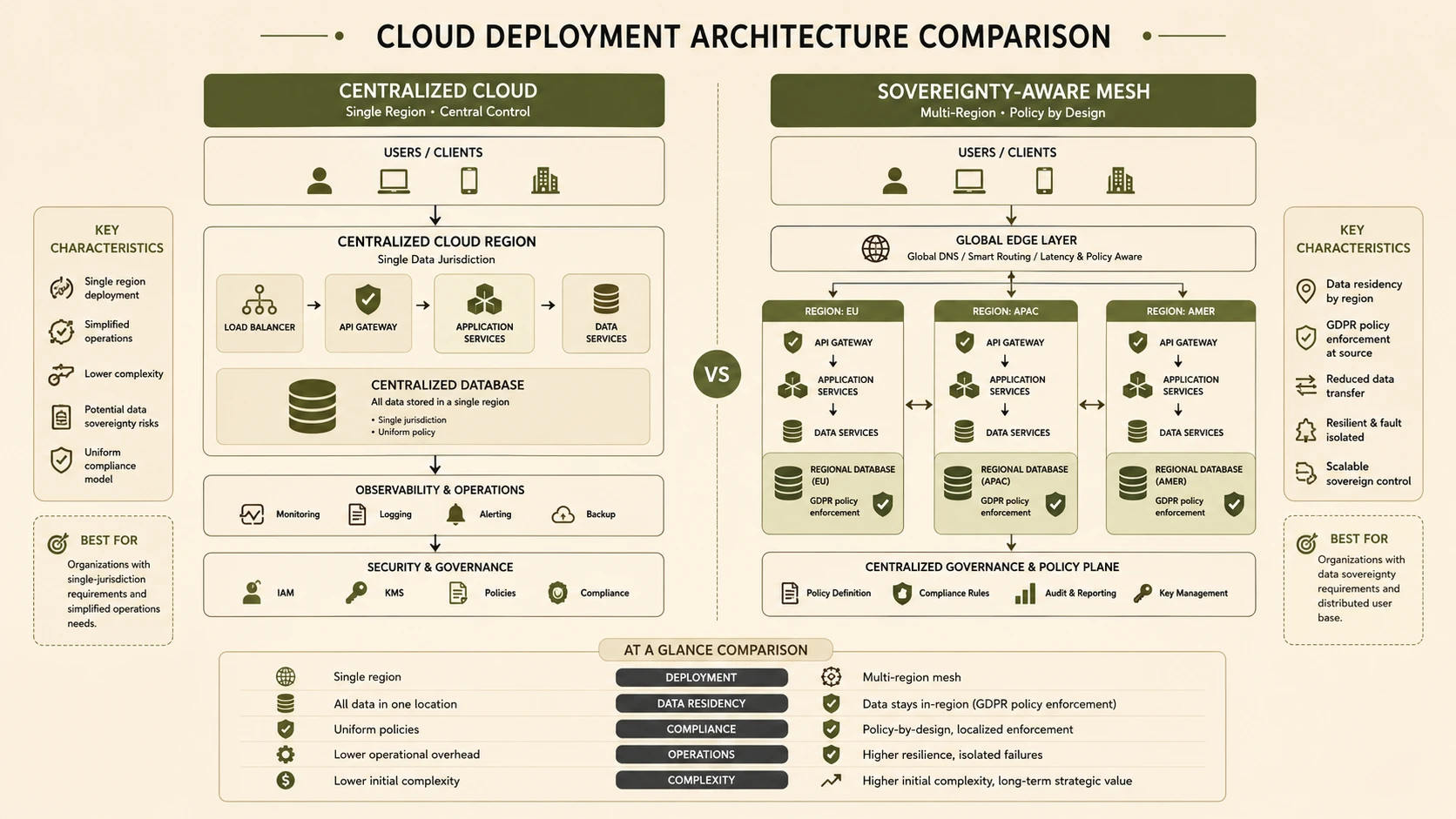
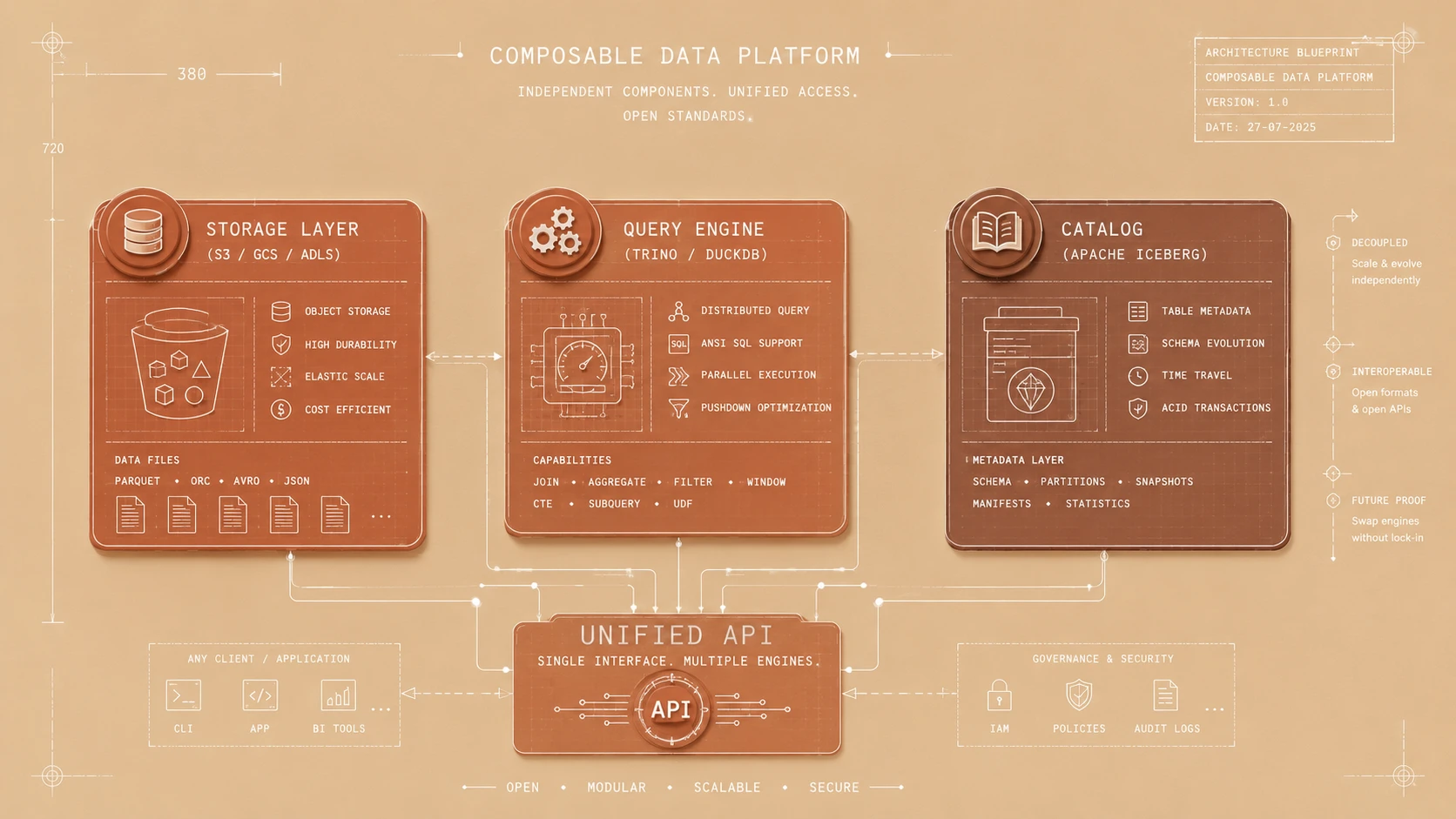
System architecture diagram and conceptual workflow layout for Data Sovereignty & Decentralized Architecture.
Rather than maintaining a single global database for every workload, organizations increasingly adopt distributed data strategies.
Typical approaches include:
- ◆Regional databases
- ◆Data replication policies
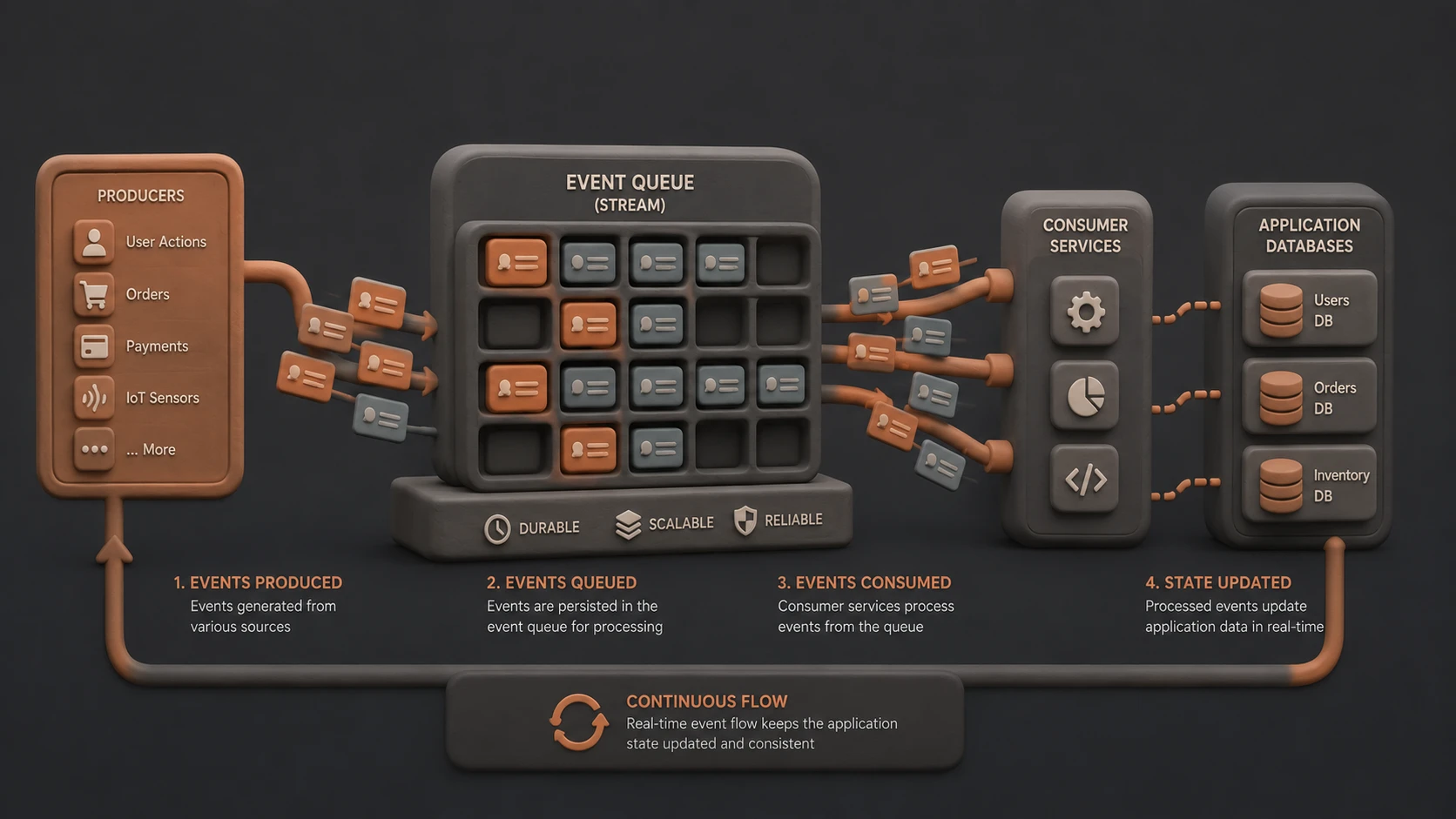
- ◆Event-driven synchronization
- ◆Metadata management
- ◆Data lifecycle governance
This enables localized processing while supporting enterprise-wide reporting and analytics where permitted.
Enterprise Use Cases
| Scenario | Benefit |
|---|---|
| Financial Services | Regional regulatory compliance |
| Healthcare Platforms | Localized patient data governance |
| Government Systems | National data residency support |
| Manufacturing | Distributed operational resilience |
| Retail Platforms | Regional customer experience optimization |
| Global SaaS Providers | Flexible multi-region service delivery |
Organizations operating across multiple jurisdictions benefit from architectures that separate governance policies from application logic.
Performance Considerations
Engineering teams should evaluate:
- ◆Regional response latency
- ◆Data synchronization performance
- ◆Network utilization
- ◆Cross-region replication delay
- ◆Infrastructure utilization
- ◆Disaster recovery objectives
Performance optimization should consider both user experience and regulatory requirements.
Security Considerations
Decentralized architectures require comprehensive security governance.
Organizations should continue implementing:
- ◆Zero Trust architecture
- ◆Identity federation
- ◆End-to-end encryption
- ◆Confidential computing where appropriate
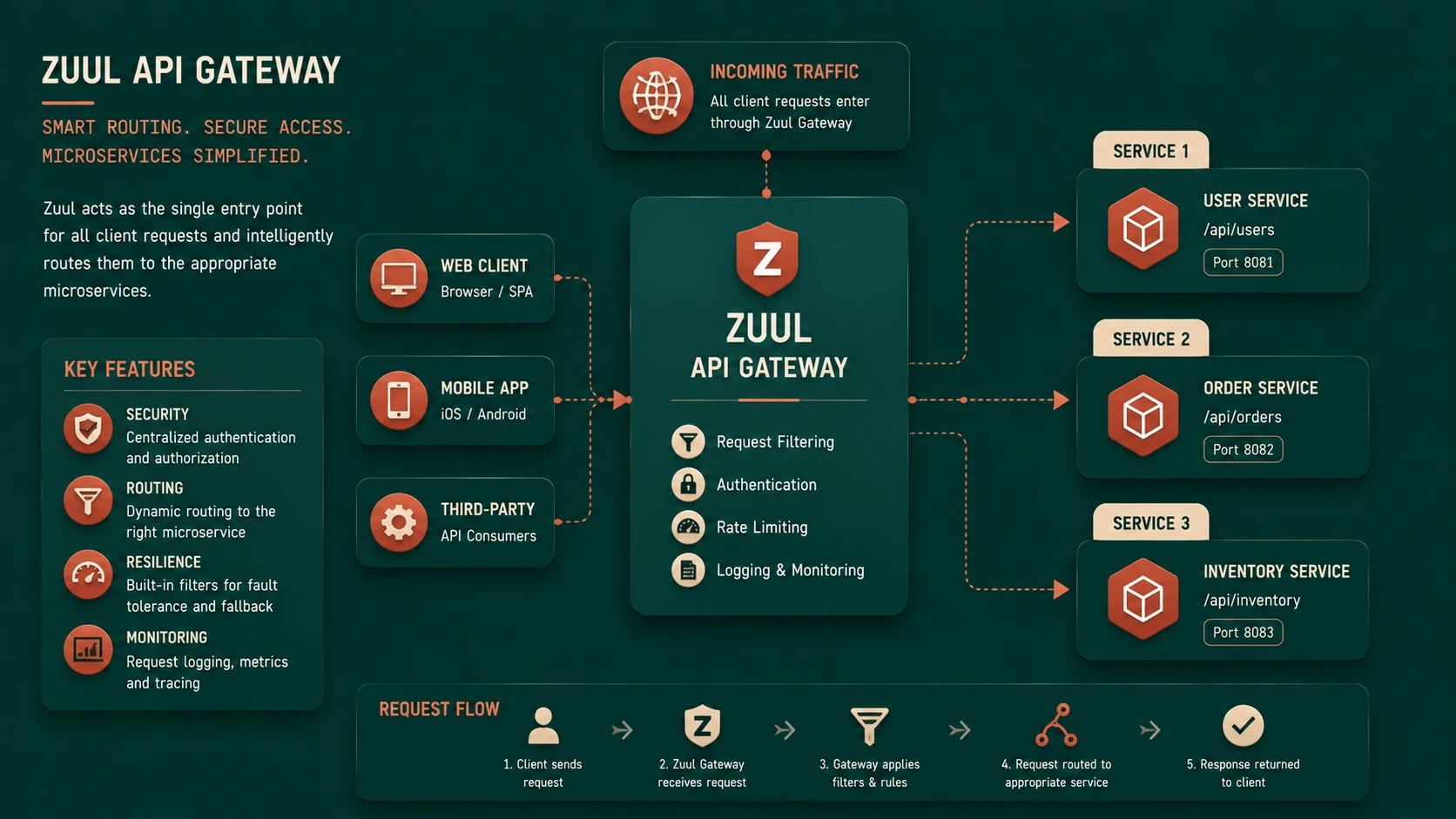
- ◆Secure API gateways
- ◆Centralized policy management
- ◆Comprehensive audit logging
Security policies should remain consistent regardless of workload location.
Scalability
Sovereignty-aware architectures support enterprise growth through:
- ◆Regional infrastructure expansion
- ◆Independent workload scaling
- ◆Policy-driven automation
- ◆Distributed operational resilience
- ◆Flexible cloud provider integration
These capabilities allow organizations to expand globally while respecting regional governance requirements.
Best Practices
Organizations designing sovereignty-aware architectures should:
- ◆Inventory data according to sensitivity and jurisdiction.
- ◆Separate application logic from data location policies.
- ◆Adopt policy-driven workload placement.
- ◆Standardize APIs across deployment environments.
- ◆Implement federated identity management.
- ◆Encrypt sensitive data throughout its lifecycle.
- ◆Automate compliance validation where practical.
- ◆Continuously review regulatory developments and infrastructure strategies.
Well-designed governance enables distributed architectures without sacrificing operational consistency.
Common Mistakes
Organizations should avoid:
- ◆Assuming every workload requires regional isolation.
- ◆Treating data sovereignty solely as an infrastructure issue.
- ◆Embedding jurisdiction-specific logic directly into applications.
- ◆Ignoring interoperability across cloud providers.
- ◆Neglecting observability within distributed environments.
- ◆Optimizing exclusively for compliance while overlooking operational efficiency.
Successful decentralized architectures balance governance, resilience, performance, and maintainability.
Technology Comparison
| Capability | Centralized Cloud Architecture | Sovereignty-Aware Decentralized Architecture |
|---|---|---|
| Data Processing | Central cloud regions | Regional and distributed execution |
| Data Governance | Centralized | Policy-driven by jurisdiction |
| Latency | Region dependent | Optimized through workload placement |
| Compliance Flexibility | Moderate | High |
| Operational Resilience | Region focused | Multi-region and distributed |
| Infrastructure Strategy | Centralized cloud | Hybrid, multi-cloud, and edge |
Decentralized architecture complements centralized cloud computing by enabling organizations to deploy workloads where they best satisfy business, technical, and regulatory requirements.
Adoption Strategy
Organizations should modernize incrementally.
A practical roadmap includes:
- 1.Classify enterprise data according to regulatory and business requirements.
- 2.Assess workload placement strategies.
- 3.Introduce policy-based infrastructure governance.
- 4.Expand regional deployment capabilities.
- 5.Implement federated identity and security controls.
- 6.Establish distributed observability and compliance monitoring.
- 7.Continuously optimize architecture based on operational metrics, regulatory evolution, and business expansion.
An incremental approach reduces migration risk while allowing organizations to build governance maturity over time.
Limitations
As of November 2024, organizations should recognize several considerations.
Current observations include:
- ◆Decentralized architectures increase operational complexity compared to fully centralized deployments.
- ◆Distributed data management requires careful governance and synchronization strategies.
- ◆Regulatory requirements continue evolving and vary across jurisdictions.
- ◆Successful implementation depends on organizational governance, platform engineering, automation, and architectural discipline rather than infrastructure technology alone.
Organizations should therefore approach data sovereignty as an enterprise architecture capability that integrates security, compliance, cloud strategy, and application design.
Looking Ahead
As of November 2024, data sovereignty has become a defining consideration in enterprise cloud architecture. Rather than abandoning centralized cloud platforms, organizations are extending them with regional infrastructure, edge computing, distributed data platforms, policy-driven governance, and hybrid deployment models that align with both business objectives and regulatory obligations.
For enterprise architects, CISOs, platform engineering teams, and technology leaders, the strategic objective is to build flexible architectures capable of adapting to evolving regulations, expanding global operations, and emerging AI workloads without compromising security or operational efficiency. Organizations that invest in policy-driven governance, distributed infrastructure, cryptographic protection, and automation will be well positioned for the next generation of globally distributed enterprise computing.