Introduction
Enterprise applications today serve globally distributed users who expect consistently fast, personalized, and reliable digital experiences. Traditional caching mechanisms have long reduced latency by storing frequently requested resources closer to end users. However, the rapid growth of dynamic applications, AI-powered services, personalized content, and edge computing has exposed the limitations of rule-based caching strategies.
Conventional caching systems depend heavily on predefined expiration policies, cache invalidation rules, and manually configured content delivery networks. While these approaches remain effective for static assets, they struggle to optimize highly dynamic workloads where user behavior, regional traffic patterns, and application state continuously evolve.
By late 2023, organizations are increasingly adopting intelligent caching strategies that combine machine learning, predictive analytics, edge computing, and real-time telemetry. Rather than reacting after cache misses occur, these systems proactively predict demand, pre-position content, optimize cache placement, and intelligently refresh data before users request it.
For enterprise architects, predictive edge logic represents a major advancement in cloud-native application performance, enabling lower latency, improved scalability, and better infrastructure utilization.
Industry Background
Modern digital platforms increasingly depend upon:
- ◆Global Content Delivery Networks (CDNs)
- ◆Edge Computing
- ◆Microservices
- ◆Cloud-native Infrastructure
- ◆AI-powered Analytics
- ◆Real-time Telemetry
- ◆API Gateways
- ◆Distributed Data Platforms
Together these technologies create the foundation for intelligent content delivery across geographically distributed environments.
The Business Problem
Traditional caching systems commonly encounter:
- ◆Cache misses during traffic spikes
- ◆High origin server load
- ◆Static expiration policies
- ◆Regional latency differences
- ◆Inefficient cache utilization
- ◆Manual optimization efforts
Organizations require adaptive caching systems capable of responding dynamically to changing application behavior.
Understanding Intelligent Caching
Intelligent caching combines conventional cache management with predictive analytics and edge computing.
Its primary objectives include:
- ◆Predict future requests
- ◆Reduce origin traffic
- ◆Lower application latency
- ◆Improve cache hit ratios
- ◆Optimize infrastructure utilization
- ◆Enhance user experience
Rather than relying solely on fixed policies, intelligent caching continuously adapts based on observed application behavior.
Core Architecture
| Component | Responsibility |
|---|---|
| Client Applications | Generate user requests |
| Edge Network | Serve cached responses |
| CDN | Global content distribution |
| Predictive Analytics Engine | Forecast content demand |
| AI Model | Learn traffic patterns |
| Origin Services | Generate authoritative responses |
| Observability Platform | Collect telemetry |
| Cache Management System | Coordinate cache lifecycle |
These components work together to create an adaptive content delivery platform.
How Predictive Edge Logic Works
- 1.Users generate requests across multiple geographic regions.
- 2.Edge nodes collect request telemetry.
- 3.AI models analyze historical traffic patterns.
- 4.Predictive algorithms forecast future demand.
- 5.Frequently requested content is proactively cached at edge locations.
- 6.Cache policies adjust dynamically based on application behavior.
- 7.Users receive responses from nearby edge nodes while minimizing origin server requests.
This feedback loop continuously improves cache efficiency over time.
Predictive Request Analysis
Instead of waiting for cache misses, predictive systems estimate future requests using:
- ◆Historical traffic
- ◆Seasonal demand
- ◆Regional access patterns
- ◆User behavior
- ◆Application events
- ◆Business schedules
These insights allow edge infrastructure to prepare content before demand increases.
AI-Driven Cache Optimization
// Cloudflare Workers script doing predictive edge caching
addEventListener('fetch', event => {
  event.respondWith(handleRequest(event.request));
});

async function handleRequest(request) {
  const url = new URL(request.url);
  const cache = caches.default;

  let response = await cache.match(request);
  if (!response) {
    response = await fetch(request);
    event.waitUntil(cache.put(request, response.clone()));

    // Predictively prefetch the next page resources in background
    if (url.pathname === '/catalog') {
      event.waitUntil(fetch('/api/v1/personalized-offers'));
    }
  }
  return response;
}
Machine learning models increasingly optimize:
- ◆Cache eviction policies
- ◆Object prioritization
- ◆Cache refresh timing
- ◆Geographic placement
- ◆Storage utilization
- ◆Resource allocation
This adaptive approach improves cache effectiveness while reducing manual tuning.
Edge Computing Integration
Edge computing extends application logic closer to users.
Benefits include:
- ◆Lower latency
- ◆Reduced network congestion
- ◆Faster API responses
- ◆Local request processing
- ◆Improved resilience
- ◆Better scalability
Predictive caching complements edge execution by ensuring frequently accessed resources remain available near users.
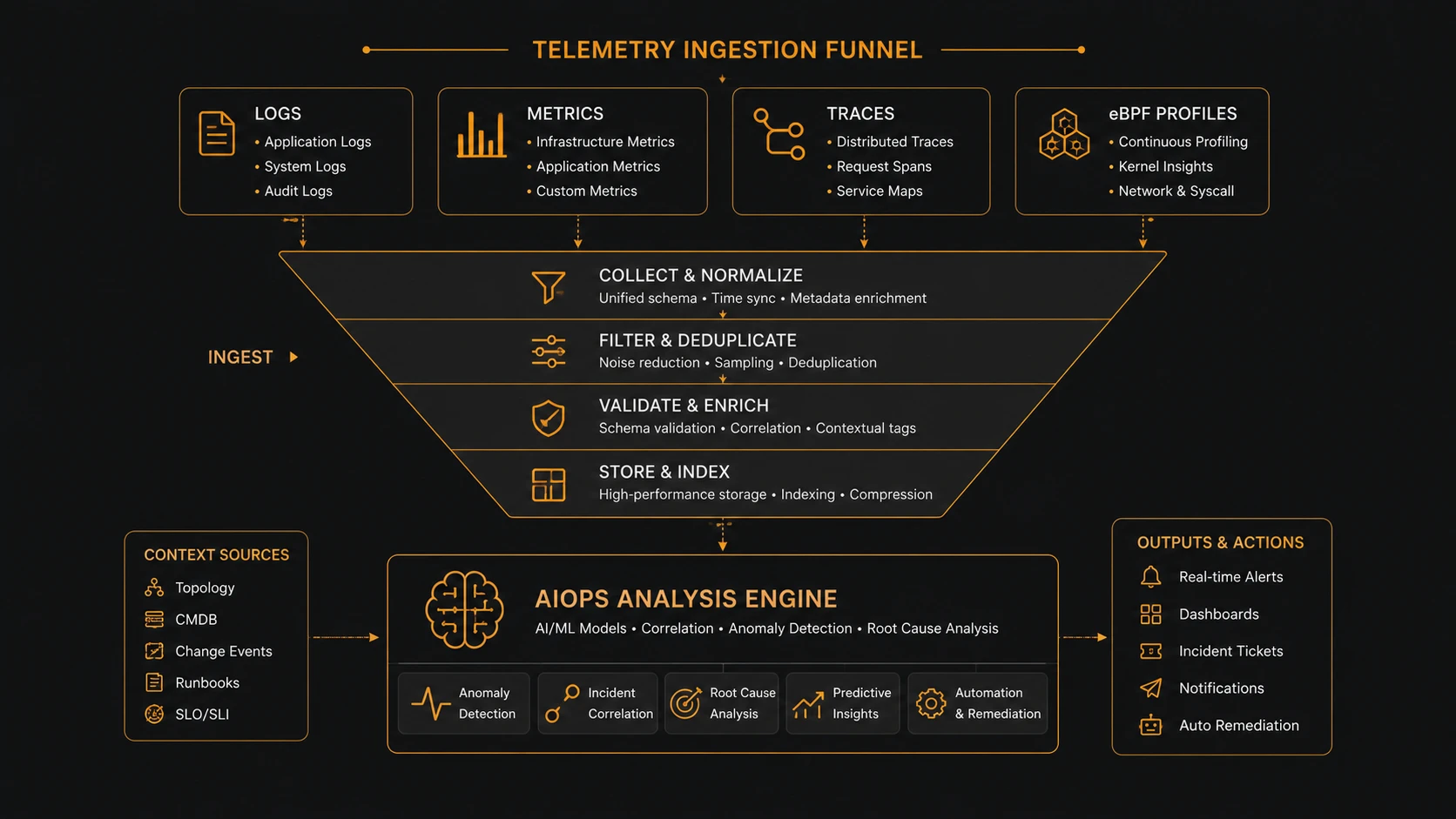
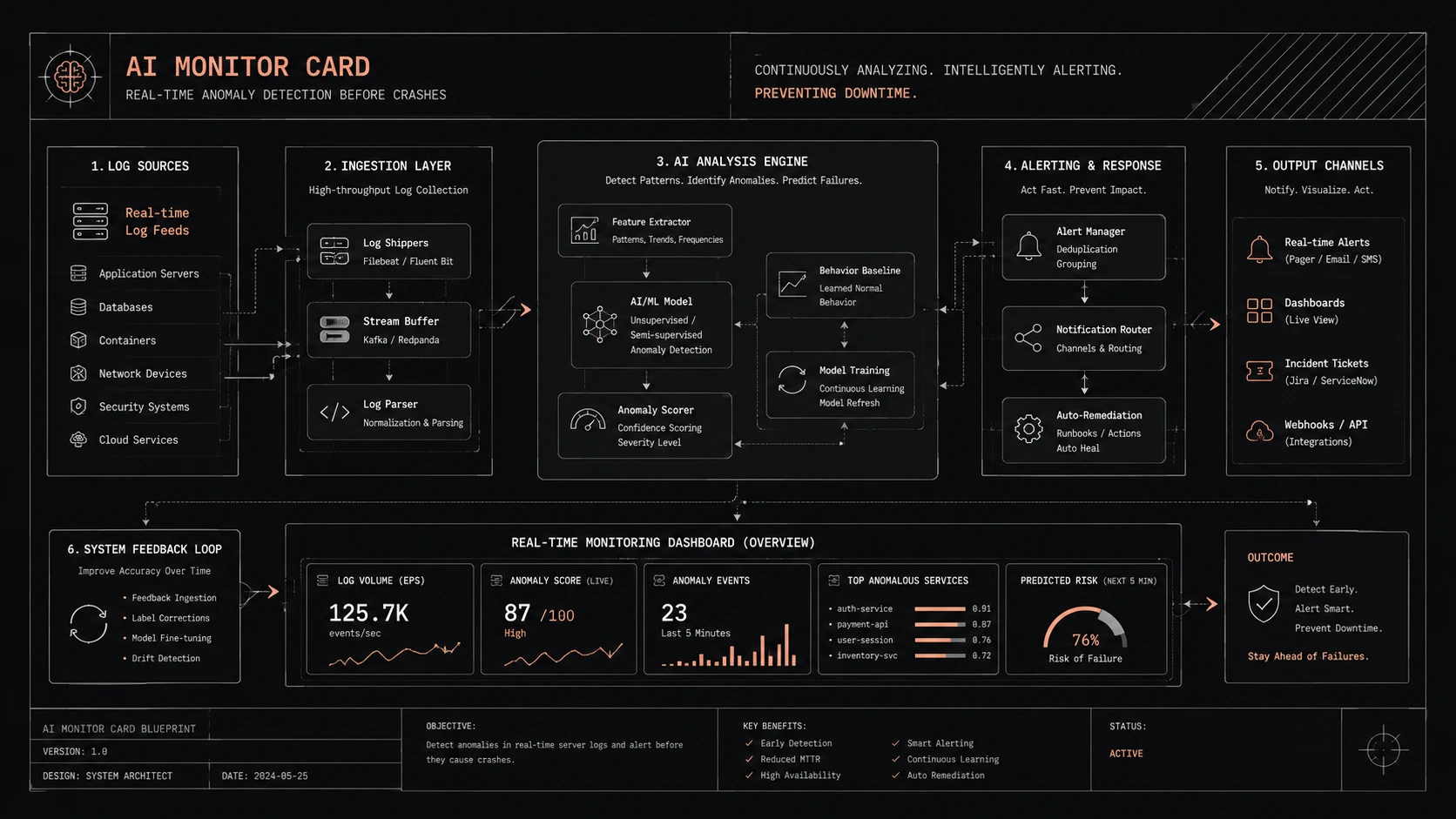
Real-Time Telemetry
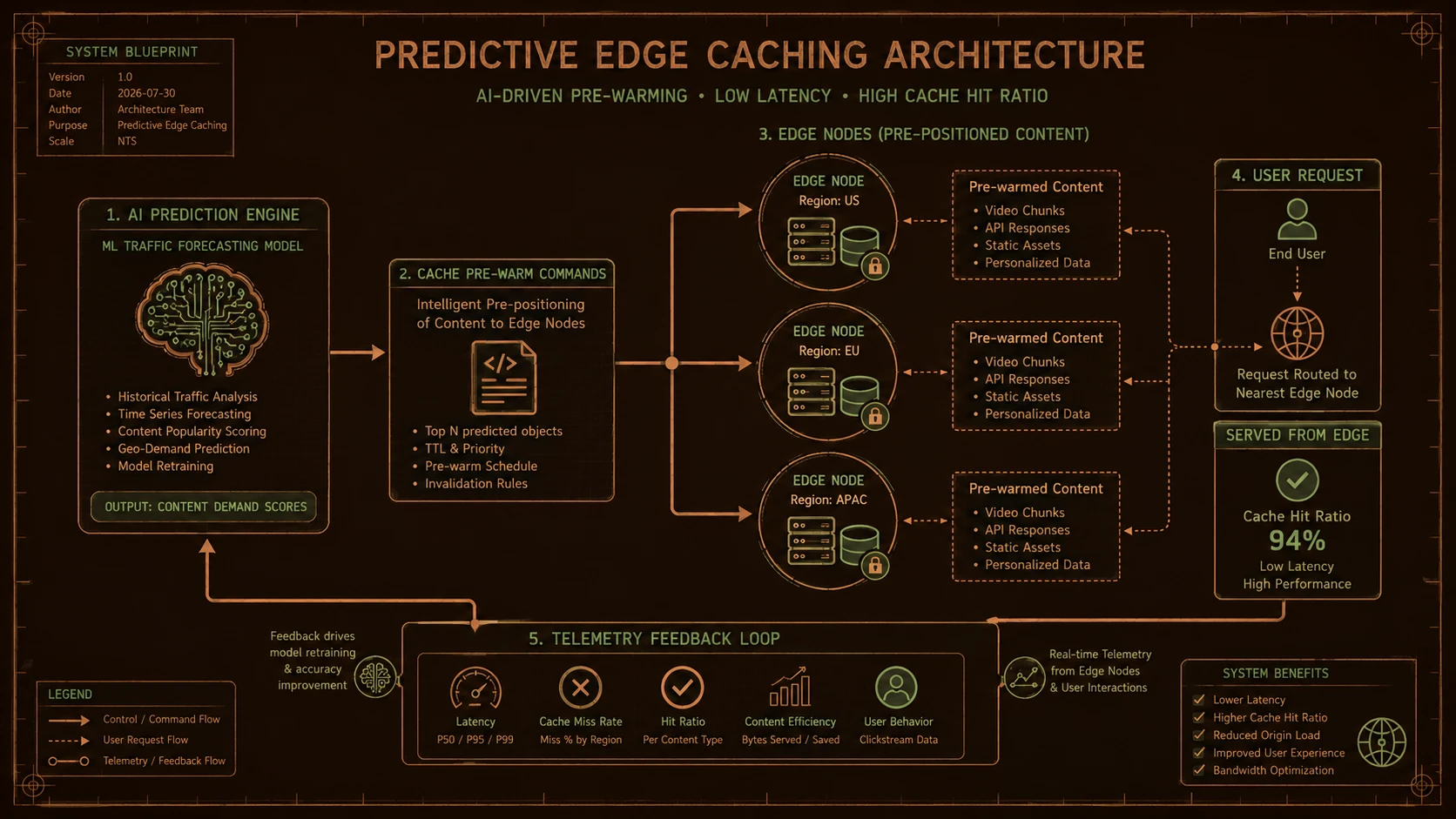
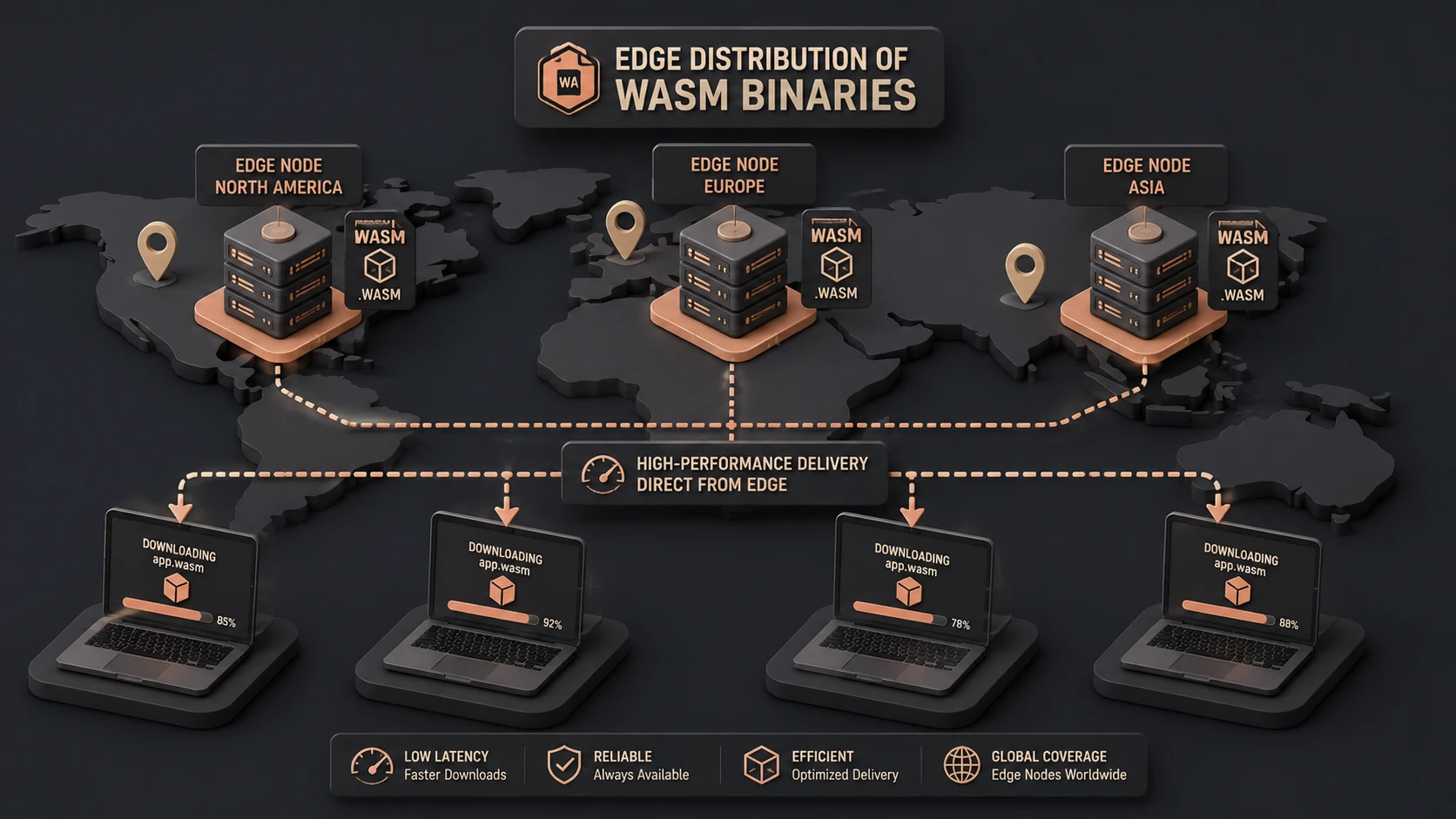
System architecture diagram and conceptual workflow layout for Intelligent Caching with Predictive Edge Logic.
Continuous monitoring enables intelligent cache decisions.
Typical telemetry includes:
- ◆Cache hit ratio
- ◆Origin request volume
- ◆Geographic traffic distribution
- ◆API latency
- ◆Resource utilization
- ◆Application performance metrics
Observability platforms provide the feedback necessary for continuous optimization.
Enterprise Use Cases
E-Commerce Platforms
Predictively cache popular products during promotional events and seasonal demand.
Media Streaming
Pre-position frequently accessed media assets closer to viewers.
SaaS Applications
Improve dashboard responsiveness for globally distributed customers.
Financial Services
Reduce latency for customer portals while minimizing backend infrastructure load.
AI Applications
Cache frequently requested inference responses and reference datasets at edge locations.
Performance Considerations
Enterprise teams should monitor:
- ◆Cache hit ratio
- ◆Edge response latency
- ◆Origin server utilization
- ◆Cache refresh frequency
- ◆Geographic response times
- ◆Infrastructure cost efficiency
Optimization efforts should balance performance improvements with operational costs.
Security Considerations
Intelligent caching must operate within enterprise security policies.
Organizations should implement:
- ◆Secure cache invalidation
- ◆Encryption for cached content
- ◆Identity-aware edge services
- ◆Access control policies
- ◆API authentication
- ◆Data classification
- ◆Continuous audit logging
Sensitive information should never be cached without appropriate governance.
Scalability
Predictive edge architectures improve scalability through:
- ◆Dynamic cache allocation
- ◆Distributed edge processing
- ◆AI-assisted optimization
- ◆Reduced origin traffic
- ◆Elastic infrastructure
- ◆Intelligent workload distribution
These capabilities help organizations support growing global user bases while maintaining consistent application performance.
Best Practices
- ◆Continuously monitor cache effectiveness.
- ◆Use predictive models to complement rather than replace traditional cache rules.
- ◆Classify content according to cache suitability.
- ◆Deploy edge logic close to major user regions.
- ◆Validate cache invalidation strategies regularly.
- ◆Integrate observability across cache layers.
- ◆Measure both latency improvements and infrastructure costs.
- ◆Continuously retrain predictive models using recent operational data.
Common Mistakes
| Mistake | Enterprise Impact |
|---|---|
| Caching highly sensitive personalized data without controls | Security exposure |
| Ignoring cache invalidation complexity | Stale application data |
| Optimizing only for hit ratio | Poor overall user experience |
| Deploying identical cache policies globally | Regional inefficiencies |
| Neglecting observability | Difficult performance analysis |
| Over-relying on AI predictions without operational safeguards | Inconsistent cache behavior |
Technology Comparison
| Capability | Traditional Caching | Intelligent Predictive Caching |
|---|---|---|
| Cache Decisions | Static Rules | AI-Assisted Predictions |
| Cache Refresh | Time-Based | Demand-Aware |
| Edge Optimization | Manual | Dynamic |
| Traffic Adaptation | Reactive | Predictive |
| Resource Allocation | Fixed Policies | Continuously Optimized |
| User Experience | Consistent | Personalized and Adaptive |
Adoption Strategy
- 1.Assess existing CDN and caching infrastructure.
- 2.Collect high-quality application telemetry.
- 3.Implement centralized observability.
- 4.Introduce predictive analytics for traffic forecasting.
- 5.Deploy edge computing selectively for latency-sensitive workloads.
- 6.Measure cache performance against business objectives.
- 7.Validate AI recommendations before broad deployment.
- 8.Expand predictive caching incrementally across enterprise applications.
Limitations
As of November 2023, predictive caching technologies continue evolving alongside advances in artificial intelligence and edge computing. While machine learning significantly improves cache efficiency, prediction accuracy depends heavily on high-quality operational data and representative traffic patterns. Organizations should combine AI-assisted optimization with traditional engineering controls to ensure predictable, reliable application behavior.
Looking Ahead
From the perspective of November 2023, intelligent caching represents the next stage in web performance engineering. By integrating predictive analytics, machine learning, edge computing, and real-time observability, enterprise platforms can proactively position content closer to users, reduce infrastructure costs, and improve digital experiences across global deployments. As AI models continue becoming more accurate and edge networks expand, predictive edge logic is expected to become a foundational capability for next-generation cloud-native architectures.