Introduction
Virtualization has fundamentally changed enterprise infrastructure over the past decade by allowing multiple workloads to share physical hardware efficiently. Hypervisor technologies such as VMware ESX, Microsoft Hyper-V, and Xen have become common components of modern data centers, enabling improved resource utilization and operational flexibility.
A new approach to workload isolation is now gaining momentum through Linux Containers (LXC). Rather than virtualizing complete hardware platforms, LXC isolates applications while sharing the host operating system kernel. At the same time, Platform-as-a-Service provider dotCloud has begun developing an internal container-based packaging project intended to simplify application deployment across environments.
From the perspective of January 2013, these developments suggest that operating-system-level virtualization may become an increasingly important architectural option for cloud-native infrastructure.
Industry Background
Enterprise computing continues to evolve toward higher infrastructure density and greater deployment automation. Virtual machines have significantly improved server utilization, but each virtual machine still includes a complete guest operating system, consuming additional CPU, memory, and storage resources.
Organizations are simultaneously embracing:
- ◆Cloud computing.
- ◆Infrastructure automation.
- ◆Continuous Delivery.
- ◆Platform-as-a-Service.
- ◆DevOps collaboration.
These trends increase demand for deployment models that are faster, lighter, and easier to reproduce across environments.
Linux Containers address these goals by providing isolated execution environments without requiring a complete virtual machine for every application.
The Business Problem
Traditional virtualization introduces several operational challenges.
- ◆Large virtual machine images.
- ◆Longer provisioning times.
- ◆Higher infrastructure overhead.
- ◆Operating system duplication.
- ◆Slower application deployment.
- ◆Increased maintenance complexity.
Development and operations teams also face inconsistencies between development, testing, and production environments.
A standardized application packaging model built upon containers has the potential to improve deployment consistency while reducing operational overhead.
Understanding the Technology
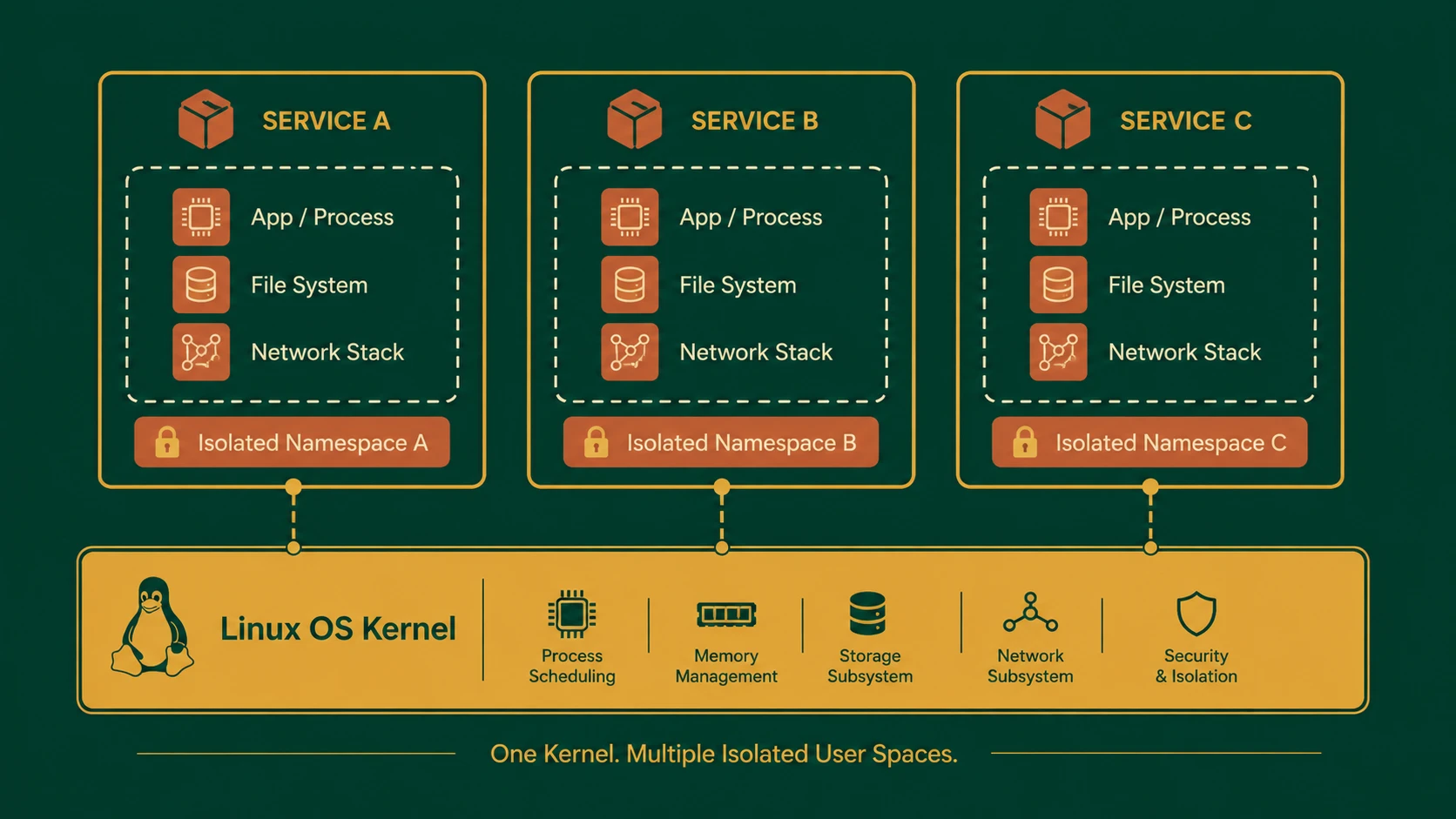
Linux Containers rely on kernel capabilities that isolate applications while sharing the host operating system.
Core technologies include:
- ◆Linux namespaces.
- ◆Control Groups (cgroups).
- ◆Filesystem isolation.
- ◆Process isolation.
- ◆Resource management.
- ◆Network isolation.
Unlike hypervisors, LXC does not emulate hardware or boot separate operating systems for each workload. Instead, isolated user-space environments execute directly on the host kernel.
This architecture significantly reduces virtualization overhead for compatible Linux workloads.
Core Architecture
A simplified container architecture appears as follows.
| Component | Responsibility |
|---|---|
| Host Linux Kernel | Shared operating system kernel |
| LXC Runtime | Container management |
| Namespaces | Process isolation |
| Control Groups | CPU and memory resource control |
| Container Filesystems | Application environments |
| Applications | Individual workloads |
Each container behaves like an independent Linux environment while sharing core kernel functionality.
Key Features
Lightweight Virtualization
Containers eliminate the need to run separate guest operating systems for each application.
Fast Provisioning
Container startup times are generally much shorter than traditional virtual machine boot processes.
Resource Efficiency
Shared kernel architecture reduces CPU, memory, and storage overhead.
Process Isolation
Applications operate in isolated execution environments without interfering with one another.
Simplified Packaging
Applications and their dependencies can be grouped into reproducible deployment units.
Developer Consistency
Containerized applications may help reduce differences between development and production environments.
How It Works
A simplified deployment model is illustrated below.
Developer
      |
Application Files
      |
Container Packaging
      |
LXC Runtime
      |
Linux Kernel
      |
Running Containers
Rather than deploying software directly onto shared operating systems, applications execute within isolated containers managed by the host.
Enterprise Use Cases
Containers support several emerging enterprise scenarios.
Application Isolation
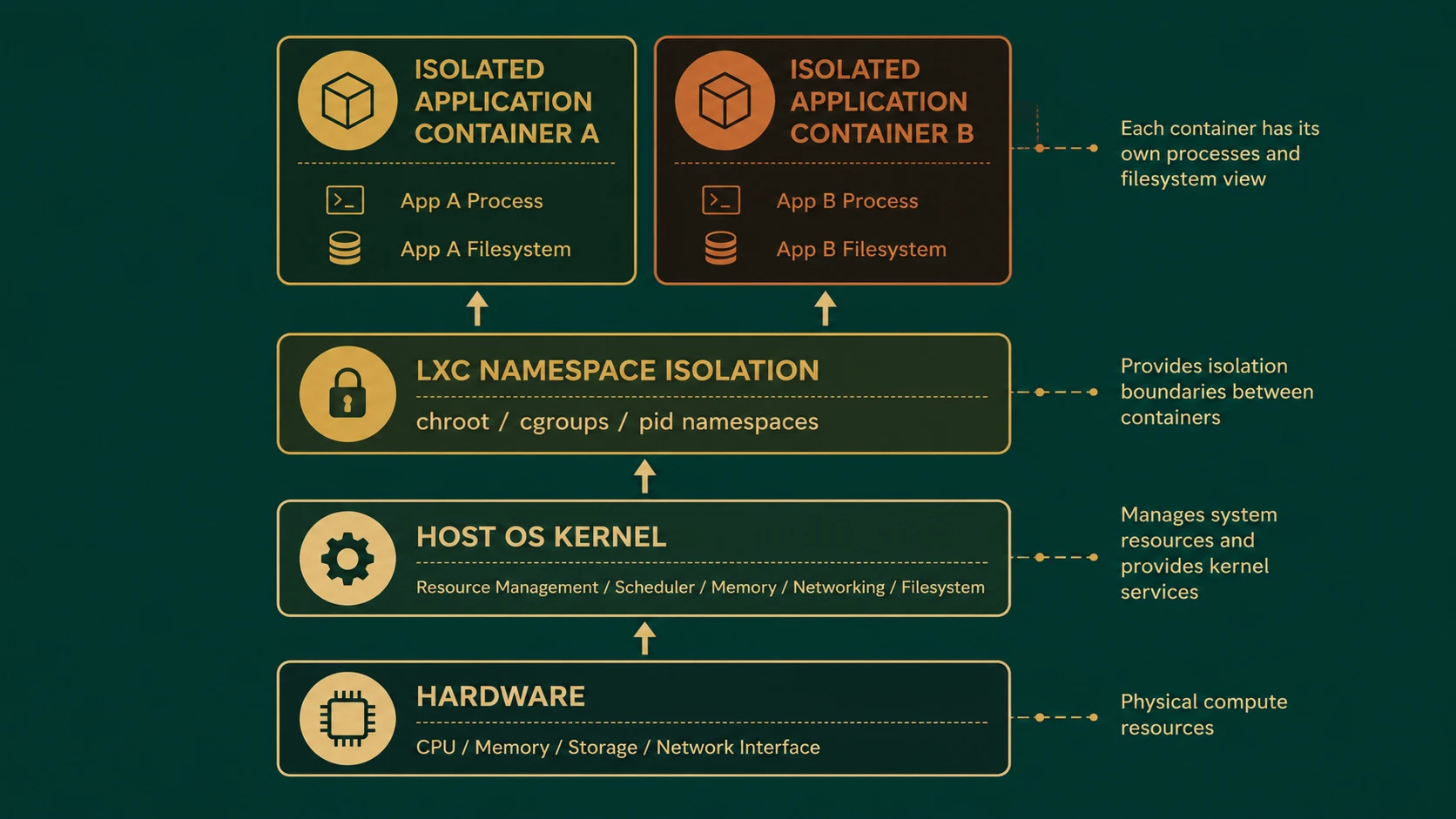
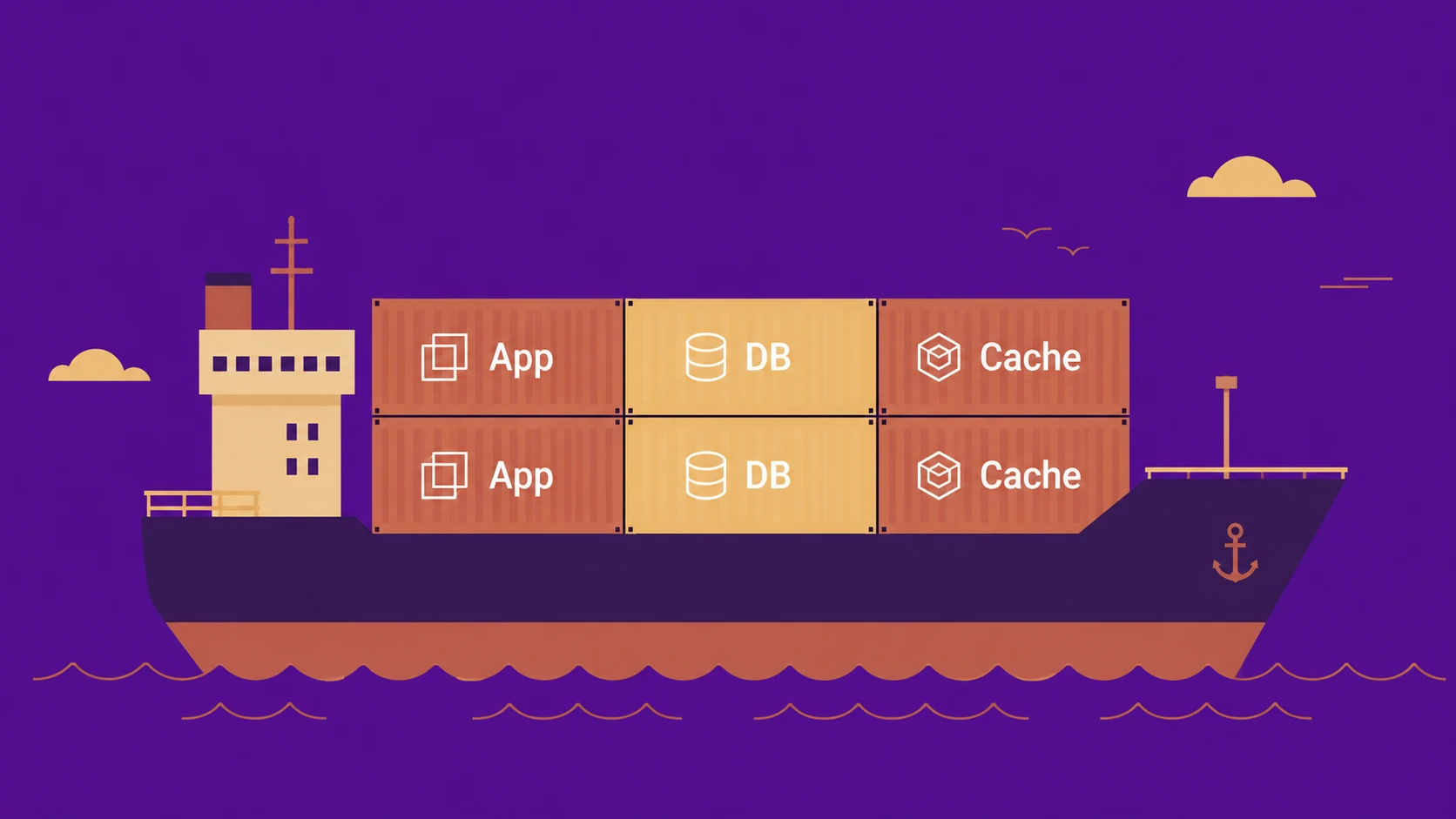
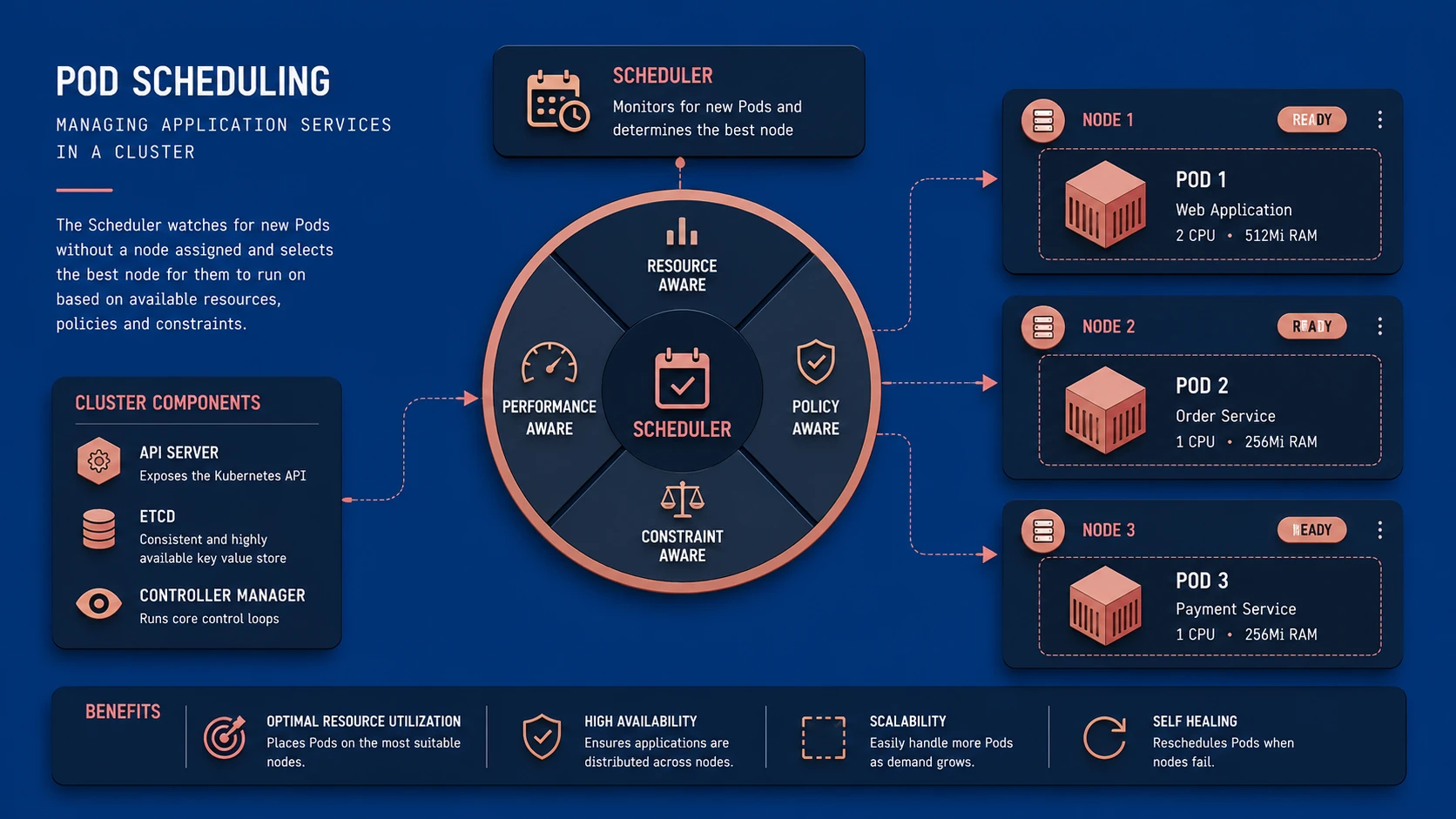
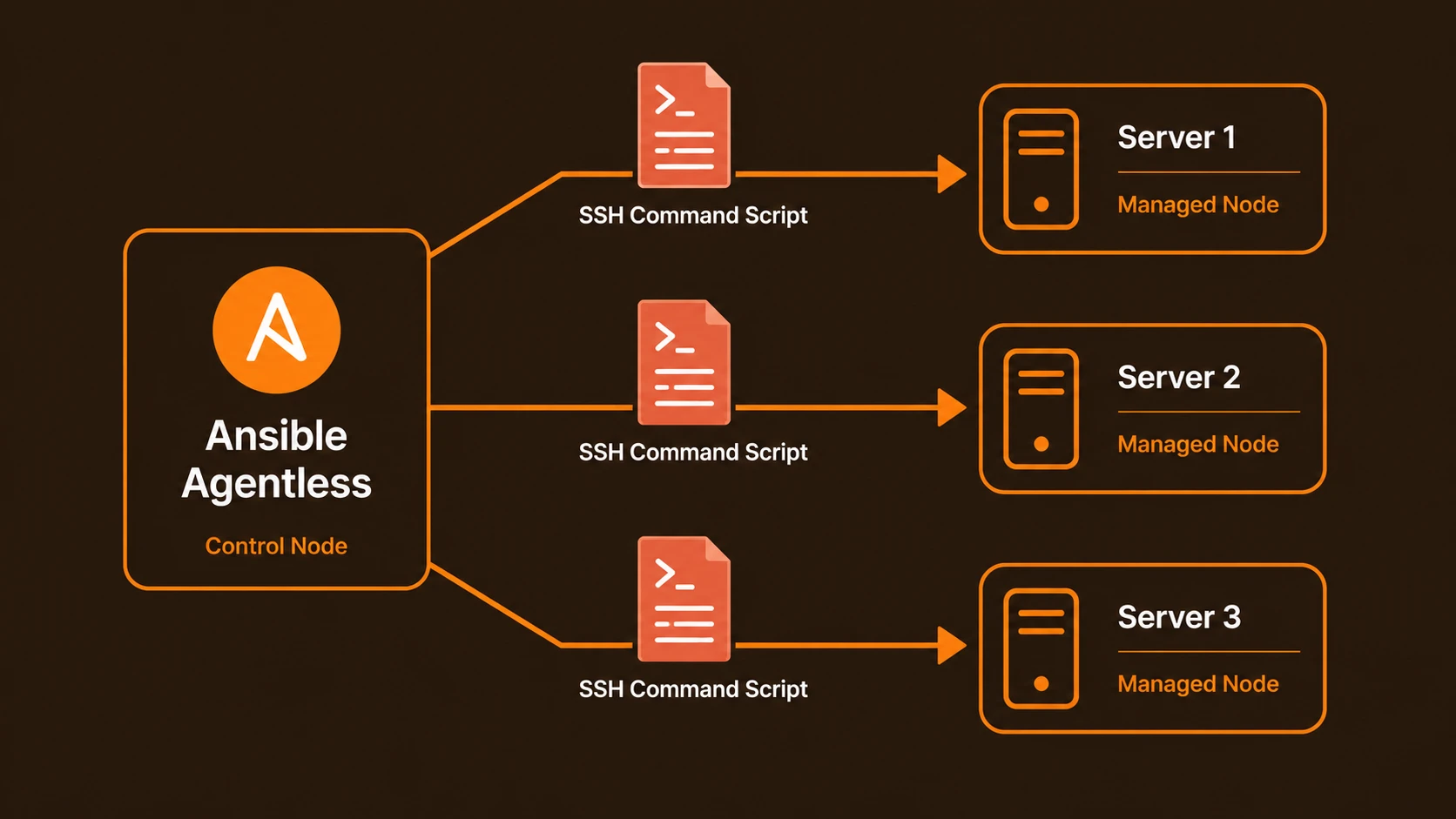
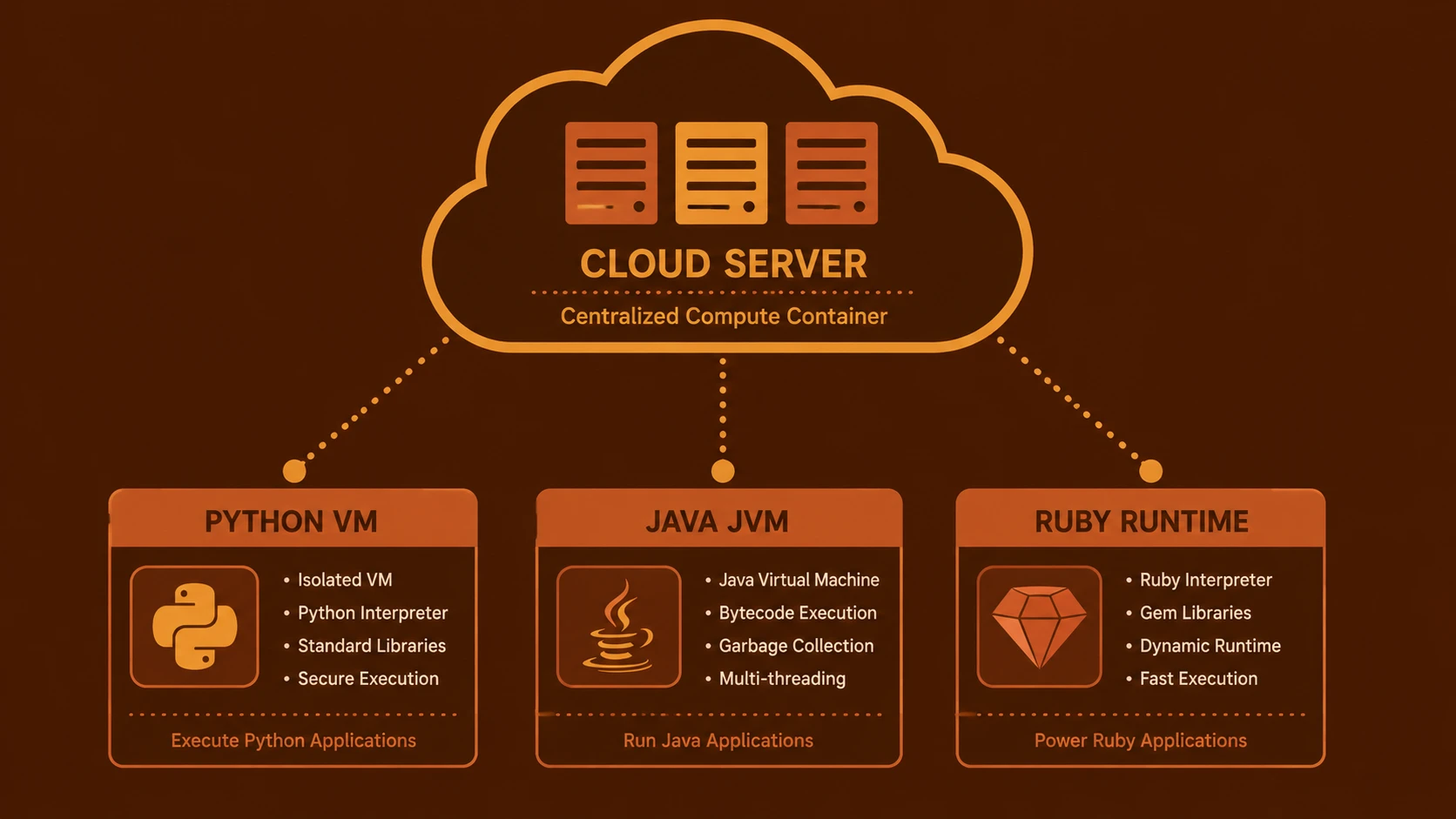
System architecture diagram and conceptual workflow layout for LXC Containers and the Early Seeds of dotCloud's Docker Project.
Multiple business applications can share a single Linux server while remaining logically isolated.
Continuous Delivery
Containerized deployments simplify repeatable application releases.
Development Environments
Engineering teams can standardize local development environments more effectively.
Cloud Platforms
Platform providers can improve resource utilization by deploying isolated application containers.
Multi-Tenant Hosting
Hosting providers may isolate customer workloads without the overhead associated with full virtual machines.
Performance Considerations
Because containers share the host kernel, they generally require fewer resources than traditional virtual machines.
Important considerations include:
- ◆Host kernel efficiency.
- ◆Storage subsystem performance.
- ◆Filesystem organization.
- ◆Resource allocation policies.
- ◆Network throughput.
Applications with heavy I/O workloads should be evaluated carefully to ensure container isolation does not introduce operational bottlenecks.
Security Considerations
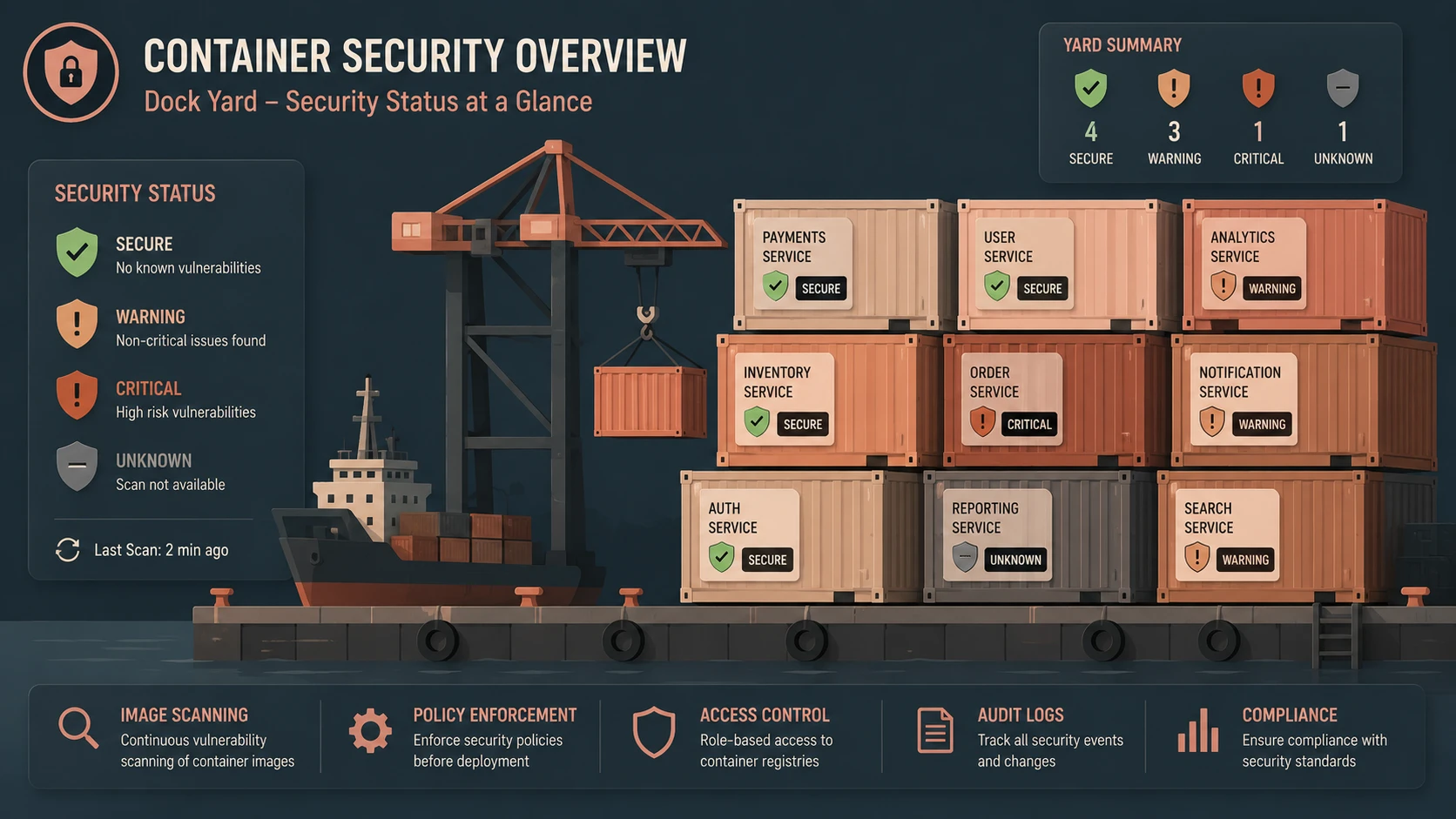
Container security differs from traditional virtualization because workloads share a common operating system kernel.
Recommended practices include:
- ◆Limit container privileges.
- ◆Isolate network communication.
- ◆Apply host operating system updates promptly.
- ◆Restrict administrative access.
- ◆Monitor resource utilization.
- ◆Separate sensitive workloads where appropriate.
Organizations should recognize that kernel-level vulnerabilities may affect multiple containers running on the same host.
Scalability
Containers support infrastructure scalability by enabling higher workload density.
Advantages include:
- ◆Faster provisioning.
- ◆Efficient resource utilization.
- ◆Simplified deployment automation.
- ◆Rapid environment creation.
- ◆Consistent application packaging.
These characteristics align well with modern cloud infrastructure and automated deployment workflows.
Best Practices
Organizations evaluating container technologies should:
- ◆Standardize Linux environments.
- ◆Automate container provisioning.
- ◆Separate application configuration from application code.
- ◆Version deployment artifacts.
- ◆Monitor host resource utilization.
- ◆Test applications under production-like workloads.
- ◆Integrate containers into automated deployment pipelines.
These practices improve operational consistency and simplify long-term maintenance.
Common Mistakes
| Mistake | Business Impact |
|---|---|
| Treating containers as full virtual machines | Operational confusion |
| Ignoring host kernel maintenance | Increased security risk |
| Mixing unrelated workloads | Resource contention |
| Poor filesystem organization | Difficult maintenance |
| Manual container deployment | Reduced consistency |
| Lack of monitoring | Operational blind spots |
Avoiding these issues helps organizations realize the operational advantages of container-based deployment.
Technology Comparison
| Technology | Virtualization Model | Operating System |
|---|---|---|
| LXC | Operating-system-level containers | Shared Linux kernel |
| VMware ESX | Hardware virtualization | Separate guest operating systems |
| Hyper-V | Hardware virtualization | Separate guest operating systems |
| Xen | Hypervisor virtualization | Separate guest operating systems |
LXC emphasizes lightweight isolation and efficient resource utilization, while traditional hypervisors provide stronger operating system isolation through separate guest environments.
Adoption Strategy
Organizations interested in container technologies should begin with development and testing environments before considering broader production adoption.
Recommended roadmap:
- 1.Evaluate Linux infrastructure readiness.
- 2.Pilot containerized development environments.
- 3.Automate deployment workflows.
- 4.Establish operational monitoring.
- 5.Develop security guidelines.
- 6.Expand gradually into production workloads where appropriate.
Incremental adoption allows engineering teams to build operational expertise while minimizing infrastructure risk.
Limitations
Although Linux Containers provide several advantages, organizations should consider important limitations.
- ◆Linux-only workloads are supported.
- ◆Shared kernel architecture introduces different security considerations than full virtualization.
- ◆Operational tooling continues to mature.
- ◆Container management standards are still evolving.
- ◆Existing enterprise processes may require adaptation.
These considerations should be evaluated alongside the operational benefits.
Looking Ahead
From the perspective of January 2013, Linux Containers represent one of the most promising developments in operating-system-level virtualization. Their lightweight architecture, efficient resource utilization, and compatibility with automated deployment practices position them as an attractive complement to existing virtualization technologies.
Meanwhile, dotCloud's emerging container packaging initiative reflects growing interest in making application deployment more portable and reproducible across environments. If this effort matures successfully, it could simplify how developers package and deploy Linux applications while encouraging broader adoption of container-based infrastructure. The coming years will determine whether container technologies become a standard component of enterprise cloud platforms or remain specialized tools for selected workloads.