Introduction
Container technology has rapidly evolved from a developer convenience into a strategic infrastructure component for enterprise software delivery. Docker has significantly simplified application packaging by allowing software and its dependencies to be bundled into portable containers that execute consistently across development, testing, and production environments.
While containers solve application packaging challenges, operating hundreds or thousands of containers introduces a new set of operational problems. Organizations must determine where containers should execute, how failed instances should recover, how services should be discovered, and how applications should scale as workloads fluctuate.
Google has addressed these challenges through Kubernetes, an open-source container orchestration platform derived from years of experience operating large-scale distributed infrastructure. The release of Kubernetes 1.0 marks an important milestone, positioning the platform as production ready for enterprise deployment.
For architects designing cloud-native infrastructure, Kubernetes introduces a declarative approach to managing distributed applications while reducing the operational complexity traditionally associated with large container environments.
Industry Background
Virtualization transformed enterprise infrastructure by improving hardware utilization and simplifying server management. Containers extend this evolution by providing lightweight application isolation with significantly lower overhead than traditional virtual machines.
Organizations increasingly deploy:
- ◆Microservices
- ◆Continuous delivery pipelines
- ◆Cloud-native applications
- ◆Distributed APIs
- ◆Scalable web services
- ◆Stateless application components
Managing these workloads manually becomes increasingly difficult as infrastructure expands.
Container orchestration platforms therefore become essential operational components.
The Business Problem
Enterprise container deployments commonly encounter several operational challenges.
- ◆Manual container scheduling
- ◆Service discovery complexity
- ◆Application scaling
- ◆Container failures
- ◆Infrastructure inconsistency
- ◆Operational overhead
Without centralized orchestration, managing large numbers of containers quickly becomes impractical.
Understanding Kubernetes 1.0
Kubernetes is an open-source platform for automating the deployment, scheduling, scaling, and management of containerized applications.
Rather than treating individual containers as deployment units, Kubernetes introduces higher-level abstractions that simplify distributed application management.
Primary objectives include:
- ◆Automated scheduling
- ◆Desired-state infrastructure
- ◆Self-healing applications
- ◆Service discovery
- ◆Horizontal scalability
- ◆Portable cloud deployment
These capabilities enable infrastructure teams to focus on application behavior rather than individual server management.
Core Architecture
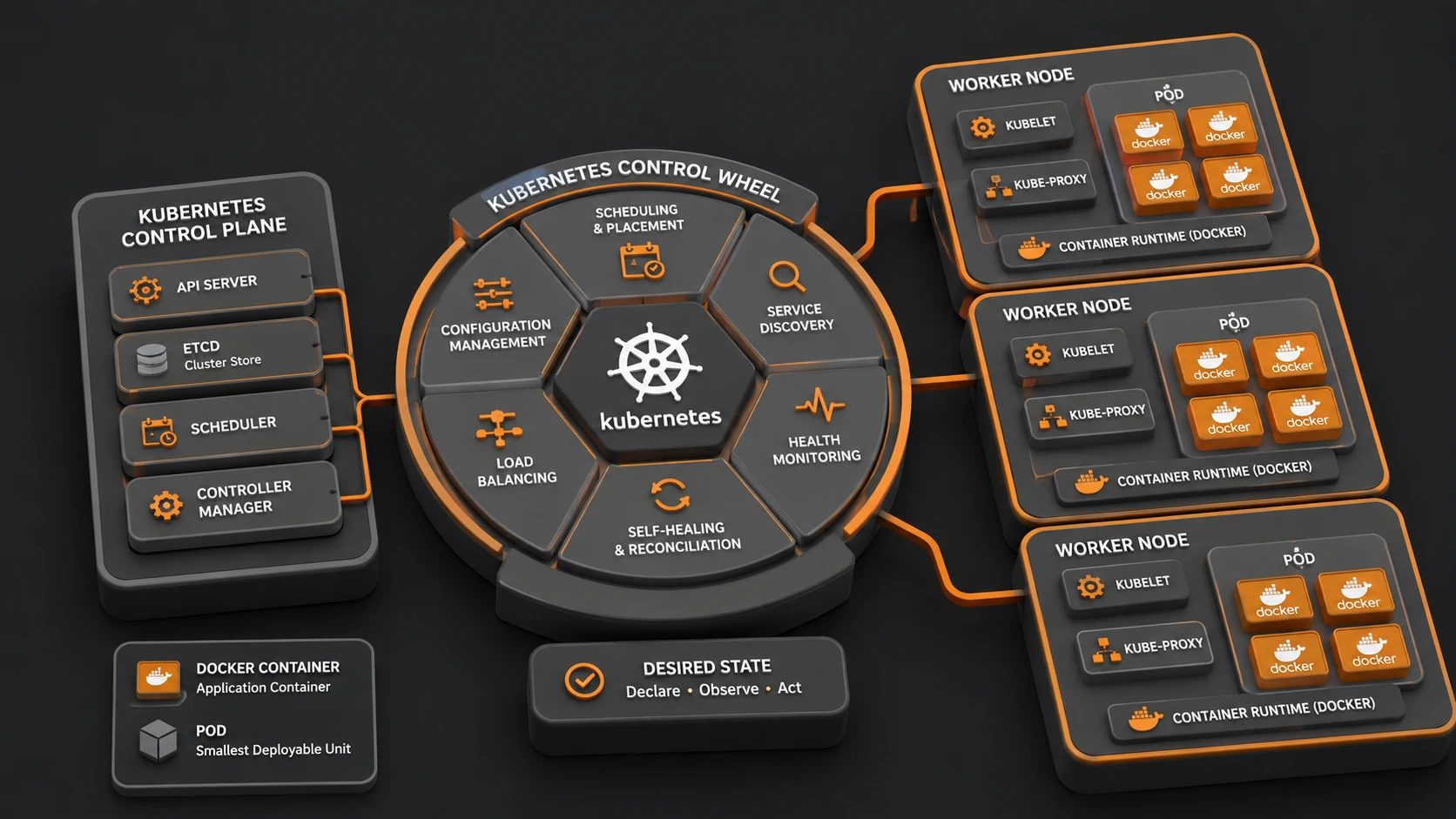
Kubernetes 1.0 organizes container infrastructure into several core components.
| Component | Responsibility |
|---|---|
| Master | Cluster management |
| Node (Minion) | Executes application workloads |
| Pod | Smallest deployable application unit |
| Replication Controller | Maintains desired Pod count |
| Service | Stable network endpoint |
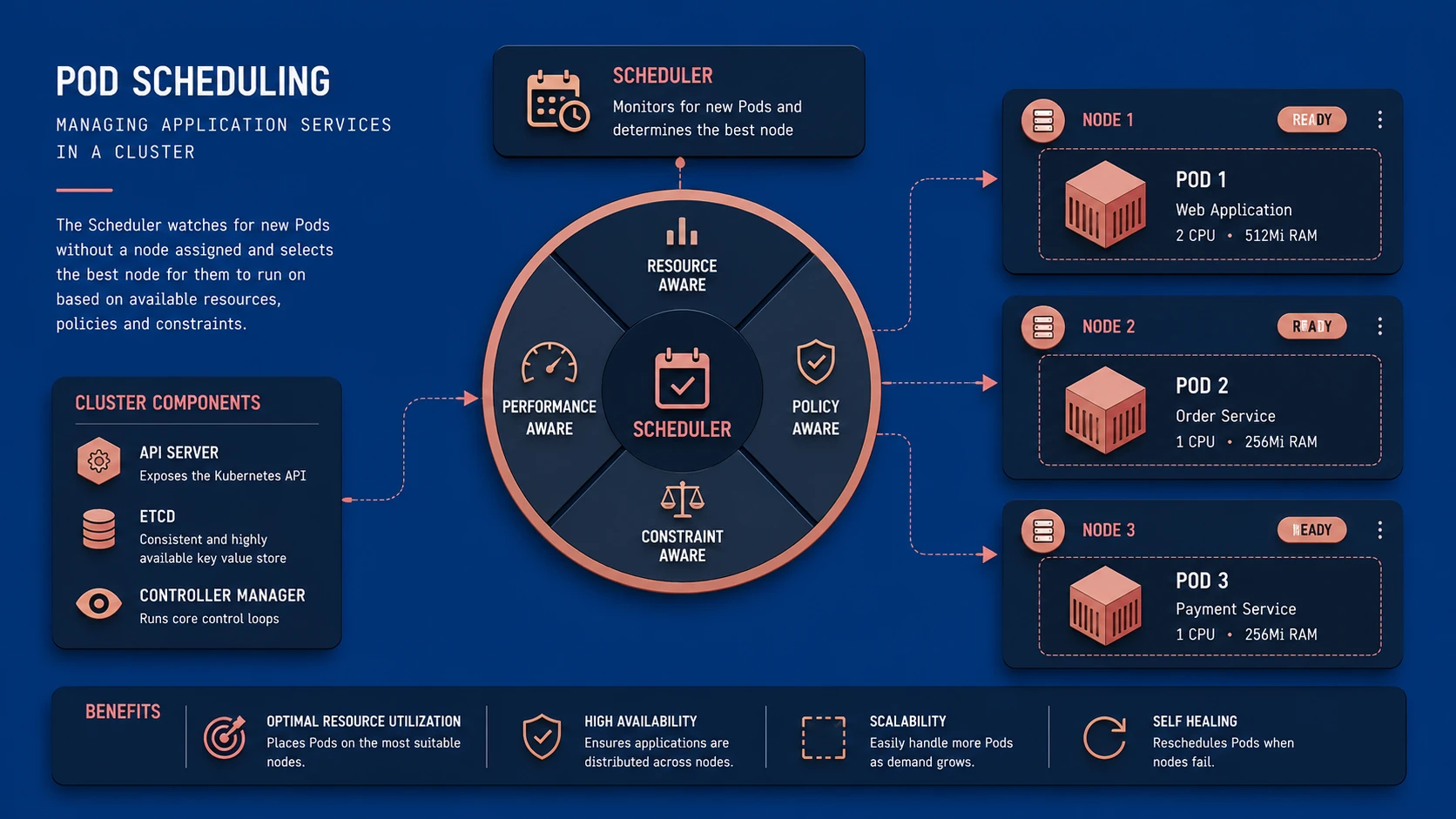
| Scheduler | Assigns Pods to Nodes |
| etcd | Cluster configuration storage |
Together these components provide a distributed control plane capable of managing large container environments.
How Kubernetes Works
A simplified deployment workflow includes:
- 1.Administrator submits a desired application definition.
- 2.The API server validates the request.
- 3.Cluster state is stored in etcd.
- 4.Scheduler selects an appropriate Node.
- 5.The selected Node launches the Pod.
- 6.Replication Controller monitors availability.
- 7.Services provide stable network access to application instances.
Applications are therefore managed according to declared desired state rather than manual operational procedures.
Pods: The Fundamental Deployment Unit
# Simple Kubernetes 1.0 Pod configuration definition
apiVersion: v1
kind: Pod
metadata:
  name: shivam-static-web
  labels:
    role: web-server
spec:
  containers:
    - name: nginx-web
      image: nginx:1.9
      ports:
        - containerPort: 80
One of Kubernetes' defining architectural decisions is the introduction of the Pod.
A Pod represents one or more closely related containers that:
- ◆Share networking
- ◆Share storage resources
- ◆Execute together
- ◆Operate as a single deployment unit
Rather than scheduling containers individually, Kubernetes schedules Pods across cluster nodes.
This abstraction simplifies deployment while supporting tightly coupled application components.
Replication Controllers
Replication Controllers ensure that a specified number of Pod instances remain operational.
If a Pod terminates unexpectedly:
- ◆Failure is detected.
- ◆Replacement Pods are scheduled.
- ◆Desired application availability is restored.
This self-healing capability reduces operational intervention while improving service reliability.
Services
Containers frequently receive temporary network addresses.
Kubernetes Services provide stable network identities independent of individual Pod lifecycles.
Enterprise advantages include:
- ◆Stable service endpoints
- ◆Simplified application discovery
- ◆Load distribution
- ◆Reduced configuration complexity
Applications communicate with Services rather than individual containers.
Key Features
Declarative Deployment
Administrators define desired application state while Kubernetes manages implementation details.
Automated Scheduling
The scheduler places Pods onto available cluster nodes according to resource availability.
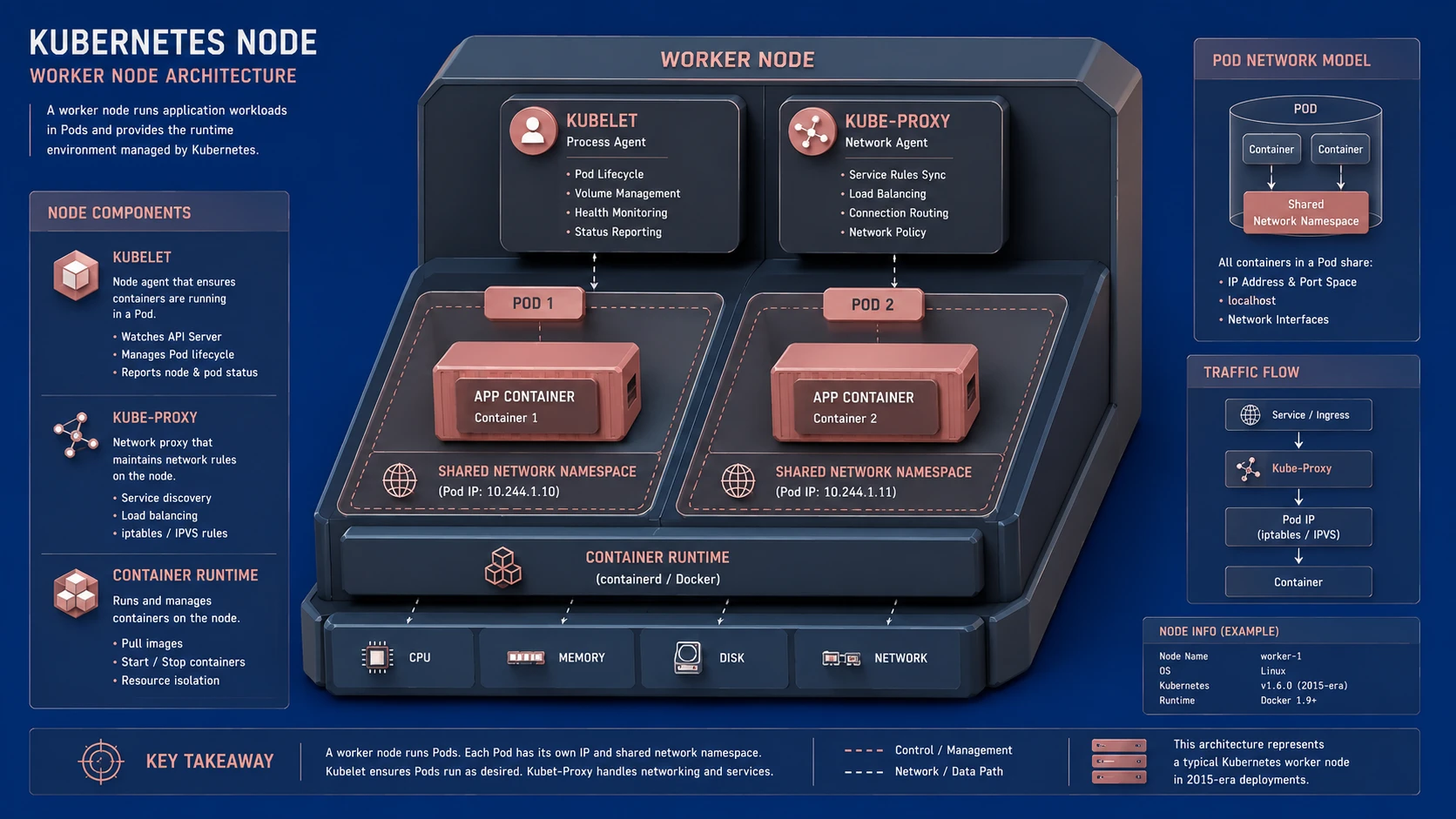
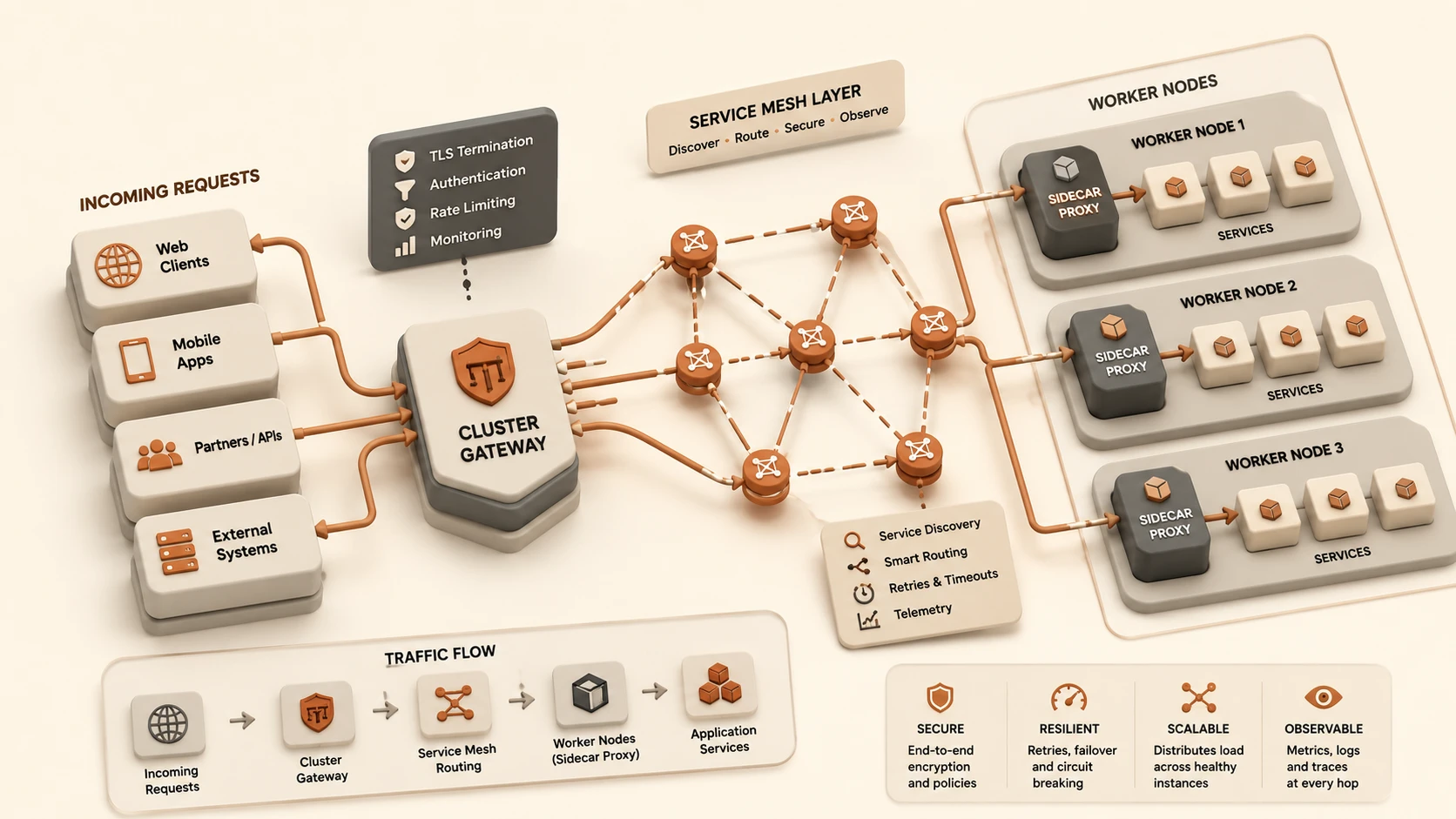
System architecture diagram and conceptual workflow layout for Kubernetes 1.0: Pods, Replication Controllers, and Cluster Services.
Self-Healing
Failed Pods are recreated automatically.
Horizontal Scaling
Replication Controllers simplify increasing or decreasing application capacity.
Service Discovery
Stable Services remove dependency upon temporary container addresses.
Enterprise Use Cases
Microservices
Independent application components can be deployed and managed consistently across clusters.
Continuous Delivery
Deployment automation supports increasingly frequent software releases.
Web Applications
Scalable frontend and backend services benefit from automated workload management.
API Platforms
Distributed REST services gain improved resilience through replication and scheduling.
Private Cloud Infrastructure
Organizations can standardize container operations across internal computing environments.
Performance Considerations
Kubernetes primarily improves infrastructure efficiency rather than individual application performance.
Performance considerations include:
- ◆Scheduler efficiency
- ◆Resource allocation
- ◆Container startup time
- ◆Network latency
- ◆Cluster utilization
- ◆Storage performance
Proper resource requests and capacity planning remain essential for predictable production workloads.
Security Considerations
Container orchestration introduces additional operational responsibilities.
Organizations should implement:
- ◆Secure API access
- ◆Authentication
- ◆Authorization
- ◆Network segmentation
- ◆Container image validation
- ◆Secret management procedures
Infrastructure automation should complement existing enterprise security governance.
Scalability
One of Kubernetes' primary strengths is horizontal scalability.
Benefits include:
- ◆Distributed scheduling
- ◆Automated workload placement
- ◆Application replication
- ◆Cluster expansion
- ◆Fault tolerance
- ◆Infrastructure portability
These capabilities align well with cloud computing and distributed application architectures.
Best Practices
Organizations evaluating Kubernetes should consider the following recommendations.
- ◆Design stateless application components where practical.
- ◆Package applications consistently.
- ◆Monitor cluster resource utilization.
- ◆Separate application configuration from container images.
- ◆Validate deployment definitions before production rollout.
- ◆Automate infrastructure provisioning.
- ◆Establish operational monitoring.
- ◆Train operations teams on cluster management concepts.
Common Mistakes
| Mistake | Enterprise Impact |
|---|---|
| Treating containers as virtual machines | Operational inefficiency |
| Ignoring resource planning | Scheduling problems |
| Poor application decomposition | Reduced scalability |
| Manual infrastructure changes | Configuration drift |
| Weak monitoring | Delayed operational response |
| Skipping deployment validation | Increased production risk |
Kubernetes simplifies orchestration but depends upon disciplined operational practices.
Technology Comparison
| Capability | Manual Container Management | Kubernetes 1.0 |
|---|---|---|
| Scheduling | Manual | Automated |
| Scaling | Manual | Replication Controllers |
| Service Discovery | External Configuration | Services |
| Failure Recovery | Administrator Driven | Automatic |
| Cluster Management | Limited | Centralized |
| Enterprise Scalability | Moderate | High |
Kubernetes extends container technology from isolated deployments toward complete application lifecycle management.
Adoption Strategy
Organizations planning Kubernetes adoption should:
- 1.Identify suitable containerized workloads.
- 2.Standardize application packaging.
- 3.Build a pilot Kubernetes cluster.
- 4.Deploy non-critical services.
- 5.Establish monitoring and logging.
- 6.Train development and operations teams.
- 7.Validate scaling and recovery procedures.
- 8.Expand production adoption gradually.
A phased deployment minimizes operational risk while building internal expertise.
Limitations
Although Kubernetes 1.0 provides a production-ready orchestration platform, organizations should recognize several considerations.
- ◆Cluster administration introduces new operational responsibilities.
- ◆Existing applications may require architectural adjustments.
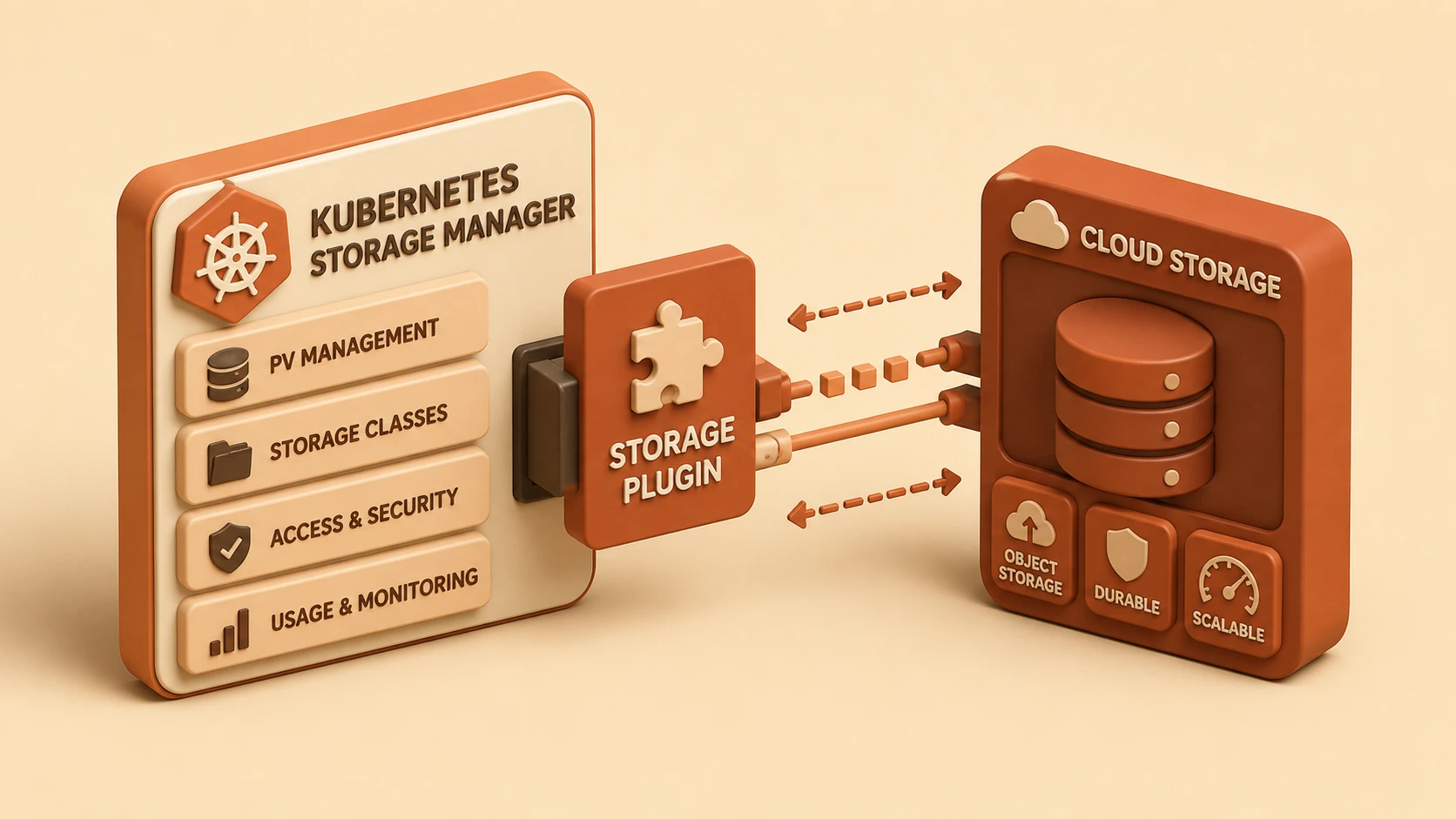
- ◆Persistent storage strategies require careful planning.
- ◆Teams must understand distributed systems concepts.
- ◆Operational tooling surrounding Kubernetes continues to evolve.
Successful adoption depends upon organizational readiness as much as platform capabilities.
Looking Ahead
From the perspective of July 2015, Kubernetes 1.0 represents one of the most significant developments in cloud infrastructure management. By combining automated scheduling, declarative deployment, self-healing applications, and scalable service management, Google has delivered a production-ready platform capable of simplifying large-scale container operations.
As organizations continue modernizing infrastructure around containers and distributed applications, orchestration platforms such as Kubernetes are expected to play an increasingly important role in enterprise cloud strategy. Kubernetes 1.0 establishes a strong architectural foundation for managing containerized applications consistently across private and public cloud environments.