Introduction
Containerization has fundamentally changed how modern software is developed, deployed, and operated. By packaging applications together with their runtime dependencies, containers provide consistent execution environments across development, testing, and production infrastructure. As enterprise adoption of containers has accelerated, orchestration platforms have become essential for managing scheduling, scaling, networking, health monitoring, and application lifecycle management.
Kubernetes has rapidly emerged as one of the leading container orchestration platforms by providing declarative infrastructure management, automated scheduling, self-healing capabilities, service discovery, and scalable deployment primitives. Earlier releases introduced many powerful workload controllers, but organizations deploying mission-critical applications also required long-term API stability before making Kubernetes the foundation of enterprise infrastructure.
Kubernetes 1.9 represents a major production milestone with the General Availability (GA) of the Workloads API. Core workload resources including Deployments, ReplicaSets, StatefulSets, and DaemonSets are now available through stable APIs, giving enterprise organizations greater confidence when building long-term automation and operational tooling.
From the perspective of December 2017, Kubernetes 1.9 demonstrates that the platform is continuing its transition from an emerging orchestration system into a mature enterprise infrastructure platform.
Industry Background
Organizations increasingly deploy applications using containerized architectures.
Modern enterprise environments commonly include:
- ◆Docker containers.
- ◆Microservices.
- ◆Hybrid cloud deployments.
- ◆Continuous Integration pipelines.
- ◆Continuous Delivery workflows.
- ◆Service discovery.
- ◆Infrastructure automation.
As deployments grow from dozens to thousands of containers, manual infrastructure management becomes impractical.
Container orchestration platforms must provide:
- ◆Declarative deployments.
- ◆Automated scheduling.
- ◆High availability.
- ◆Rolling updates.
- ◆Resource management.
- ◆Failure recovery.
Kubernetes has become one of the most comprehensive platforms addressing these operational requirements.
The Business Problem
Operating containerized applications at enterprise scale introduces several challenges.
Organizations commonly encounter:
- ◆Manual deployment processes.
- ◆Inconsistent scaling.
- ◆Complex application upgrades.
- ◆Infrastructure drift.
- ◆Service availability risks.
- ◆Operational complexity.
- ◆API evolution concerns.
Production environments require orchestration platforms that provide both operational automation and long-term API stability.
The General Availability of the Workloads API directly addresses this requirement.
Understanding the Technology
The Kubernetes Workloads API defines the primary resources responsible for managing application lifecycle and pod orchestration.
Stable workload resources include:
- ◆Deployments.
- ◆ReplicaSets.
- ◆StatefulSets.
- ◆DaemonSets.
These controllers automate application deployment while continuously reconciling the desired cluster state with the actual runtime environment.
Rather than managing individual containers manually, administrators declare the desired system state using Kubernetes manifests.
The control plane continually works toward maintaining that desired configuration.
Core Architecture
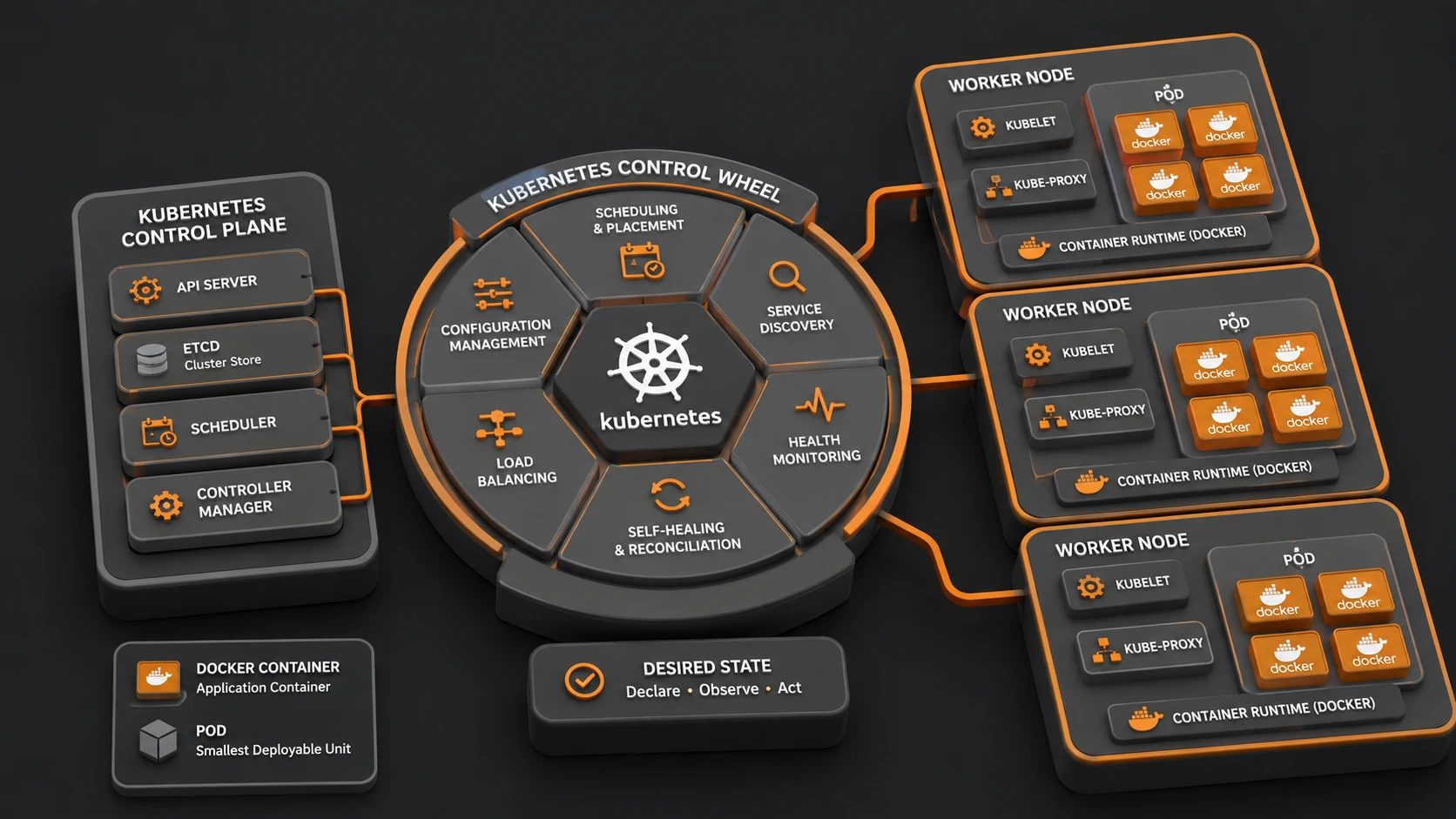
A simplified Kubernetes 1.9 architecture appears below.
| Component | Responsibility |
|---|---|
| kubectl | Cluster administration |
| API Server | Cluster API endpoint |
| Scheduler | Pod placement |
| Controller Manager | Workload reconciliation |
| Workloads API | Deployment management |
| Worker Nodes | Execute containers |
| Pods | Application runtime |
The Workloads API provides the declarative interface used by administrators while controllers ensure the cluster converges toward the desired application state.
Key Features
General Availability of the Workloads API
The defining milestone of Kubernetes 1.9 is the General Availability of the Workloads API.
Stable APIs provide enterprise organizations with greater confidence that automation, deployment tooling, and operational procedures can be developed against long-term supported interfaces.
API stability is particularly important for organizations managing large production clusters.
Deployments
Deployments remain the preferred controller for stateless application rollout.
They automate:
- ◆Rolling updates.
- ◆Rollbacks.
- ◆Replica management.
- ◆Declarative application deployment.
These capabilities simplify production software delivery.
ReplicaSets
ReplicaSets ensure that the desired number of pod replicas remains available.
When failures occur, Kubernetes automatically creates replacement pods to restore the declared application state.
StatefulSets
StatefulSets support applications requiring:
- ◆Stable identities.
- ◆Persistent storage.
- ◆Ordered deployment.
- ◆Ordered termination.
These characteristics make StatefulSets suitable for databases and distributed systems requiring predictable identities.
DaemonSets
DaemonSets ensure that designated pods execute across cluster nodes.
Common enterprise use cases include:
- ◆Monitoring agents.
- ◆Log collection.
- ◆Security services.
- ◆Infrastructure management.
Declarative Operations
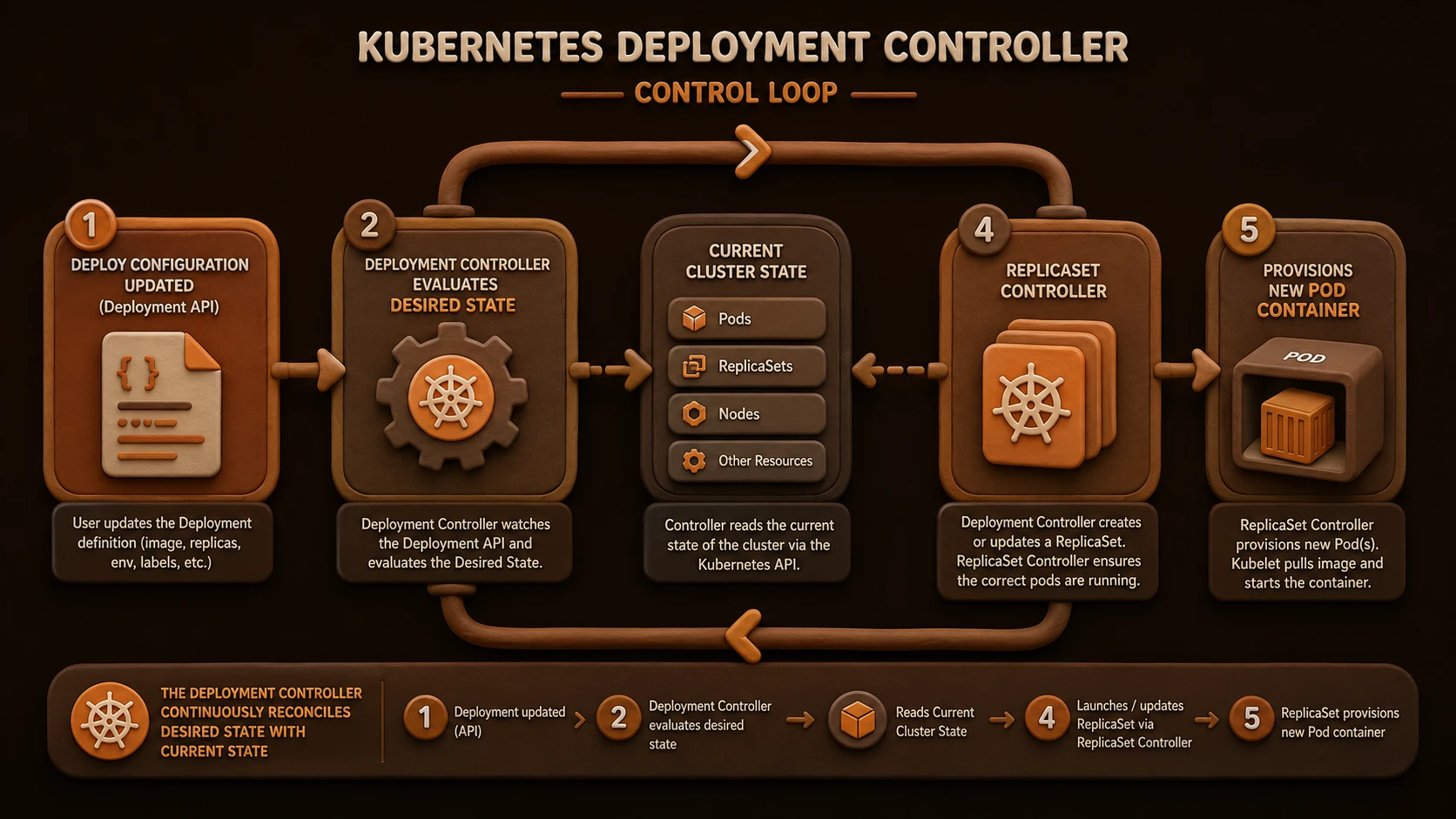
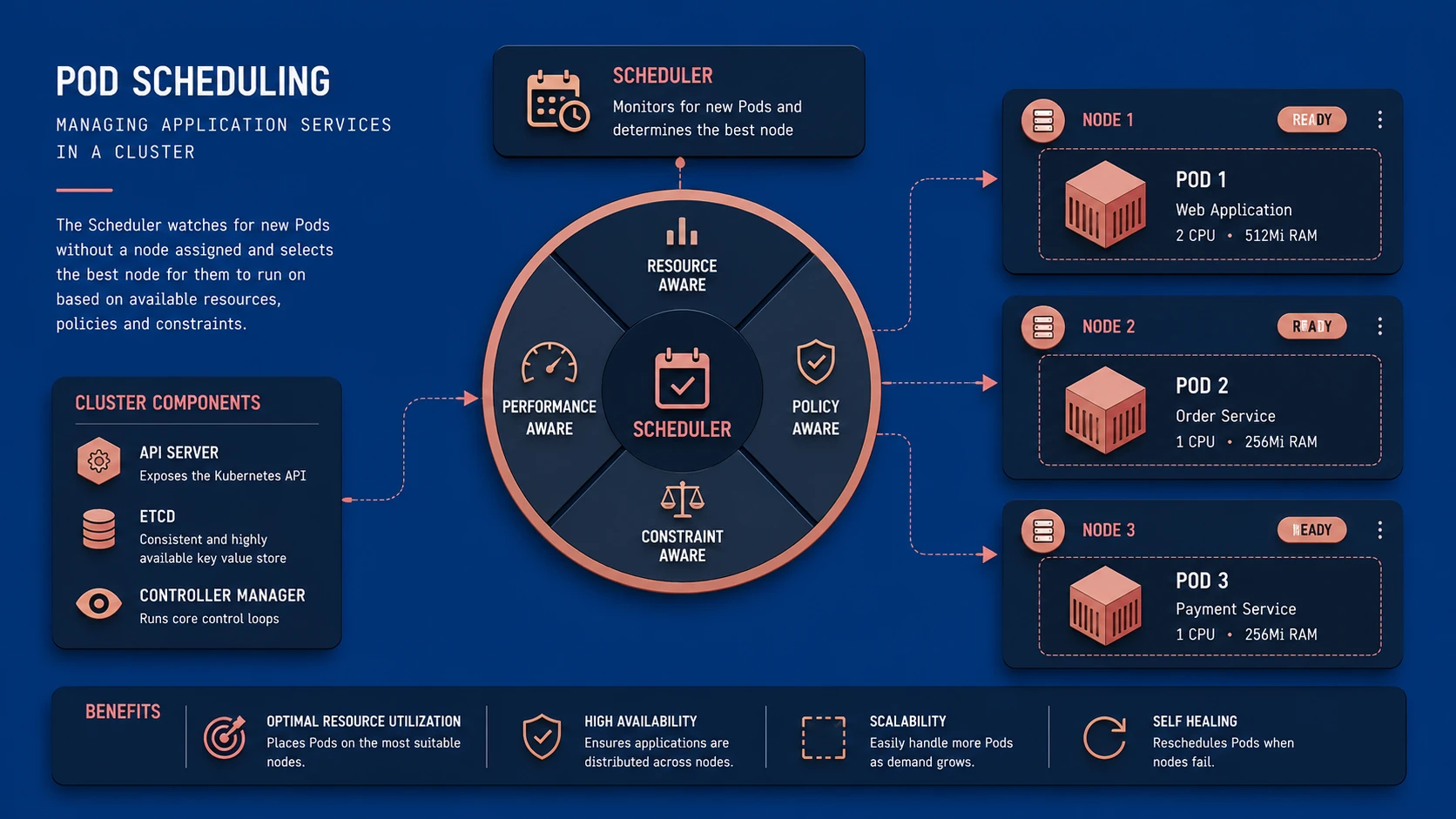
System architecture diagram and conceptual workflow layout for Kubernetes 1.9 Workloads API GA.
Administrators define desired infrastructure using configuration manifests rather than imperative operational commands.
Kubernetes continuously reconciles actual cluster state with the declared specification.
How It Works
A simplified deployment workflow appears below.
Application Manifest
         |
API Server
         |
Workloads API
         |
Controller Manager
         |
Scheduler
         |
Worker Nodes
         |
Running Pods
Controllers continually monitor cluster state and create, remove, or update pods until the declared configuration is satisfied.
Enterprise Use Cases
Microservices Platforms
Large collections of independently deployable services benefit from declarative deployment management.
Continuous Delivery
Deployment automation integrates naturally with modern software delivery pipelines.
Hybrid Cloud Infrastructure
Organizations can standardize workload management across multiple infrastructure environments.
Platform Engineering
Infrastructure teams can define reusable deployment patterns through stable Kubernetes APIs.
Enterprise Monitoring
DaemonSets simplify deployment of node-level monitoring, logging, and operational services.
Performance Considerations
Kubernetes performance depends upon both control plane configuration and workload characteristics.
Organizations should evaluate:
- ◆Cluster size.
- ◆Scheduler performance.
- ◆API responsiveness.
- ◆Resource utilization.
- ◆Controller reconciliation latency.
- ◆Network performance.
Stable APIs improve operational consistency but do not eliminate the need for careful infrastructure capacity planning.
Security Considerations
Production Kubernetes deployments should continue implementing:
- ◆Role-Based Access Control.
- ◆Secure API authentication.
- ◆TLS communication.
- ◆Namespace isolation.
- ◆Secret management.
- ◆Audit logging.
Stable workload management complements comprehensive cluster security practices.
Scalability
Kubernetes 1.9 continues strengthening enterprise scalability.
Advantages include:
- ◆Declarative infrastructure.
- ◆Automated workload recovery.
- ◆Efficient replica management.
- ◆Stable workload APIs.
- ◆Consistent operational automation.
These capabilities support increasingly large production container deployments.
Best Practices
Organizations adopting Kubernetes 1.9 should:
- ◆Standardize deployment manifests.
- ◆Use Deployments for stateless services.
- ◆Reserve StatefulSets for stateful workloads.
- ◆Deploy infrastructure agents through DaemonSets.
- ◆Monitor controller health.
- ◆Validate rolling update strategies.
- ◆Integrate Kubernetes configuration into version control.
Operational consistency becomes increasingly valuable as clusters expand.
Common Mistakes
| Mistake | Business Impact |
|---|---|
| Managing production pods manually | Reduced operational consistency |
| Using inappropriate workload controllers | Increased maintenance complexity |
| Ignoring rolling update validation | Application downtime risk |
| Treating StatefulSets as Deployments | Storage and identity issues |
| Skipping resource planning | Cluster instability |
| Delaying operational automation | Reduced infrastructure efficiency |
Selecting the appropriate workload controller is fundamental to successful Kubernetes operations.
Technology Comparison
| Workload Controller | Primary Purpose | Typical Enterprise Use Case |
|---|---|---|
| Deployment | Stateless applications | Web services, APIs, application servers |
| ReplicaSet | Replica management | High availability for pods |
| StatefulSet | Stateful workloads | Databases, clustered storage systems |
| DaemonSet | Node-level services | Monitoring, logging, security agents |
The General Availability of these workload controllers provides a stable operational foundation for production Kubernetes environments.
Adoption Strategy
Organizations should adopt Kubernetes 1.9 through a phased infrastructure strategy.
- 1.Upgrade non-production clusters.
- 2.Validate workload compatibility.
- 3.Standardize deployment manifests.
- 4.Automate deployment pipelines.
- 5.Monitor production workloads carefully.
- 6.Expand adoption across enterprise infrastructure following operational validation.
This measured approach minimizes operational risk while allowing infrastructure teams to benefit from the stabilized Workloads API.
Limitations
As of December 2017, Kubernetes continues evolving rapidly.
Organizations should recognize several considerations.
- ◆Operational expertise remains essential.
- ◆Cluster monitoring should accompany production deployments.
- ◆Application architecture significantly influences orchestration effectiveness.
- ◆Storage and networking integrations require careful planning.
- ◆Large-scale production environments should continue validating upgrades before deployment.
These considerations should guide enterprise Kubernetes adoption strategies.
Looking Ahead
From the perspective of December 2017, Kubernetes 1.9 represents a defining milestone in the maturation of container orchestration. The General Availability of the Workloads API provides enterprise organizations with stable deployment primitives for managing stateless applications, stateful services, replica management, and node-level infrastructure.
By stabilizing the core workload controllers that underpin modern container operations, Kubernetes strengthens its position as a production-ready platform for cloud-native infrastructure. Organizations investing in containerized applications, microservices, and automated software delivery should view Kubernetes 1.9 as an increasingly mature foundation for long-term enterprise platform engineering.