Introduction
The JavaScript ecosystem has evolved rapidly over the past several years. Enterprise web applications increasingly rely on modular architectures, sophisticated build systems, and dependency management tools to deliver complex browser experiences. Frameworks such as Angular 2, React, and Vue.js encourage applications composed of reusable components, but this modularity also introduces larger dependency graphs and increasingly complicated asset pipelines.
Webpack has become one of the leading module bundlers by treating every asset—JavaScript, CSS, images, fonts, and templates—as part of a dependency graph. Rather than simply concatenating files, Webpack analyzes module relationships to produce optimized bundles suitable for production deployment.
The Webpack 2.0 preview introduces several important architectural improvements, most notably native support for ES2015 modules and tree shaking. These capabilities allow build tools to eliminate unused code while encouraging developers to adopt standardized JavaScript modules instead of framework-specific loading mechanisms.
For enterprise architects, these preview features represent an important step toward more maintainable and efficient front-end application delivery.
Industry Background
Modern web applications increasingly include:
- ◆Single Page Applications
- ◆Component-based user interfaces
- ◆Large third-party libraries
- ◆Complex dependency graphs
- ◆Automated build pipelines
- ◆Continuous integration workflows
Managing application size while preserving modular development has become a significant engineering challenge.
The Business Problem
Enterprise JavaScript projects commonly encounter:
- ◆Growing bundle sizes
- ◆Duplicate dependencies
- ◆Long build times
- ◆Difficult module organization
- ◆Performance degradation
- ◆Complex deployment pipelines
Organizations require tooling capable of optimizing applications without sacrificing maintainability.
Understanding Webpack 2.0
Webpack is a module bundler that analyzes application dependencies and produces optimized deployment bundles.
The Webpack 2.0 previews emphasize:
- ◆Native ES2015 module support
- ◆Improved optimization
- ◆Tree shaking
- ◆Better static analysis
- ◆Simplified configuration
- ◆Improved loader behavior
Rather than changing application runtime behavior, Webpack enhances the build process.
Core Architecture
| Component | Responsibility |
|---|---|
| Entry Points | Starting point for dependency analysis |
| Module Graph | Tracks application dependencies |
| Loaders | Transform source files |
| Plugins | Extend build functionality |
| Bundler | Produces deployment artifacts |
| Output Bundles | Optimized production assets |
This architecture enables Webpack to optimize assets before deployment.
How Webpack 2.0 Works
A typical build process includes:
- 1.Webpack begins at configured entry points.
- 2.Dependency analysis constructs a complete module graph.
- 3.Loaders transform source assets.
- 4.Plugins apply build optimizations.
- 5.Tree shaking removes unused exports where possible.
- 6.Bundles are generated for deployment.
- 7.Applications execute using standard browser JavaScript.
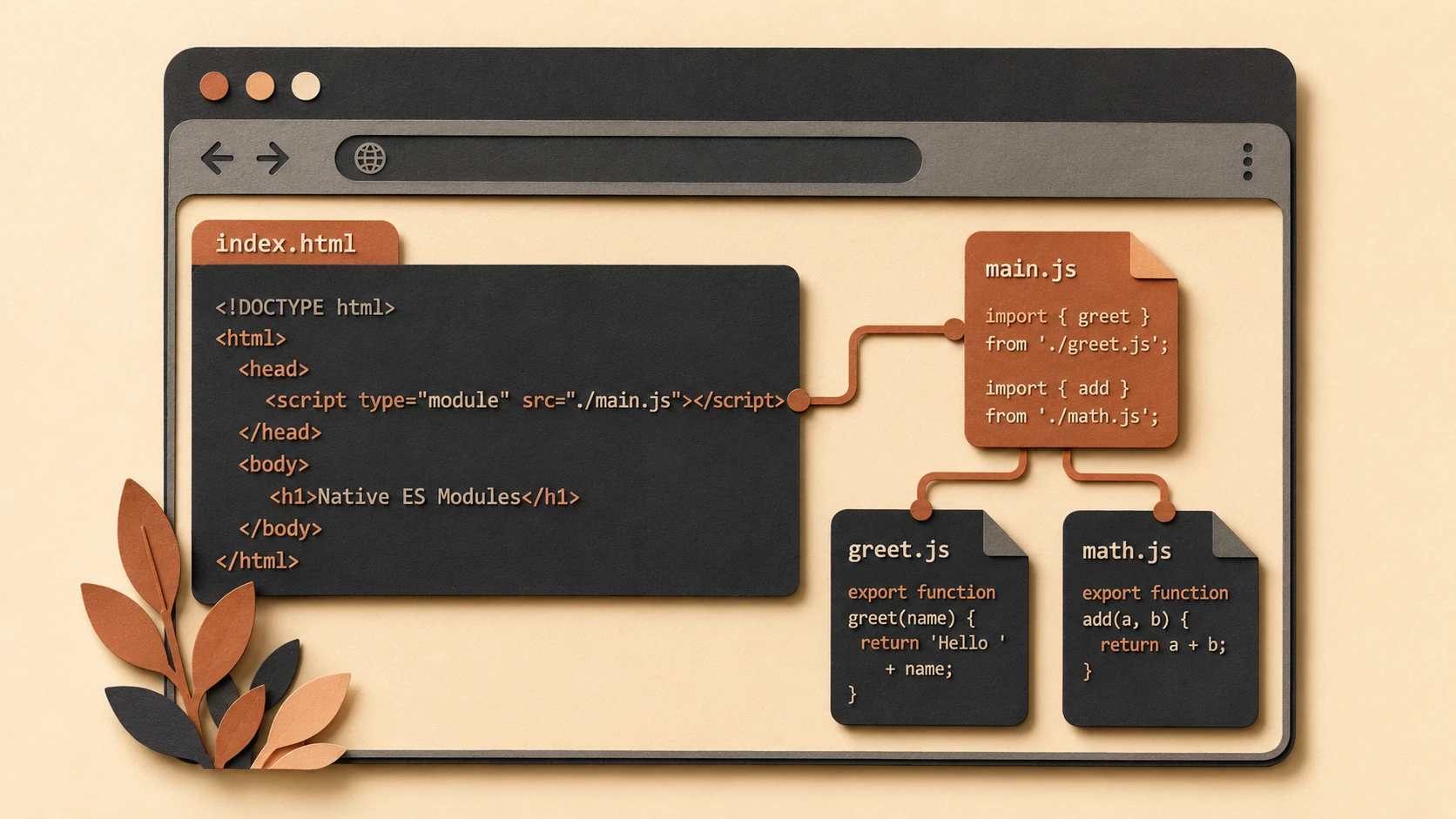
Native ES Modules
One of the most significant enhancements in Webpack 2.0 previews is improved support for ECMAScript module syntax.
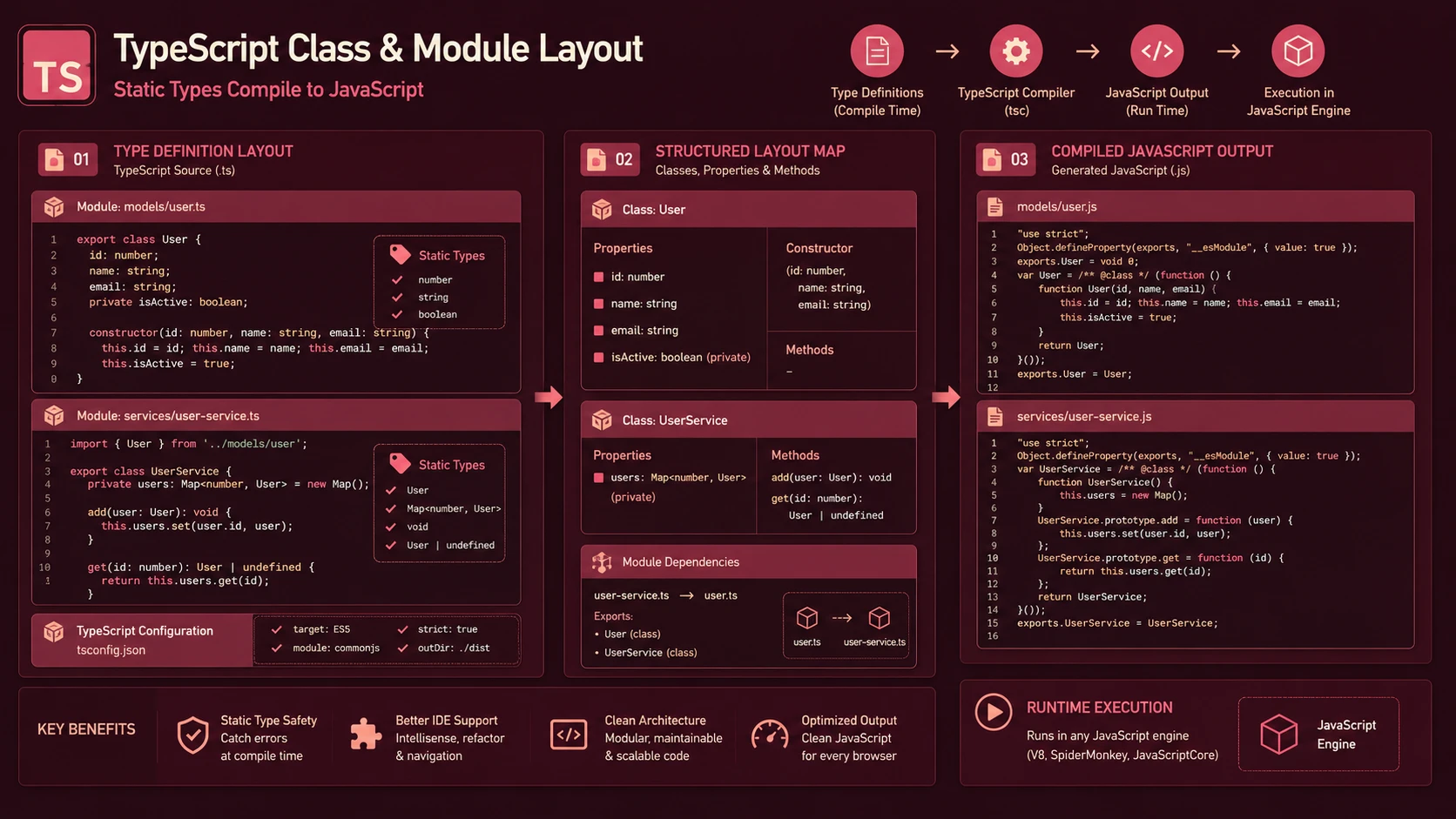
Developers can increasingly rely on standardized import and export statements rather than proprietary module formats.
Benefits include:
- ◆Improved interoperability
- ◆Better static analysis
- ◆Cleaner dependency management
- ◆Alignment with emerging JavaScript standards
Because imports and exports are statically analyzable, Webpack can better understand application structure during compilation.
Tree Shaking
Tree shaking refers to removing unused module exports during the build process.
If an application imports only a subset of a library, unused exported code may be excluded from the final bundle when appropriate.
Potential advantages include:
- ◆Smaller JavaScript bundles
- ◆Reduced download sizes
- ◆Faster page loading
- ◆Lower parsing overhead
- ◆Improved caching efficiency
Tree shaking is most effective when applications use statically analyzable ES module syntax.
Key Features
Improved Module Resolution
Webpack continues enhancing dependency analysis while supporting modern JavaScript development.
Optimized Bundles
Unused code can be excluded more effectively during production builds.
Enhanced Plugin Ecosystem
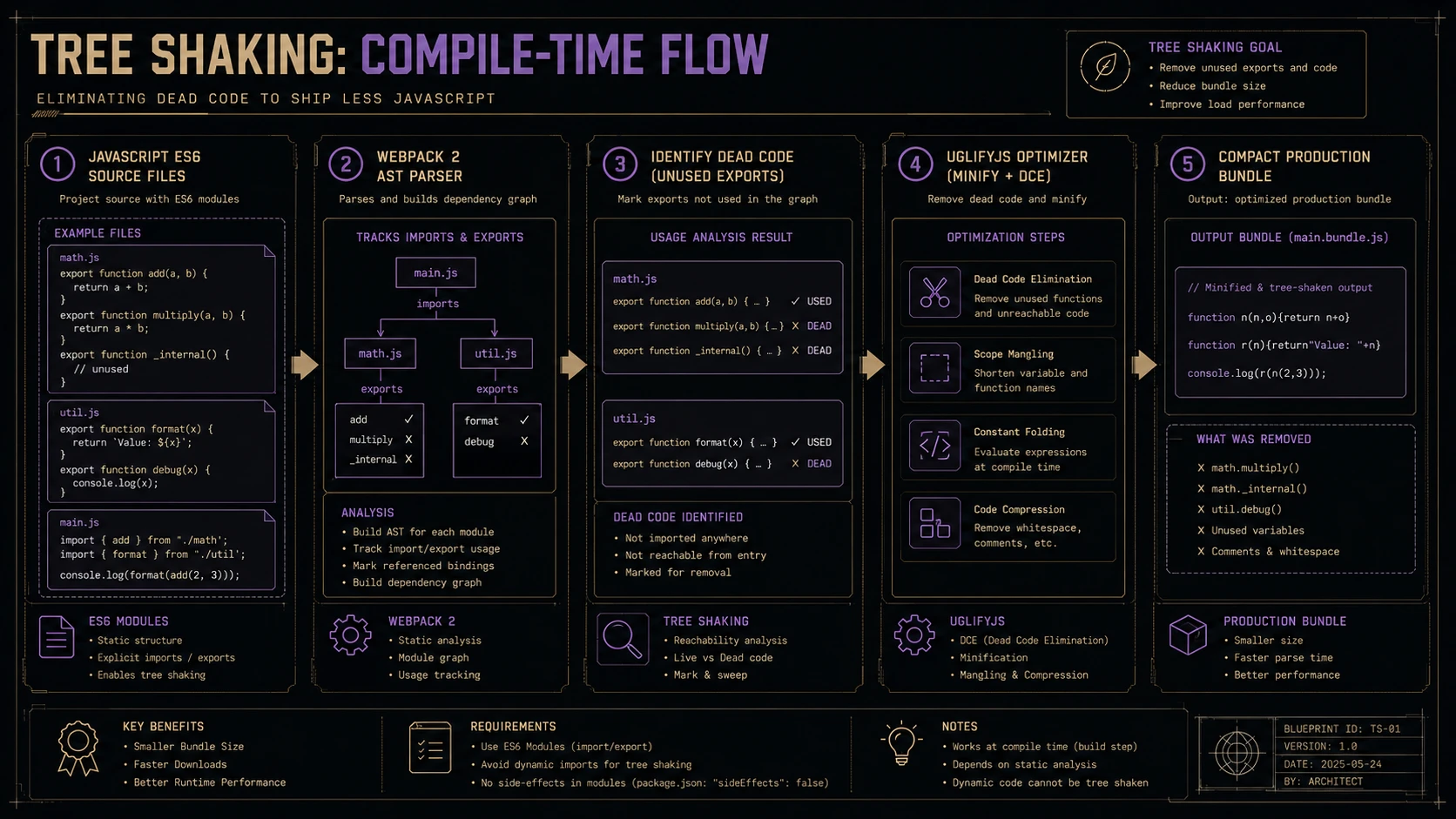
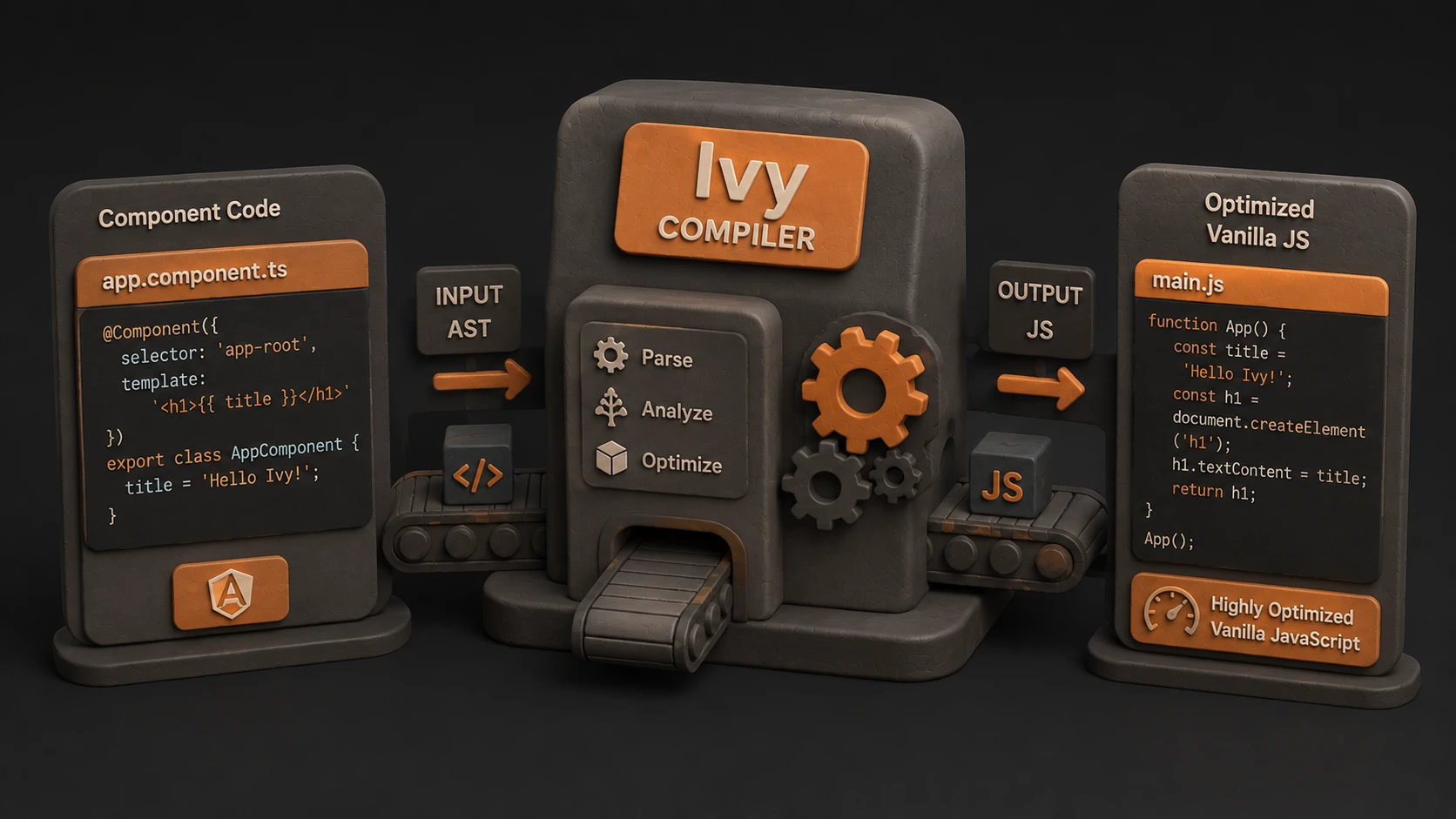
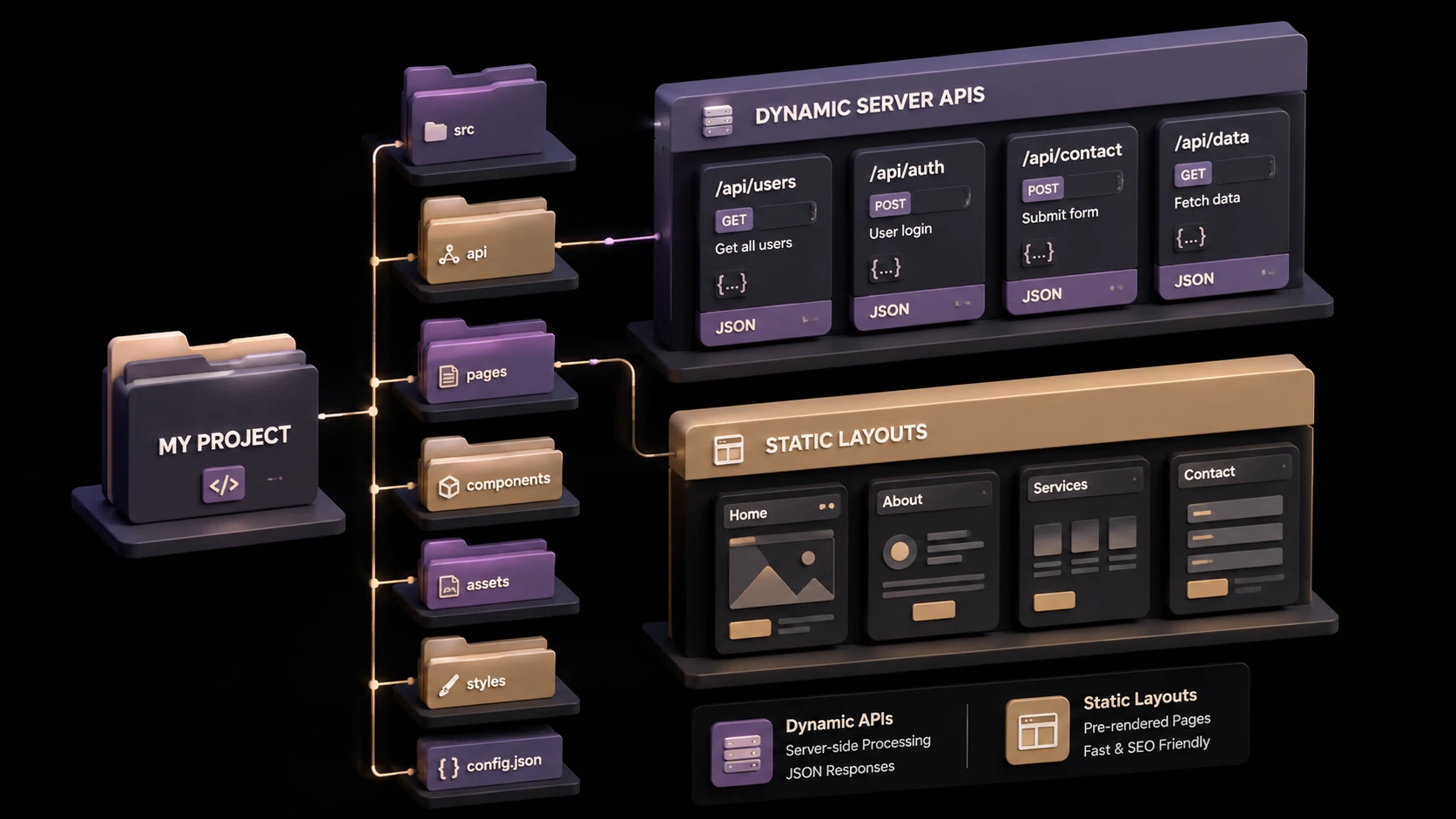
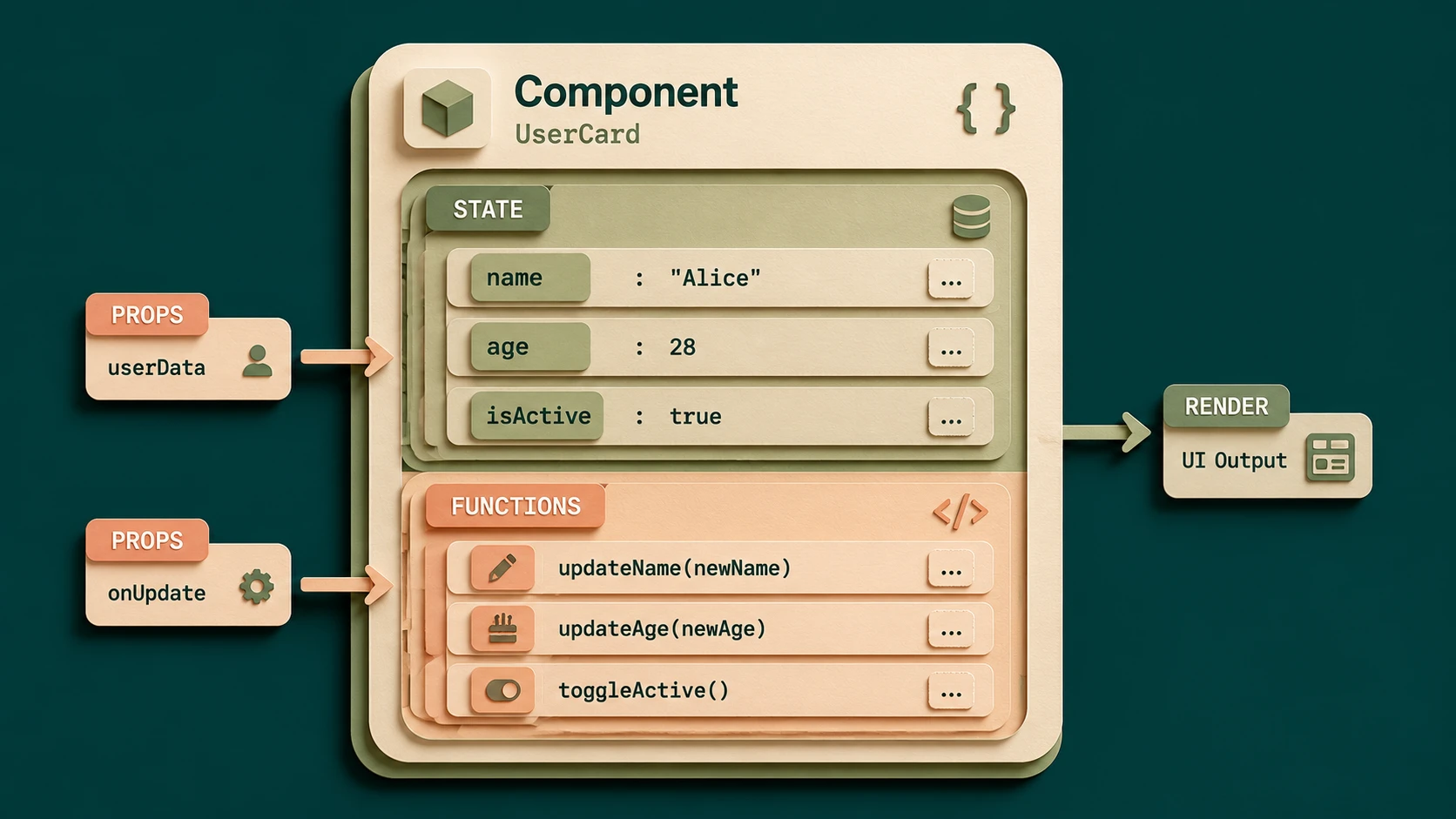
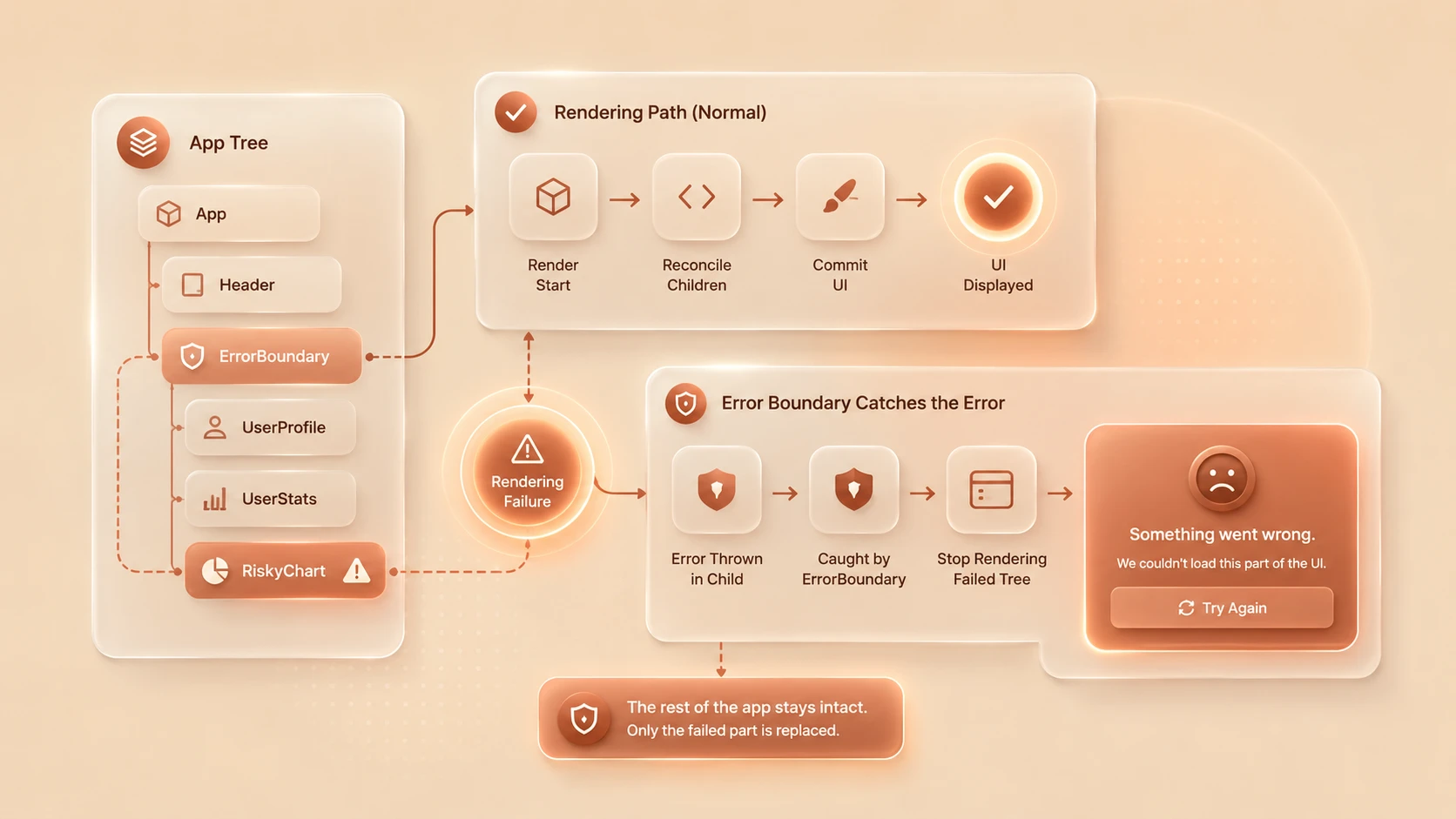
System architecture diagram and conceptual workflow layout for Webpack 2.0 Previews.
Plugins continue extending build functionality without modifying application source code.
Loader Improvements
Asset transformation remains flexible while supporting modern JavaScript workflows.
Production-Oriented Builds
Webpack encourages build optimization as an integrated part of application deployment.
Enterprise Use Cases
Single Page Applications
Large React and Angular applications benefit from smaller production bundles.
Enterprise Dashboards
Reducing downloaded assets improves perceived application responsiveness.
Component Libraries
Reusable UI libraries benefit from standardized ES module organization.
Continuous Integration
Automated build pipelines can integrate Webpack optimizations into deployment workflows.
Multi-Team Development
Consistent module organization simplifies collaboration across distributed engineering teams.
Performance Considerations
Webpack 2.0 previews focus primarily on build-time optimization.
Expected benefits include:
- ◆Reduced bundle sizes
- ◆Improved browser download performance
- ◆Better cache utilization
- ◆More efficient dependency management
- ◆Lower client-side parsing overhead
Organizations should benchmark production builds because optimization effectiveness depends upon application structure and library design.
Security Considerations
Webpack does not replace application security practices.
Enterprise teams should continue implementing:
- ◆Dependency auditing
- ◆Secure build environments
- ◆Input validation
- ◆HTTPS deployment
- ◆Controlled package management
- ◆Build artifact verification
Third-party packages should continue undergoing governance and review before production adoption.
Scalability
Webpack supports scalable front-end engineering through:
- ◆Modular application structure
- ◆Automated dependency management
- ◆Reusable build configuration
- ◆Standardized deployment pipelines
- ◆Component-based development
These capabilities simplify long-term maintenance of large JavaScript codebases.
Best Practices
- ◆Adopt ES2015 module syntax consistently.
- ◆Organize code into focused modules.
- ◆Review bundle size regularly.
- ◆Minimize unnecessary dependencies.
- ◆Separate development and production builds.
- ◆Benchmark optimized bundles.
- ◆Integrate Webpack into continuous integration.
- ◆Validate production configuration before deployment.
Common Mistakes
| Mistake | Enterprise Impact |
|---|---|
| Mixing incompatible module systems unnecessarily | Reduced optimization |
| Ignoring bundle analysis | Larger deployments |
| Excessive plugin usage | Longer build times |
| Poor dependency management | Maintainability issues |
| Shipping development builds | Lower production performance |
| Assuming tree shaking removes all unused code automatically | Unrealistic optimization expectations |
Technology Comparison
| Capability | Webpack 1.x | Webpack 2.0 Preview |
|---|---|---|
| ES2015 Module Support | Limited | Improved Native Support |
| Tree Shaking | Limited | Introduced |
| Static Dependency Analysis | Moderate | Enhanced |
| Bundle Optimization | Good | Improved |
| Modern JavaScript Alignment | Partial | Stronger |
| Enterprise Build Flexibility | High | Higher |
Adoption Strategy
- 1.Evaluate existing Webpack projects.
- 2.Introduce ES2015 module syntax where practical.
- 3.Test preview releases in development environments.
- 4.Measure bundle size improvements.
- 5.Validate third-party library compatibility.
- 6.Update continuous integration pipelines.
- 7.Benchmark production builds.
- 8.Plan broader adoption after preview evaluation.
Limitations
As of August 2016, Webpack 2 remains in preview. APIs, configuration options, and optimization behavior may continue evolving before the final release. Organizations should evaluate preview builds carefully and avoid assuming complete production stability until the project reaches its official release.
Looking Ahead
From the perspective of August 2016, the Webpack 2.0 previews represent an important advancement in JavaScript build tooling. By embracing native ES modules and introducing tree shaking, Webpack aligns more closely with the direction of modern JavaScript while helping organizations reduce application size and improve deployment efficiency. As browser applications continue growing in scale, build systems capable of intelligent dependency analysis and automated optimization are expected to become increasingly central to enterprise front-end architecture.