Introduction
Enterprise web applications have become significantly more sophisticated over the past several years. Organizations now expect browser-based software to deliver experiences comparable to desktop applications while supporting responsive interfaces, real-time updates, modular development, and rapid release cycles.
AngularJS demonstrated that declarative programming, dependency injection, and two-way data binding could simplify the development of Single Page Applications. As enterprise projects grew larger, however, developers also encountered challenges involving performance, application structure, scalability, and maintainability.
Angular 2.0 represents a complete architectural redesign rather than an incremental upgrade. The framework adopts a component-based programming model, embraces TypeScript as a first-class development language, improves dependency injection, introduces unidirectional data flow principles, and significantly modernizes its rendering architecture.
From the perspective of May 2016, Angular 2.0 is positioned as Google's long-term framework for building enterprise-grade client-side applications.
Industry Background
Enterprise software increasingly relies on rich browser applications.
Organizations are developing:
- ◆Customer relationship management systems.
- ◆Enterprise resource planning portals.
- ◆Financial dashboards.
- ◆Healthcare management applications.
- ◆Cloud administration consoles.
- ◆Business intelligence platforms.
- ◆Software-as-a-Service products.
Modern JavaScript frameworks are expected to support:
- ◆Component reuse.
- ◆Modular application design.
- ◆Testability.
- ◆Performance.
- ◆Scalable development teams.
- ◆Mobile-friendly interfaces.
Angular 2.0 reflects this evolution by redesigning nearly every aspect of the framework around modular application architecture.
The Business Problem
Large AngularJS applications frequently encounter several engineering challenges.
Organizations commonly experience:
- ◆Large controller implementations.
- ◆Complex scope hierarchies.
- ◆Digest cycle performance limitations.
- ◆Difficult application maintenance.
- ◆Tight coupling between components.
- ◆Complicated testing.
- ◆Scaling challenges for large development teams.
As enterprise applications continue growing, stronger architectural boundaries become increasingly important.
Angular 2.0 addresses these concerns through components, improved change detection, and clearer data flow patterns.
Understanding the Technology
Angular 2.0 is built around modern web application architecture.
Major capabilities include:
- ◆Component-based development.
- ◆TypeScript support.
- ◆Dependency Injection.
- ◆Unidirectional data flow.
- ◆Metadata decorators.
- ◆Improved routing.
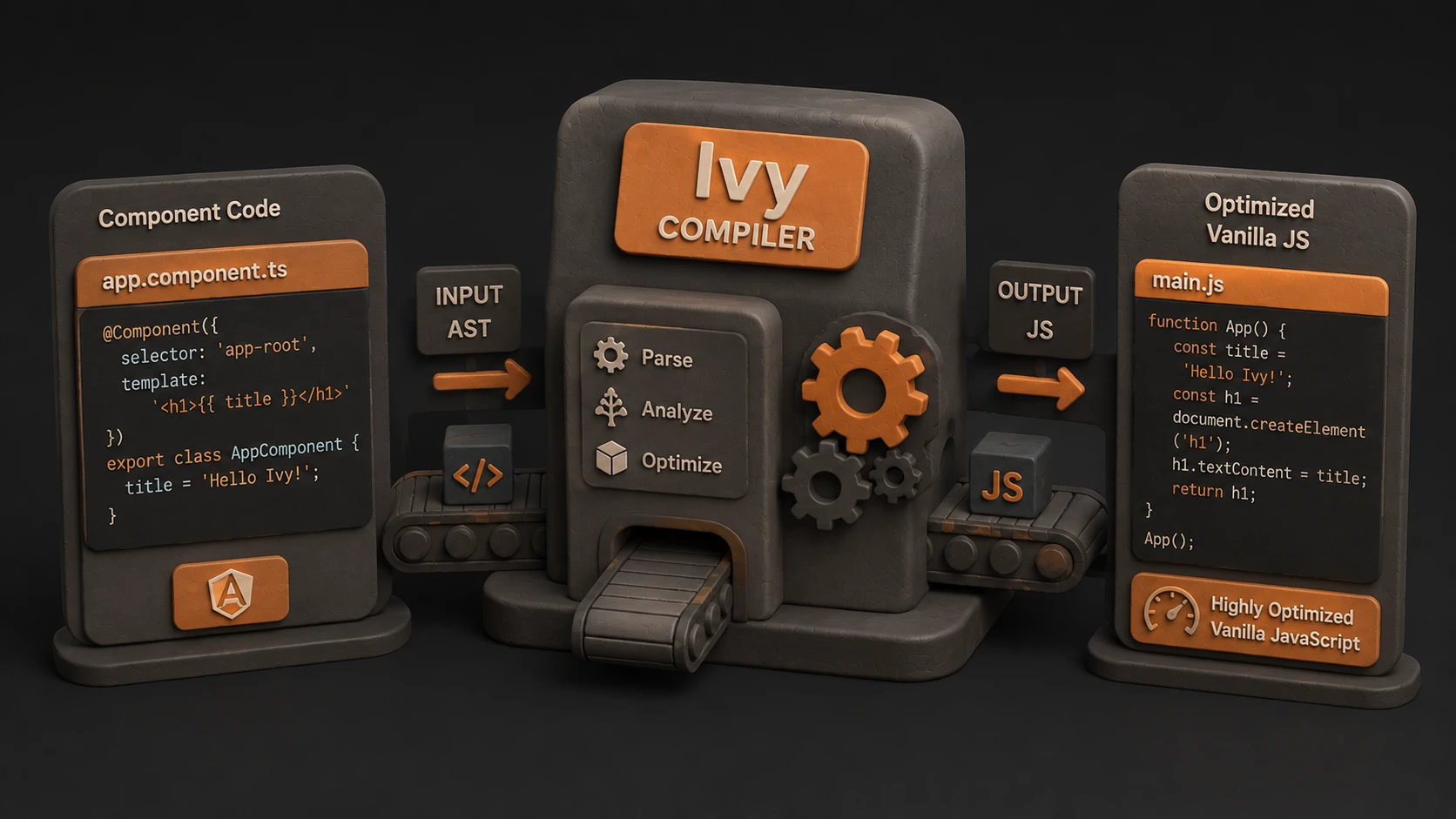
- ◆Template compilation.
- ◆Enhanced change detection.
Rather than extending AngularJS, Angular 2.0 introduces an entirely new programming model optimized for large-scale applications.
Core Architecture
A simplified Angular 2.0 architecture appears below.
| Component | Responsibility |
|---|---|
| Browser | Executes application |
| Angular Runtime | Framework services |
| Components | User interface modules |
| Templates | Declarative UI definitions |
| Dependency Injection | Service management |
| Services | Business logic |
| HTTP Layer | Backend communication |
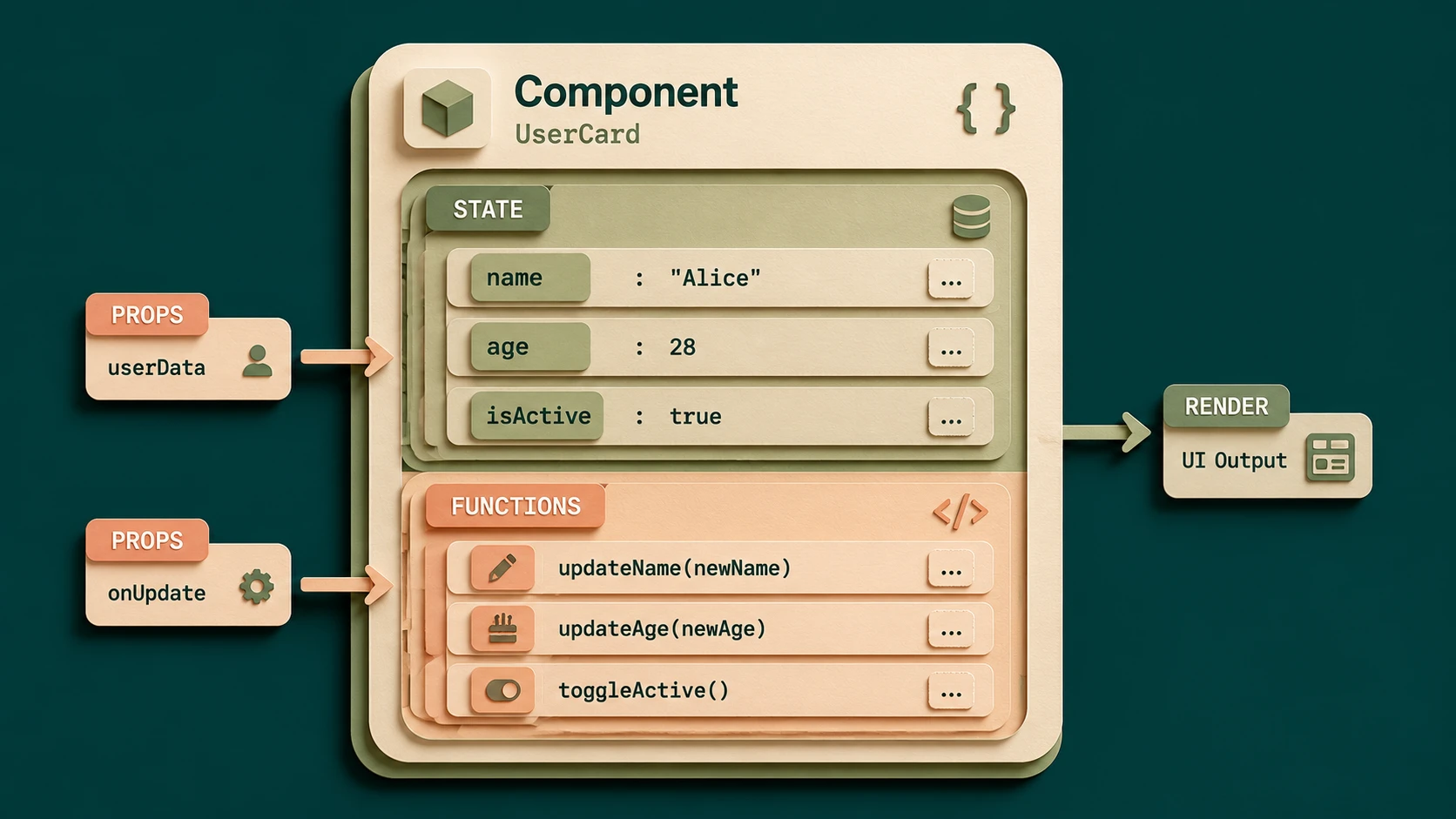
Each component encapsulates presentation, behavior, and interaction while communicating with other components through clearly defined interfaces.
Key Features
Component-Based Architecture
Components become the fundamental building blocks of Angular applications.
Each component combines:
- ◆Template.
- ◆Metadata.
- ◆Business logic.
- ◆Lifecycle behavior.
This modular approach encourages reuse and simplifies long-term maintenance.
TypeScript Integration
Angular 2.0 adopts TypeScript as its primary development language.
Static typing, decorators, interfaces, and improved tooling contribute to better developer productivity and application reliability.
Unidirectional Data Flow
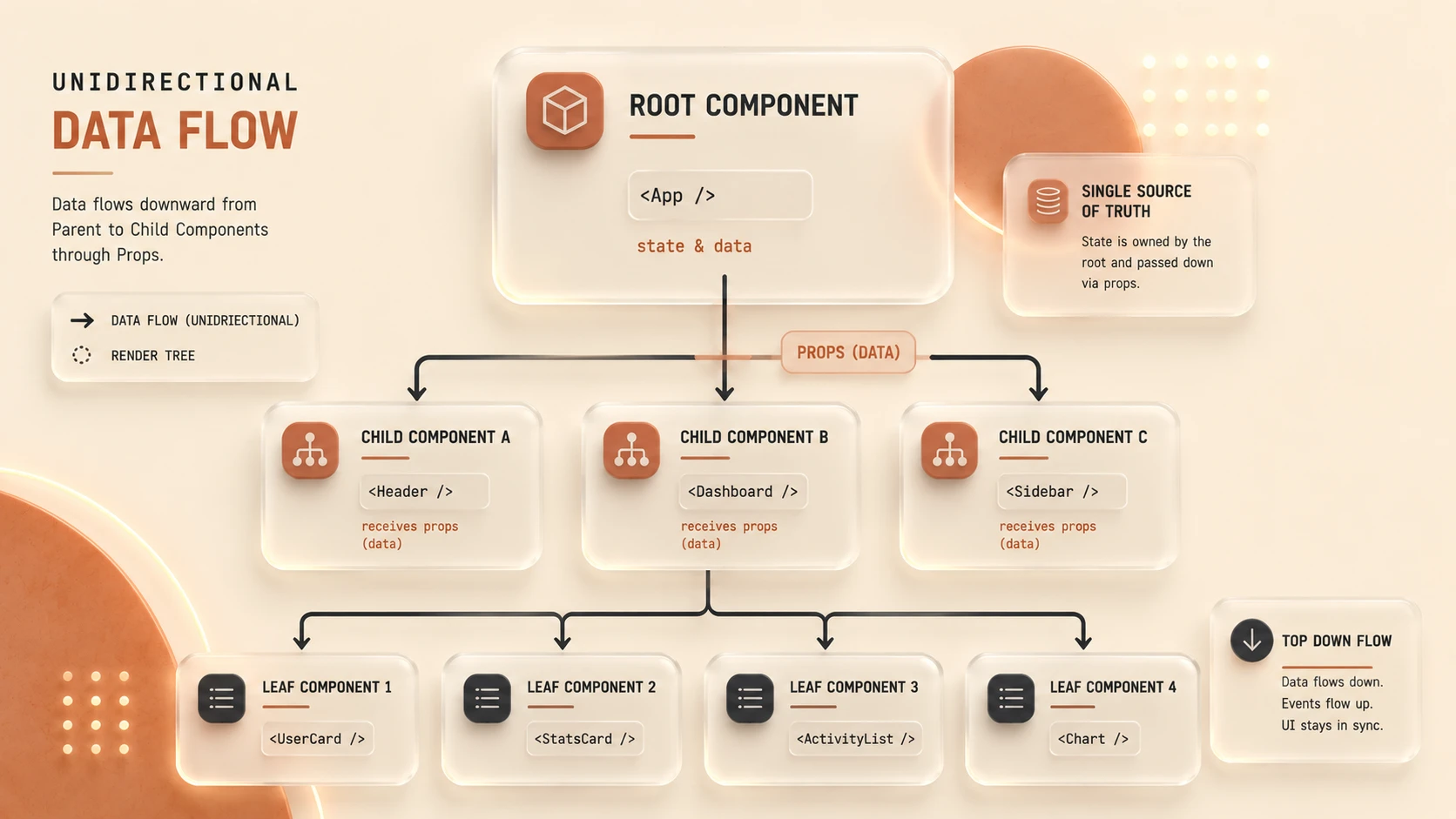
Angular 2.0 promotes clearer application state management by encouraging predictable one-way movement of data between components.
This reduces unexpected side effects while simplifying debugging.
Improved Dependency Injection
Dependency Injection remains a central architectural feature but has been redesigned for greater flexibility and consistency.
Services become easier to manage throughout large application hierarchies.
Enhanced Change Detection
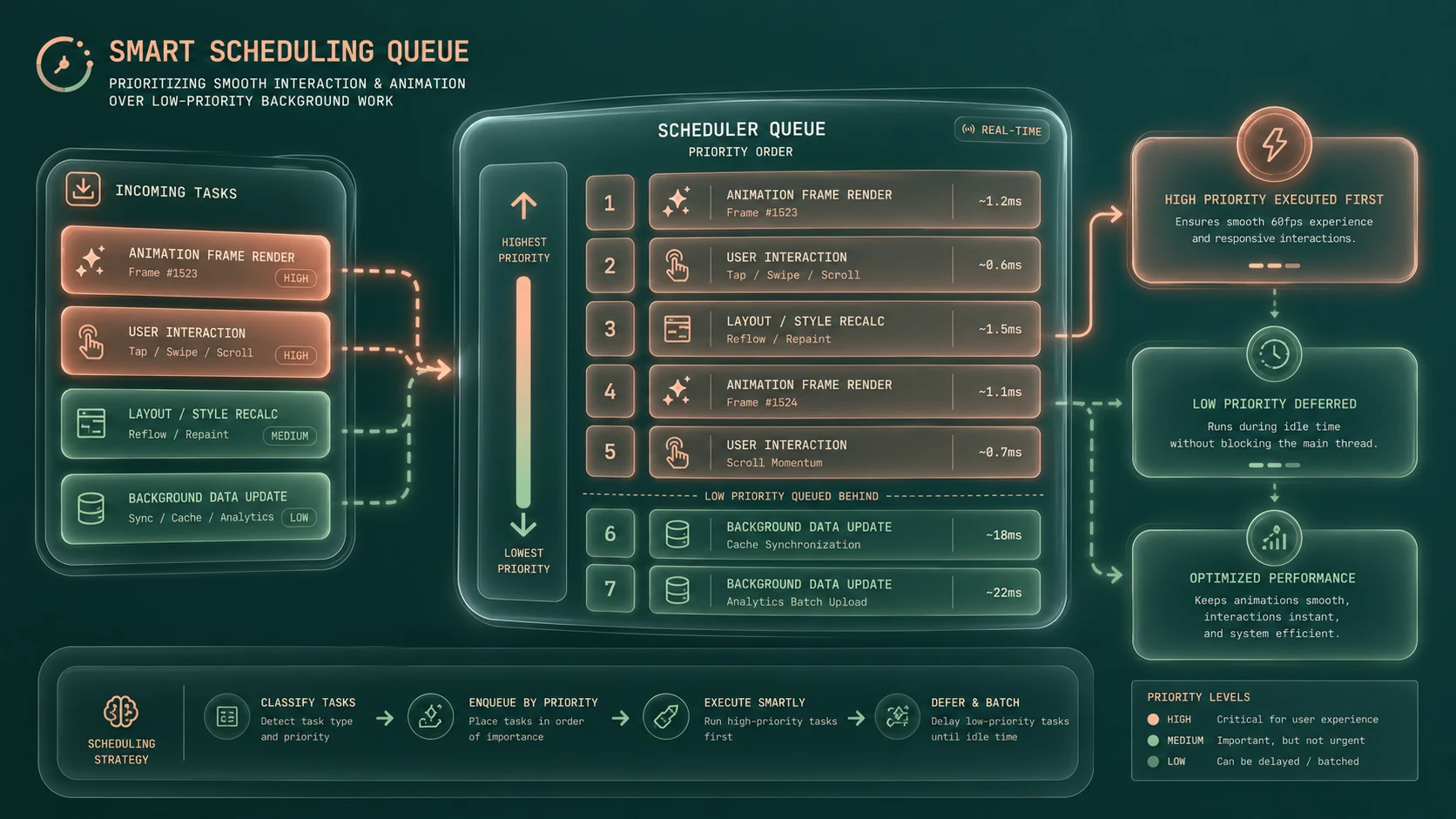
The framework introduces a more efficient change detection mechanism that minimizes unnecessary rendering work.
This contributes to improved responsiveness in larger applications.
Routing Improvements
Angular 2.0 provides a more capable routing system supporting increasingly modular application structures.
How It Works
A simplified application workflow appears below.
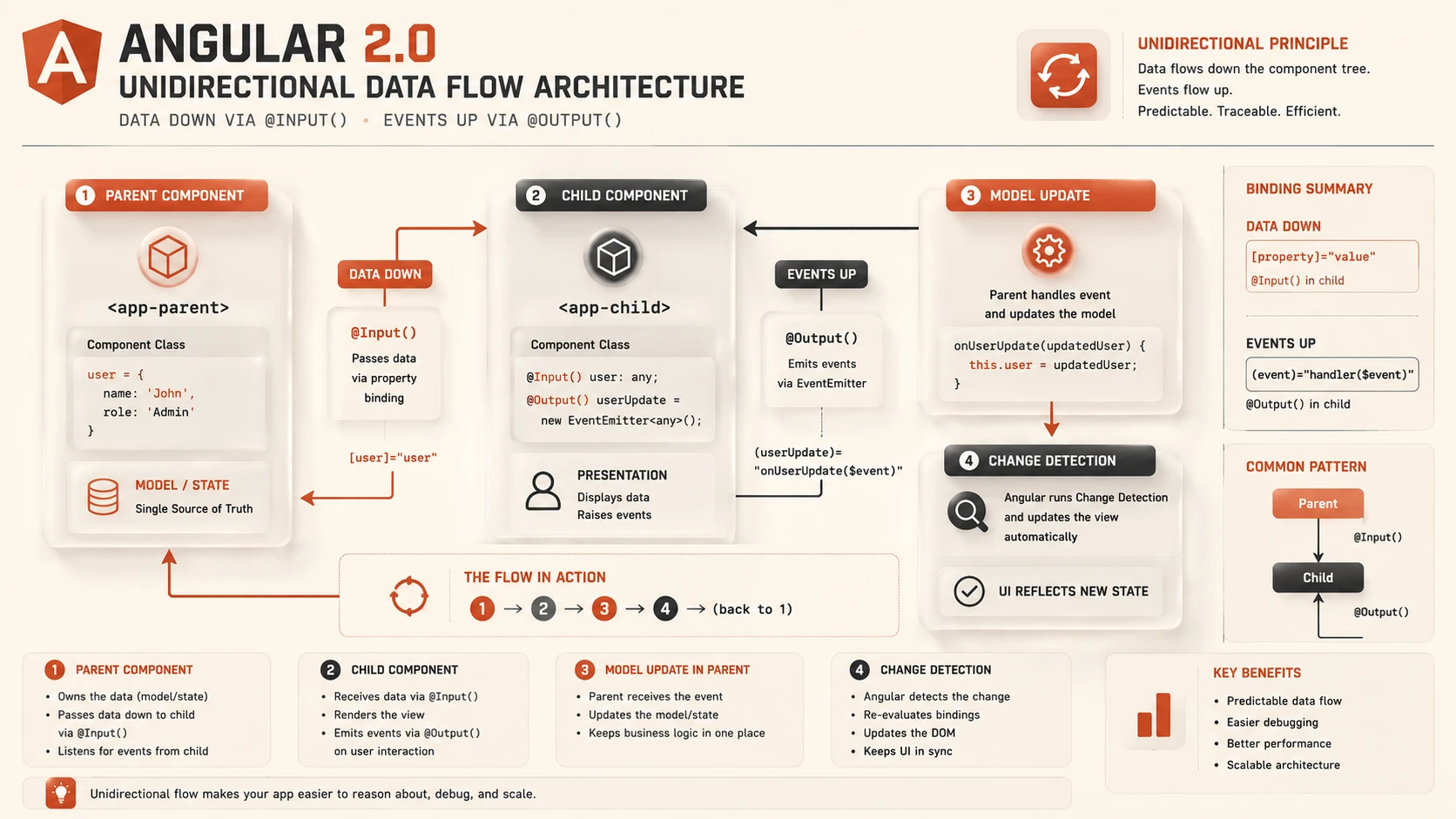
System architecture diagram and conceptual workflow layout for Angular 2.0 Final Release.
User Interaction
        |
Component Event
        |
Service Layer
        |
Business Logic
        |
Application State Updated
        |
Change Detection
        |
Template Rendering
The framework updates only the portions of the interface affected by application state changes.
Enterprise Use Cases
Enterprise Portals
Component-based development allows multiple teams to work independently on different functional modules.
Software-as-a-Service Platforms
Angular supports highly interactive user interfaces requiring modular architecture.
Financial Systems
Complex dashboards displaying real-time operational information benefit from structured component hierarchies.
Healthcare Applications
Large forms and workflow-driven interfaces become easier to organize using reusable components.
Internal Business Applications
Organizations can standardize interface development using shared component libraries.
Performance Considerations
Angular 2.0 introduces several architectural improvements.
Important considerations include:
- ◆Change detection efficiency.
- ◆Component granularity.
- ◆Rendering performance.
- ◆Memory utilization.
- ◆Template compilation.
- ◆JavaScript execution.
Application architecture remains a major factor influencing overall performance.
Security Considerations
Angular 2.0 contributes to secure application development through framework features, but enterprise security remains an architectural responsibility.
Organizations should continue implementing:
- ◆Authentication.
- ◆Authorization.
- ◆HTTPS communication.
- ◆Input validation.
- ◆Secure API design.
- ◆Cross-Site Scripting mitigation.
Client-side frameworks should always be complemented by secure backend services.
Scalability
Angular 2.0 emphasizes scalable enterprise development.
Advantages include:
- ◆Modular components.
- ◆Reusable services.
- ◆Predictable dependency management.
- ◆Improved testing.
- ◆Better team collaboration.
These characteristics make the framework suitable for large, long-lived enterprise applications.
Best Practices
Organizations evaluating Angular 2.0 should:
- ◆Design applications around reusable components.
- ◆Separate presentation from business logic.
- ◆Use dependency injection consistently.
- ◆Standardize TypeScript coding conventions.
- ◆Build shared component libraries.
- ◆Profile rendering performance.
- ◆Integrate automated testing into Continuous Integration pipelines.
Architectural consistency becomes increasingly valuable as projects expand.
Common Mistakes
| Mistake | Business Impact |
|---|---|
| Treating components as large monolithic modules | Reduced maintainability |
| Mixing business logic directly into templates | Difficult testing |
| Ignoring dependency injection patterns | Increased coupling |
| Migrating AngularJS applications without redesign | Higher migration complexity |
| Skipping TypeScript best practices | Lower code quality |
| Inconsistent project organization | Reduced developer productivity |
Organizations should approach Angular 2.0 as a new platform rather than a simple framework upgrade.
Technology Comparison
| Characteristic | AngularJS 1.x | Angular 2.0 |
|---|---|---|
| Primary Architecture | Controllers and scopes | Components |
| Language | JavaScript | TypeScript preferred |
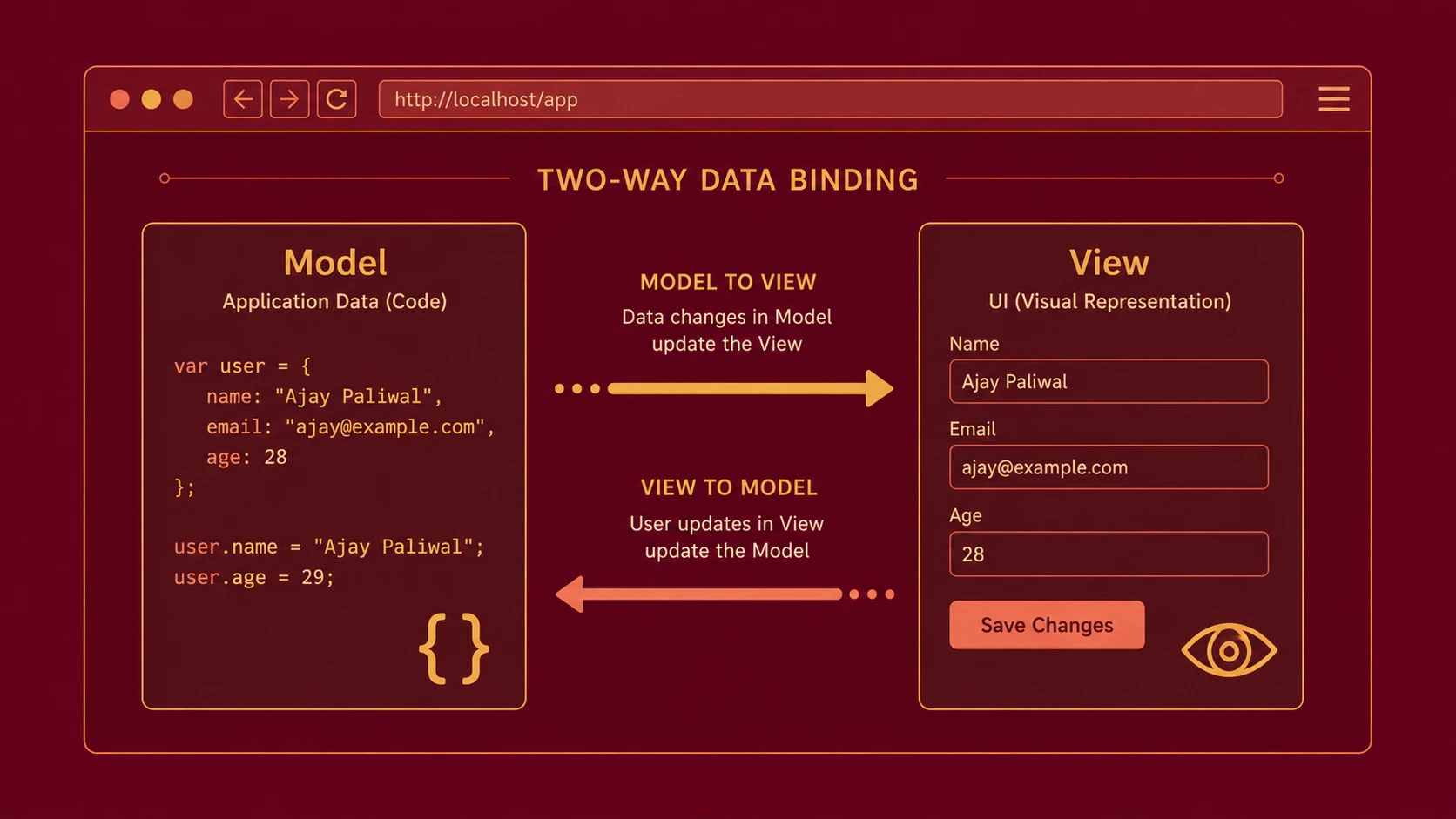
| Data Flow | Two-way data binding | Component-oriented with unidirectional patterns |
| Change Detection | Digest cycle | Improved change detection |
| Dependency Injection | Supported | Redesigned and enhanced |
| Mobile Focus | Limited optimization | Improved architecture for modern applications |
Angular 2.0 prioritizes modularity, maintainability, and performance for enterprise-scale development.
Adoption Strategy
Organizations should adopt Angular 2.0 through a structured migration plan.
- 1.Evaluate existing AngularJS applications.
- 2.Train development teams on TypeScript and component architecture.
- 3.Develop shared design and coding standards.
- 4.Pilot new projects using Angular 2.0.
- 5.Benchmark performance under realistic workloads.
- 6.Expand adoption as internal expertise grows.
Incremental adoption reduces migration risk while allowing engineering teams to establish modern development practices.
Limitations
As of May 2016, Angular 2.0 introduces a substantially different programming model from AngularJS.
Organizations should recognize several considerations.
- ◆Existing AngularJS applications require significant migration planning.
- ◆Developer training is essential.
- ◆Third-party ecosystem support continues expanding.
- ◆Architectural redesign may be necessary for mature applications.
- ◆Operational best practices will continue evolving as enterprise adoption grows.
These considerations should be incorporated into modernization strategies before beginning large-scale migrations.
Looking Ahead
From the perspective of May 2016, Angular 2.0 represents one of the most significant redesigns of a major web framework in recent years. By replacing controller-centric architecture with reusable components, embracing TypeScript, improving dependency injection, and encouraging predictable application state management, Google has created a framework designed for increasingly complex enterprise applications.
While migration from AngularJS requires careful planning, Angular 2.0 establishes a stronger architectural foundation for modern Single Page Applications. Organizations investing in long-term enterprise web platforms should evaluate the framework carefully, particularly where maintainability, modularity, and scalable team development are primary objectives.