Server-side JavaScript has rapidly evolved from an interesting experiment into a technology attracting serious attention from enterprise developers. Node.js has introduced a new programming model built around event-driven, non-blocking I/O, making it particularly attractive for web applications that handle large numbers of concurrent connections. At the same time, the Node Package Manager (npm) has become the central repository for sharing reusable JavaScript modules.
One of the defining characteristics of the Node.js ecosystem is the extraordinary pace at which new packages are appearing. Developers can now solve many common problems simply by installing community-created modules instead of implementing functionality from scratch. Authentication libraries, web frameworks, testing utilities, database connectors, logging systems, template engines, and networking components are becoming readily available through npm.
This rapid ecosystem growth offers tremendous opportunities, but it also introduces new architectural responsibilities. Enterprise development teams must balance development speed with long-term maintainability, stability, and governance. Choosing dependencies carefully is becoming just as important as writing application code.
This article examines the expanding npm ecosystem from the perspective of August 2011 and explores practical strategies for managing dependencies in enterprise Node.js applications.
The Growth of Node.js
Over the past two years, Node.js has attracted increasing interest because of its event-driven architecture and efficient handling of network operations.
Organizations are beginning to evaluate Node.js for:
- ◆Real-time web applications
- ◆Chat systems
- ◆REST-style HTTP APIs
- ◆Proxy servers
- ◆Streaming applications
- ◆Network utilities
- ◆Lightweight web services
Unlike traditional request-per-thread web servers, Node.js processes many operations through an event loop, making efficient use of system resources for I/O-intensive workloads.
Introducing npm
npm serves as the primary package management system for Node.js.
Developers can install reusable modules using simple commands.
Example:
npm install expressOnce installed, packages become available within the application.
This encourages code reuse while reducing repetitive implementation work.
Why Package Managers Matter
Enterprise software rarely consists solely of internally written code.
Modern applications often depend on:
- ◆Web frameworks
- ◆Database drivers
- ◆Logging libraries
- ◆Utility modules
- ◆Testing frameworks
- ◆Authentication components
- ◆Configuration libraries
A package manager simplifies installation, updates, and dependency tracking.
Rather than manually downloading libraries, developers rely on standardized package management.
The Expanding npm Ecosystem
The number of available npm packages continues to grow rapidly.
Developers can now find modules supporting:
- ◆HTTP servers
- ◆Routing
- ◆File processing
- ◆Email delivery
- ◆XML parsing
- ◆JSON handling
- ◆Database connectivity
- ◆Unit testing
This growing ecosystem accelerates development while encouraging community collaboration.
Enterprise Benefits
Reusable packages provide several advantages.
Faster Development
Teams can focus on business functionality rather than reimplementing common infrastructure.
Community Innovation
Open-source contributors continuously improve many libraries.
Consistent Development Practices
Standardized packages encourage reusable implementation patterns.
Reduced Boilerplate Code
Well-designed libraries eliminate repetitive infrastructure programming.
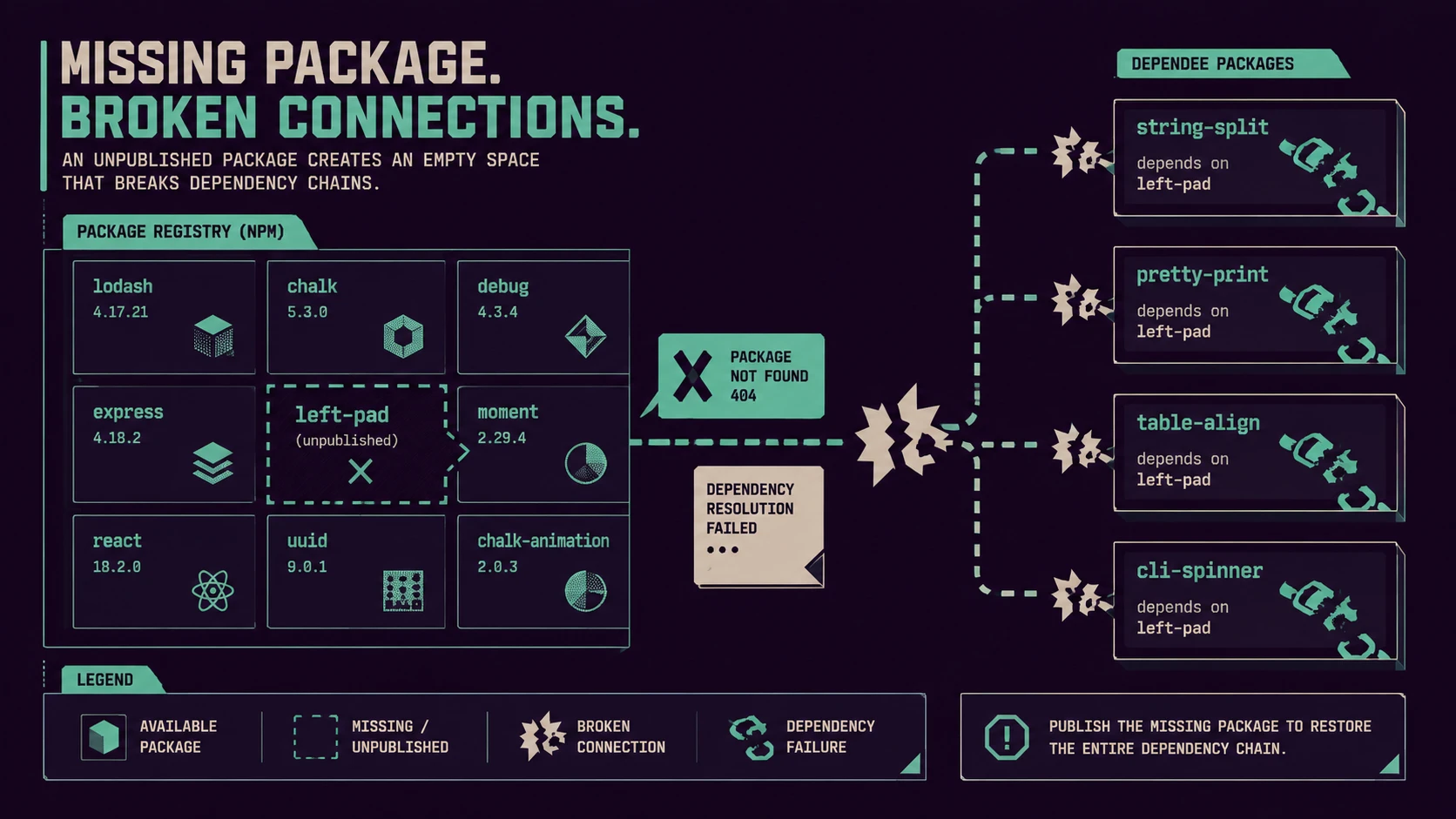
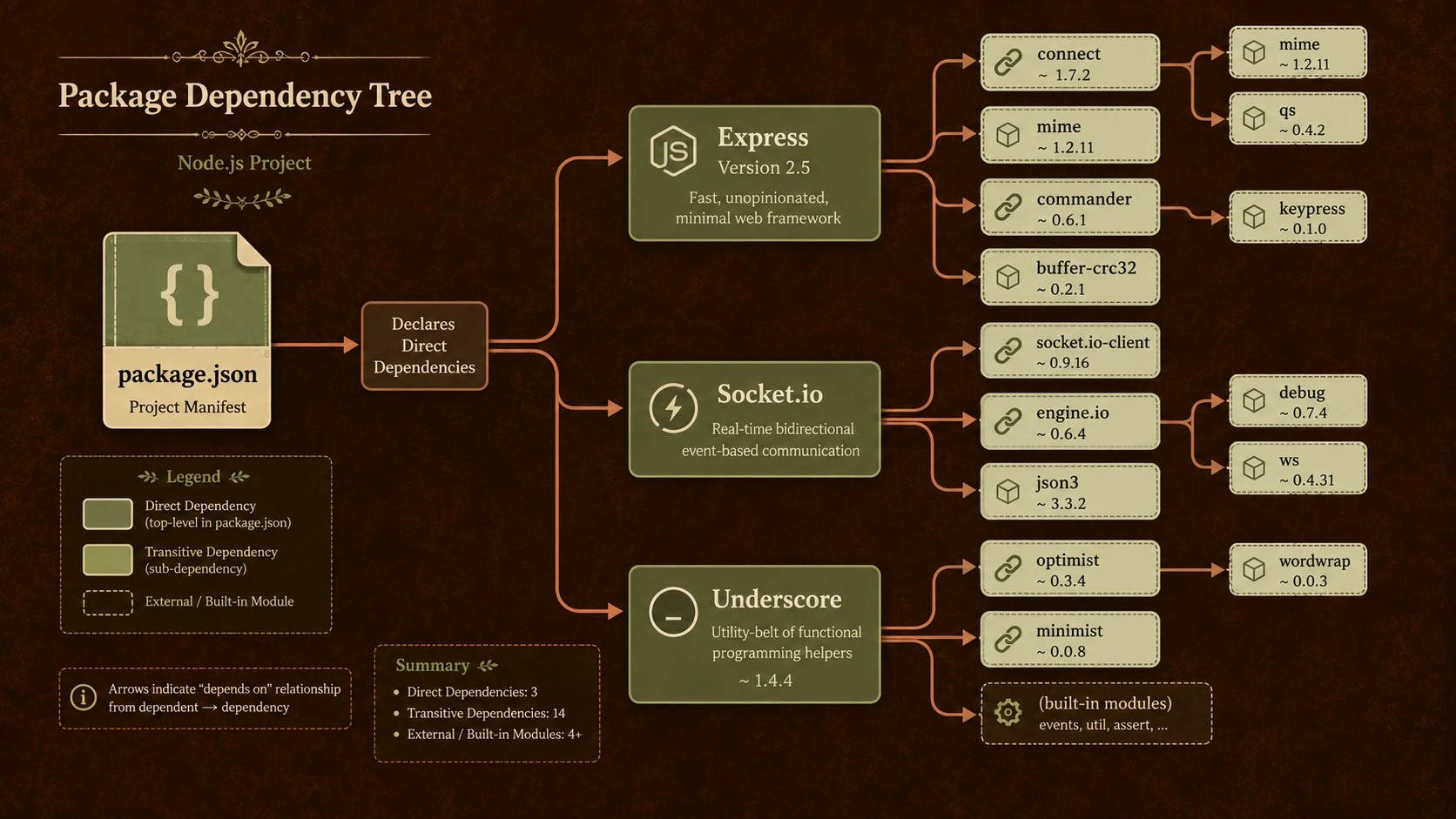
Understanding Dependency Trees
One package frequently depends on additional packages.
Example:
Enterprise Application
        |
   Web Framework
      /      \
Routing    Utilities
    |          |
Parser   Logging Module
As projects grow, dependency relationships become increasingly complex.
Development teams should understand not only direct dependencies but also the modules introduced indirectly.
Selecting Packages Carefully
Not every package is equally appropriate for enterprise applications.
Architects should evaluate:
- ◆Project maturity
- ◆Documentation quality
- ◆Community activity
- ◆Update frequency
- ◆Stability
- ◆Licensing
- ◆Overall architecture
A large number of available packages does not eliminate the need for technical evaluation.
Version Management
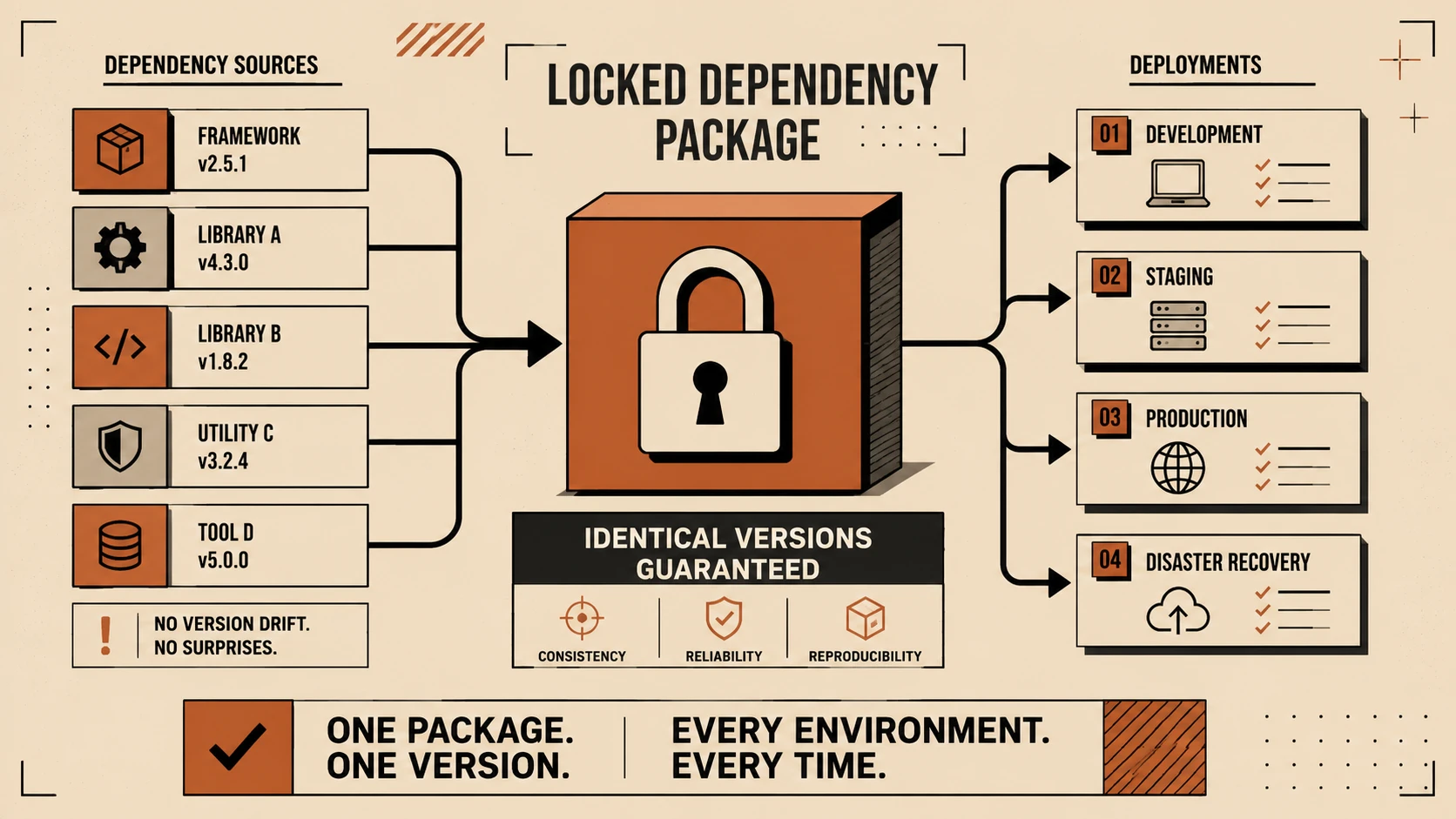
One important aspect of dependency management is version consistency.
Development, testing, and production environments should install compatible package versions.
Uncontrolled upgrades may introduce:
- ◆Unexpected behavior
- ◆API changes
- ◆Compatibility issues
- ◆Regression defects
Development teams should establish version management policies before large-scale adoption.
Enterprise Architecture
Node.js applications should continue following layered architectural principles.
Typical architecture:
Browser
      |
HTTP Server
      |
Application Layer
      |
Business Services
      |
Reusable npm Modules
      |
Database
External packages should support application architecture rather than replace sound architectural design.
Event loop routing for non-blocking asynchronous I/O execution threads.
Dependency Governance
Enterprise organizations typically establish governance around third-party software.
Recommended practices include:
- ◆Approved package lists
- ◆License review
- ◆Code quality evaluation
- ◆Documentation standards
- ◆Security review
- ◆Periodic dependency audits
Governance reduces operational risk while allowing teams to benefit from community innovation.
Enterprise Use Cases
Web Applications
Node.js packages simplify:
- ◆Routing
- ◆Session management
- ◆Template rendering
- ◆Request handling
REST Services
Reusable middleware accelerates development of HTTP-based APIs.
Real-Time Applications
Packages supporting event-driven communication simplify messaging and collaboration systems.
Internal Development Tools
Node.js is increasingly useful for automation scripts, build utilities, and deployment support.
Performance Considerations
Additional packages should not be included simply because they are available.
Organizations should evaluate:
- ◆Startup time
- ◆Memory usage
- ◆CPU utilization
- ◆Network performance
- ◆Package overhead
Dependencies should contribute measurable value.
Testing Third-Party Modules
Enterprise applications should validate third-party libraries just as thoroughly as internally developed code.
Testing should include:
- ◆Functional verification
- ◆Integration testing
- ◆Performance evaluation
- ◆Upgrade testing
- ◆Error handling
Comprehensive testing reduces deployment risk.
Best Practices
Organizations adopting Node.js should consider the following recommendations.
Minimize Dependencies
Install only packages that provide meaningful business value.
Prefer Mature Projects
Well-documented and actively maintained libraries generally reduce operational risk.
Separate Business Logic
Business functionality should remain independent from third-party frameworks whenever practical.
Document Package Decisions
Architectural decisions regarding major dependencies should be recorded for future maintenance.
Monitor Ecosystem Changes
Development teams should periodically review updates to important project dependencies.
Common Mistakes
Many organizations entering the Node.js ecosystem encounter similar challenges.
Installing Too Many Packages
Every dependency introduces additional maintenance responsibility.
Ignoring Documentation
Poorly understood packages can create long-term support challenges.
Depending on Unproven Libraries
Early-stage projects may evolve rapidly or become inactive.
Mixing Business Logic with Framework Code
Clear separation improves flexibility if dependencies change.
Neglecting Testing
Third-party packages require the same quality assurance as application code.
Comparing Traditional Library Management and npm
| Traditional Library Management | npm |
|---|---|
| Manual downloads | Automated installation |
| Manual updates | Versioned packages |
| Limited sharing | Central package repository |
| Higher maintenance effort | Simplified dependency management |
| Application-specific libraries | Large reusable ecosystem |
The package management model significantly improves developer productivity while introducing new governance considerations.
Adoption Recommendations
Organizations evaluating Node.js should adopt structured dependency management practices.
Recommended roadmap:
- 1.Establish dependency review guidelines.
- 2.Create approved package standards.
- 3.Evaluate package maturity before adoption.
- 4.Maintain consistent package versions across environments.
- 5.Test dependencies during continuous integration.
- 6.Review package updates regularly.
- 7.Document architectural decisions involving third-party libraries.
Following these practices allows development teams to benefit from npm's rapidly expanding ecosystem while maintaining enterprise-quality software.
Looking Ahead
The rapid growth of npm reflects the increasing maturity of the Node.js ecosystem and the broader shift toward reusable open-source software components. As more developers contribute packages and frameworks, enterprise organizations gain access to an expanding collection of tools capable of accelerating application development.
Success, however, depends on disciplined dependency management. Organizations that combine thoughtful package selection, strong architectural practices, comprehensive testing, and effective governance will be well positioned to take advantage of Node.js while building maintainable and reliable enterprise applications as the ecosystem continues to evolve.