Introduction
Enterprise data management is undergoing a period of rapid evolution. While relational database management systems continue to power the majority of mission-critical business applications, organizations are increasingly encountering workloads that challenge traditional relational models. Explosive growth in web applications, social platforms, content management systems, analytics, and rapidly changing data structures has encouraged architects to evaluate alternative database technologies.
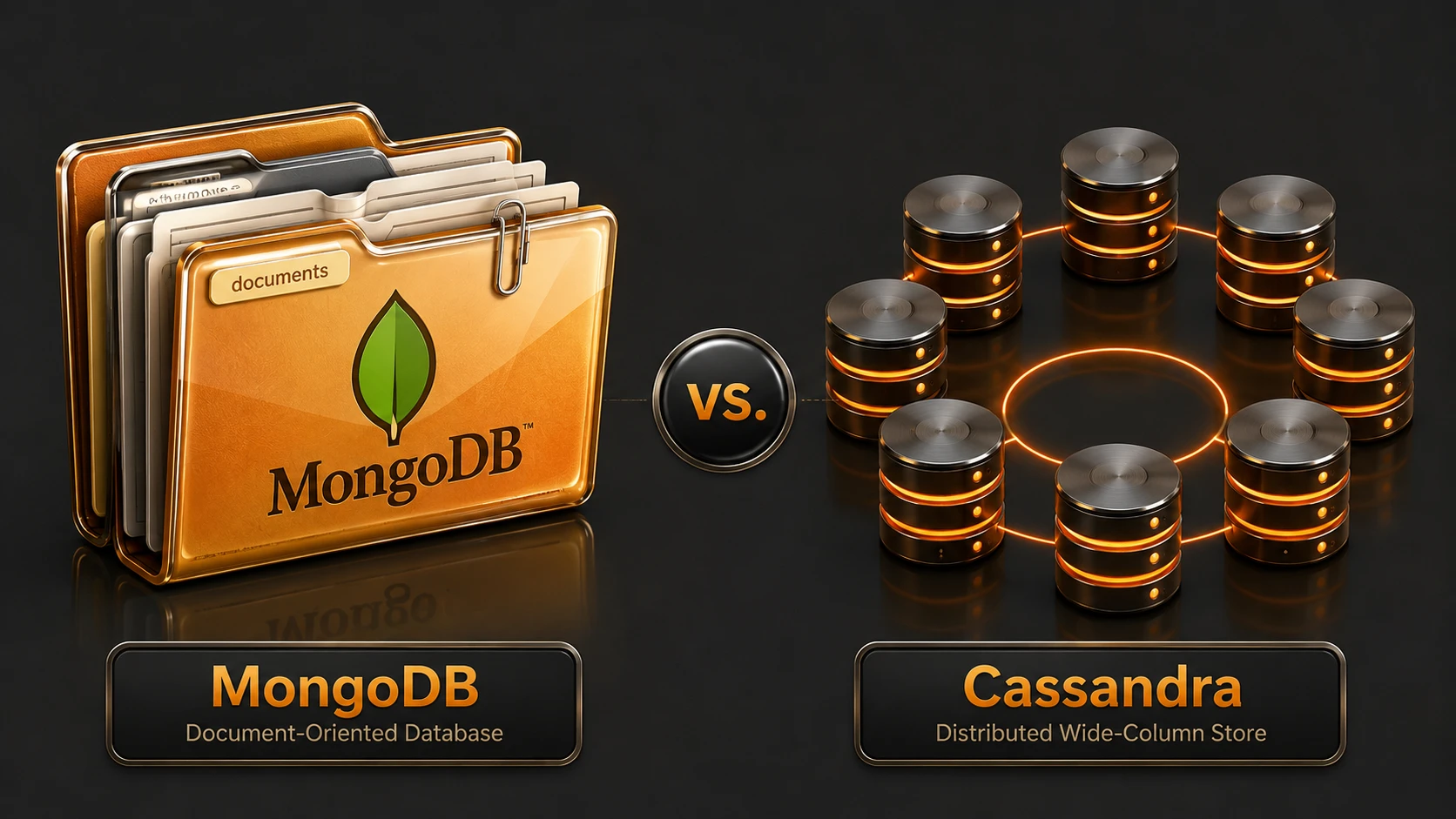
Among the emerging NoSQL databases, MongoDB has attracted considerable attention because of its document-oriented design, flexible schema model, and emphasis on developer productivity. Instead of organizing information into rows and tables, MongoDB stores data as BSON documents, allowing applications to evolve more naturally as business requirements change.
MongoDB 2.0 represents an important milestone in the platform's maturity. Released during 2011, this version introduces improvements aimed at increasing performance, improving concurrency, expanding indexing capabilities, and strengthening operational reliability.
As of September 2011, MongoDB remains an emerging enterprise technology. Many organizations are evaluating it alongside established relational databases rather than viewing it as a universal replacement. Understanding where MongoDB excels—and where traditional relational systems continue to provide advantages—is essential for successful adoption.
This article examines MongoDB 2.0 from an enterprise architecture perspective, explores its major enhancements, compares it with relational database systems, and discusses practical deployment recommendations.
Why Organizations Are Exploring NoSQL
Relational databases have successfully supported enterprise software for decades. However, several modern application characteristics have introduced new design challenges.
These include:
- ◆Rapidly changing data models
- ◆Large volumes of semi-structured information
- ◆High write throughput
- ◆Horizontal scalability requirements
- ◆Content management systems
- ◆User-generated data
- ◆Product catalogs with varying attributes
Traditional normalization remains valuable, but some workloads benefit from more flexible document structures.
Understanding MongoDB's Document Model
MongoDB stores information as BSON documents within collections.
Rather than requiring identical columns for every record, documents may contain different fields based on application requirements.
Example document:
{
  "customerId": 1001,
  "name": "John Smith",
  "email": "john@example.com",
  "orders": [
    {
      "orderId": 501,
      "total": 249.95
    }
  ]
}
This flexible model allows developers to evolve application schemas without modifying rigid relational table structures.
What's New in MongoDB 2.0
MongoDB 2.0 introduces several enhancements designed to improve scalability and operational maturity.
Key improvements include:
- ◆Better concurrency
- ◆Expanded indexing capabilities
- ◆Improved durability options
- ◆Enhanced sharding functionality
- ◆Operational improvements
- ◆Better performance for larger deployments
Collectively, these enhancements strengthen MongoDB's position for enterprise evaluation.
Improved Concurrency
Concurrency is one of the most closely watched areas for database performance.
Modern enterprise applications frequently process thousands of simultaneous operations involving:
- ◆Customer transactions
- ◆Product updates
- ◆Content publishing
- ◆User activity
- ◆Session management
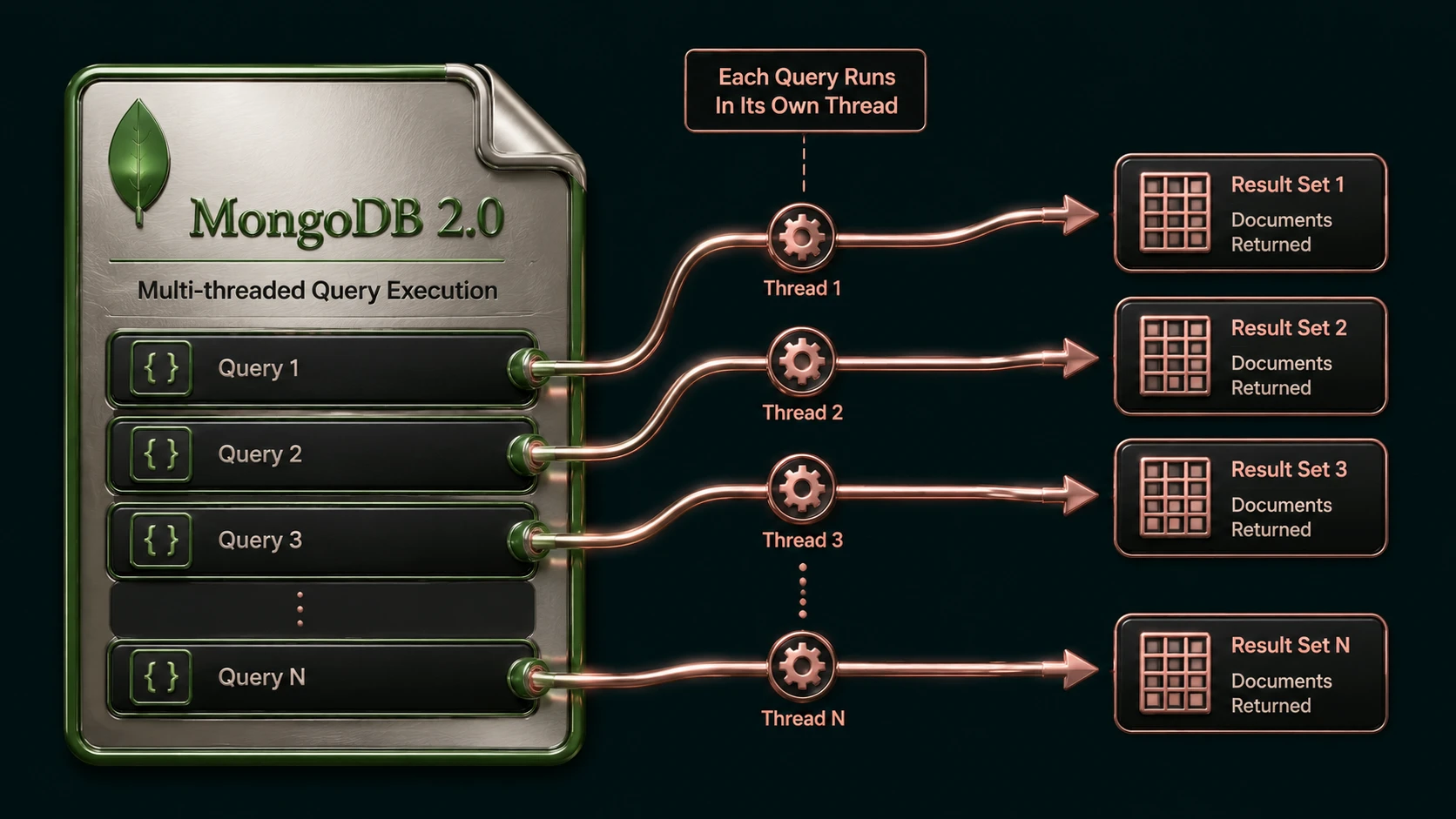
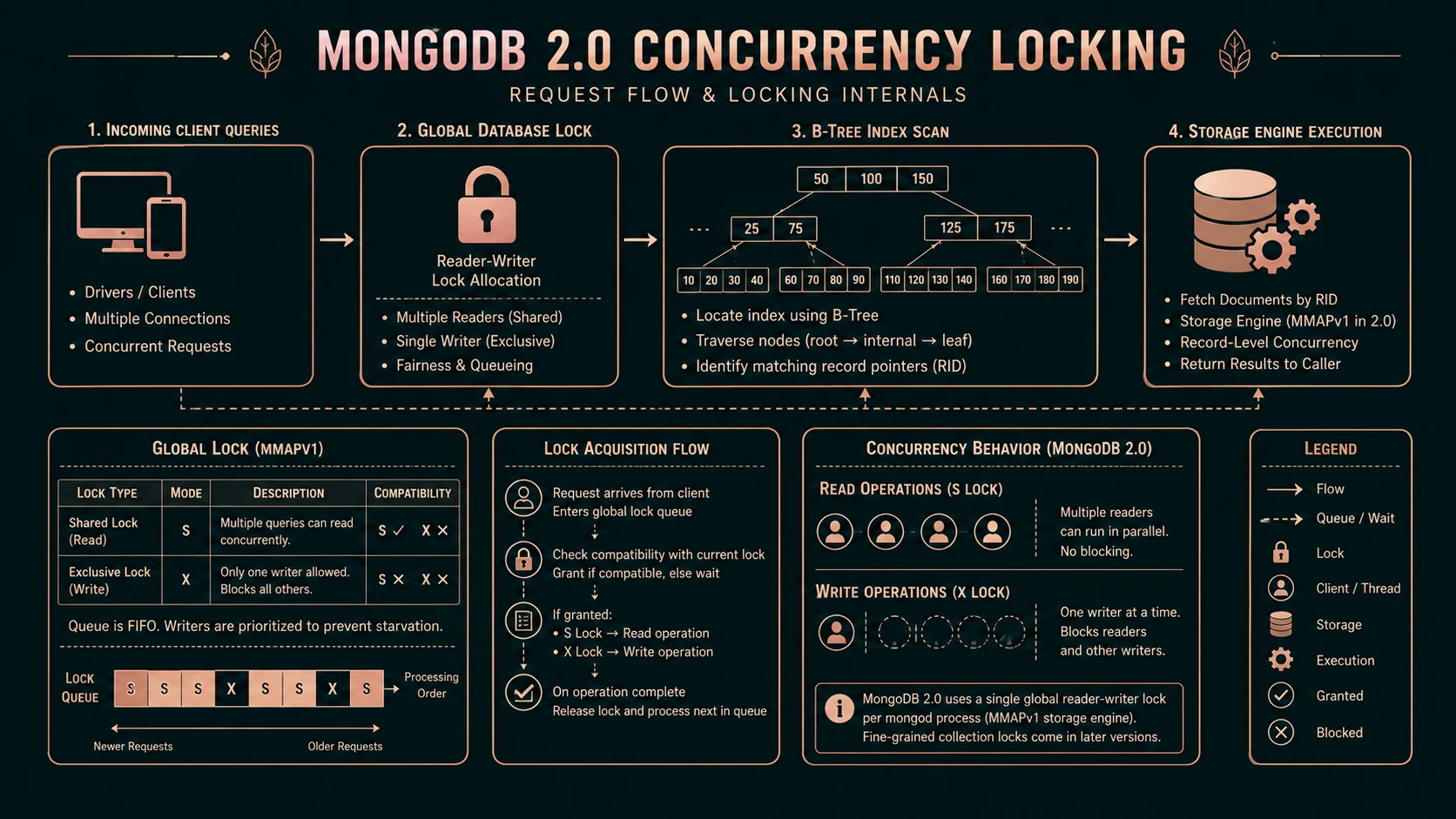
MongoDB 2.0 introduces improvements intended to reduce contention and improve throughput during concurrent operations.
Although application architecture and workload characteristics remain important, these enhancements contribute to better scalability under demanding environments.
Enhanced Indexing
Indexes remain one of the most important tools for database performance.
MongoDB 2.0 expands indexing capabilities to improve query efficiency.
Proper indexing can accelerate:
- ◆Customer searches
- ◆Product filtering
- ◆Reporting queries
- ◆Content retrieval
- ◆Administrative operations
As with relational databases, index design should reflect actual application workloads rather than theoretical usage.
Durability Improvements
Enterprise organizations require confidence that committed data remains protected.
MongoDB 2.0 introduces journaling support as an important step toward improving durability and recovery capabilities.
Benefits include:
- ◆Reduced recovery time
- ◆Improved resilience after failures
- ◆Better operational reliability
Organizations should evaluate journaling configurations according to their performance and recovery objectives.
Comparing MongoDB and Relational Databases
| Feature | Relational Database | MongoDB 2.0 |
|---|---|---|
| Data Model | Tables and Rows | Documents |
| Schema | Fixed | Flexible |
| Relationships | Foreign Keys | Embedded Documents and References |
| Horizontal Scaling | More Complex | Designed for Sharding |
| Schema Evolution | Structured | Flexible |
| Query Language | SQL | MongoDB Query API |
| Best Fit | Transactional Systems | Document-Oriented Applications |
Each approach serves different categories of enterprise workloads.
Enterprise Architecture
A typical MongoDB deployment may resemble:
Web Applications
        |
Application Services
        |
MongoDB Driver
        |
MongoDB Cluster
        |
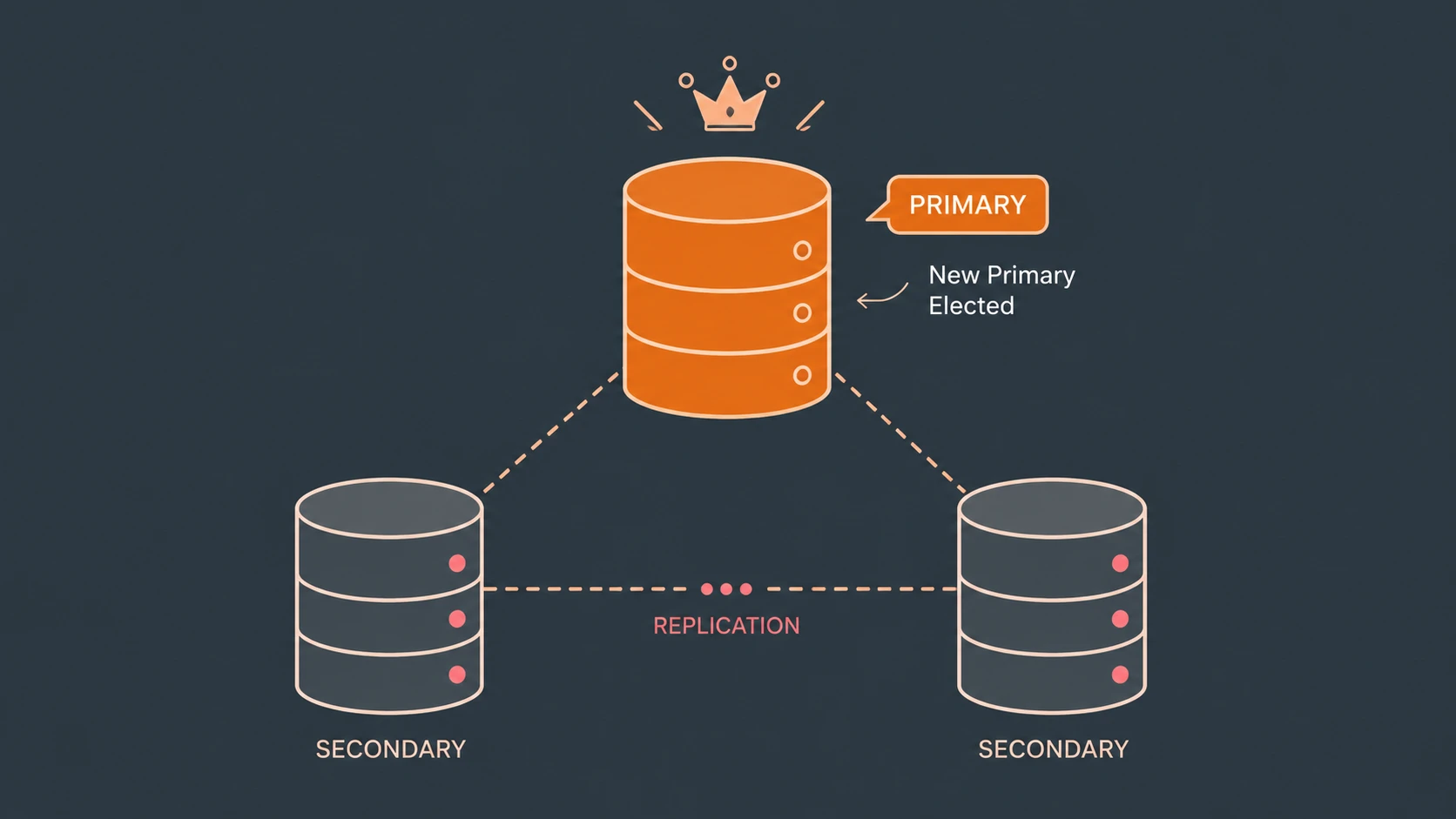
Replica Set / Sharded Deployment
The application layer communicates directly with MongoDB through language-specific drivers while the database infrastructure provides scalability and availability.
Enterprise Use Cases
Content Management Systems
Document-oriented storage naturally supports articles, media metadata, and evolving content structures.
Product Catalogs
Distributed query routing and replica set replication configurations in NoSQL storage.
Retail applications frequently manage products containing different sets of attributes.
MongoDB's flexible document model simplifies this variability.
Social Applications
Rapidly changing user profiles and activity streams align well with document-oriented storage.
Logging Platforms
Operational logs often contain semi-structured information that evolves over time.
Rapid Application Development
Projects with frequently changing business requirements may benefit from flexible schema evolution.
Performance Considerations
MongoDB performance depends on several architectural factors.
Organizations should evaluate:
- ◆Working set size
- ◆Memory utilization
- ◆Index design
- ◆Query patterns
- ◆Document size
- ◆Disk performance
- ◆Network latency
Benchmarking under realistic production workloads remains essential.
Operational Considerations
Deploying MongoDB in enterprise environments requires disciplined operational practices.
Administrators should establish:
- ◆Backup procedures
- ◆Monitoring systems
- ◆Capacity planning
- ◆Security controls
- ◆Disaster recovery strategies
- ◆Operational documentation
Successful enterprise deployments depend upon sound operational governance in addition to technology selection.
Best Practices
Organizations evaluating MongoDB 2.0 should consider the following recommendations.
- ◆Design documents around application access patterns.
- ◆Create indexes carefully.
- ◆Benchmark representative workloads.
- ◆Monitor database performance continuously.
- ◆Enable journaling where appropriate.
- ◆Plan backup and recovery procedures.
- ◆Secure database access.
- ◆Evaluate sharding based on actual scalability requirements.
- ◆Document schema conventions.
These practices improve maintainability while supporting long-term growth.
Common Mistakes
Several implementation issues frequently affect NoSQL projects.
Assuming NoSQL Replaces Every Relational Database
Relational databases remain highly effective for many transactional systems.
Ignoring Data Modeling
Flexible schemas still require thoughtful design.
Excessive Indexing
Too many indexes may negatively affect write performance.
Migrating Without Performance Testing
Architectural decisions should be supported by measurable results.
Weak Operational Planning
Monitoring, backup, and disaster recovery remain essential regardless of database technology.
Adoption Recommendations
Organizations should approach MongoDB adoption incrementally.
Phase 1
- ◆Identify document-oriented workloads.
- ◆Train development teams.
- ◆Build pilot projects.
Phase 2
- ◆Benchmark application performance.
- ◆Review operational procedures.
- ◆Establish monitoring standards.
Phase 3
- ◆Expand deployment where document-oriented storage provides measurable benefits.
- ◆Optimize indexing.
- ◆Review scalability.
Phase 4
- ◆Standardize operational practices.
- ◆Continue evaluating evolving MongoDB capabilities.
- ◆Integrate lessons learned into enterprise architecture standards.
A phased adoption strategy reduces risk while allowing organizations to develop operational expertise.
MongoDB's Role in Enterprise Architecture
MongoDB 2.0 should be viewed as an additional tool within the enterprise architect's portfolio rather than a universal replacement for relational database management systems. Applications emphasizing flexible document structures, rapid development, and horizontal scalability may benefit considerably from MongoDB's architecture.
Conversely, highly transactional systems with complex relational constraints may continue to align naturally with established relational databases. Successful organizations will evaluate each workload individually, selecting the technology that best satisfies business, operational, and technical requirements.
Looking Ahead
MongoDB 2.0 represents an important stage in the evolution of document-oriented databases. Improvements in concurrency, indexing, durability, and operational capabilities demonstrate the platform's continued progress toward supporting increasingly demanding enterprise workloads.
As organizations continue exploring NoSQL technologies throughout 2011, MongoDB deserves careful evaluation for applications requiring flexible schemas, scalable architectures, and rapid application development. By adopting MongoDB selectively and grounding deployment decisions in measurable workload characteristics, enterprise teams can expand their architectural options while maintaining the reliability and operational discipline expected of modern business systems.