Introduction
The continued growth of Software as a Service (SaaS), social platforms, e-commerce systems, and cloud-hosted business applications has dramatically increased the volume of data that enterprise systems must manage. While modern relational database management systems continue to provide exceptional transactional capabilities, many organizations are approaching the practical limits of scaling a single database server.
Adding processors, memory, and storage can postpone capacity limitations, but vertical scaling eventually encounters financial, architectural, and operational constraints. Organizations serving millions of users increasingly require database architectures capable of expanding horizontally by distributing data across multiple database servers.
Database sharding has emerged as one of the most important architectural patterns for achieving this objective. Rather than storing all application data within a single database instance, sharding partitions information across multiple independent databases while allowing the application to present a unified service.
For enterprise architects designing high-growth SaaS platforms in 2013, understanding database sharding is becoming an essential architectural skill.
Industry Background
Traditional enterprise applications were frequently deployed within a single organization and supported relatively predictable workloads. Modern internet applications operate under fundamentally different conditions.
Organizations now support:
- ◆Global customer bases
- ◆Continuous online availability
- ◆Large transactional workloads
- ◆Multi-tenant architectures
- ◆Rapid data growth
- ◆Mobile clients
- ◆API-driven integrations
As datasets expand into hundreds of millions or billions of records, scaling a single database server becomes increasingly difficult regardless of hardware investment.
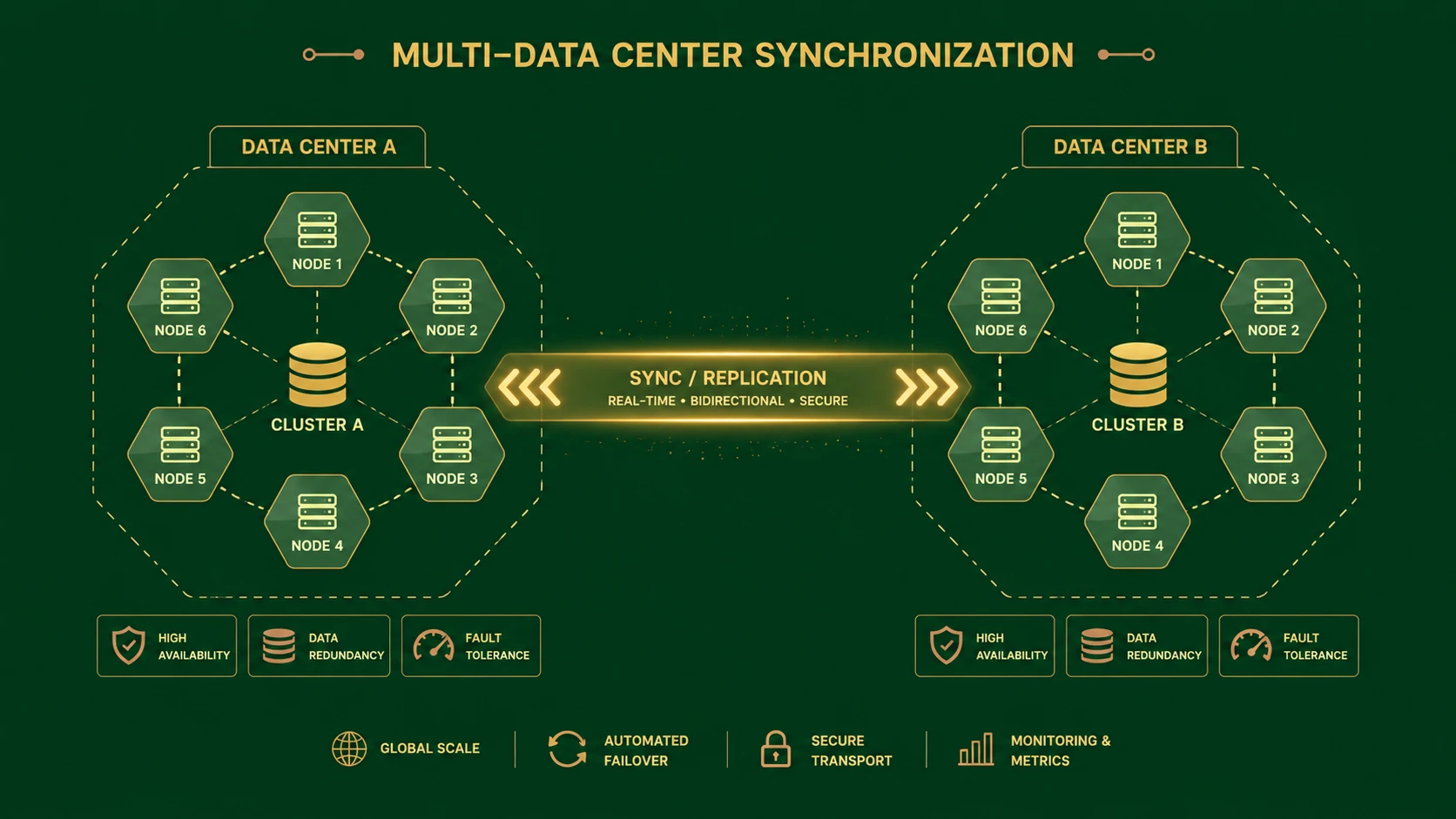
Horizontal partitioning distributes both storage and workload across multiple database nodes, enabling infrastructure to expand incrementally.
The Business Problem
Growing SaaS platforms commonly encounter:
- ◆Database capacity limitations
- ◆Increasing storage requirements
- ◆Longer backup windows
- ◆Higher replication latency
- ◆Reduced write throughput
- ◆Maintenance downtime
- ◆Infrastructure costs associated with larger database servers
Although hardware upgrades provide temporary relief, they do not eliminate the architectural limitations of concentrating all workload on a single database instance.
Sharding addresses these challenges by dividing application data into independently managed partitions.
Understanding Database Sharding
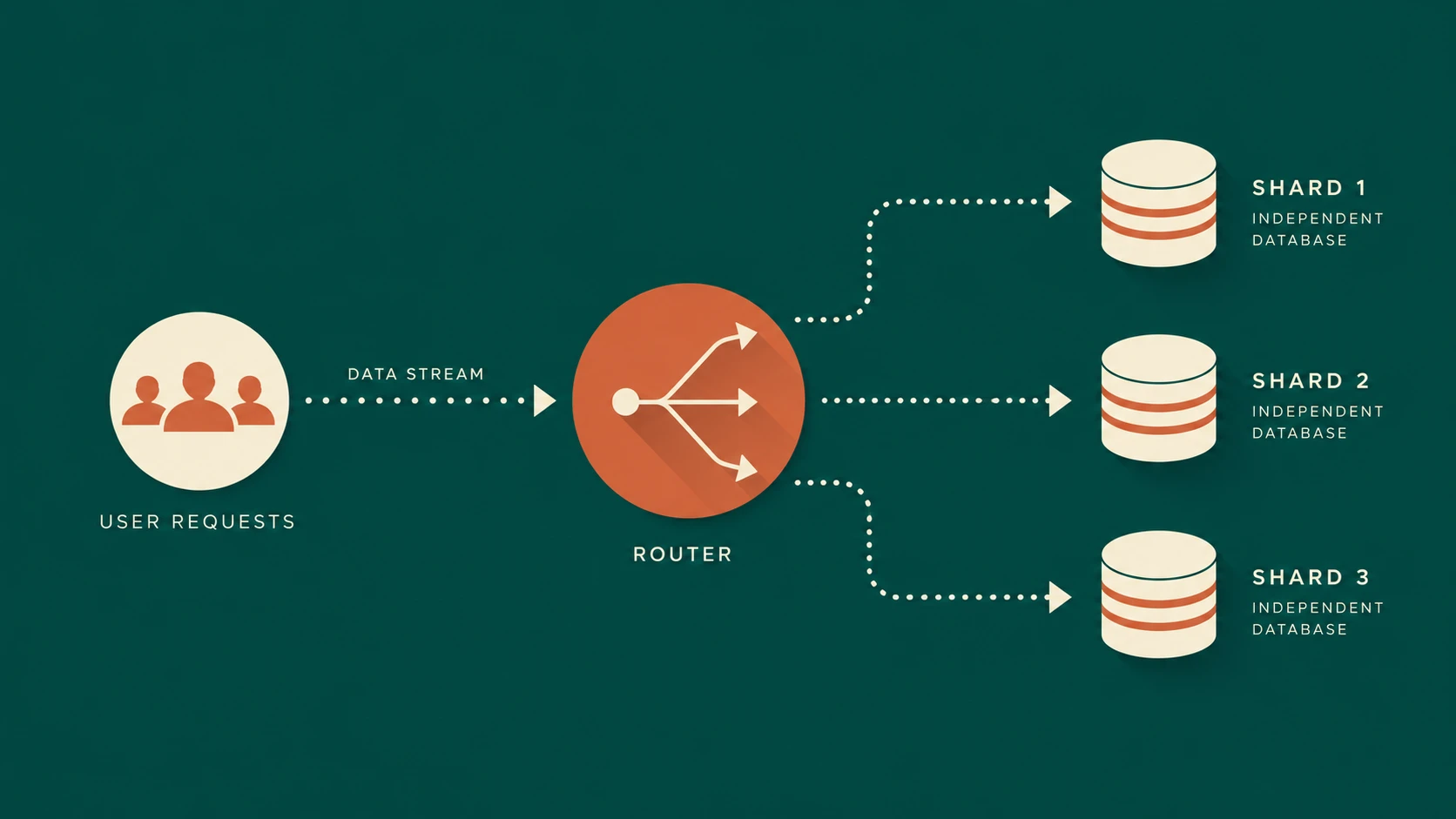
Database sharding is a horizontal partitioning strategy in which application data is distributed across multiple database servers according to predefined routing rules.
Each shard stores only a subset of the overall dataset.
Applications determine which shard contains the required information before executing queries.
From the perspective of application users, the distributed architecture ideally behaves as a single logical database.
Core Architecture
A typical sharded environment consists of several cooperating components.
| Component | Responsibility |
|---|---|
| Application Layer | Receives user requests |
| Shard Routing Layer | Determines destination shard |
| Shard Database | Stores partitioned application data |
| Metadata Service | Maintains shard mapping information |
| Monitoring Platform | Observes shard health and capacity |
Separating routing from storage simplifies long-term expansion while reducing coupling between application logic and physical database placement.
How Sharding Works
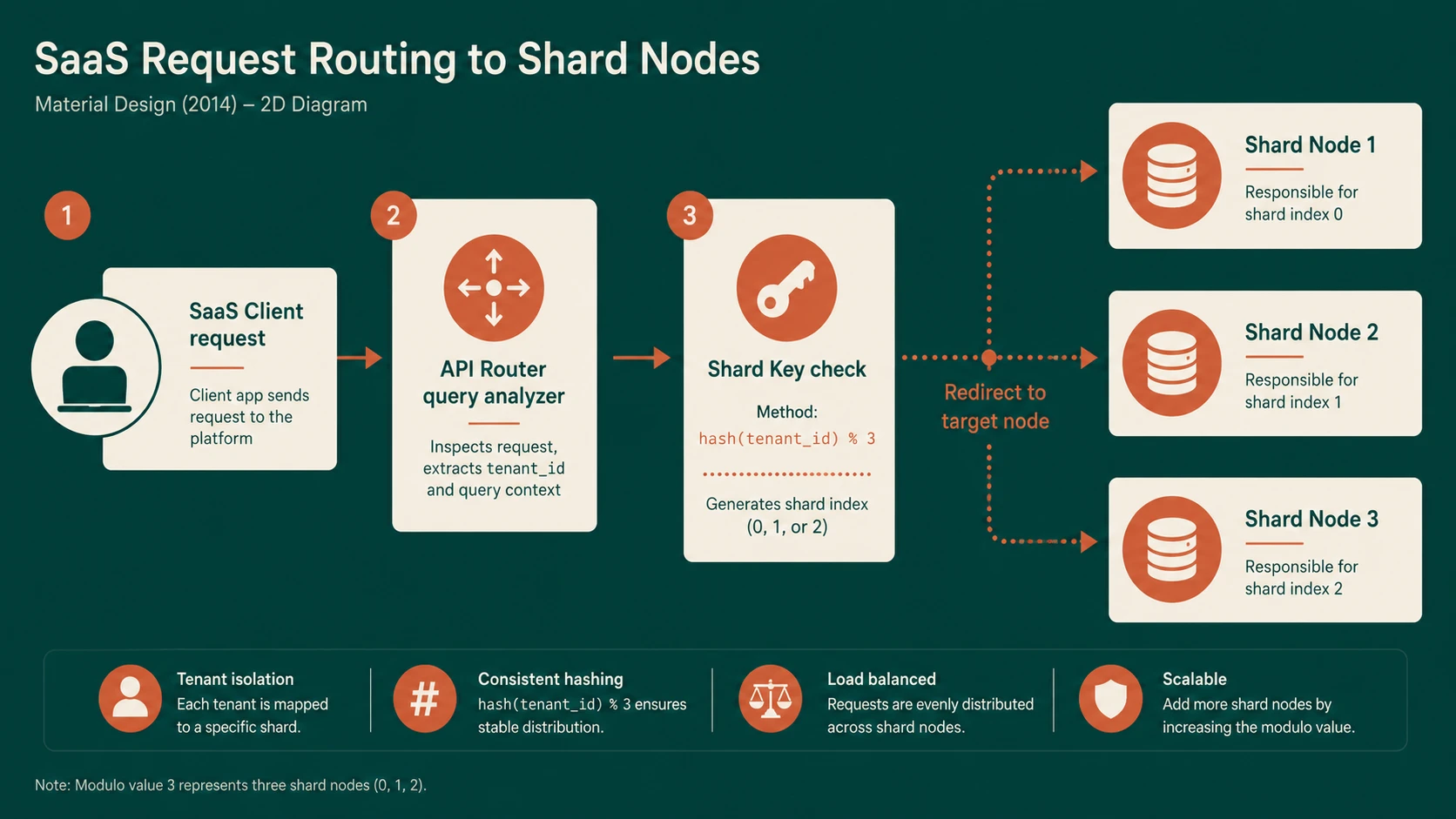
A typical request follows this sequence:
- 1.The application receives a request.
- 2.A shard key is identified.
- 3.The routing layer determines the appropriate shard.
- 4.The request is sent to the selected database.
- 5.Results are returned to the application.
- 6.Responses are presented to the client.
This routing process should remain transparent to application users.
Selecting a Shard Key
The shard key is one of the most important architectural decisions.
It determines how data is distributed throughout the environment.
Common candidates include:
- ◆Customer identifier
- ◆Tenant identifier
- ◆Geographic region
- ◆User identifier
- ◆Organization identifier
- ◆Account number
An effective shard key should:
- ◆Distribute workload evenly
- ◆Minimize hotspot formation
- ◆Support common query patterns
- ◆Reduce cross-shard operations
Poor shard key selection can significantly reduce scalability regardless of hardware capacity.
Common Sharding Patterns
Several partitioning strategies are commonly considered.
Range-Based Sharding
Data is partitioned according to value ranges.
Example:
- ◆Customer IDs 1-100000
- ◆Customer IDs 100001-200000
Advantages:
- ◆Simple implementation
- ◆Predictable routing
Challenges:
- ◆Uneven growth
- ◆Hot partitions
Hash-Based Sharding
// Simple consistent hash router to resolve database connection strings based on shard keys
const crypto = require('crypto');

const dbShards = [
  'mongodb://shard-0.shivamitcs.com:27017/saas_db',
  'mongodb://shard-1.shivamitcs.com:27017/saas_db',
  'mongodb://shard-2.shivamitcs.com:27017/saas_db'
];

function getShardConnectionString(tenantId) {
  // Hash the tenant ID and map to shard pool size
  const hash = crypto.createHash('md5').update(tenantId).digest('hex');
  const shardIndex = parseInt(hash.substring(0, 8), 16) % dbShards.length;
  return dbShards[shardIndex];
}

console.log('Routing Tenant 1234 to:', getShardConnectionString('1234'));
A hash function distributes records across available shards.
Advantages include:
- ◆Better workload distribution
- ◆Reduced hotspot probability
Trade-offs include:
- ◆More complex rebalancing
- ◆Reduced locality for range queries
Directory-Based Sharding
A lookup service maps application identifiers to physical shards.
Advantages include:
- ◆Flexible placement
- ◆Easier migration
Challenges include:
Cloud-hosted software service model replacing on-premise application servers.
- ◆Additional routing infrastructure
- ◆Metadata management
Multi-Tenant SaaS Considerations
Many SaaS applications naturally partition data according to tenant.
Tenant-based sharding provides:
- ◆Operational isolation
- ◆Predictable routing
- ◆Simplified data ownership
- ◆Flexible infrastructure expansion
Large enterprise customers may eventually require dedicated infrastructure while smaller tenants continue sharing common shards.
Cross-Shard Queries
One challenge associated with sharding involves operations spanning multiple shards.
Examples include:
- ◆Global reporting
- ◆Cross-tenant analytics
- ◆Aggregate calculations
- ◆Administrative searches
These operations often require coordination across several databases.
Architects should minimize cross-shard dependencies whenever practical.
Enterprise Use Cases
| Scenario | Benefit |
|---|---|
| SaaS platforms | Horizontal tenant growth |
| Social networking applications | User distribution |
| E-commerce systems | Increased transaction capacity |
| Online gaming | Player data partitioning |
| Content platforms | Storage scalability |
| Customer relationship management | Tenant isolation |
Organizations experiencing sustained data growth frequently benefit from distributed database architectures.
Performance Considerations
Horizontal partitioning improves scalability but introduces additional architectural complexity.
Performance planning should evaluate:
- ◆Routing latency
- ◆Network communication
- ◆Query locality
- ◆Cross-shard joins
- ◆Storage distribution
- ◆Connection management
Applications should be designed to maximize requests targeting a single shard whenever possible.
Security Considerations
Distributed databases require consistent security across every shard.
Recommended practices include:
- ◆Strong authentication
- ◆Role-based authorization
- ◆Encryption for sensitive data
- ◆Secure network communication
- ◆Centralized auditing
- ◆Administrative access controls
Operational consistency becomes increasingly important as infrastructure expands.
Scalability
The principal advantage of sharding is horizontal scalability.
Organizations can:
- ◆Add additional database servers
- ◆Expand storage incrementally
- ◆Distribute write workloads
- ◆Reduce contention
- ◆Improve fault isolation
Rather than continually upgrading a single server, capacity grows through additional infrastructure.
Operational Considerations
Sharding introduces several operational responsibilities.
These include:
- ◆Capacity planning
- ◆Shard monitoring
- ◆Backup coordination
- ◆Data migration
- ◆Rebalancing workloads
- ◆Deployment automation
Successful implementations require mature operational processes alongside sound technical architecture.
Best Practices
Organizations adopting sharding should:
- ◆Choose shard keys carefully.
- ◆Design for balanced data distribution.
- ◆Minimize cross-shard queries.
- ◆Separate routing logic from business logic.
- ◆Monitor shard growth continuously.
- ◆Plan for future shard expansion.
- ◆Automate operational management.
- ◆Test failure scenarios regularly.
Architectural planning early in the project significantly reduces future migration effort.
Common Mistakes
Common implementation mistakes include:
- ◆Selecting poor shard keys.
- ◆Assuming all queries remain efficient after partitioning.
- ◆Embedding routing logic throughout application code.
- ◆Ignoring operational complexity.
- ◆Delaying capacity planning.
- ◆Overlooking backup and recovery procedures.
Successful horizontal scaling requires disciplined architecture rather than simply adding database servers.
Technology Comparison
| Capability | Vertical Scaling | Database Sharding |
|---|---|---|
| Storage Growth | Limited by server capacity | Distributed |
| Write Scalability | Limited | Improved |
| Hardware Dependency | High | Lower per server |
| Operational Complexity | Moderate | Higher |
| Fault Isolation | Limited | Better |
| Incremental Expansion | Difficult | Excellent |
Organizations should evaluate whether projected workload growth justifies the additional architectural complexity introduced by sharding.
Adoption Strategy
Database sharding should be introduced through careful architectural planning rather than reactive infrastructure changes.
A recommended approach includes:
- 1.Measure existing workload growth.
- 2.Identify natural partitioning boundaries.
- 3.Select an appropriate shard key.
- 4.Implement centralized routing.
- 5.Validate application behavior under distributed workloads.
- 6.Establish monitoring and operational procedures.
- 7.Expand infrastructure incrementally as demand increases.
Early planning reduces the cost of future database evolution.
Limitations
Although sharding provides significant scalability advantages, organizations should recognize several trade-offs.
Current considerations include:
- ◆Increased application complexity.
- ◆More sophisticated operational management.
- ◆Challenges involving distributed transactions.
- ◆More complex reporting across multiple shards.
- ◆Additional infrastructure for routing and monitoring.
Horizontal scaling should be viewed as an architectural decision rather than a simple infrastructure upgrade.
Looking Ahead
As of late 2013, database sharding is becoming an increasingly important strategy for organizations building internet-scale SaaS platforms. While traditional relational databases continue to provide exceptional transactional reliability, sustained application growth often requires distributing data across multiple database servers.
For enterprise architects, successful sharding depends less on the specific database technology than on careful partitioning strategy, thoughtful shard key selection, disciplined operational management, and application architectures designed to minimize cross-shard dependencies. Organizations that incorporate these principles early are better positioned to support continued growth while maintaining predictable performance and operational resilience.