Introduction
For more than a decade, API gateways have served as the central entry point for enterprise applications. They have provided authentication, authorization, traffic management, rate limiting, monitoring, caching, and service discovery while shielding backend systems from direct client access.
The emergence of enterprise Generative AI during 2023 has fundamentally changed API traffic patterns. Instead of predictable REST requests targeting deterministic services, organizations increasingly process conversational prompts, vector searches, retrieval pipelines, AI agents, embeddings, document processing, multimodal workloads, and requests involving multiple AI models.
These new workloads require more than conventional request routing. API platforms must understand user intent, select the appropriate AI service, enforce prompt governance, optimize model costs, manage latency, and provide observability across increasingly complex AI workflows.
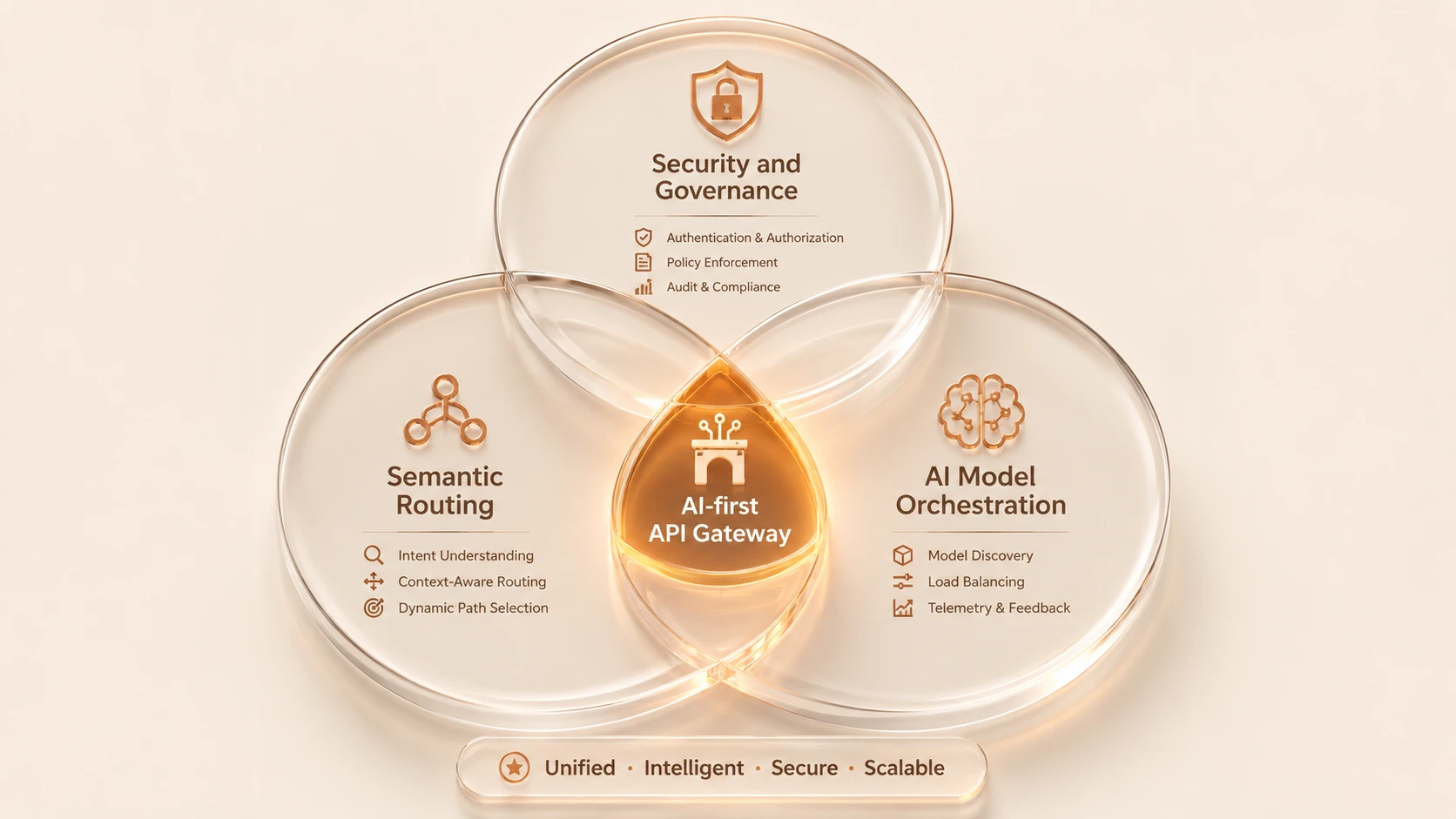
This evolution has led to the concept of AI-first API Gateways. Rather than simply forwarding requests, these gateways become intelligent orchestration platforms capable of semantic routing, policy enforcement, AI workload governance, and context-aware service selection.
From the perspective of December 2023, AI-first API Gateways represent one of the most important infrastructure trends supporting enterprise adoption of Generative AI.
Industry Background
Organizations continue integrating Generative AI across business operations.
Enterprise AI initiatives increasingly include:
- ◆Intelligent assistants.
- ◆Enterprise search.
- ◆Document analysis.
- ◆Knowledge management.
- ◆Customer support automation.
- ◆AI copilots.
- ◆Software engineering assistants.
Modern infrastructure priorities include:
- ◆AI governance.
- ◆Model interoperability.
- ◆Cost optimization.
- ◆Security.
- ◆Observability.
- ◆Multi-model orchestration.
API infrastructure is evolving from service routing toward intelligent AI orchestration.
The Business Problem
Traditional API gateways were designed for deterministic service communication.
Organizations increasingly encounter:
- ◆Multiple AI providers.
- ◆Diverse language models.
- ◆Variable inference costs.
- ◆Prompt management challenges.
- ◆Context retrieval complexity.
- ◆Latency optimization requirements.
- ◆AI governance concerns.
Routing every request to a single model becomes inefficient as enterprise AI adoption grows.
AI-first gateways address these challenges through intelligent semantic routing.
Understanding the Technology
An AI-first API Gateway extends traditional gateway capabilities with AI-aware decision making.
Rather than routing solely by URL paths or HTTP methods, semantic routing evaluates request meaning, business intent, policy requirements, latency targets, and model capabilities before selecting downstream services.
Typical capabilities include:
- ◆Semantic request classification.
- ◆Model selection.
- ◆Prompt validation.
- ◆Context retrieval.
- ◆Vector search integration.
- ◆Policy enforcement.
- ◆AI observability.
The gateway becomes an intelligent control plane for enterprise AI services.
Core Architecture
A simplified AI-first gateway architecture appears below.
| Component | Responsibility |
|---|---|
| Client Applications | User requests |
| AI-first API Gateway | Authentication, semantic routing, governance |
| Intent Classification Engine | Request understanding |
| Policy Engine | Security and compliance |
| Vector Database | Context retrieval |
| AI Models | Language, vision, and embedding inference |
| Enterprise Services | Business APIs and data systems |
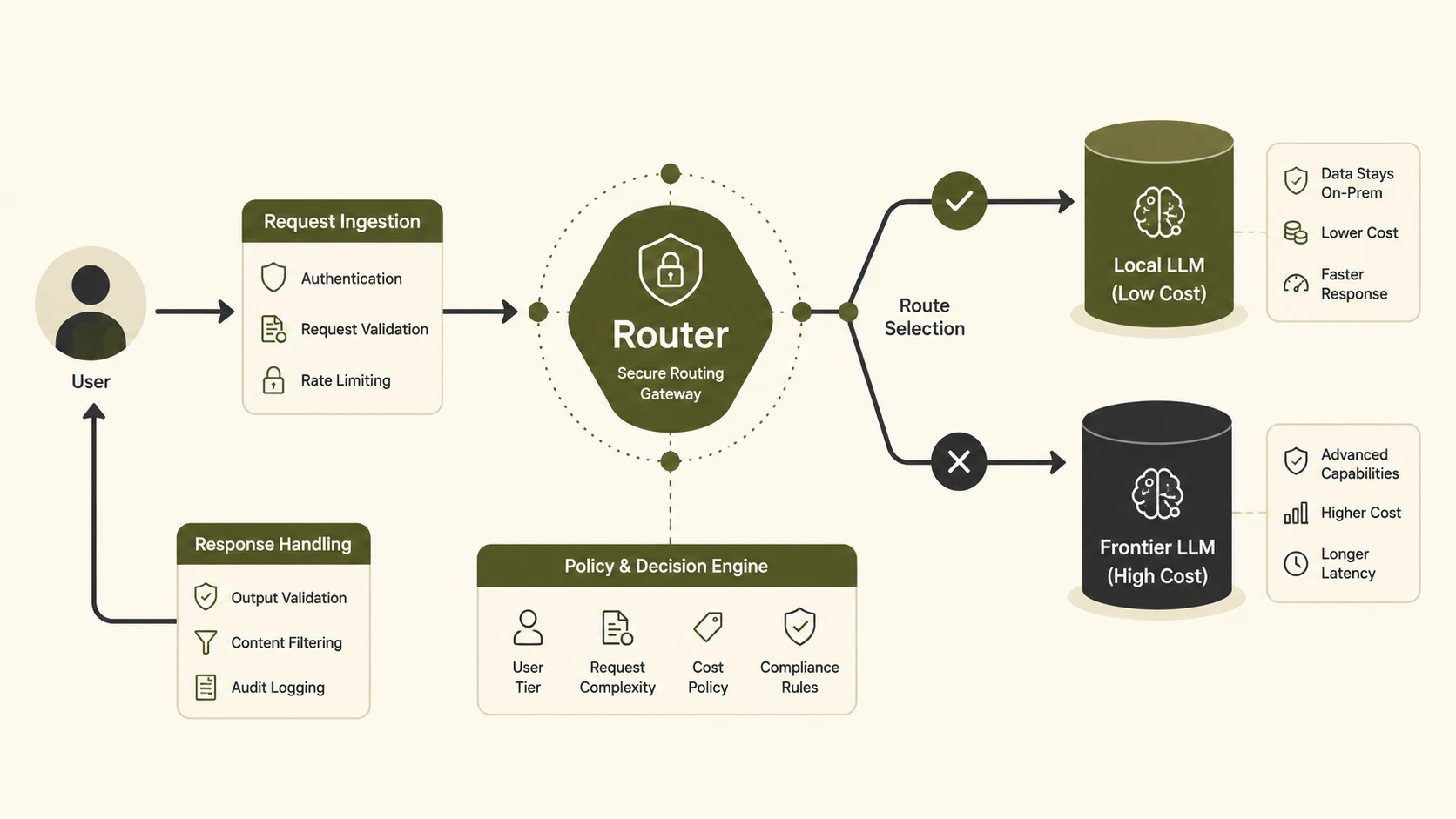
The gateway analyzes incoming requests before determining the optimal execution path across AI and enterprise services.
Key Features
Semantic Routing
The defining capability of AI-first gateways is semantic routing.
Rather than forwarding requests based only on endpoint definitions, the gateway evaluates:
- ◆User intent.
- ◆Business domain.
- ◆Required capabilities.
- ◆Model strengths.
- ◆Cost considerations.
- ◆Latency objectives.
A documentation request, for example, may be directed toward a Retrieval-Augmented Generation pipeline, while a translation request may be routed to a specialized language model.
Intelligent Model Selection
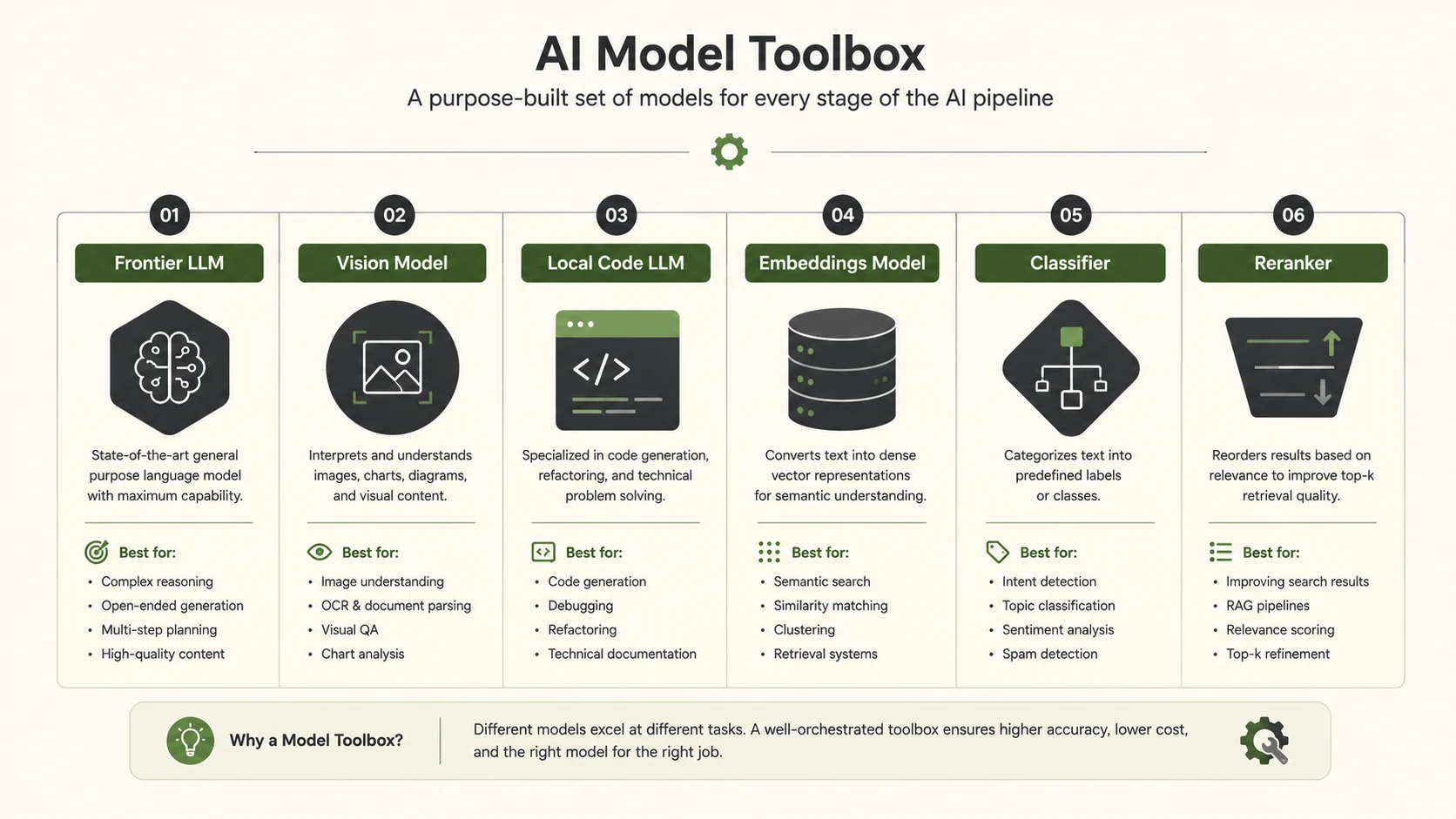
Modern enterprises increasingly operate multiple AI models.
Different models may be optimized for:
- ◆General conversation.
- ◆Code generation.
- ◆Document summarization.
- ◆Embeddings.
- ◆Vision analysis.
- ◆Classification.
The gateway selects the most appropriate model according to enterprise policies and workload characteristics.
Prompt Governance
Generative AI introduces new governance requirements.
AI-first gateways increasingly validate:
- ◆Prompt structure.
- ◆Input policies.
- ◆Sensitive information.
- ◆Organizational compliance.
- ◆Usage restrictions.
This helps reduce operational and regulatory risks before requests reach AI models.
Context-Aware Retrieval
Many enterprise AI systems rely on Retrieval-Augmented Generation (RAG).
Gateways increasingly coordinate:
- ◆Vector search.
- ◆Knowledge retrieval.
- ◆Context enrichment.
- ◆Metadata filtering.
Applications receive richer responses without directly managing retrieval workflows.
Cost and Performance Optimization
Inference costs vary across AI models.
An intelligent gateway can optimize requests by considering:
- ◆Model pricing.
- ◆Response latency.
- ◆Workload priority.
- ◆Token utilization.
- ◆Service availability.
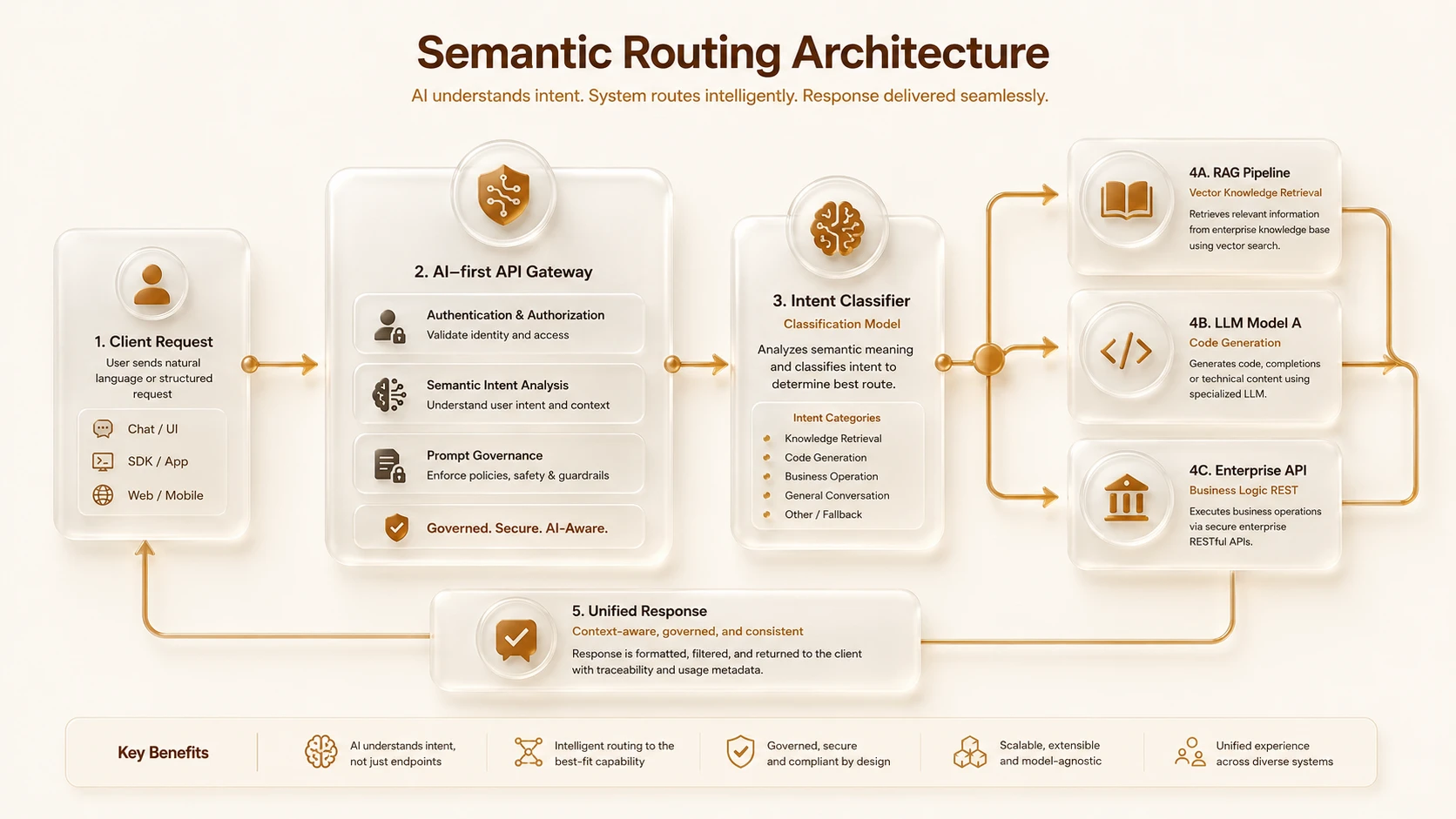
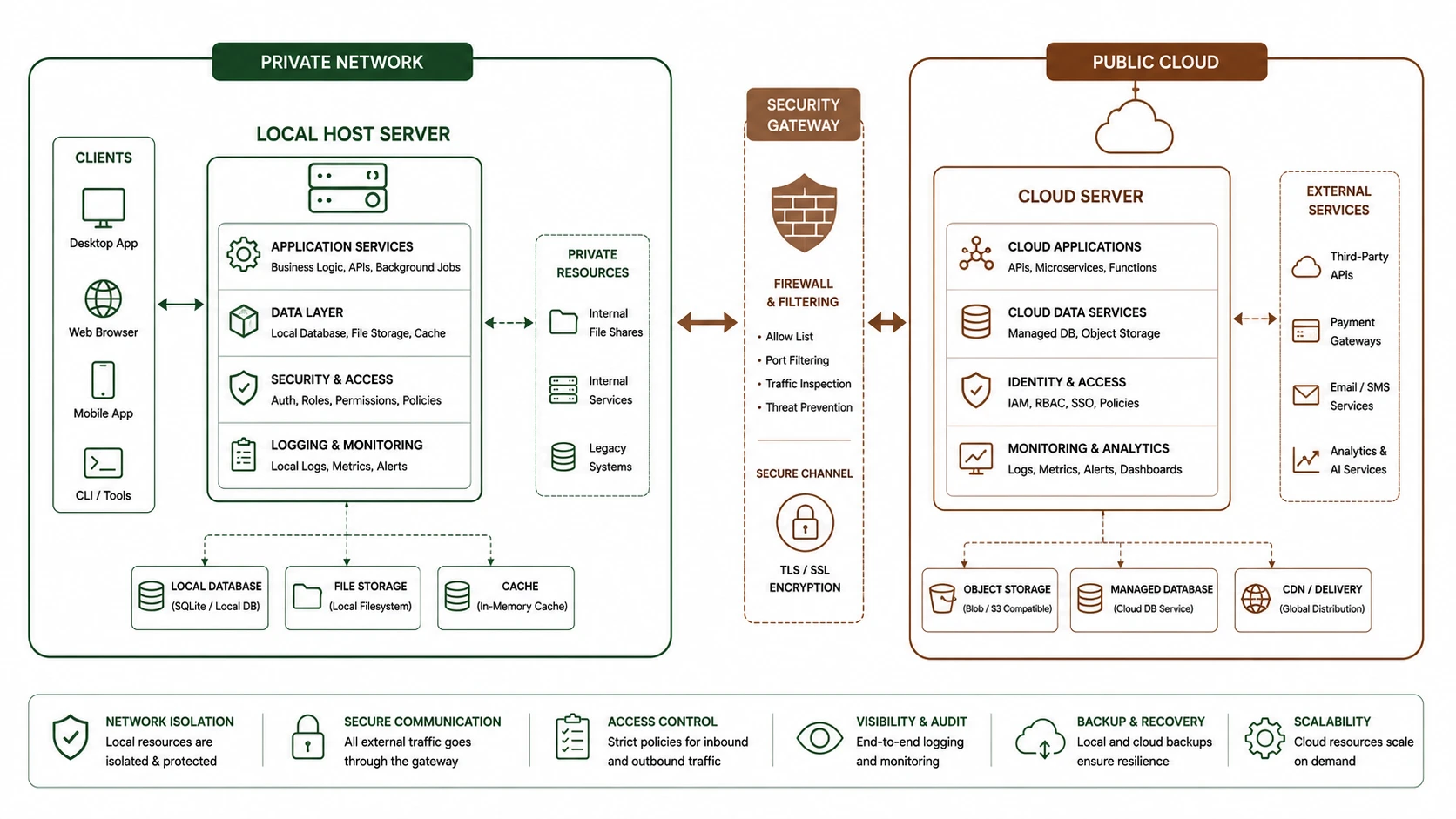
System architecture diagram and conceptual workflow layout for AI-first API Gateways & Semantic Routing.
This improves operational efficiency while controlling infrastructure expenditure.
Unified Observability
Enterprise AI requires visibility beyond traditional API metrics.
Modern gateways increasingly monitor:
- ◆Token consumption.
- ◆Model latency.
- ◆Prompt success rates.
- ◆AI response quality.
- ◆Request routing decisions.
- ◆Policy enforcement outcomes.
These metrics support operational monitoring and governance.
How It Works
A simplified request flow appears below.
Client Request
        |
AI-first API Gateway
        |
Authentication
        |
Semantic Analysis
        |
Policy Validation
        |
Context Retrieval
        |
Model Selection
        |
AI Processing
        |
Enterprise Response
The gateway evaluates request meaning before orchestrating AI services and enterprise systems.
Enterprise Use Cases
Enterprise AI Assistants
Organizations route employee questions to appropriate knowledge systems and language models while enforcing security policies.
Customer Support
Support platforms dynamically select specialized AI workflows for troubleshooting, billing, or product information.
Software Engineering Platforms
Developer portals route requests between documentation retrieval, code generation, testing assistance, and internal engineering knowledge bases.
Financial Services
AI gateways enforce governance while routing requests involving customer service, compliance, fraud analysis, and operational intelligence.
Healthcare Platforms
Medical knowledge systems combine secure retrieval pipelines with enterprise policy enforcement before interacting with AI models.
Performance Considerations
Organizations adopting AI-first gateways should evaluate:
- ◆Request classification latency.
- ◆Model response time.
- ◆Context retrieval performance.
- ◆Token utilization.
- ◆Gateway throughput.
- ◆Multi-model routing efficiency.
Performance optimization should balance user experience with infrastructure costs.
Security Considerations
AI workloads introduce new enterprise security requirements.
Organizations should implement:
- ◆Strong authentication.
- ◆Role-Based Access Control.
- ◆Prompt validation.
- ◆Sensitive data filtering.
- ◆Encryption in transit.
- ◆Comprehensive audit logging.
- ◆AI usage monitoring.
Security governance should extend across both conventional APIs and AI services.
Scalability
AI-first API Gateways improve enterprise scalability through:
- ◆Centralized AI governance.
- ◆Multi-model orchestration.
- ◆Intelligent routing.
- ◆Shared policy enforcement.
- ◆Consistent observability.
- ◆Simplified AI integration.
These capabilities enable organizations to expand AI adoption while maintaining operational control.
Best Practices
Organizations adopting AI-first API Gateways should:
- ◆Separate routing policies from application logic.
- ◆Standardize AI governance across all models.
- ◆Monitor token consumption and inference costs.
- ◆Integrate semantic routing with enterprise identity systems.
- ◆Build reusable prompt validation policies.
- ◆Continuously evaluate model performance.
- ◆Maintain comprehensive observability for AI workloads.
Successful adoption depends on treating AI infrastructure as a governed enterprise platform rather than a collection of isolated model endpoints.
Common Mistakes
| Mistake | Business Impact |
|---|---|
| Routing every request to the largest available model | Increased operational cost and latency |
| Allowing applications to bypass centralized AI governance | Security and compliance risks |
| Ignoring prompt validation | Greater exposure to policy violations |
| Hardcoding model selection into application logic | Reduced architectural flexibility |
| Monitoring only traditional API metrics | Limited visibility into AI operations |
| Assuming semantic routing eliminates application-level validation | Reduced reliability and governance |
Organizations should view AI-first gateways as an orchestration layer that complements—not replaces—responsible application architecture.
Technology Comparison
| Characteristic | Traditional API Gateway | AI-first API Gateway |
|---|---|---|
| Routing | URL and HTTP method based | Intent and semantic understanding |
| Backend Services | REST and gRPC services | AI models, RAG pipelines, and enterprise APIs |
| Governance | Authentication and rate limiting | AI policies, prompt governance, and security |
| Observability | Request metrics | AI metrics, tokens, latency, routing decisions |
| Scalability | Service orchestration | Multi-model orchestration |
| Intelligence | Static routing | Context-aware routing and optimization |
AI-first gateways extend traditional API management into intelligent orchestration platforms for enterprise AI workloads.
Adoption Strategy
Organizations should modernize incrementally.
- 1.Inventory existing API gateway capabilities.
- 2.Identify AI workloads requiring centralized governance.
- 3.Introduce semantic request classification.
- 4.Integrate enterprise identity and policy engines.
- 5.Add observability for AI-specific metrics.
- 6.Expand intelligent routing after validating performance, security, and operational governance.
This phased approach enables enterprises to adopt AI infrastructure without disrupting existing API ecosystems.
Limitations
As of December 2023, organizations should recognize several considerations.
- ◆AI-first API gateways are an emerging architectural pattern rather than a universally standardized product category.
- ◆Semantic routing decisions depend on the quality of request classification and organizational policies.
- ◆Human oversight remains necessary for governance, security, and compliance.
- ◆Organizations operating multiple AI providers should continuously evaluate latency, cost, and model quality.
- ◆Long-term success depends on integrating AI gateways with enterprise identity, observability, and platform engineering practices.
These considerations should guide enterprise AI infrastructure modernization.
Looking Ahead
From the perspective of December 2023, AI-first API Gateways represent the natural evolution of enterprise API management in the era of Generative AI. Traditional gateways successfully standardized service connectivity for cloud-native applications, but AI-powered systems require a higher level of intelligence that includes semantic understanding, context-aware routing, prompt governance, and multi-model orchestration.
As enterprise AI ecosystems continue expanding, API gateways are evolving into intelligent control planes capable of coordinating language models, retrieval systems, business APIs, and governance policies within a unified architecture. Organizations investing in AI-first gateways, semantic routing, and centralized AI governance will be better positioned to build secure, scalable, and cost-efficient AI platforms while maintaining the operational discipline expected of modern enterprise infrastructure.