Introduction
Software engineering has entered a period of rapid architectural evolution. While traditional enterprise development remains centered around proven technologies such as Java, .NET, SQL Server, Oracle Database, and mature web frameworks, organizations are increasingly adopting new development practices that emphasize automation, scalability, cloud deployment, and faster release cycles.
Unlike previous technology shifts driven primarily by programming languages, many of today's changes focus on software delivery itself. Continuous Integration, automated testing, cloud infrastructure, responsive user interfaces, REST-based services, and infrastructure automation are becoming integral parts of enterprise software projects.
From the perspective of November 2014, these trends are not isolated innovations. Together they represent a broader transformation toward highly automated, service-oriented, and cloud-aware software engineering.
Industry Background
Several industry forces are driving modernization efforts.
Organizations are responding to:
- ◆Rapid smartphone adoption.
- ◆Growth of cloud computing.
- ◆Increased customer expectations.
- ◆Larger software teams.
- ◆Continuous business change.
- ◆Global application deployments.
- ◆Higher security expectations.
Enterprise software now operates in environments where applications must evolve continuously while maintaining high availability.
Traditional development models centered around large annual releases are gradually giving way to shorter delivery cycles supported by automation.
The Business Problem
Enterprise organizations face multiple challenges when maintaining modern software platforms.
Common concerns include:
- ◆Increasing application complexity.
- ◆Longer release cycles.
- ◆Difficult infrastructure management.
- ◆Scalability limitations.
- ◆Device fragmentation.
- ◆Security risks.
- ◆Rising operational costs.
These pressures require engineering organizations to rethink not only application architecture but also development processes, deployment strategies, and operational practices.
Understanding the Technology Landscape
Rather than one dominant innovation, 2014 is characterized by several complementary trends.
Key technology areas include:
- ◆Cloud computing.
- ◆DevOps automation.
- ◆Continuous Integration.
- ◆Continuous Delivery.
- ◆Responsive Web Design.
- ◆Mobile application development.
- ◆JavaScript frameworks.
- ◆Container technologies.
- ◆NoSQL databases.
- ◆Service-oriented architectures.
Organizations increasingly combine these technologies rather than treating them as independent initiatives.
Core Architecture
A modern enterprise software delivery model increasingly resembles the following.
| Component | Responsibility |
|---|---|
| Source Control | Version management |
| Continuous Integration | Automated builds and testing |
| Automated Testing | Software validation |
| Deployment Automation | Consistent application delivery |
| Cloud Infrastructure | Elastic hosting |
| Monitoring | Operational visibility |
| End Users | Application consumption |
This architecture emphasizes automation throughout the software lifecycle.
Key Development Trends
Cloud-First Architecture
Organizations are increasingly designing applications with cloud deployment in mind.
Applications emphasize:
- ◆Horizontal scalability.
- ◆Virtualized infrastructure.
- ◆Automated provisioning.
- ◆Service isolation.
Cloud platforms are influencing software architecture long before production deployment occurs.
DevOps Adoption
Development and operations teams are collaborating more closely through shared automation, monitoring, and deployment practices.
The emphasis is shifting from isolated responsibilities toward continuous software delivery.
Continuous Integration
Automated builds, unit testing, code analysis, and artifact generation are becoming standard engineering practices.
Immediate feedback reduces integration failures and improves software quality.
Continuous Delivery
Organizations increasingly seek software that remains deployable throughout development.
Smaller releases reduce operational risk while allowing faster business response.
Responsive Web Applications
Desktop-only interfaces are becoming less practical.
Responsive design allows applications to support:
- ◆Smartphones.
- ◆Tablets.
- ◆Desktop systems.
without maintaining multiple independent applications.
JavaScript Maturity
JavaScript continues evolving from a browser scripting language into a platform supporting sophisticated enterprise applications.
Frameworks such as AngularJS continue encouraging richer client-side architectures.
Server-Side JavaScript
Node.js has demonstrated that JavaScript can also support scalable server-side networking through asynchronous programming models.
Organizations are evaluating where event-driven architectures complement existing enterprise platforms.
Container Technologies
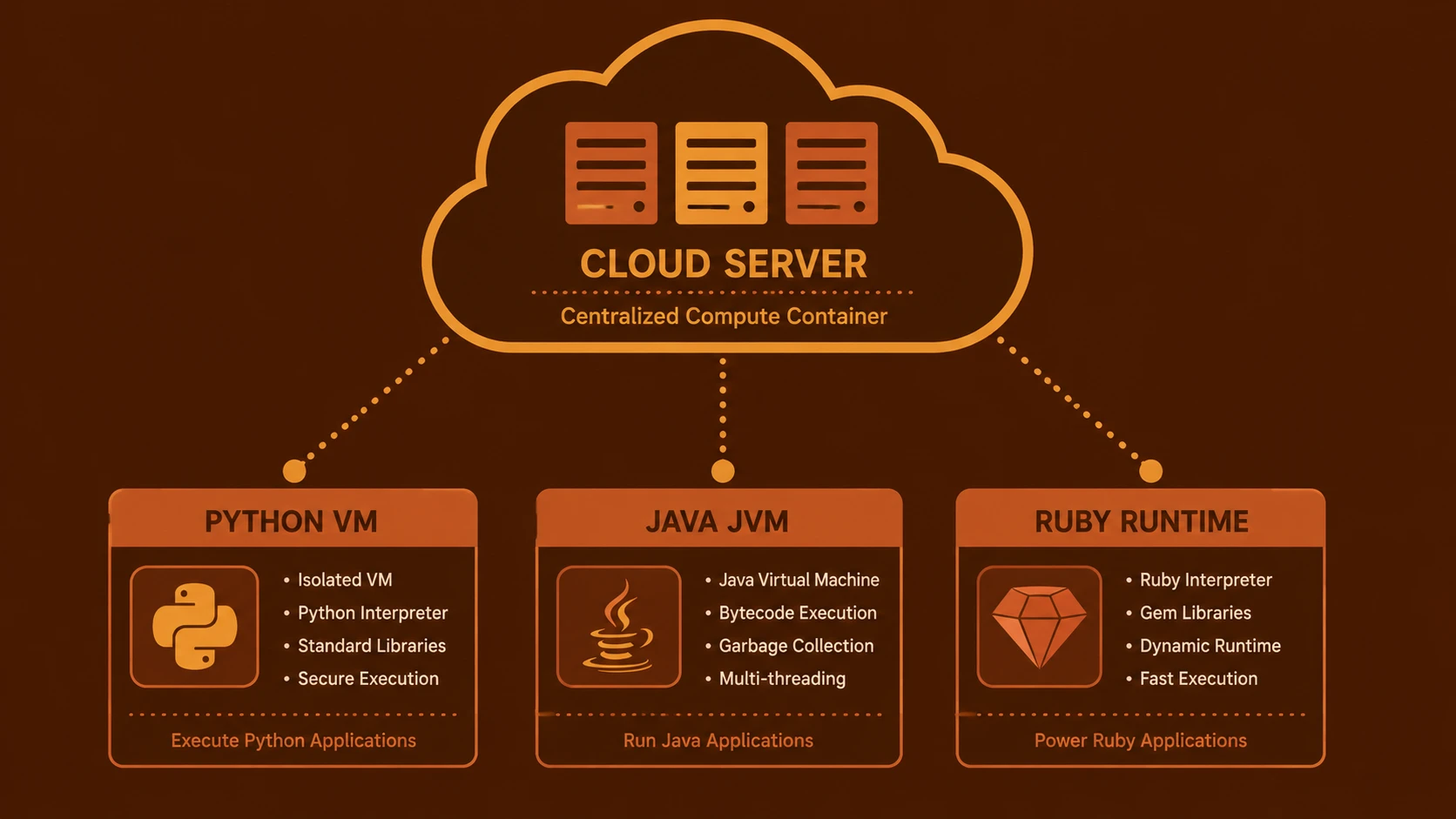
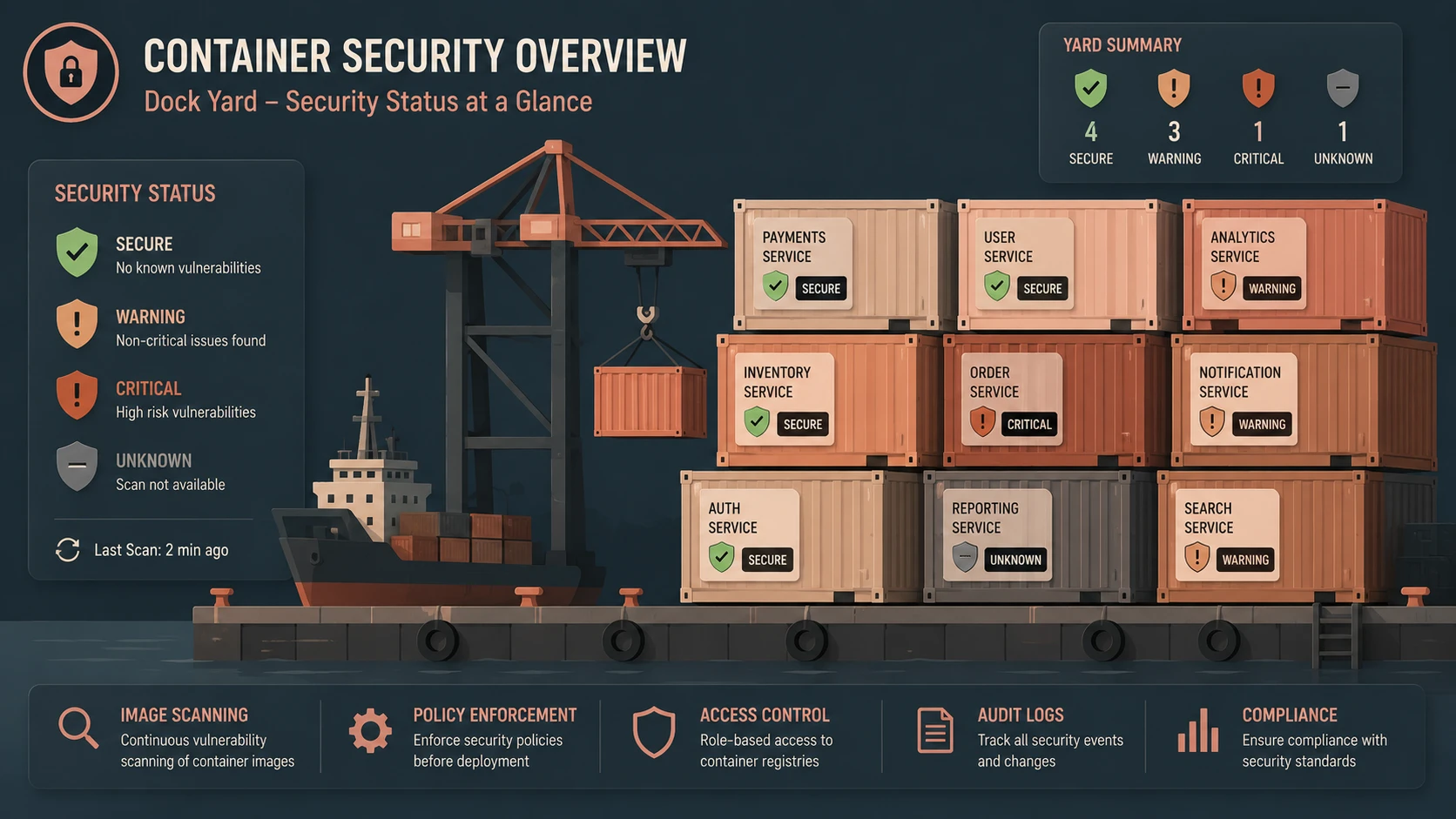
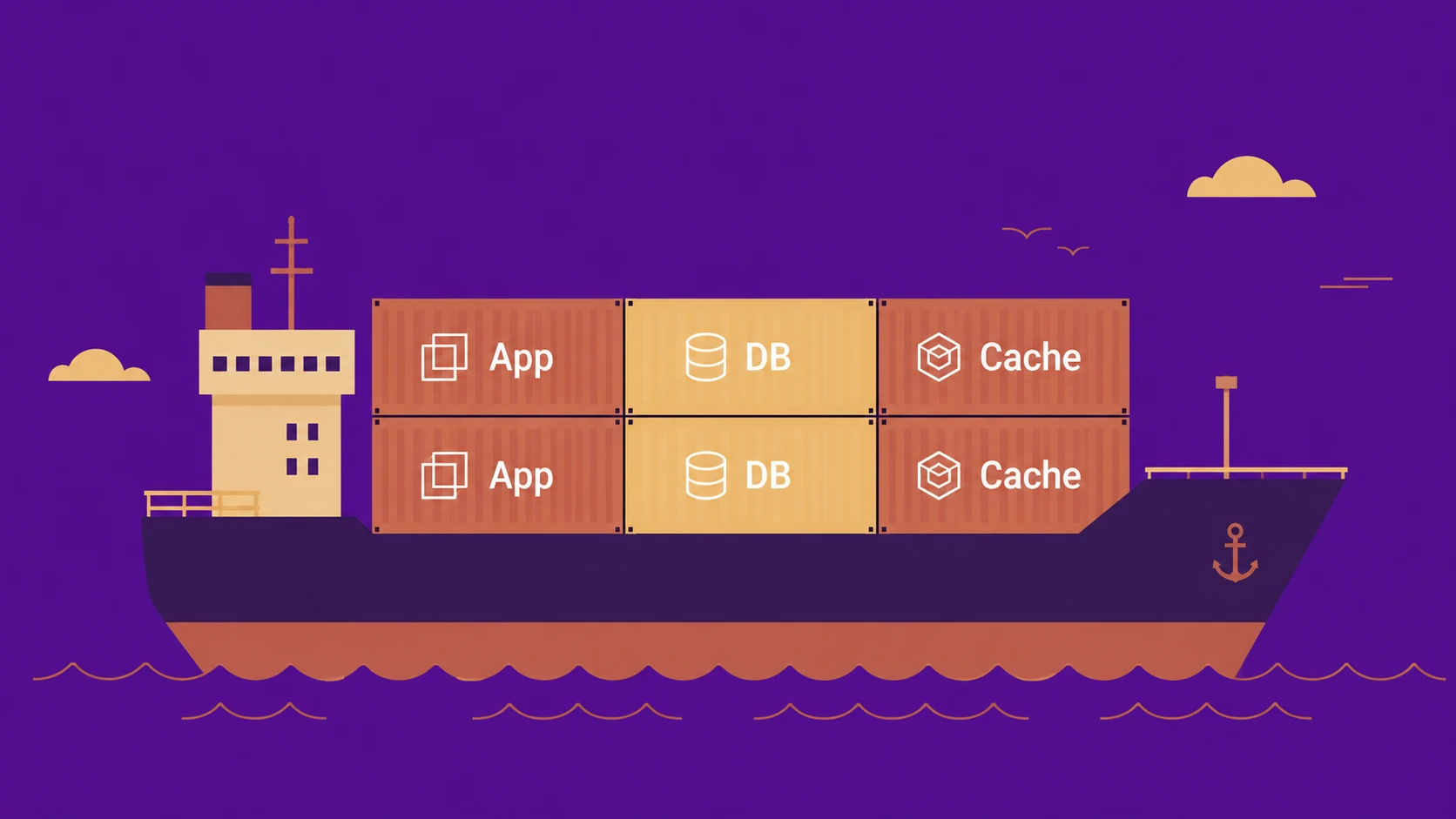
Linux Containers are attracting increasing interest because they simplify application isolation while reducing virtualization overhead.
Although adoption remains relatively early, container-based deployment is becoming an important topic in cloud infrastructure discussions.
Database Innovation
Relational databases continue evolving.
Features such as SQL Server 2014 In-Memory OLTP demonstrate how database vendors are redesigning storage engines to leverage modern server hardware.
At the same time, NoSQL databases continue attracting attention for workloads involving flexible schemas and horizontal scalability.
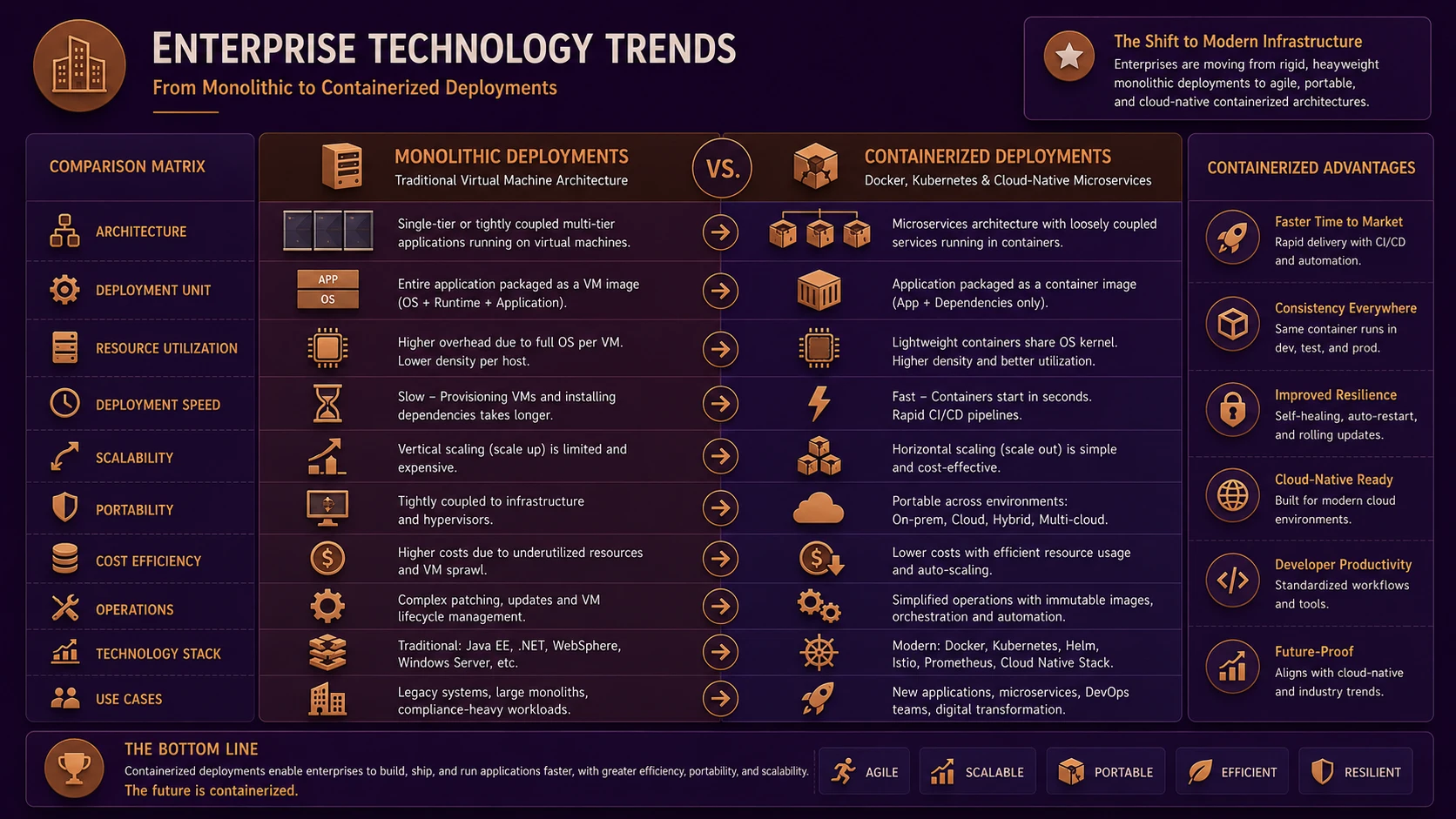
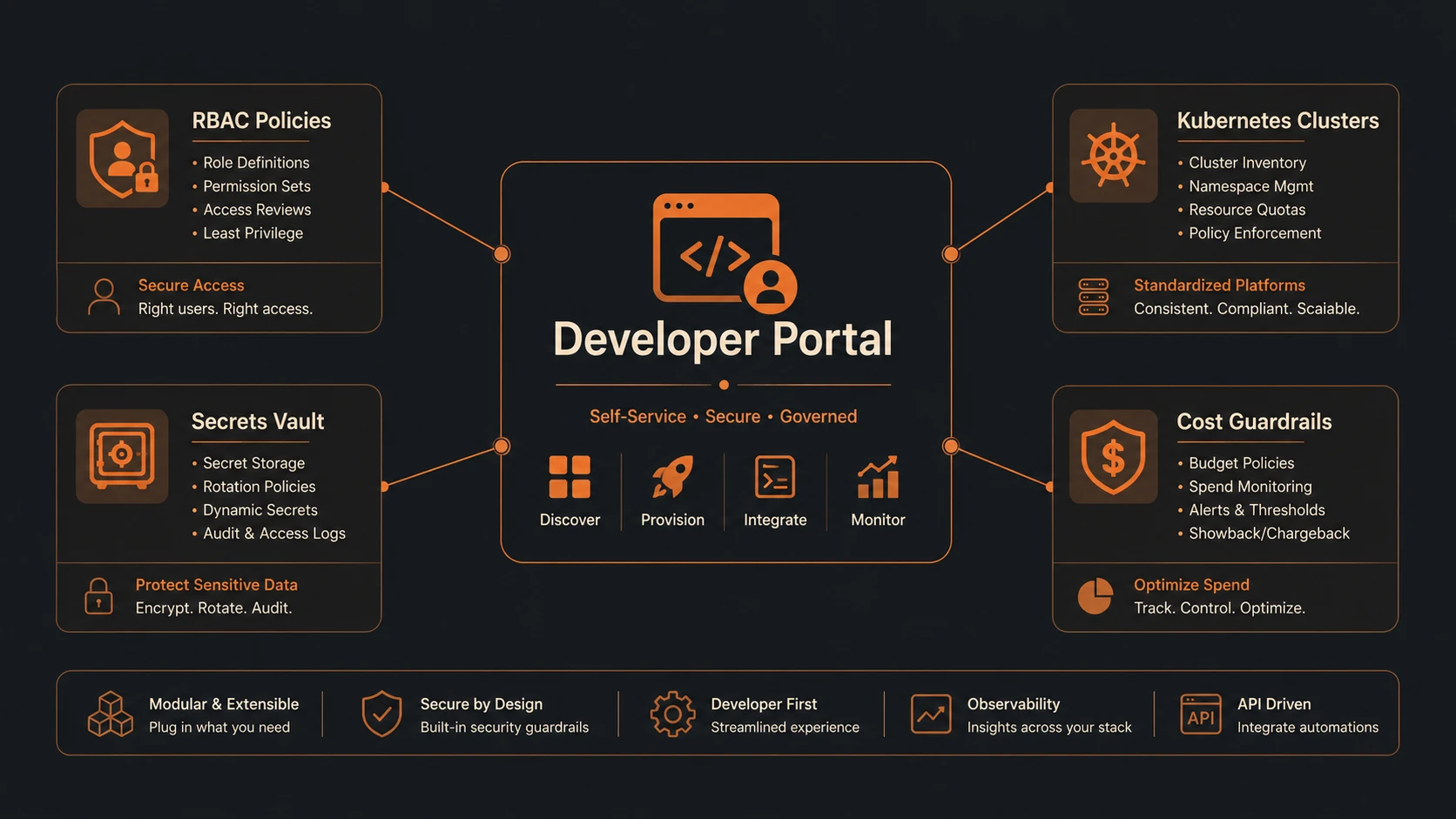
System architecture diagram and conceptual workflow layout for Software Development Trends.
Mobile Enterprise Development
Mobile devices are becoming standard business tools.
Enterprise software increasingly includes mobile interfaces for:
- ◆Sales teams.
- ◆Field service.
- ◆Executives.
- ◆Customer self-service.
This trend encourages API-driven application architectures.
How Modern Enterprise Development Works
Requirements
      |
Source Control
      |
Continuous Integration
      |
Automated Testing
      |
Artifact Creation
      |
Deployment Automation
      |
Cloud Infrastructure
      |
Monitoring
      |
Continuous Improvement
Automation is becoming a continuous process rather than a release-specific activity.
Enterprise Use Cases
Financial Services
Banks continue modernizing online banking, fraud detection, and customer self-service platforms.
Retail
Retail organizations increasingly require integrated mobile applications, e-commerce platforms, and inventory management systems.
Healthcare
Healthcare providers continue digitizing patient information while strengthening security and compliance.
Manufacturing
Manufacturing systems increasingly integrate operational reporting, automation, and mobile workforce applications.
Software-as-a-Service
Hosted software products continue expanding across numerous business sectors, encouraging scalable multi-tenant architectures.
Performance Considerations
Performance engineering increasingly focuses on the complete application lifecycle.
Organizations should evaluate:
- ◆Application responsiveness.
- ◆Infrastructure utilization.
- ◆Database performance.
- ◆Network latency.
- ◆Build execution speed.
- ◆Deployment efficiency.
Performance optimization is becoming a continuous engineering discipline rather than a final deployment activity.
Security Considerations
Security remains fundamental regardless of architectural style.
Organizations should continue implementing:
- ◆Secure authentication.
- ◆Authorization.
- ◆HTTPS communication.
- ◆Secure software development practices.
- ◆Regular vulnerability assessments.
- ◆Centralized monitoring.
Security should be incorporated throughout development rather than introduced after deployment.
Scalability
Modern enterprise systems increasingly emphasize scalable architecture.
Important characteristics include:
- ◆Stateless services where appropriate.
- ◆Distributed application components.
- ◆Automated infrastructure.
- ◆Modular application design.
- ◆Efficient resource utilization.
Scalability planning now begins during system design rather than after production deployment.
Best Practices
Organizations modernizing software development should:
- ◆Automate builds and testing.
- ◆Standardize deployment procedures.
- ◆Adopt version control consistently.
- ◆Monitor production environments continuously.
- ◆Design modular software.
- ◆Invest in developer training.
- ◆Measure engineering performance objectively.
These practices support sustainable long-term software delivery.
Common Mistakes
| Mistake | Business Impact |
|---|---|
| Pursuing every new technology simultaneously | Increased project risk |
| Ignoring automation | Slower delivery cycles |
| Delaying performance testing | Production bottlenecks |
| Treating cloud migration as infrastructure only | Architectural limitations |
| Neglecting operational monitoring | Reduced production visibility |
| Underestimating organizational change | Slower adoption |
Successful modernization depends on disciplined engineering rather than technology selection alone.
Technology Comparison
| Traditional Approach | Emerging Direction in 2014 |
|---|---|
| Large release cycles | Continuous Delivery |
| Manual deployments | Deployment automation |
| Physical infrastructure | Virtualized and cloud environments |
| Desktop-centric interfaces | Responsive multi-device applications |
| Monolithic systems | Modular service-oriented architectures |
| Manual testing | Automated testing pipelines |
The industry is steadily moving toward automation, modularity, and operational efficiency.
Adoption Strategy
Organizations should modernize incrementally.
Recommended roadmap:
- 1.Standardize source control.
- 2.Introduce Continuous Integration.
- 3.Expand automated testing.
- 4.Automate deployments.
- 5.Modernize application architecture.
- 6.Evaluate cloud deployment strategies.
- 7.Continuously improve operational monitoring.
This phased approach reduces implementation risk while allowing engineering teams to develop new operational capabilities.
Limitations
Not every emerging technology is appropriate for every organization.
Decision makers should evaluate:
- ◆Existing investments.
- ◆Team expertise.
- ◆Regulatory requirements.
- ◆Operational maturity.
- ◆Infrastructure readiness.
Technology adoption should solve measurable business problems rather than simply follow industry trends.
Looking Ahead
From the perspective of November 2014, software development is increasingly defined by automation, cloud readiness, modular architecture, responsive user experiences, and continuous improvement. The most successful engineering organizations are no longer distinguished solely by the programming languages they use, but by the efficiency and reliability of their entire software delivery process.
While individual technologies will continue evolving, the broader direction is becoming clear. Enterprise software is moving toward smaller, independently deployable components, automated validation pipelines, cloud-oriented infrastructure, and development practices that enable rapid yet reliable delivery. Organizations that invest in these engineering capabilities today will be better prepared to respond to changing business requirements while maintaining the stability and quality expected of modern enterprise systems.