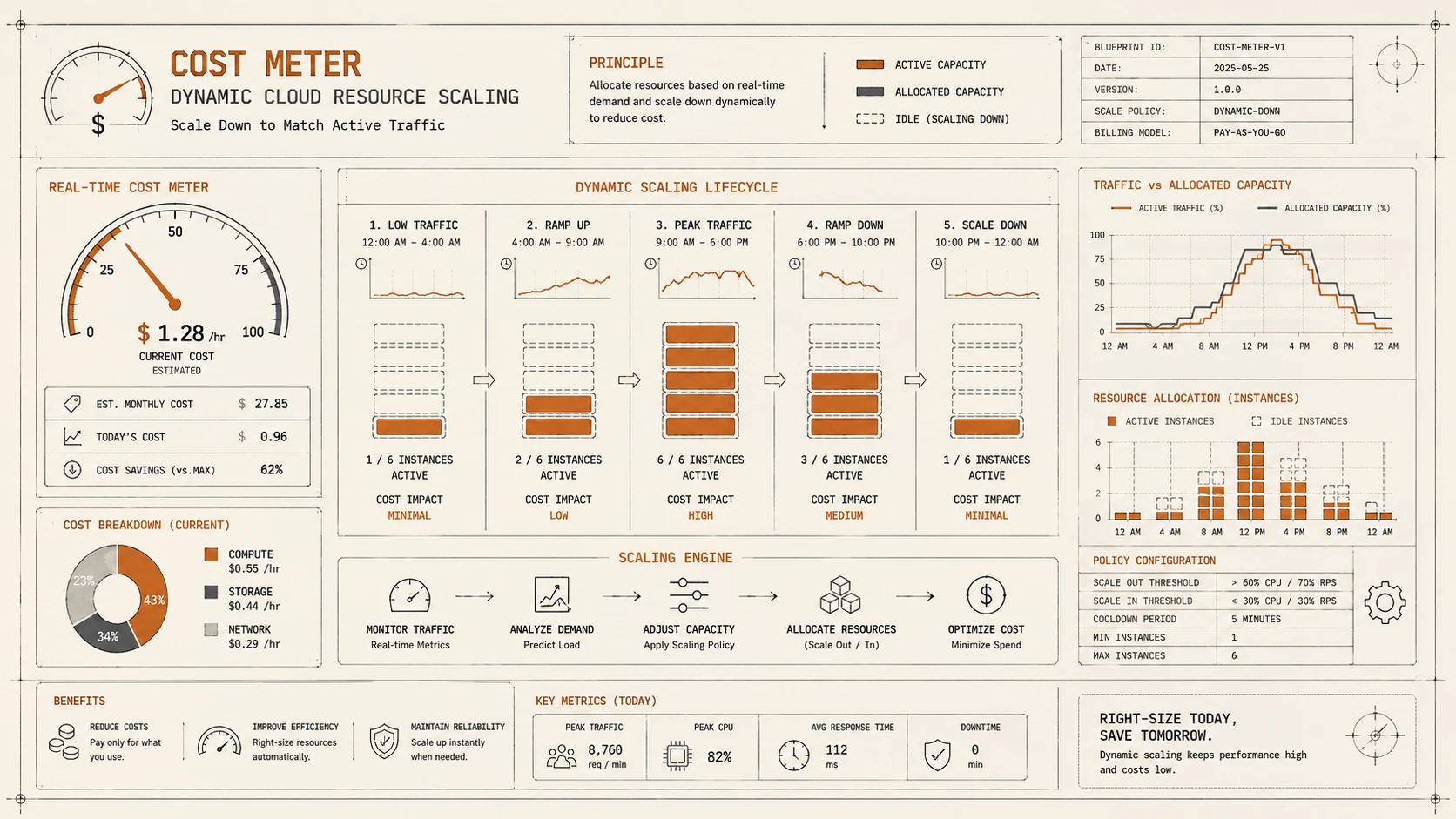
The rapid evolution of generative AI has unlocked unprecedented innovation, yet it has also introduced a significant challenge for enterprises: the rapidly escalating costs of Large Language Model (LLM) infrastructure. Organizations, initially captivated by the transformative power of models like GPT-4, Gemini, or Llama, are now confronting a sobering reality as their AI initiatives scale from experimentation to production. The unique dynamics of per-token pricing, intensive GPU requirements, and complex serving architectures can quickly lead to 'sticker shock,' threatening the long-term sustainability and return on investment (ROI) of their AI investments.
Traditional cloud FinOps practices, while invaluable for general cloud resource management, often fall short when applied directly to the nuanced demands of AI workloads. LLMs introduce distinct cost drivers that necessitate a specialized approach—one that integrates financial accountability with a deep technical understanding of AI engineering. This is where FinOps for AI emerges as a critical discipline. It's not merely about cutting costs; it's about optimizing value, ensuring that every dollar spent on AI infrastructure directly contributes to business objectives, fostering responsible innovation, and building a truly sustainable AI future.
Understanding the Unique Cost Drivers of LLM Infrastructure
Why do LLM costs feel so fundamentally different from traditional cloud spending? The answer lies in the highly specialized and often opaque nature of AI workloads. Unlike a standard virtual machine or database, LLMs introduce several nuanced cost vectors that demand careful scrutiny.
Token Consumption and API Costs
At the forefront of LLM costs is token consumption. Whether you're using a proprietary API (such as OpenAI's or Anthropic's) or self-hosting an open-source model, every input prompt and generated response is broken down into tokens, and billing occurs on a per-token basis. A seemingly innocuous increase in prompt length or a verbose model response can dramatically inflate costs. For large-scale applications with millions of user interactions, even slight inefficiencies in token usage can translate into substantial, unforeseen expenses.
GPU Compute and Training Costs
Developing and deploying LLMs are inherently GPU-intensive operations. Training foundational models requires immense computational power, often involving thousands of GPU hours on high-end accelerators like NVIDIA A100s or H100s. While most enterprises consume pre-trained models, fine-tuning them for specific use cases still demands significant GPU resources. Furthermore, serving LLMs for inference, especially for larger models or high-throughput applications, necessitates powerful GPUs, leading to ongoing compute costs that dwarf those of typical CPU-based workloads.
Data Storage and Transfer
LLMs operate on vast datasets. Storing and managing these datasets for training, fine-tuning, and Retrieval-Augmented Generation (RAG) pipelines incurs significant storage costs. More critically, transferring these large models and datasets across regions or even within a cloud provider's network can lead to substantial data transfer (egress) charges. When deploying models globally or integrating with various data sources, network egress can become an unexpected but significant cost component.
Managed Service Overheads
Cloud providers offer managed AI services (e.g., AWS SageMaker, Azure Machine Learning, Google Vertex AI) that simplify LLM deployment and scaling. While these services abstract away much of the infrastructure complexity, they often come with a premium. Understanding the pricing models—which can include per-endpoint hour, per-instance hour, per-request, or per-token—is crucial. Misconfigurations or underutilized managed endpoints can lead to significant waste, even if the underlying compute appears optimized.
The FinOps Framework for AI: A Strategic Blueprint
How can enterprises gain control over these complex costs? The answer lies in adapting the established FinOps framework to the unique demands of AI. FinOps, at its core, is a cultural practice that brings financial accountability to the variable spend of cloud resources. For AI, this means fostering collaboration between AI engineers, finance, and operations teams to drive cost efficiency and maximize business value. The framework revolves around three iterative phases: Inform, Optimize, and Operate.
1. Inform: Gaining Visibility into AI Spend
You cannot manage what you cannot see. The 'Inform' phase focuses on bringing transparency to your LLM infrastructure costs. This involves collecting, analyzing, and reporting on AI-specific usage and spending data.
- ◆Granular Cost Allocation: Implement robust tagging strategies for all AI-related cloud resources. This includes tagging GPU instances, storage buckets for datasets, and managed AI services by project, team, environment (dev/prod), and even specific model versions. This enables clear attribution of costs to specific initiatives or departments.
- ◆LLM API Usage Tracking: For third-party LLM APIs, integrate monitoring that tracks token usage per application, feature, or user. Many API providers offer detailed dashboards, but custom logging and analytics might be necessary for granular insights and chargeback models.
- ◆GPU Utilization Metrics: Monitor GPU utilization rates for both training and inference workloads. Low utilization indicates potential over-provisioning, while consistently high utilization could justify scaling up or optimizing workloads through batching or model changes.
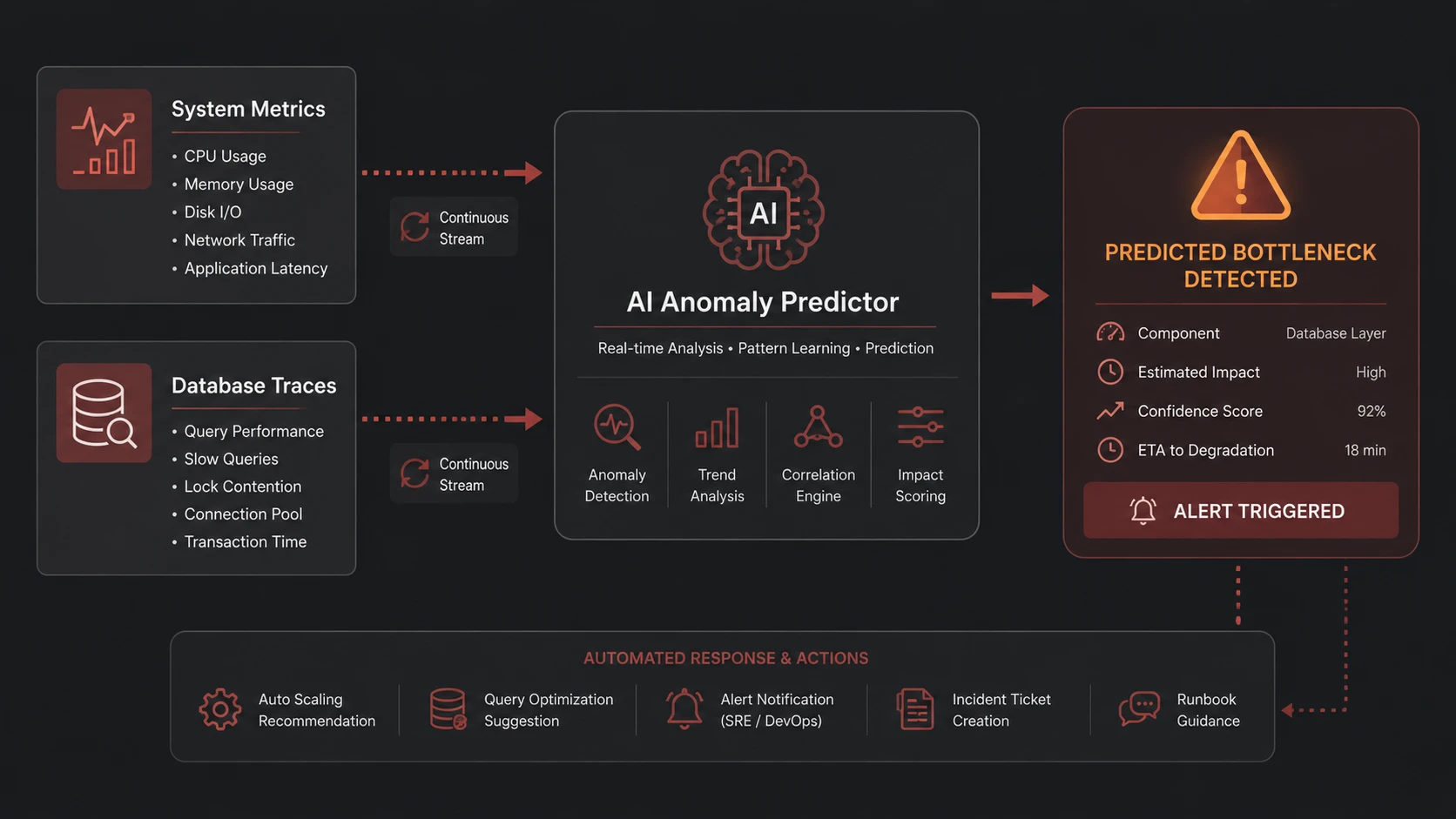
- ◆Cost Anomaly Detection: Implement automated alerts for sudden, unexpected spikes in LLM API calls or GPU usage. This helps identify runaway costs or misconfigurations before they become major budget issues.
2. Optimize: Driving Efficiency in AI Workloads
Once you have clear visibility, the 'Optimize' phase is about taking action to reduce waste and improve efficiency across your LLM infrastructure. This involves both technical and architectural adjustments.
- ◆Model Selection and Rightsizing: Not every task requires the largest, most expensive LLM. Evaluate smaller, more specialized models (e.g., open-source models like Llama 3 8B or Mistral) for specific use cases. Often, these can deliver comparable performance for targeted tasks at a fraction of the cost. Consider fine-tuning smaller models rather than relying solely on large foundation models for every query.
- ◆Prompt Engineering Best Practices: Train AI engineers on cost-aware prompt engineering. This includes crafting concise prompts, using few-shot examples judiciously, and optimizing instruction sets to reduce token count without sacrificing response quality. Continuously evaluate the trade-off between prompt complexity and desired response accuracy.
- ◆Quantization: For self-hosted models, implement quantization techniques. This involves reducing the numerical precision of model weights (e.g., from FP32 to INT8 or INT4), which significantly reduces memory footprint and accelerates inference, often with minimal impact on model accuracy. This directly translates to lower GPU memory requirements and faster processing, saving compute costs.
- ◆Batching and Caching: Implement request batching for LLM inference. Instead of processing one request at a time, group multiple user prompts into a single inference call to the GPU. This dramatically improves GPU utilization and reduces the per-request cost. Additionally, implement a caching layer for frequent or identical prompts and their responses, avoiding redundant LLM API calls and saving tokens.
- ◆Leveraging Spot Instances and Reserved Capacity: For non-critical training or batch inference jobs, utilize cloud spot instances for significant cost savings. For consistent, high-volume inference workloads, consider reserved instances or savings plans for GPUs to secure lower, predictable rates.
3. Operate: Continuous Governance and Accountability
The 'Operate' phase ensures that cost optimization is an ongoing, integrated part of your AI lifecycle, fostering a culture of continuous improvement and accountability.
- ◆Automated Cost Policies: Implement infrastructure-as-code (IaC) to enforce cost-aware deployments. This could include policies that prevent deployment of overly large models to production without specific approvals or automatically scaling down GPU instances during off-peak hours.
- ◆Budgeting and Forecasting: Establish clear budgets for AI projects, broken down by LLM API usage, GPU hours, and storage. Use historical data and current consumption patterns to forecast future AI spend and adjust resource allocation proactively.
- ◆Cross-Functional Collaboration: Foster regular communication between AI engineers, FinOps specialists, and finance teams. AI engineers provide technical insights into model performance and resource needs, while FinOps and finance ensure alignment with budget and business value. This collaborative approach is the cornerstone of successful FinOps for AI.
- ◆Performance vs. Cost Trade-offs: Continuously evaluate the trade-offs between model performance (latency, accuracy) and cost. For many applications, a slightly less accurate or slower model might be perfectly acceptable if it significantly reduces operational expenditure. This requires defining clear business metrics beyond just technical performance.
Practical Strategies for LLM Cost Optimization in Action
Let's dive deeper into actionable steps with examples that can be implemented today.
Example: Cost-Aware Prompt Optimization
Consider an LLM application for customer support. An unoptimized prompt might look like:

FinOps for AI: Master LLM Infrastructure Cost Optimization
"As an expert customer service agent, please provide a very detailed and comprehensive explanation about how to troubleshoot common network connectivity issues for our product, including steps for checking Wi-Fi, Ethernet, router settings, and device drivers. Be exhaustive in your response."This prompt encourages verbose output, increasing token usage and thus cost. A cost-optimized prompt, leveraging context and specific instructions, could be:
"Troubleshoot network connectivity for [Product Name]. Provide concise steps for: 1. Wi-Fi check, 2. Ethernet verification, 3. Router reset, 4. Driver updates. Prioritize actionable advice. Max 200 words."By being explicit about length and required information, you guide the model to a more efficient, yet still effective, response, directly impacting token consumption.
Example: Quantization for Self-Hosted Models
If you're self-hosting a model like Llama 3 8B on a cloud GPU instance, quantization can dramatically reduce its resource footprint. Tools like Hugging Face's transformers library with bitsandbytes or GGUF format loaders (e.g., llama.cpp) allow for easy implementation.
from transformers import AutoModelForCausalLM, AutoTokenizer, BitsAndBytesConfig
import torch

# Configuration for 4-bit quantization
bnb_config = BitsAndBytesConfig(
    load_in_4bit=True,
    bnb_4bit_quant_type="nf4",
    bnb_4bit_compute_dtype=torch.float16,
    bnb_4bit_use_double_quant=False,
)

model_id = "meta-llama/Llama-2-7b-hf" # Example model

# Load model with quantization
model = AutoModelForCausalLM.from_pretrained(
    model_id,
    quantization_config=bnb_config,
    device_map="auto"
)
tokenizer = AutoTokenizer.from_pretrained(model_id)

print(f"Model loaded with 4-bit quantization. Memory footprint reduced.")
# This model will now consume significantly less GPU memory and infer faster,
# potentially allowing use of smaller, cheaper GPUs or higher concurrent requests.
This simple change can allow you to run larger models on smaller, cheaper GPUs, or fit more concurrent models on a single GPU, directly impacting your inference costs and improving throughput.
Example: Cloud Cost Allocation Tagging
Implementing consistent tagging is fundamental for granular cost visibility. For AWS, an EC2 instance running an LLM inference endpoint might have tags like:
{
  "Project": "CustomerSupportBot",
  "Environment": "Production",
  "CostCenter": "AI_Initiatives",
  "Owner": "ai-team-lead@example.com",
  "ModelVersion": "Llama3-8B-v2.1"
}
These tags enable detailed cost reporting in AWS Cost Explorer, allowing the FinOps team to attribute spending accurately and identify specific cost centers or projects for optimization. Similar tagging strategies apply to Azure and GCP resources, forming the backbone of the 'Inform' phase.
Implementing FinOps for AI: Governance, Tools, and Culture
Achieving effective FinOps for AI requires more than just technical tweaks; it demands a holistic approach encompassing robust governance, specialized tooling, and a significant cultural shift within the organization.
Establishing AI Cost Governance
Robust governance provides the guardrails for sustainable AI spending. This includes defining clear policies for:
- ◆Model Selection Criteria: Establishing guidelines on when to use a proprietary API versus an open-source model, and which model sizes are approved for different environments (e.g., development, staging, production).
- ◆Deployment Standards: Mandating specific quantization levels, batching configurations, and caching strategies for all production deployments to ensure consistent efficiency.
- ◆Budget Approval Workflows: Establishing clear processes for approving AI infrastructure spend, especially for new projects or scaling existing ones, ensuring financial oversight.
- ◆Regular Cost Reviews: Scheduling recurring meetings between AI engineering, FinOps specialists, and product teams to review spending trends, identify optimization opportunities, and adjust forecasts proactively.
Leveraging FinOps Tooling for AI
Modern cloud cost management platforms (e.g., CloudHealth, Apptio Cloudability, native cloud provider tools) are essential. However, their integration with AI-specific metrics is key:
- ◆Custom Dashboards: Build dashboards that combine traditional cloud billing data with AI-specific metrics such as LLM API usage (tokens processed, requests per second), GPU utilization, and model inference latency. This unified view provides a comprehensive picture of AI expenditure and performance.
- ◆AI-Specific Cost Allocation: Ensure your tools can parse and attribute costs based on the granular tagging strategies implemented for AI resources, allowing for accurate chargebacks and cost center accountability.
- ◆Automation for Optimization: Integrate cost management tools with automation platforms to enforce policies, trigger alerts, and even initiate automated scaling actions based on cost thresholds or utilization patterns.
Fostering a Cost-Conscious AI Culture
Ultimately, FinOps for AI is a cultural practice. It requires a collaborative mindset where AI engineers, data scientists, finance professionals, and operations teams work together, sharing responsibility for cloud cost management and value optimization. This means:
- ◆Education and Training: Equipping AI engineers with the knowledge of cost implications for their architectural and coding decisions.
- ◆Shared Goals: Aligning teams around common objectives that balance innovation, performance, and cost efficiency.
- ◆Feedback Loops: Establishing clear channels for engineers to receive feedback on the cost impact of their deployments and contribute to optimization efforts.
Key Takeaways: Building a Sustainable AI Future
The explosion of generative AI presents immense opportunities, but also introduces complex cost management challenges that traditional FinOps alone cannot fully address. By adopting a specialized FinOps for AI framework, enterprises can gain unprecedented visibility, implement powerful optimization strategies, and establish robust governance over their LLM infrastructure spending.
Moving beyond reactive cost cutting, FinOps for AI empowers organizations to proactively manage their AI investments, ensuring that innovation is not hampered by unexpected expenses. It transforms AI from a potential cost center into a sustainable, value-driven engine for business growth, fostering a culture where efficiency and innovation go hand-in-hand. Embracing this framework is not just a best practice; it's a strategic imperative for building a resilient and profitable AI-powered future.
Finops For Ai: A Practical Cost Optimization Framework For Llm Infrastructure plays a vital role in modern IT and AI-driven digital transformation.