Introduction
Enterprise data has become one of the most valuable business assets. Organizations collect information from transactional systems, customer applications, IoT devices, SaaS platforms, APIs, mobile applications, data warehouses, and event streaming platforms. While this growth creates new opportunities for analytics and machine learning, it also exposes limitations in traditional centralized data architectures.
Many enterprises have invested heavily in data lakes and centralized analytics platforms over the past decade. Although these environments improve data accessibility, they often become operational bottlenecks as engineering teams struggle to manage increasing numbers of data sources, business domains, governance requirements, and analytical workloads.
Data Mesh proposes a different architectural approach. Rather than concentrating ownership within a centralized data engineering organization, it encourages business domains to own, manage, and publish high-quality data products while relying on shared self-service infrastructure and federated governance.
As of April 2023, Data Mesh is increasingly being evaluated by large enterprises seeking to improve scalability, organizational alignment, and long-term data platform sustainability. Successful adoption, however, depends as much on organizational maturity as technology selection.
Industry Background
Several trends continue driving Data Mesh adoption:
- ◆Cloud-native data platforms
- ◆Event-driven architectures
- ◆Distributed engineering teams
- ◆Self-service analytics
- ◆Data democratization
- ◆Domain-driven design
- ◆Machine learning initiatives
- ◆Multi-cloud deployments
Organizations increasingly require architectures capable of scaling both technology platforms and organizational collaboration.
The Business Problem
Centralized data platforms commonly encounter:
- ◆Engineering bottlenecks
- ◆Slow delivery of new datasets
- ◆Growing maintenance complexity
- ◆Limited business ownership
- ◆Inconsistent data quality
- ◆Governance challenges
- ◆Difficult scalability
As organizations expand, centralized teams often become unable to meet growing demand from multiple business units.
Understanding Data Mesh
Data Mesh is an organizational and architectural approach that distributes responsibility for data management across business domains while maintaining shared governance and platform capabilities.
Rather than viewing data solely as a technical asset, Data Mesh treats data as a product owned by the teams that understand it best.
The approach emphasizes:
- ◆Domain ownership
- ◆Data as a product
- ◆Self-service platform capabilities
- ◆Federated computational governance
Together these principles encourage scalable collaboration between business and engineering teams.
Core Architecture
| Component | Responsibility |
|---|---|
| Domain Teams | Own and publish data products |
| Self-Service Data Platform | Provides shared infrastructure |
| Data Products | Standardized, discoverable datasets |
| Governance Framework | Defines enterprise policies |
| Metadata Services | Enable discovery and cataloging |
| Consumers | Analytics, reporting, applications, and machine learning |
This architecture separates platform capabilities from business ownership while maintaining organizational consistency.
Domain-Oriented Ownership
One of the defining characteristics of Data Mesh is domain ownership.
Business domains such as:
- ◆Sales
- ◆Finance
- ◆Marketing
- ◆Supply Chain
- ◆Human Resources
- ◆Customer Support
become responsible for managing and publishing their own data products.
Potential advantages include:
- ◆Greater business context
- ◆Faster delivery
- ◆Clear ownership
- ◆Improved accountability
This approach aligns data management more closely with organizational expertise.
Data as a Product
Rather than treating datasets as internal implementation details, Data Mesh encourages teams to manage data products with the same discipline applied to software products.
Well-designed data products typically emphasize:
- ◆Documentation
- ◆Discoverability
- ◆Quality
- ◆Reliability
- ◆Versioning
- ◆Lifecycle management
Consumers should be able to understand and use data without extensive coordination with producing teams.
Self-Service Data Platform
To prevent duplication of engineering effort, platform teams provide shared capabilities that individual domains can reuse.
Typical services include:
- ◆Data ingestion
- ◆Storage
- ◆Security
- ◆Monitoring
- ◆Catalog services
- ◆Workflow orchestration
- ◆Infrastructure automation
Self-service capabilities allow domains to focus on business knowledge rather than platform implementation.
Federated Governance
Completely decentralized data ownership can introduce inconsistency.
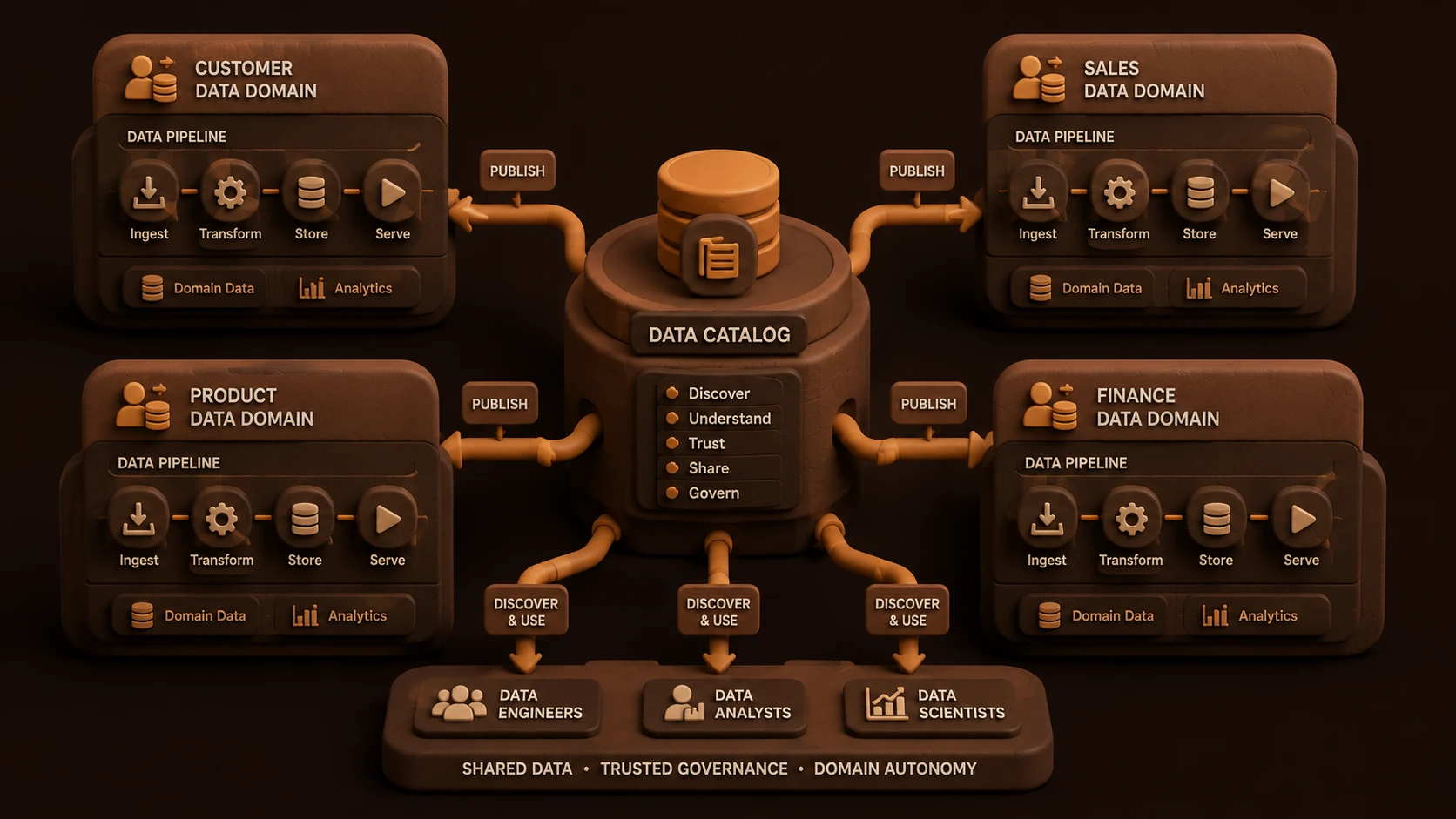
Data Mesh therefore promotes federated governance that establishes organization-wide standards while allowing domains operational autonomy.
Governance commonly addresses:
- ◆Metadata standards
- ◆Security policies
- ◆Data quality requirements
- ◆Regulatory compliance
- ◆Access management
Shared governance helps maintain consistency across independently managed domains.
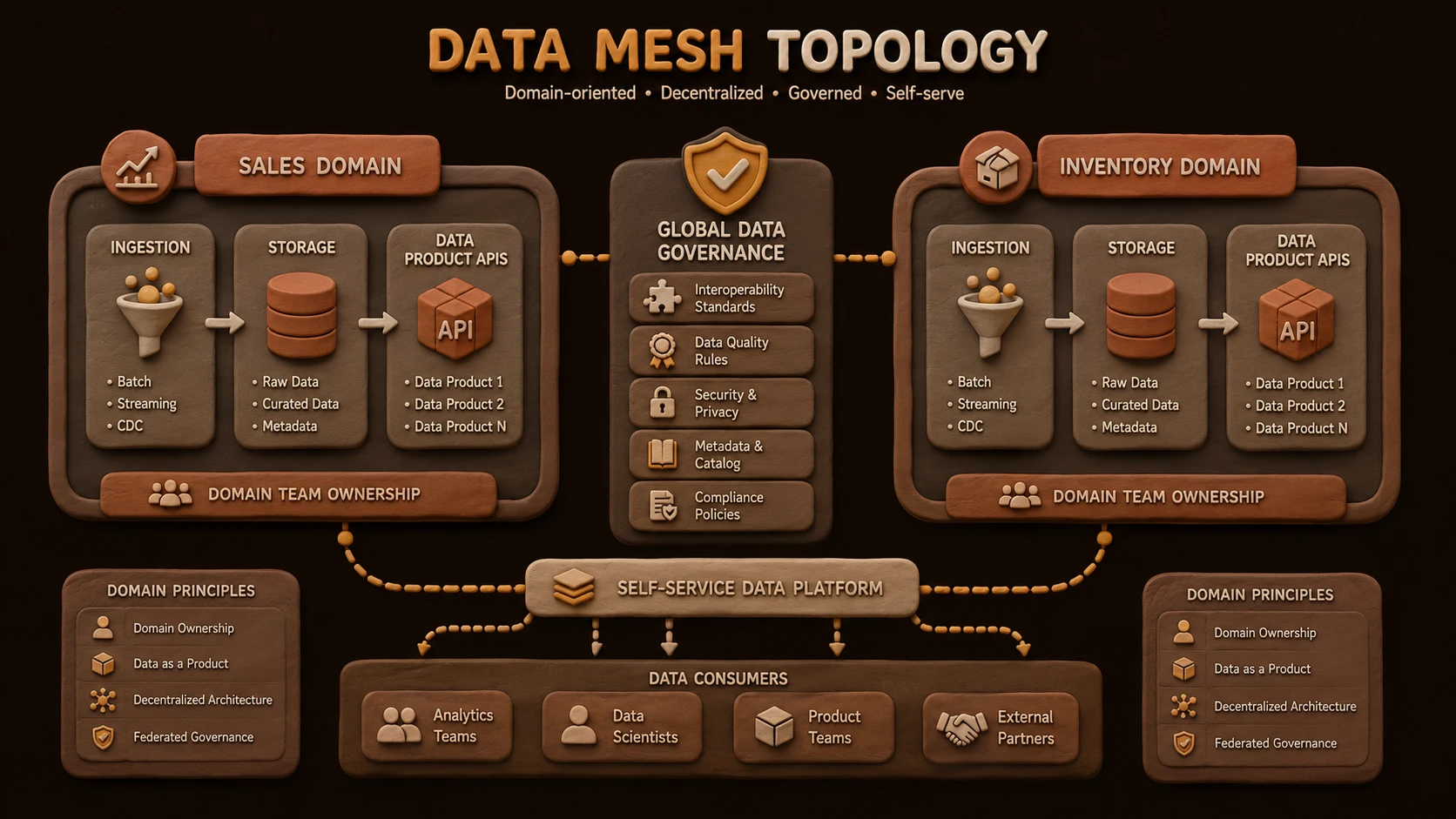
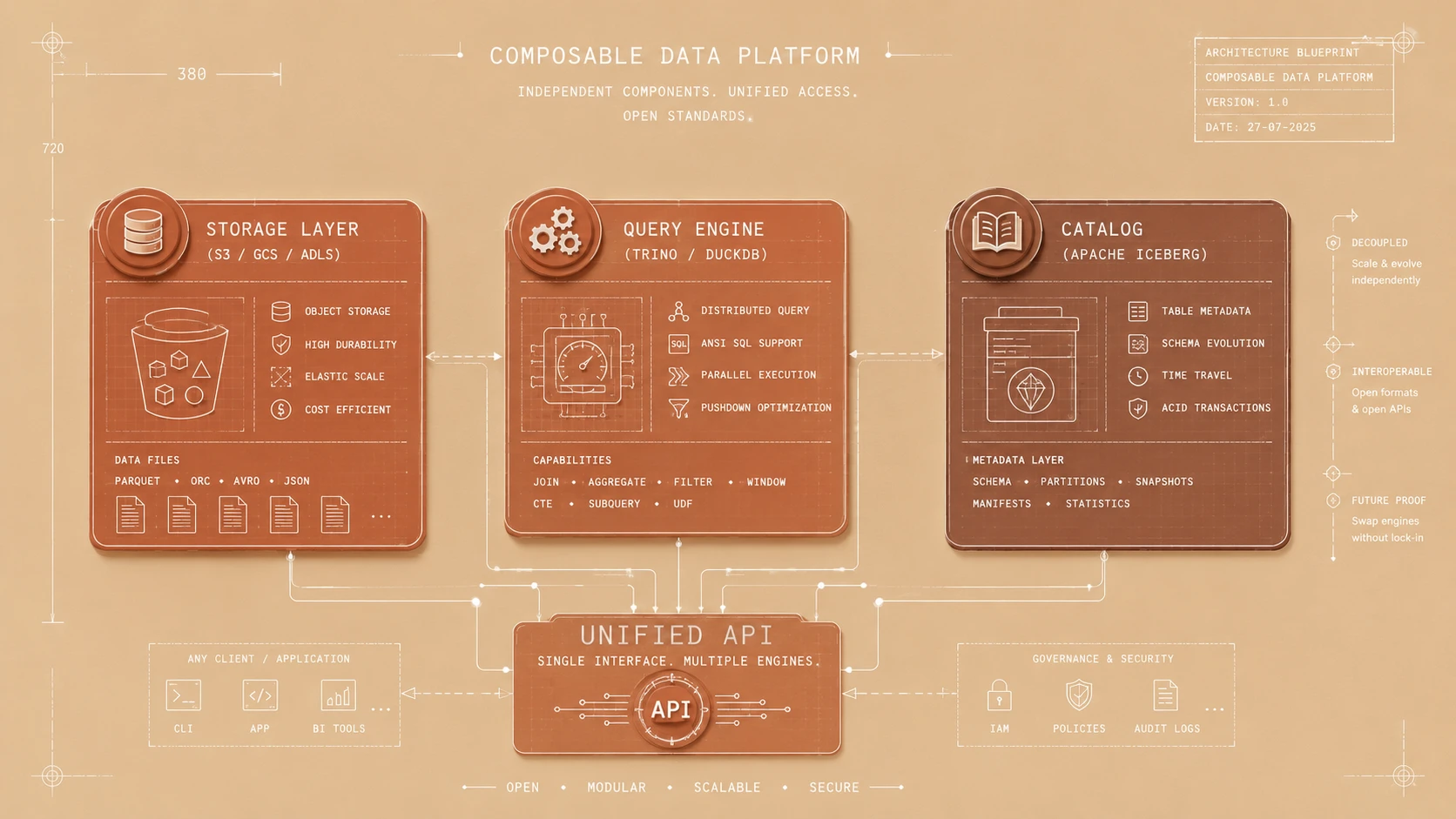
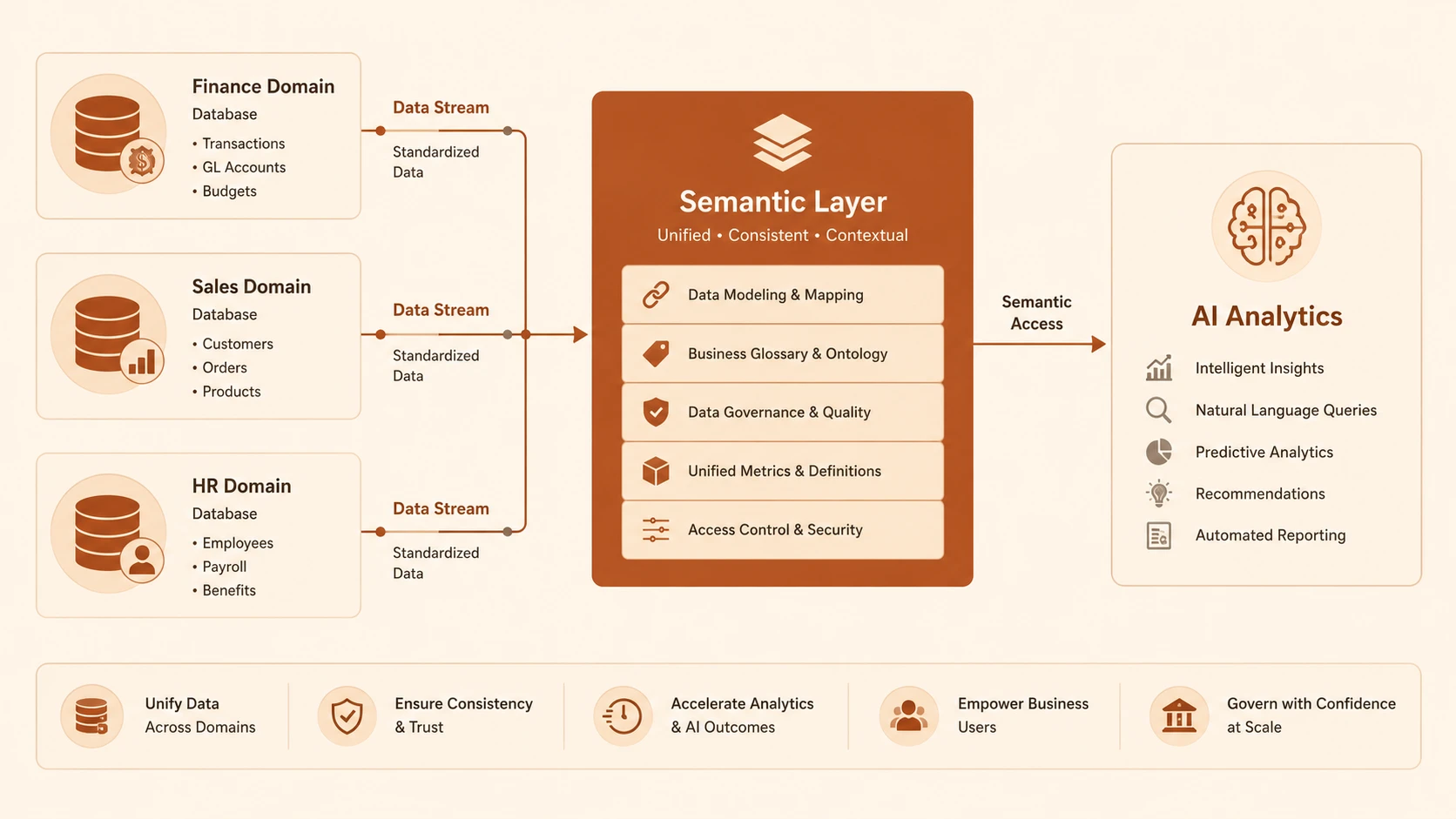
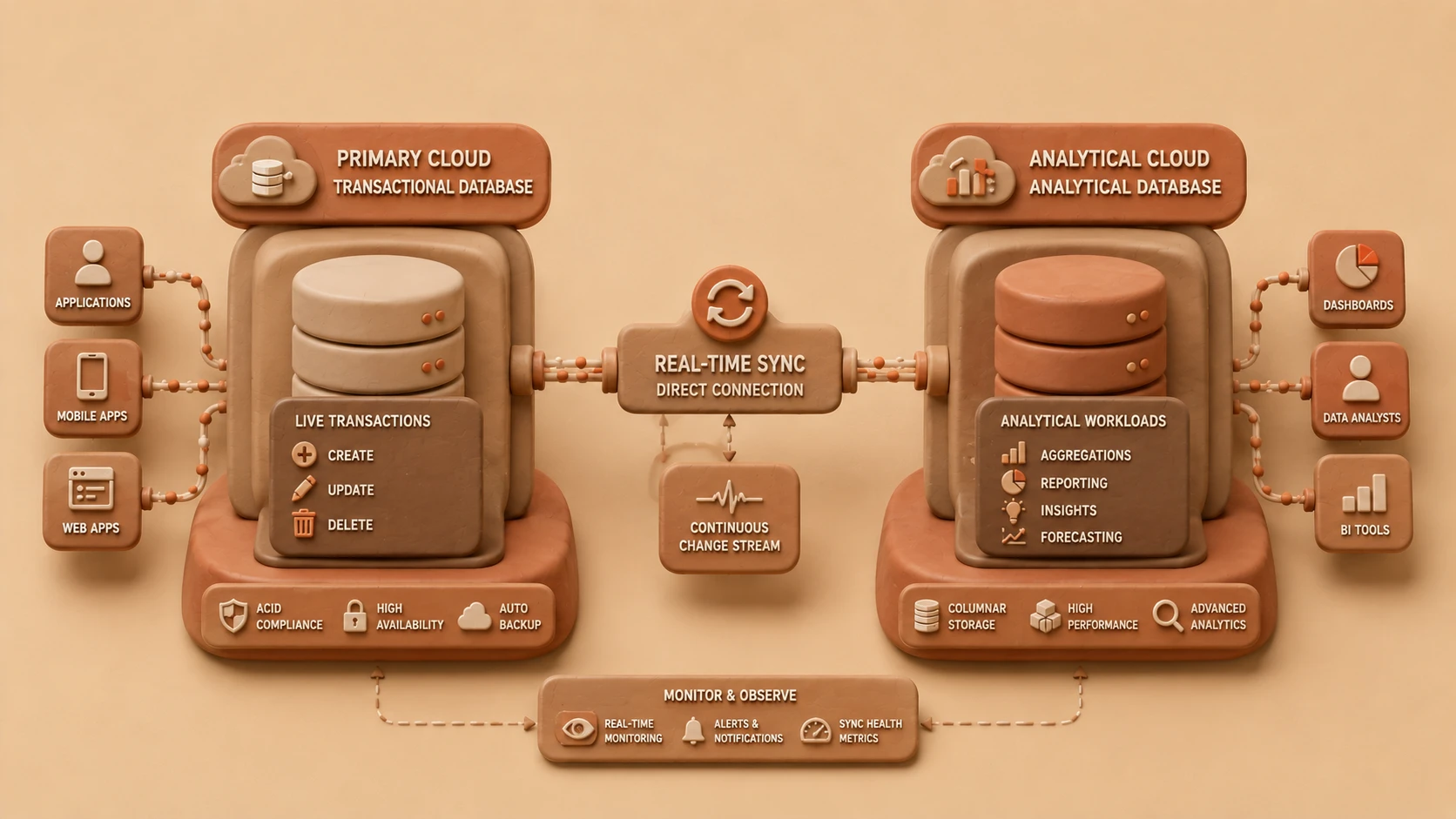
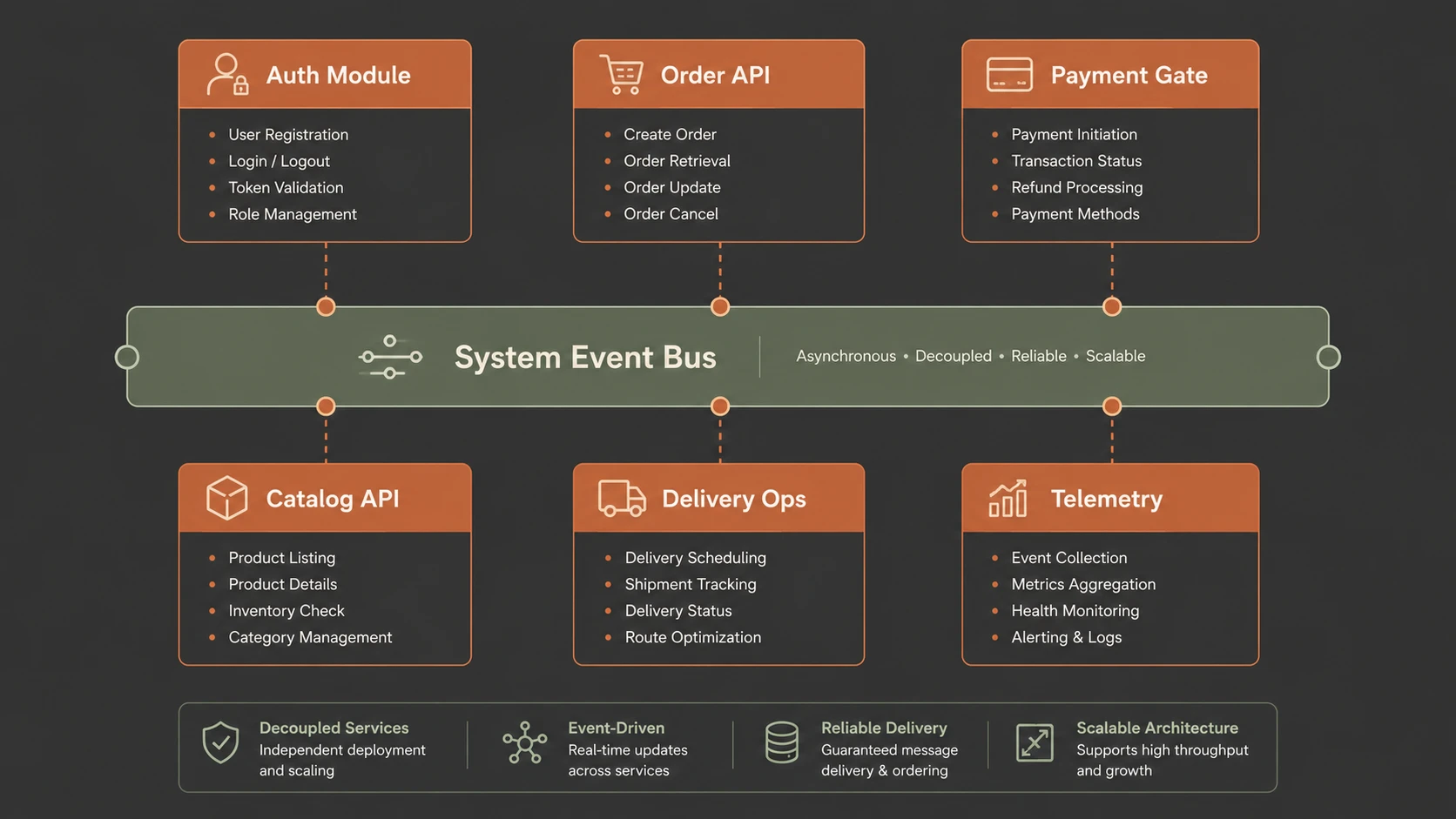
System architecture diagram and conceptual workflow layout for Data Mesh Adoption in Real Enterprises.
Migration Strategy
Organizations rarely adopt Data Mesh through complete architectural replacement.
A common migration sequence includes:
- 1.Identify business domains.
- 2.Define ownership responsibilities.
- 3.Establish shared platform services.
- 4.Publish initial data products.
- 5.Expand governance capabilities.
- 6.Gradually increase domain autonomy.
Incremental adoption reduces organizational disruption while allowing platform capabilities to mature.
Enterprise Use Cases
| Scenario | Benefit |
|---|---|
| Global Retail | Domain-specific customer and inventory data |
| Financial Services | Independent business unit ownership |
| Manufacturing | Production and supply chain data products |
| Healthcare | Department-level analytical ownership |
| Telecommunications | Distributed operational analytics |
| SaaS Platforms | Scalable analytics architecture |
Organizations with multiple autonomous business units often gain the greatest value from Data Mesh principles.
Performance Considerations
Data Mesh primarily addresses organizational scalability rather than raw processing performance.
Engineering teams should evaluate:
- ◆Query latency
- ◆Data freshness
- ◆Platform utilization
- ◆Pipeline reliability
- ◆Metadata discovery performance
- ◆Infrastructure costs
Operational metrics remain essential for validating platform effectiveness.
Security Considerations
Distributed ownership requires strong security governance.
Organizations should continue implementing:
- ◆Identity and access management
- ◆Data classification
- ◆Encryption
- ◆Audit logging
- ◆Regulatory compliance controls
- ◆Fine-grained authorization
Security responsibilities should be shared across domain teams and central platform governance.
Scalability
Data Mesh supports enterprise growth by:
- ◆Distributing ownership
- ◆Reducing centralized bottlenecks
- ◆Enabling independent domain evolution
- ◆Standardizing reusable platform services
- ◆Improving organizational alignment
These characteristics become increasingly valuable as enterprises expand both technologically and organizationally.
Best Practices
Organizations adopting Data Mesh should:
- ◆Begin with clearly defined business domains.
- ◆Invest in self-service platform capabilities before broad decentralization.
- ◆Treat data products as long-term supported assets.
- ◆Establish measurable quality standards.
- ◆Maintain centralized governance for security and compliance.
- ◆Define ownership responsibilities explicitly.
- ◆Build comprehensive metadata catalogs.
- ◆Measure adoption through business outcomes rather than infrastructure metrics alone.
A balanced approach enables organizational autonomy while preserving enterprise consistency.
Common Mistakes
Organizations should avoid:
- ◆Assuming Data Mesh is simply a new technology platform.
- ◆Decentralizing ownership without governance.
- ◆Treating every dataset as a data product.
- ◆Ignoring organizational change management.
- ◆Underinvesting in self-service platform engineering.
- ◆Expecting immediate benefits without gradual cultural transformation.
Successful Data Mesh initiatives depend on organizational maturity, platform engineering, and governance working together.
Technology Comparison
| Capability | Centralized Data Platform | Data Mesh |
|---|---|---|
| Ownership | Central data team | Business domains |
| Platform Services | Centralized | Shared self-service platform |
| Governance | Centralized | Federated |
| Scalability | Team constrained | Organizationally distributed |
| Data Products | Often implicit | Explicit product ownership |
| Organizational Alignment | Limited | Domain-centric |
Data Mesh shifts scalability challenges from centralized engineering toward coordinated domain ownership supported by shared infrastructure.
Adoption Strategy
Organizations should modernize incrementally.
A recommended roadmap includes:
- 1.Assess current data architecture.
- 2.Identify high-value business domains.
- 3.Build foundational platform services.
- 4.Publish pilot data products.
- 5.Expand governance capabilities.
- 6.Measure adoption and operational outcomes.
- 7.Extend the model across additional business units where appropriate.
Incremental implementation reduces organizational risk while allowing teams to refine operating models over time.
Limitations
As of April 2023, organizations should recognize several considerations.
Current observations include:
- ◆Data Mesh requires significant organizational alignment in addition to technical implementation.
- ◆Not every enterprise possesses the operational maturity necessary for fully distributed ownership.
- ◆Platform engineering investment remains essential.
- ◆Governance should evolve alongside decentralization to maintain security, quality, and compliance.
Organizations should therefore evaluate Data Mesh according to business structure, engineering maturity, and long-term strategic objectives rather than viewing it as a universal replacement for existing data architectures.
Looking Ahead
As of April 2023, Data Mesh continues to gain attention among enterprises seeking to scale analytics, data engineering, and organizational collaboration. Its emphasis on domain ownership, data products, self-service infrastructure, and federated governance offers an alternative to increasingly overloaded centralized data organizations.
For enterprise architects, CTOs, chief data officers, and platform engineering leaders, the key objective is not simply decentralizing data but building sustainable operating models that balance autonomy with enterprise standards. Organizations that invest in platform capabilities, governance, and cross-functional collaboration will be best positioned to realize the long-term benefits of Data Mesh while maintaining high-quality, trusted data across the enterprise.