Introduction
Cloud computing continues to reshape enterprise software architecture. Organizations increasingly expect infrastructure that scales automatically, minimizes operational overhead, and enables development teams to focus primarily on business functionality rather than server administration.
Traditional web applications typically require provisioning virtual machines, configuring operating systems, deploying application servers, monitoring infrastructure, and planning capacity in advance. While cloud platforms have simplified infrastructure management, many operational responsibilities still remain with development and operations teams.
AWS Lambda introduces a different execution model. Instead of deploying applications to continuously running servers, developers upload individual functions that execute only in response to events. Infrastructure provisioning, scaling, and server lifecycle management become responsibilities of the cloud platform.
Complementing Lambda, the Serverless Framework provides an open-source deployment and management tool that standardizes packaging, configuration, deployment, and lifecycle management for serverless applications.
As of June 2016, serverless computing remains an emerging architectural pattern, but it is attracting considerable interest among organizations building APIs, event-driven systems, and cloud-native Software as a Service (SaaS) platforms.
Industry Background
Enterprise application development increasingly emphasizes:
- ◆Cloud-native architecture
- ◆Continuous delivery
- ◆Microservices
- ◆Event-driven processing
- ◆Infrastructure automation
- ◆Elastic scalability
- ◆Pay-for-use computing
Cloud providers continue expanding managed services that reduce operational complexity while enabling development teams to concentrate on application logic.
Serverless computing represents a logical extension of this trend by abstracting infrastructure management almost entirely.
The Business Problem
Organizations developing cloud applications commonly encounter:
- ◆Server provisioning
- ◆Capacity planning
- ◆Infrastructure maintenance
- ◆Idle compute resources
- ◆Deployment complexity
- ◆Operational overhead
- ◆Slow infrastructure scaling
Development teams often spend significant effort maintaining infrastructure that does not directly contribute to business functionality.
Serverless platforms attempt to reduce these operational responsibilities.
Understanding AWS Lambda
AWS Lambda is an event-driven compute service that executes application code in response to events.
Rather than maintaining dedicated application servers, developers deploy independent functions that run when triggered.
Typical event sources include:
- ◆HTTP requests
- ◆Object storage events
- ◆Database events
- ◆Scheduled jobs
- ◆Messaging services
- ◆Application workflows
The cloud platform automatically provisions execution environments as required.
Core Architecture
| Component | Responsibility |
|---|---|
| Event Source | Triggers function execution |
| AWS Lambda | Executes business logic |
| Serverless Framework | Packages and deploys applications |
| API Gateway | Receives HTTP requests |
| Cloud Services | Provide storage, messaging, and persistence |
| Monitoring Services | Collect logs and operational metrics |
This architecture separates application logic from infrastructure management while supporting highly distributed cloud applications.
Event-Driven Execution
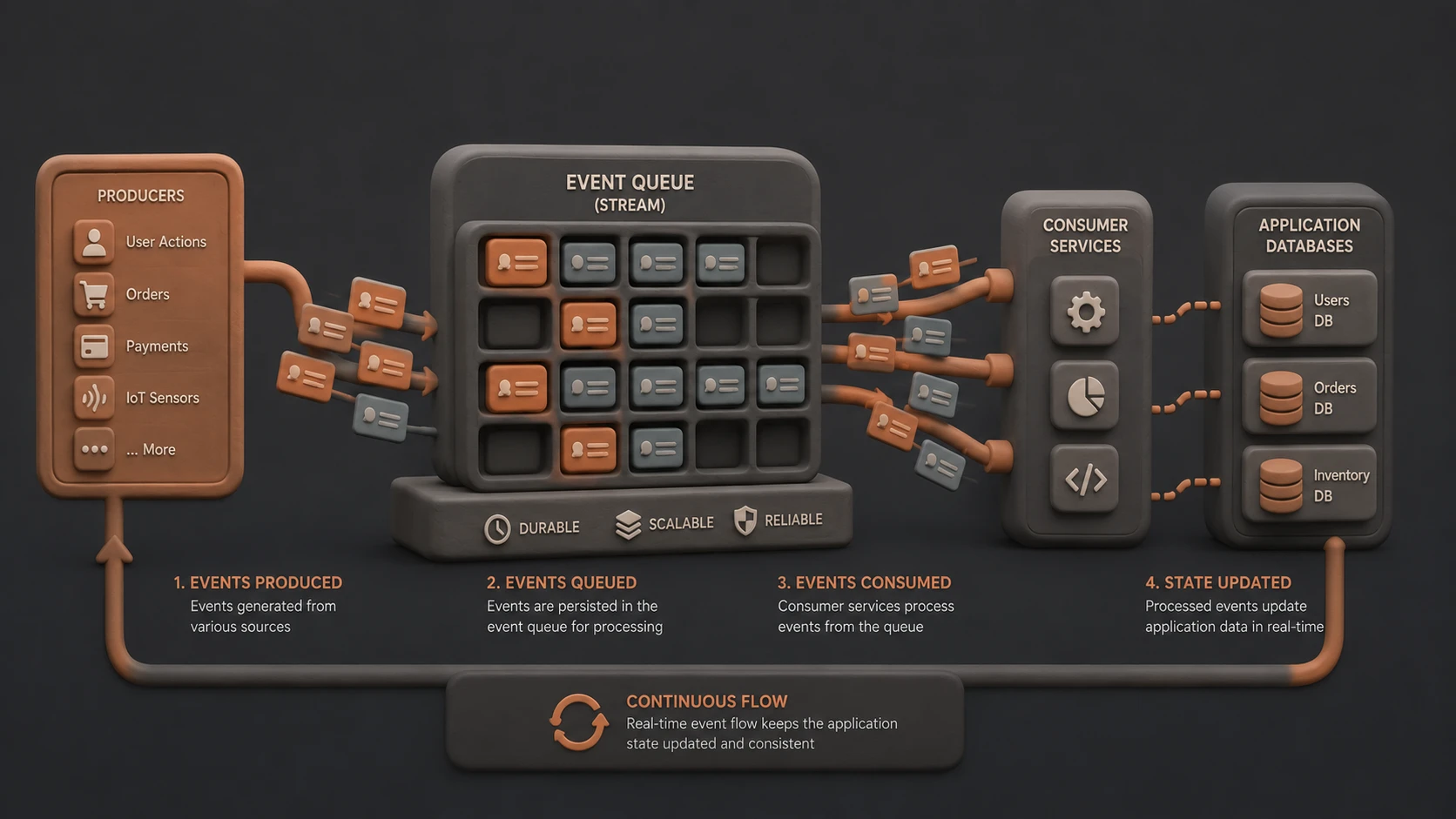
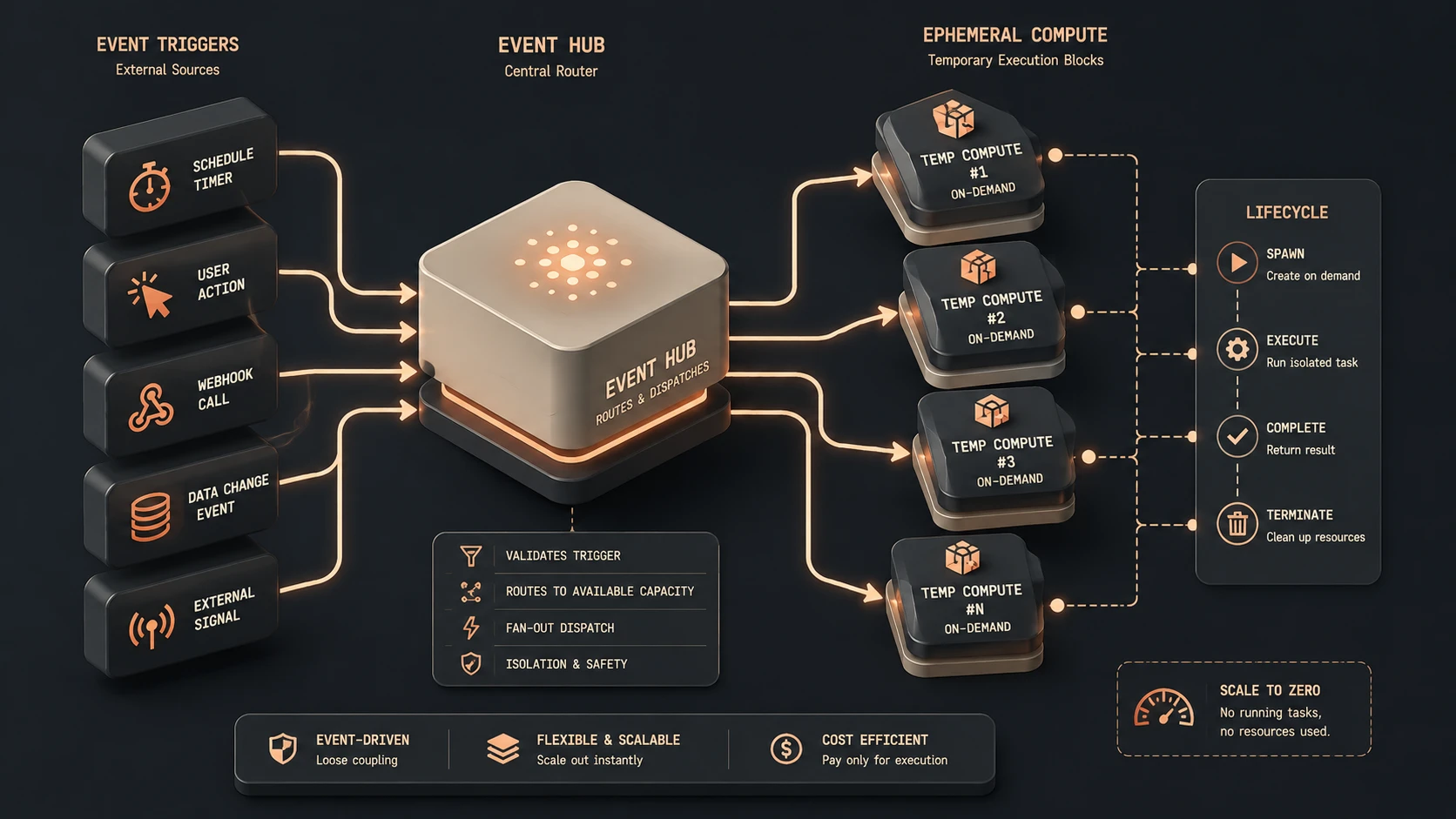
Lambda applications execute only when events occur.
A typical execution workflow includes:
- 1.An event is generated.
- 2.AWS invokes the appropriate Lambda function.
- 3.Business logic executes.
- 4.Required cloud services are accessed.
- 5.A response or follow-up event is produced.
- 6.The execution environment becomes available for future requests.
This execution model differs significantly from continuously running application servers.
Function-Oriented Design
Applications are divided into small, focused functions.
Examples include:
- ◆User registration
- ◆Image processing
- ◆Order validation
- ◆Email notifications
- ◆Report generation
- ◆Data transformation
Keeping functions narrowly focused improves maintainability while encouraging modular application architecture.
API Integration
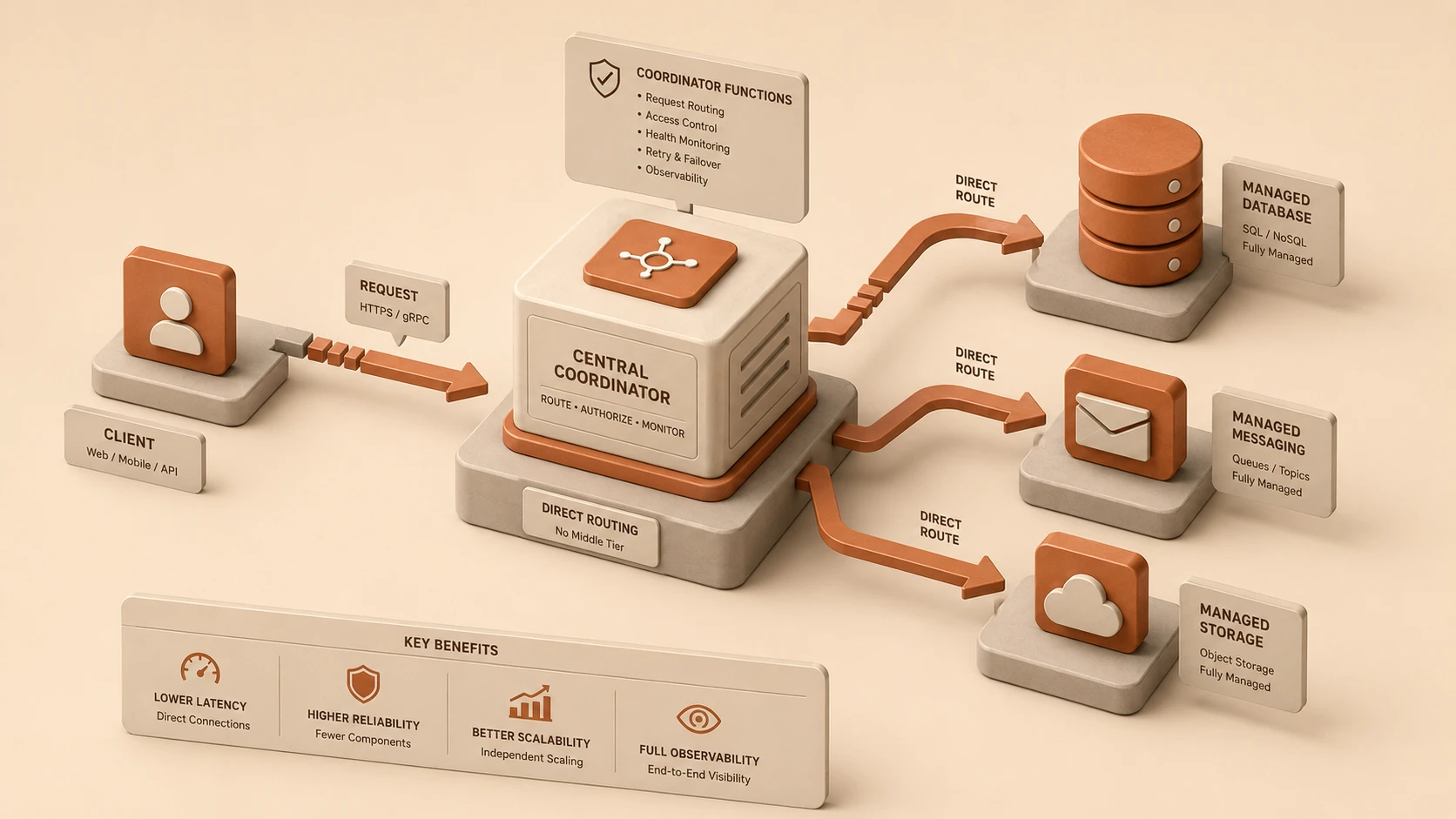
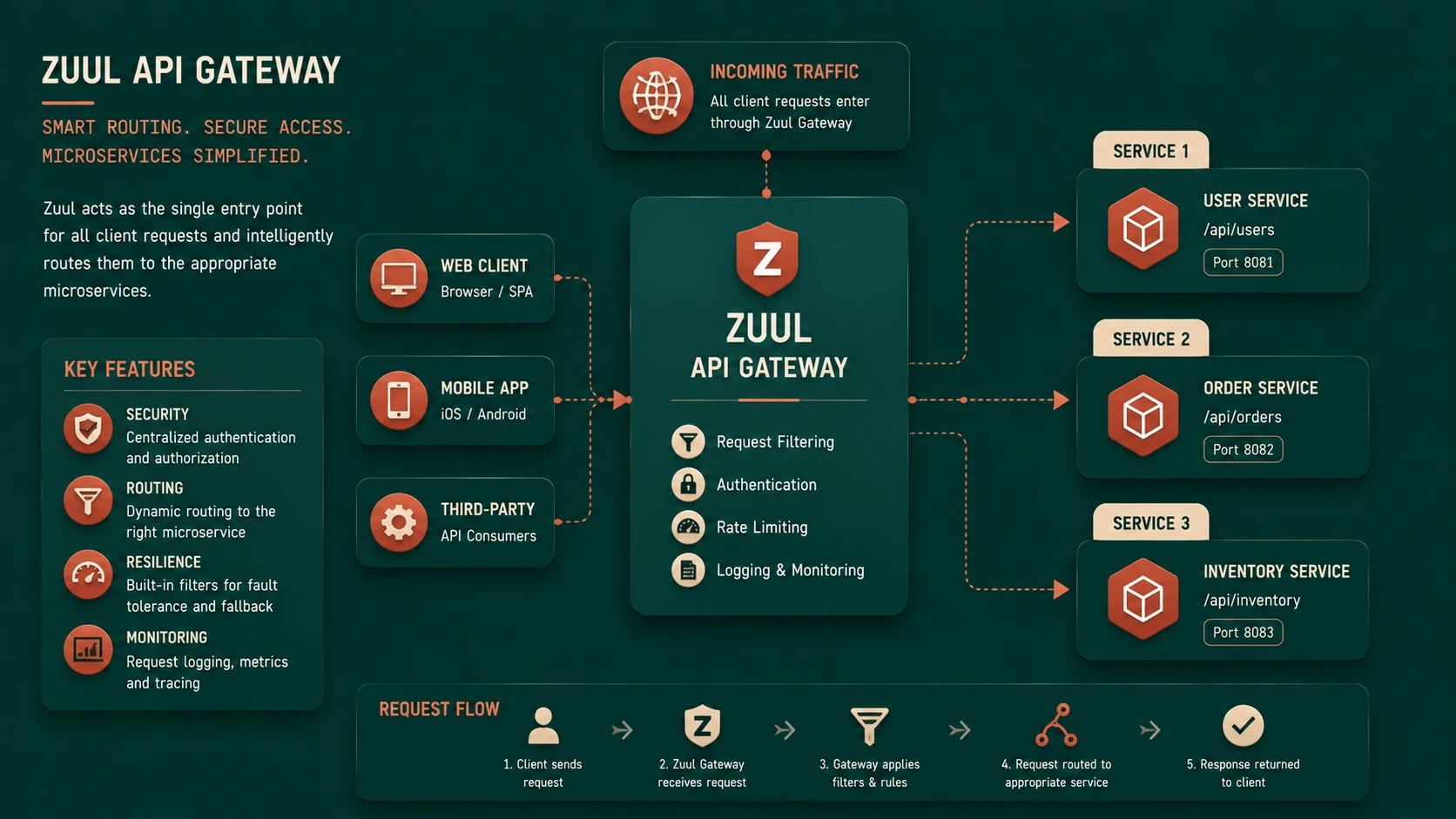
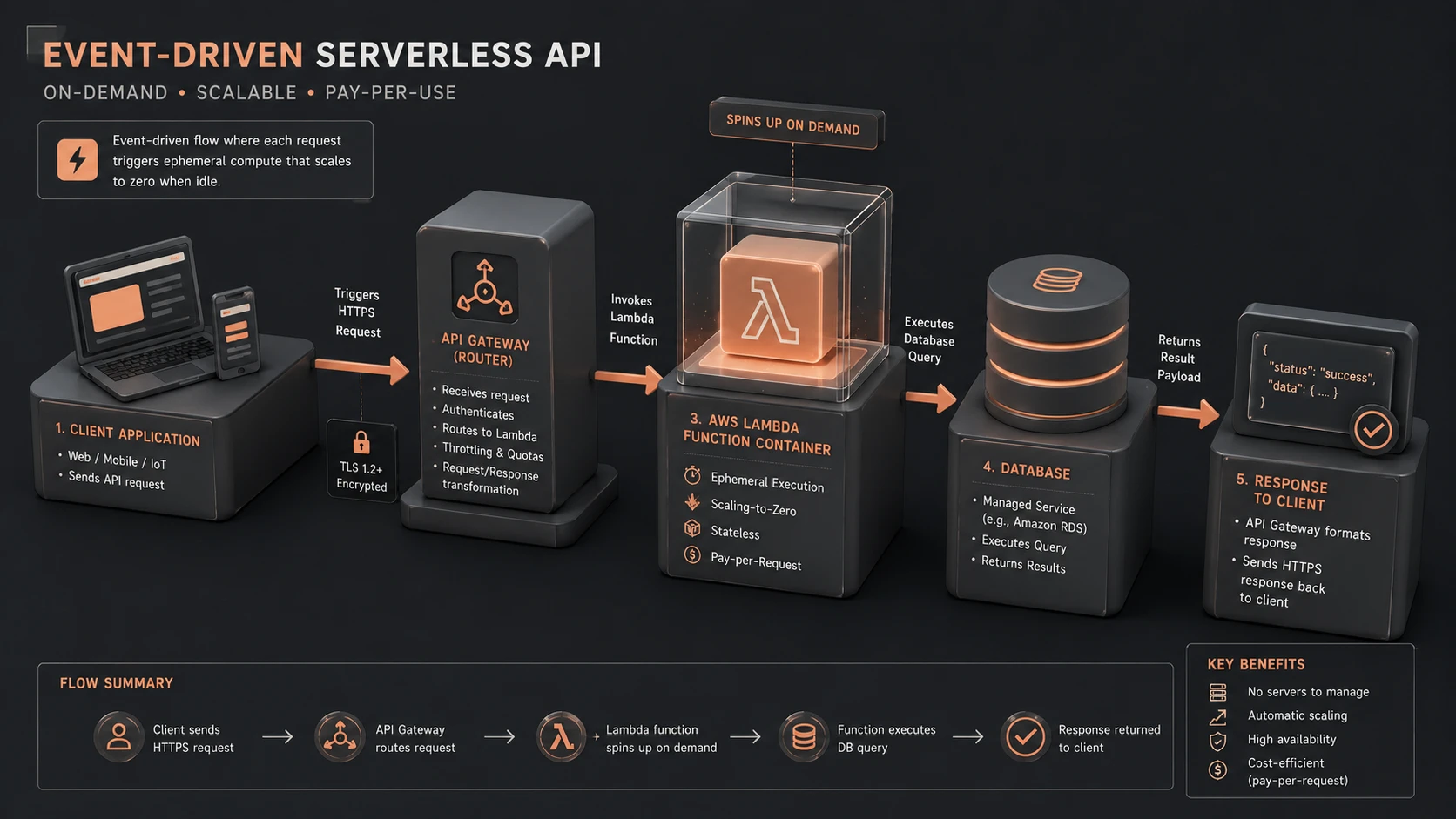
One common enterprise deployment pattern combines API Gateway with AWS Lambda.
The workflow typically follows:
- 1.A client sends an HTTP request.
- 2.API Gateway validates and routes the request.
- 3.Lambda executes the requested operation.
- 4.Backend services perform business processing.
- 5.A response is returned to the client.
This architecture enables RESTful APIs without maintaining dedicated web servers.
The Serverless Framework
# serverless.yml defining an event-driven AWS Lambda microservice
service: client-billing-service
provider:
  name: aws
  runtime: nodejs12.x
  region: us-east-1

functions:
  processInvoice:
    handler: handlers.processInvoice
    events:
      - http:
          path: billing/invoice
          method: post
          cors: true
Managing numerous Lambda functions manually can quickly become difficult.
The Serverless Framework provides a consistent approach for:
- ◆Project organization
- ◆Infrastructure configuration
- ◆Function deployment
- ◆Environment management
- ◆Service packaging
- ◆Version control integration
Infrastructure definitions become part of the application source, improving deployment consistency across environments.
Deployment Pipeline
A typical Serverless Framework deployment process includes:
Redundant multi-region failover configuration for disaster recovery protocols.
- 1.Define application configuration.
- 2.Package application code.
- 3.Configure cloud resources.
- 4.Deploy functions.
- 5.Configure event sources.
- 6.Validate deployment.
- 7.Monitor production execution.
This workflow aligns well with automated build and deployment pipelines.
Event Sources
Lambda supports a variety of event-driven integration patterns.
Common enterprise triggers include:
- ◆API requests
- ◆File uploads
- ◆Queue processing
- ◆Scheduled execution
- ◆Notification services
- ◆Database change events
These integrations enable loosely coupled application architectures.
Enterprise Use Cases
| Scenario | Benefit |
|---|---|
| REST APIs | Infrastructure-free request processing |
| SaaS Platforms | Automatic scaling |
| Image Processing | Event-driven execution |
| Notification Services | Asynchronous processing |
| Scheduled Maintenance Jobs | Simplified scheduling |
| Business Workflow Automation | Modular function execution |
Organizations building cloud-native applications benefit from reduced operational overhead and flexible scaling.
Performance Considerations
Serverless applications require careful performance evaluation.
Important considerations include:
- ◆Function startup latency
- ◆Execution duration
- ◆Memory allocation
- ◆Event throughput
- ◆Network communication
- ◆Dependency size
Functions should remain focused and efficient to minimize execution time and resource consumption.
Security Considerations
Although AWS manages the underlying infrastructure, application security remains a shared responsibility.
Organizations should continue implementing:
- ◆Least-privilege access policies
- ◆Secure credential management
- ◆HTTPS communication
- ◆Input validation
- ◆Audit logging
- ◆Secure integration with cloud services
Serverless deployment simplifies infrastructure management but does not eliminate secure application design responsibilities.
Scalability
One of Lambda's primary advantages is automatic scaling.
Benefits include:
- ◆Elastic execution capacity
- ◆Event-driven concurrency
- ◆Reduced idle infrastructure
- ◆Independent function scaling
- ◆Simplified operational management
Applications can respond dynamically to changing workloads without manual server provisioning.
Best Practices
Organizations evaluating AWS Lambda should:
- ◆Keep functions small and focused.
- ◆Design stateless functions.
- ◆Separate business logic from infrastructure configuration.
- ◆Automate deployments using the Serverless Framework.
- ◆Monitor execution metrics.
- ◆Manage permissions using least privilege.
- ◆Validate event inputs.
- ◆Document event contracts.
Disciplined architecture improves maintainability as serverless applications expand.
Common Mistakes
Development teams should avoid:
- ◆Creating excessively large functions.
- ◆Embedding infrastructure configuration directly within application code.
- ◆Ignoring monitoring and operational visibility.
- ◆Assuming serverless computing eliminates architectural planning.
- ◆Coupling unrelated business processes within a single function.
- ◆Neglecting deployment automation.
Serverless computing simplifies operations but still requires thoughtful software architecture.
Technology Comparison
| Capability | Traditional Application Servers | AWS Lambda with Serverless Framework |
|---|---|---|
| Server Management | Required | Managed by AWS |
| Scaling | Manual or configured | Automatic |
| Deployment Unit | Entire application | Individual functions |
| Idle Infrastructure | Continuous | Event driven |
| Infrastructure Automation | External tooling | Integrated deployment workflow |
| Operational Overhead | Higher | Reduced |
Serverless architecture shifts operational responsibility from infrastructure management toward application development.
Adoption Strategy
Organizations should evaluate serverless computing incrementally.
A practical approach includes:
- 1.Identify event-driven workloads.
- 2.Build a small Lambda-based service.
- 3.Introduce the Serverless Framework for deployment automation.
- 4.Integrate with API Gateway where appropriate.
- 5.Monitor execution characteristics.
- 6.Validate operational processes.
- 7.Expand adoption across additional services as experience grows.
Pilot projects allow engineering teams to evaluate serverless architecture while minimizing operational risk.
Limitations
As of June 2016, serverless computing remains an emerging architectural model.
Current considerations include:
- ◆Long-running workloads may not align with function-based execution.
- ◆Existing monolithic applications may require significant architectural changes.
- ◆Operational tooling and best practices continue to mature.
- ◆Development teams should carefully evaluate workload suitability before migration.
Serverless computing is best viewed as an additional architectural option rather than a universal replacement for existing application models.
Looking Ahead
AWS Lambda and the Serverless Framework represent a significant evolution in cloud application development by shifting operational responsibility away from server management and toward event-driven application design. By combining automatic scaling, managed infrastructure, and deployment automation, organizations can simplify the development of cloud-native services while improving operational agility.
As of June 2016, enterprise architects should evaluate serverless computing for APIs, asynchronous processing, automation workflows, and other event-driven workloads. Organizations that adopt modular application design, automated deployment pipelines, and disciplined operational practices will be well positioned to take advantage of this emerging cloud computing model as the ecosystem continues to mature.